hepatic elimination
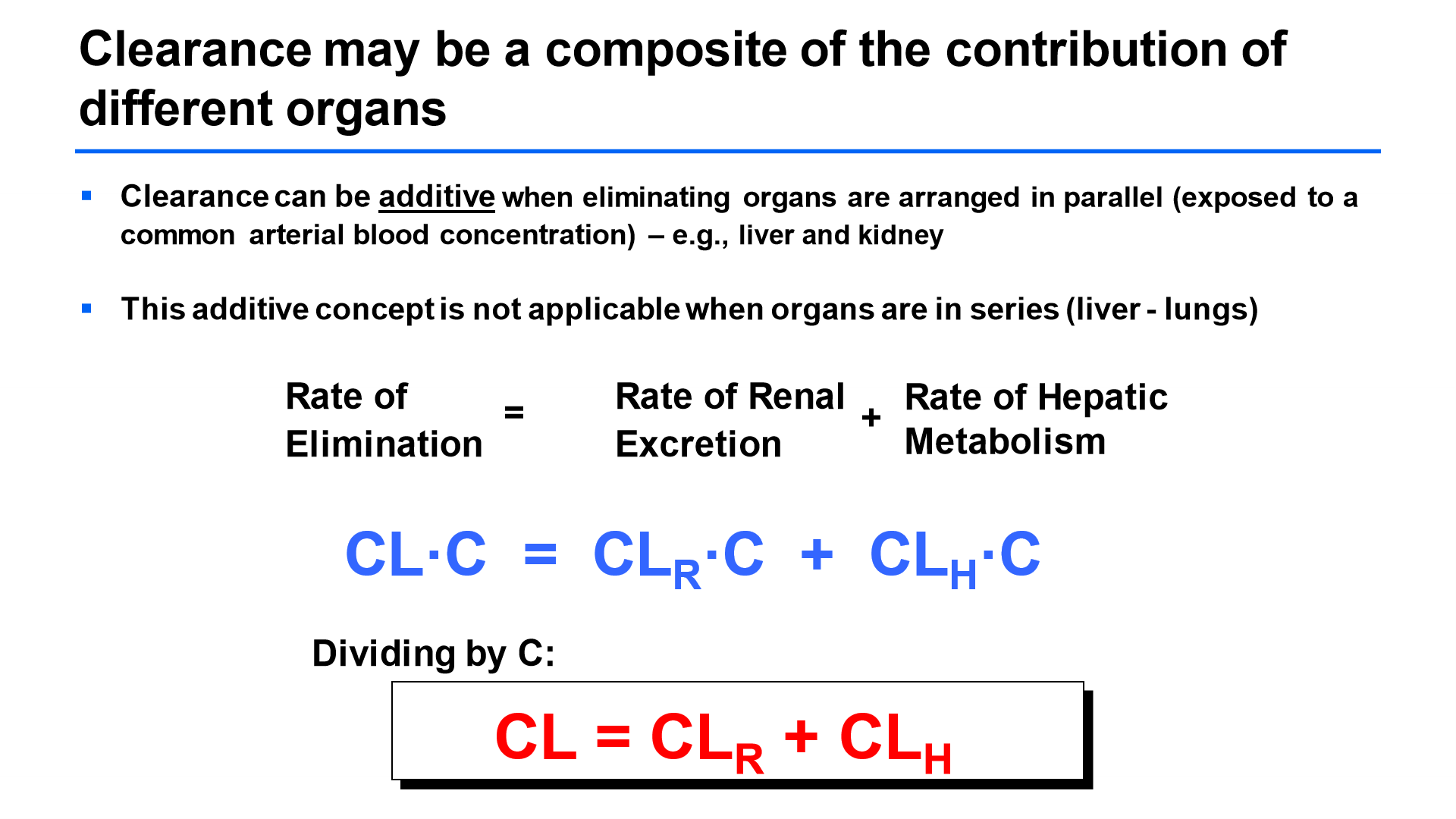
Clearance a composite of the contribution of different organs:
- Clearance = rate of elimination/ concentration in plasma
Rate of elimination = clearance x concentration in plasma
Hepatic elimination and liver blood supply:
- Two mechanisms drugs can be eliminated from liver are metabolism or biliary excretion
- Liver is highly perfused meaning highly lipophilic drugs can be quickly distributed into hepatocytes
- Dual blood supply:
- Portal vein
- Hepatic artery
- After passing through the liver, drug goes into systemic circulation, it has the potential of being exposed to metabolism in the liver multiple times
- CLH= QH x EH
- CL - hepatic clearance
- Q - hepatic blood flow
- E - hepatic extraction value (extraction value is between 0-1)
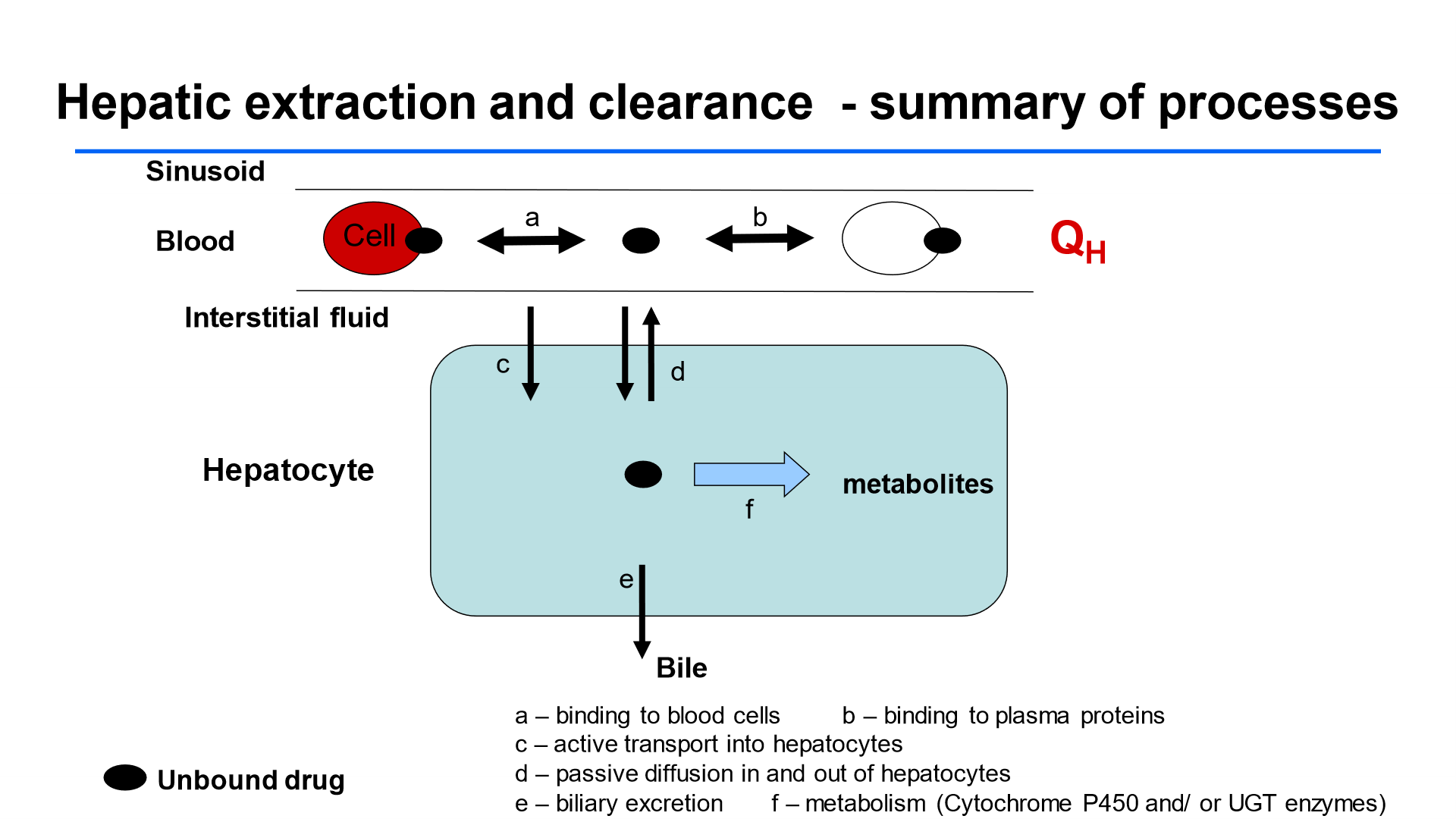
Hepatic extraction and clearance:
- Hepatocytes are the major liver cells
- in initial distribution process it is only the unbound drug which crosses the membrane and enters hepatocytes
- Drug can be distributed by passive diffusion - controlled by concentration gradient.
- But some drugs are not as permeable to membrane and require transport proteins
- Once in hepatocyte :
- Drugs could be excreted into bile where it is eliminated unchanged
- Or metabolised into metabolites which can enter systemic circulation or be secreted into bile
Factors influencing hepatic clearance of a drug:
- Hepatic blood flow
- Plasma protein binding
- Enzyme activity
- Liver disease status
- Transporter activity - uptake or efflux
Affect of hepatic blood flow on hepatic clearance:
- Only affects drug which high hepatic extraction (greater than 0.7/ 70%)
- Changes in heoatic blood flow impact hepatic clearance as rate limiting step is blood flow
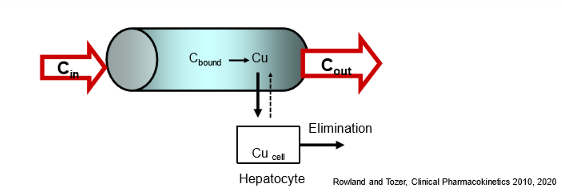
- Drugs with low hepatic extraction (less than 0.3/ 30%) are not affected by changes in hepatic flow. Liver is not efficient at eliminating these drugs due to significant binding to plasma proteins or drug is not a very good substrate for transporters/ or metabolic enzymes
Impact of plasma protein binding on clearance:
- When a drug is highly bound to plasma proteins, it is less available for elimination by the kidneys or metabolism by the liver. This results in reduced clearance of the drug from the bloodstream, leading to a longer half-life and potentially increased drug accumulation in the body.
- Hepatic clearance involves metabolism of drugs by enzymes in the liver. Drugs that are highly bound to plasma proteins may have reduced access to liver enzymes, resulting in slower metabolism and clearance.
Enzyme activity as a factor affecting hepatic clearance:
- Changes in enzyme activity can occur because:
- Increase drug - drug interaction
- Genetic polymorphism
- Disease
Changes in liver cirrohosis which may affect pharmacokinetics of drugs:
- Decrease in functional activity of hepatocytes
- Reduced activity of metabolic enzymes and drug transporters
- Decrease in circulating levels of plasma proteins
- Changes in hepatic blood flow and liver volume
- Impaired Renal function
Role of uptake and efflux transporters in hepatic clearance:
- Drugs are actively up taken into hepatocytes by OATP1B1, once in hepatocytes can be metabolised
- Drugs and drug conjugates are effluxed out of hepatocytes
Biliary excretion as hepatic elimination mechanism:
- Involves active transport: uses P-gp, BCRP and MPR2 efflux transporters
- Polar molecules and some metabolites (glucuronides)
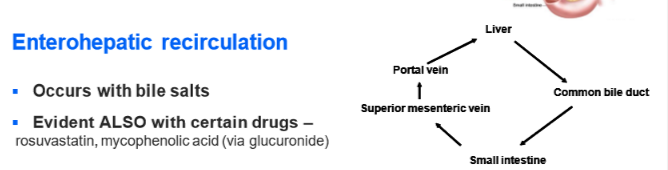
- This enterohepatic recirculation leads to prolonged elimination