L11 Abnormal Cell Growth
Objectives
Discuss the role of genes in cancer
Describe the concept of oncogenes and proto-oncogenes
Discuss the concept of tumor suppressors
Discuss the role of oncogenes and tumor suppressor genes in abnormal cell growth
How does cell production achieve homeostasis?
equal rate of new cells and cells lost
malfunction in this regulatory mechanism → pathological disorders
What can lead to more production of new cells but decreased rate of cell loss?
Aging
What are proto-oncogenes or c-onc aka normal/cellular?
produces proteins that regulate normal cell growth, functions, and differentiation
What happens when there is a mutation in proto-oncogenes?
Qualitative and/or Quantitative changes can form an Oncogene (protein products) or v-onc (mutated/viral) that lead to inappropriate cell proliferation (over-stimulate cell division)
What are the types of mutations/changes → Ontogenesis (functional products)
Point Mutation
abnormal or excessive proteins
Insert Mutation
Amplification
increased quantity
Truncation
Chromosomal Translocation
What are onco-proteins
proteins produced by oncogenes
What are some oncogenes acronyms
Myc — Myelocytomatosis
Sis — Simian Sarcoma
Erb — Erythroblastoma
Src — Rous sarcoma virus
Ras — Rat sarcoma
Yes — Y73 & ESh sarcoma isolated from Mr. Esh’s chicken
Abl — Abelson murine leukemia virus
Fos — Finkel biskis jinkins reilly mouse sarcoma
jun — junana
What does c-erbB codes for?
EGFR
Which erbB is a constitutively activated Receptor Tyrosine Kinases (RTK) and not controlled by the ligand-binding domain to divide?
v-erbB
What does v-erbB codes for?
abnormal EGFR that lacks a large portion of the N-terminal ligand-binding domain
What transcribed characteristic is seen in v-erbB which can result in a highly aggressive and malignant brain tumor (30%) called Glioblastoma multiforme?
Deletion in the EGFR VIII
Is EGFR VIII present in both normal and brain tumor cells?
No, it leads to accelerated cell proliferation, invasion, angiogenesis, and metastasis in only brain tumor cells.
Ras Oncogenes has an imbalance of GDP and what that can result in uncontrolled growth, proliferation, and migration → cancer?
GTP
What is a rare but highly aggressive and fast growing B-cell non-Hodgkin lymphoma (NHL)?
Burkitt’s Lymphoma
In Burkitt’s Lymphoma, the immunoglobulin gene on chromosome 8 is translocated to what on chromosome 14?
c-myc gene
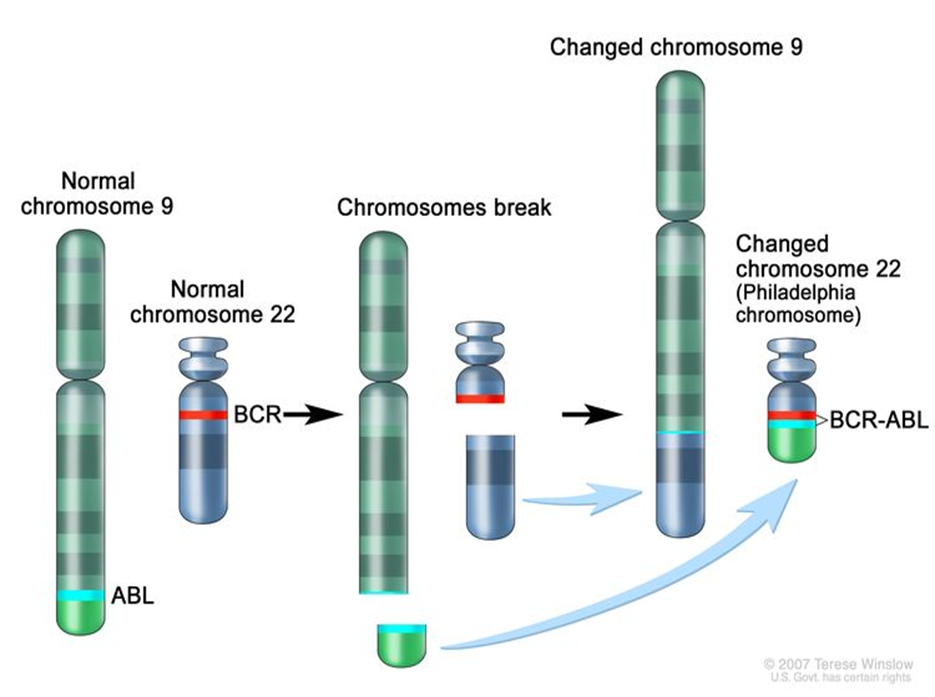
In Chronic Myelogenous Leukemia (CML), translocate what two genes between chromosomes 9 and 22?
BCR and ABL
What enzyme has revolutionized the treatment of Chronic Myelogenous Leukemia (CML)?
Tyrosine Kinase Inhibitors
An increasing number of what cells in the blood and bone marrow indicates Chronic Myelogenous Leukemia (CML)?
Myeloblasts
What Oncogene forms when stress, oncoproteins, and/or growth factors lead to the dimer formation between Fos-like and Jun oncogenes?
C-fos
What are Tumor Suppressor Genes?
Segments of DNA that codes negative regulator proteins
What is the function of a Tumor Suppressor Gene?
Reduces the probability of a cell in a multicellular organism → tumor cell by stopping uncontrolled cell division cycle
What can happen to a Tumor Suppressor Gene for it to INCREASE the chance of tumor formation?
Mutation or Deletion in the gene
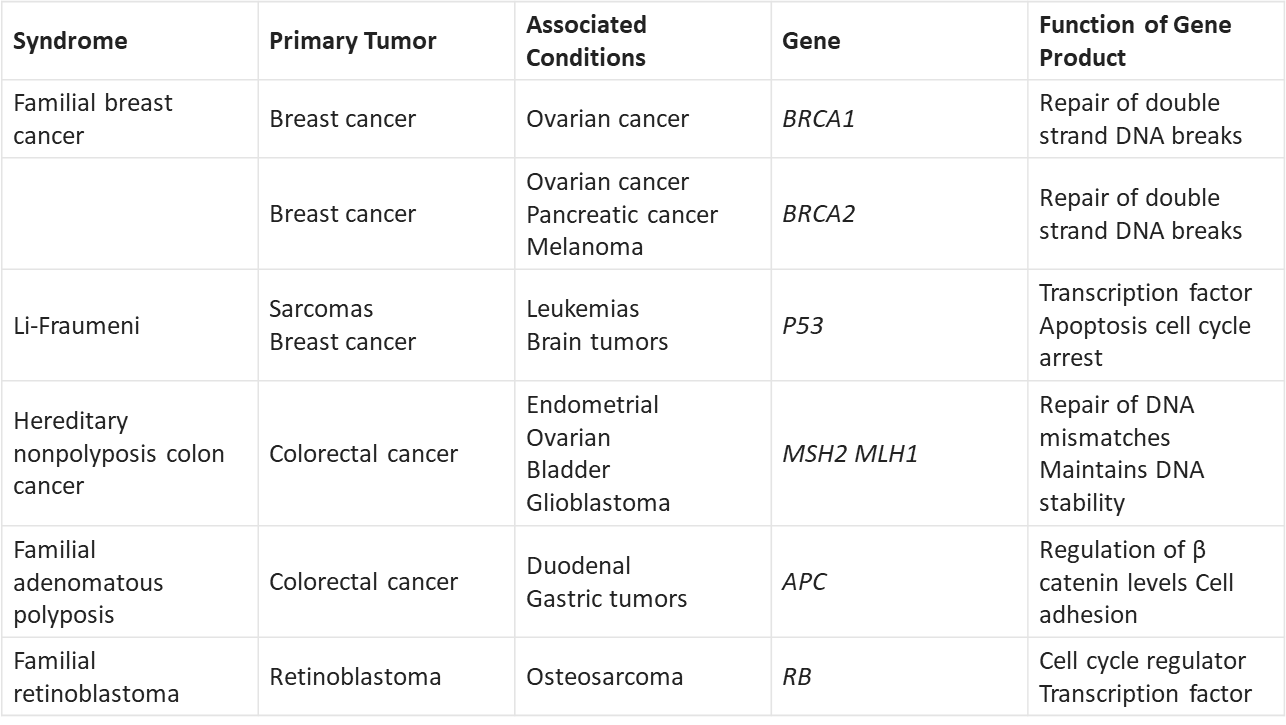
What are examples of Tumor Suppressor Genes?
P53, Rb, PTEN, BRCA -1 and -2
What was the first ever Tumor Suppressor Gene to be discovered in Human Retinoblastoma?
pRb
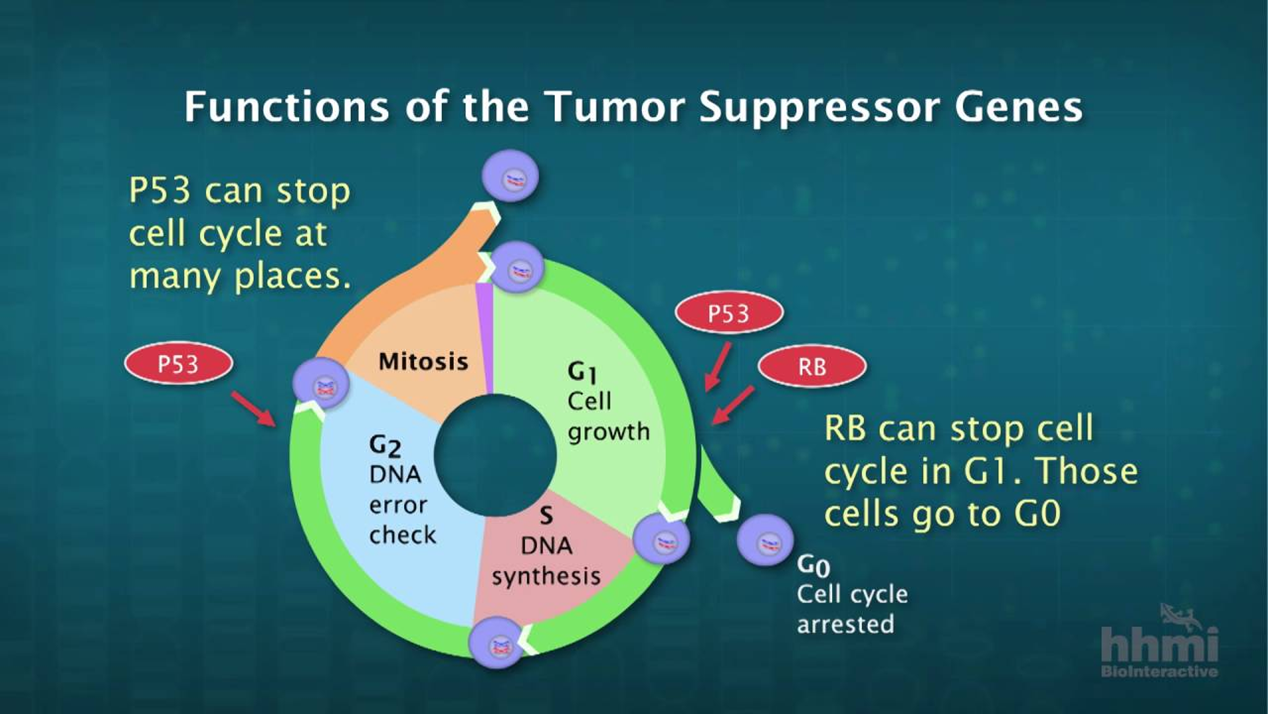
How does the Rb gene function?
pRb is bound with E2F until it undergoes phosphorylation via Cyclin activation
E2F is released to continue cell division
T/F: p53 can only stop in one phase of the cell cycle
False, it can stop in multiple places
List the factors that can activate p53
Lack of Nucleotides
UV Radiation
Ionizing Radiation
Oncogene Signaling
Hypoxia
Blockage of Transcription
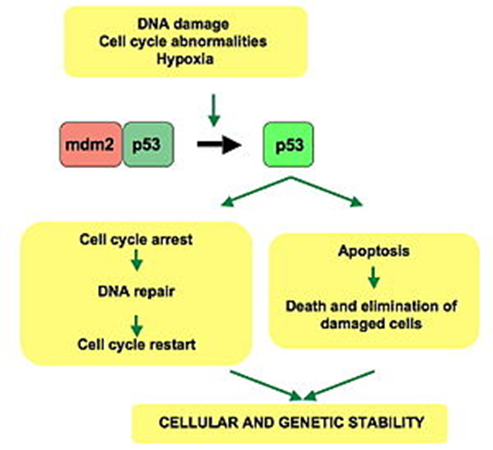
When p53 is inactive, it forms a dimer with what?
mdm2
What are the functions of p53 after sensing DNA damage?
induce G1 arrest via p21
induce DNA repair
induce apoptosis
What is p53’s nickname
Guardian of the Genome
What happens when p53 is impaired
accumulation of damaged DNA → malignancy
The homozygous loss of p53 is seen in which type of cancers?
All
T/F: loss of p53 is only seen in cancerous cells
False, it is seen if over half of malignant cells
Describe the pathway of Colon CA development
Normal epithelium experiences loss of APC, tumor suppressor gene
Polyp of small benign growth forms which can activate KRAS oncogene
Early Adenoma with a large benign growth can lose DCC, tumor suppressor gene
Late Adenoma can lose p53 and form a Carcinoma or malignant tumor → colon cancer and metastasis with additional mutations
Inherited Mutations and CA