Calculus 1
basic calculus/limits
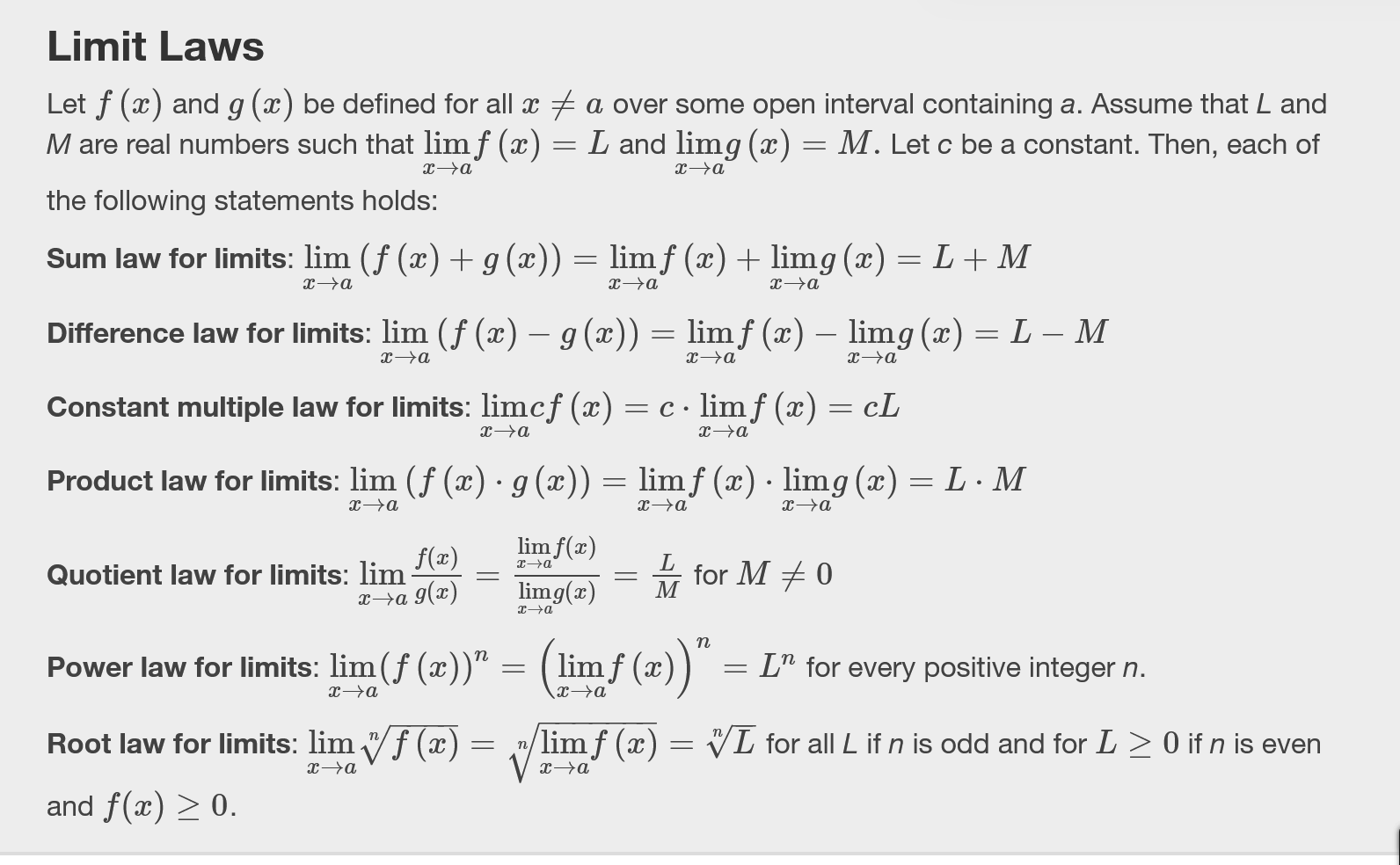
6 techniques for evaluating limits:
Direct Substitution
Limit Laws
Factoring
Rationalizing Numerator/denominator
Simplifying the expression
The Squeeze theorem
Conjugate: method for factoring square root problems
-continuity checklist
The function is defined at x = a; that is, f(a) equals a real number.
The limit of the function as x approaches a exists.
The limit of the function as x approaches a is equal to the function value at x = a.
precal rules
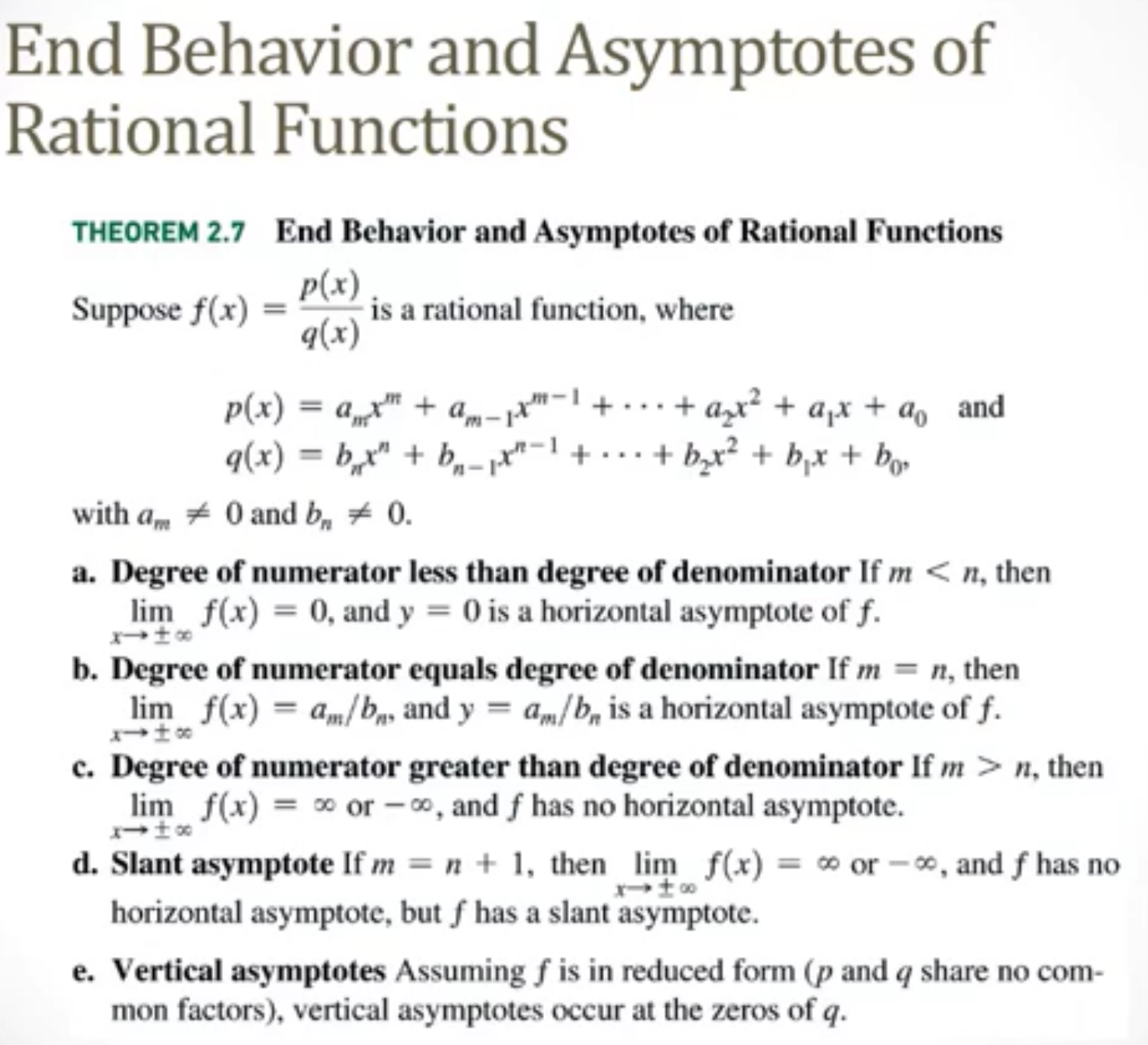
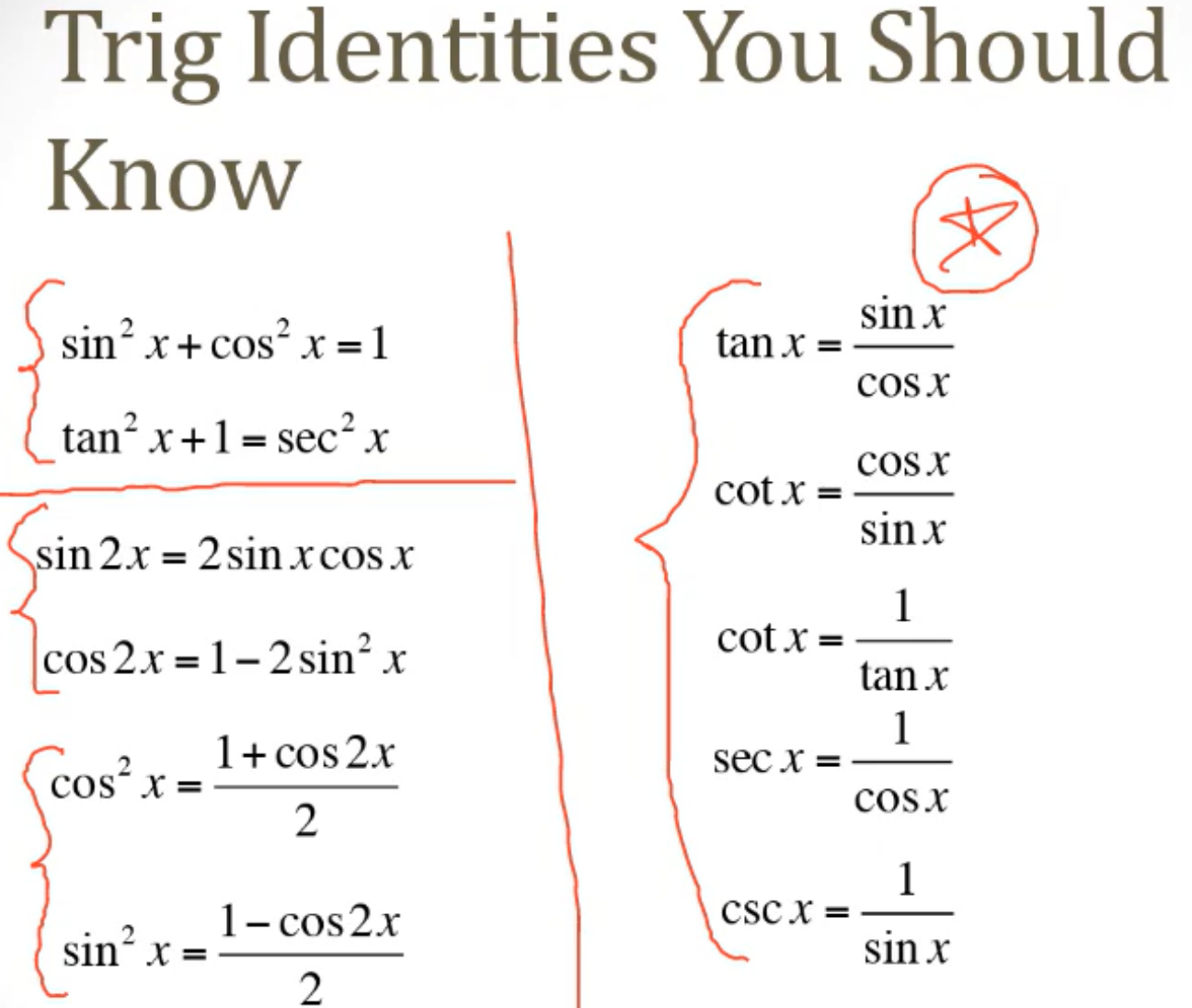
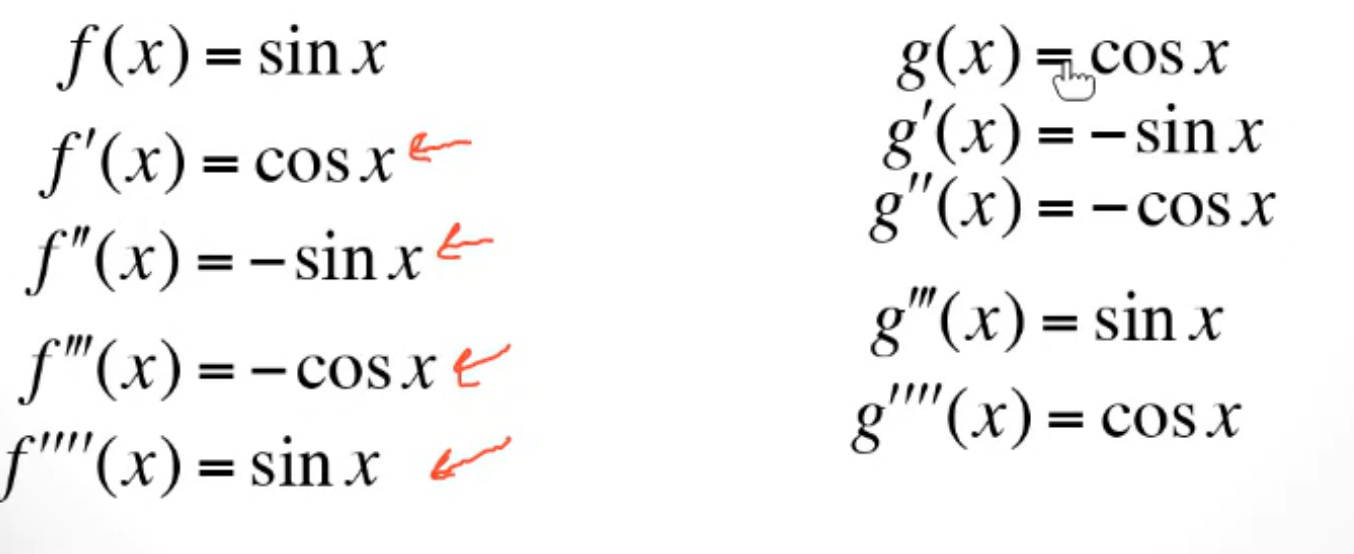
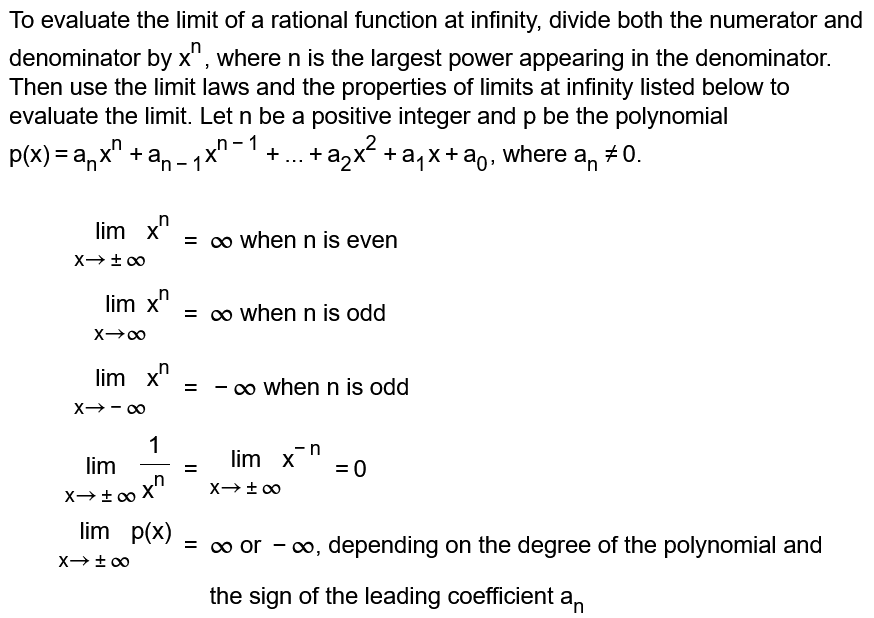
limit of a rational function at infinity
To evaluate the limit of a rational function at infinity, divide both the numerator and denominator by x_n, where n is the largest power appearing in the denominator.
ex. (x²+2x+1)/x²)→ ((1+2/x+1/x²)/1)→(1+0+0)/1→1
ex2. at negative infinity: (x³+2x²+x)/x³)→divide by -x³→ ((-1-2/x-1/x²)/-1)→(-1-0-0)/-1→1
If the degree in the denominator is greater than the numerator than the number moves towards 0 (make it 0)
Derivative
-Constant Functions: constants are zero
-Power rule: f(x)=x^n; f’(x)= (d/dx)(x^n)= nx^(n-1)
-constant multiple rule: cf(x); (d/dx)[cf(x)]= cf’(x)
-Sum rule: F(x)= f(x)+g(x)= (d/dx)(f(x)+g(x)= f’(x)+g’(x)
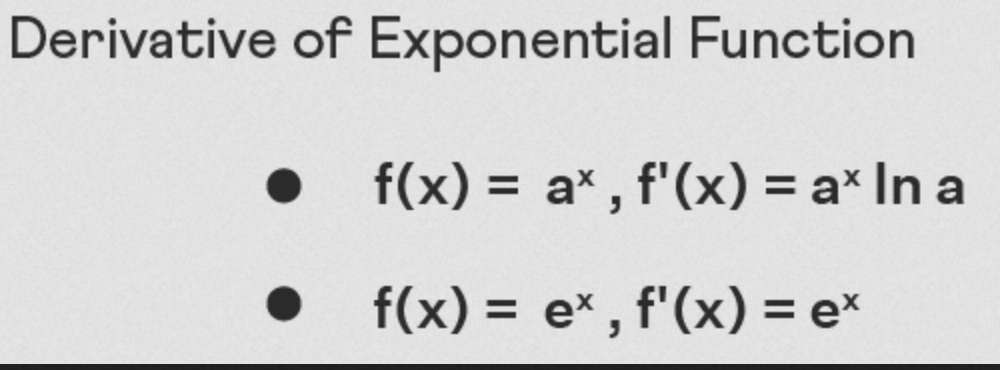
Derivatives of Exponentials: f(x)=e^x; (d/dx)(e^x)= e^x
Higher order/second derivative: f^(n)*(x)=(d^n*f/dx^n)=(d/dx)(f^(n-1)(x))
just perform the derivative multiple times.
-when is a function not differentiable rules
A point where the function is not differentiable is a point where this limit does not exist, that is, is either infinite (case of a vertical tangent), where the function is discontinuous, or where there are two different one-sided limits. Also with corners.
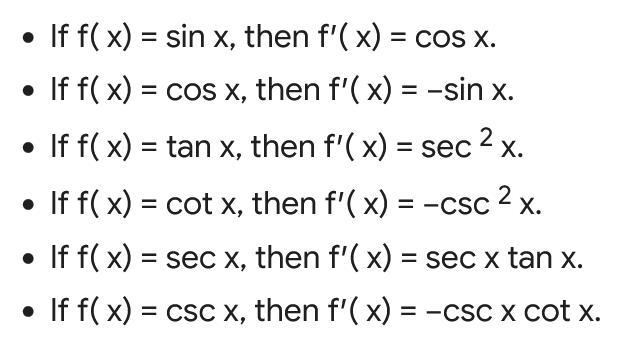
-Position: f(a); velocity: f’(a); speed: |f’(a)|; acceleration: f’’(a)
finding highest point? f’(a)=0?
how long does it take to hit the ground? f(a)=0 (generally the positive value)
The speed at which the object hits the ground? Take the time from f(a)=0 and plug it into f’(a)
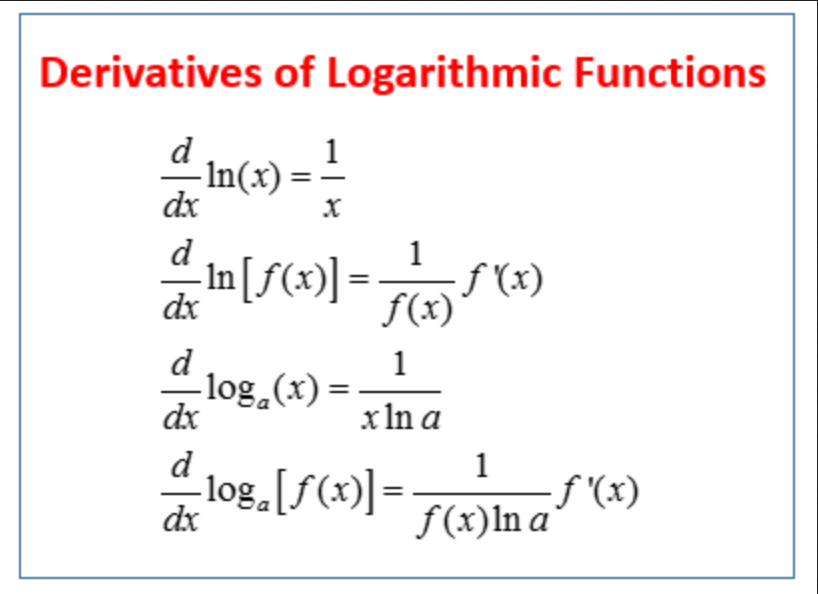
Derivative of inverse function is: (f^-1)’(y)=1/(f’(x)); where y=f(x)
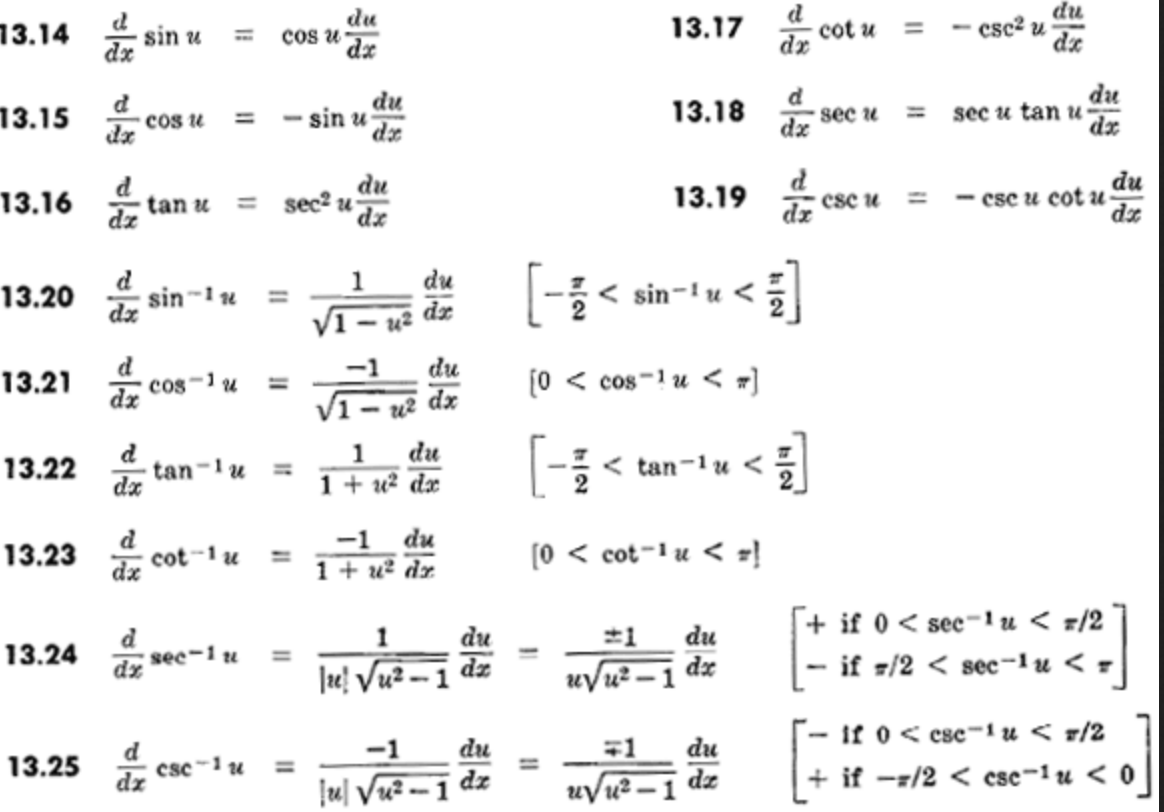
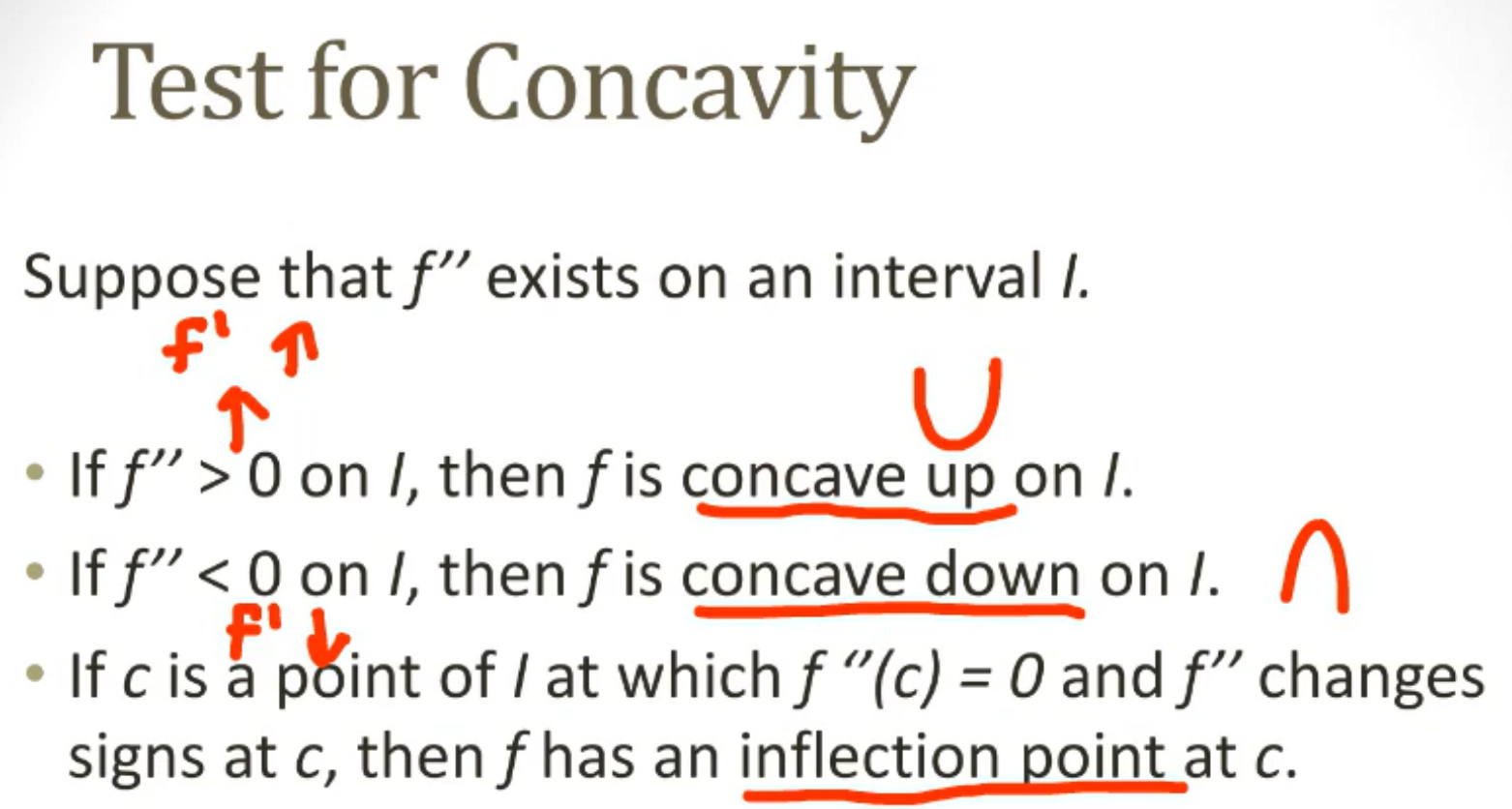
Derivative Graph
First Derivative test
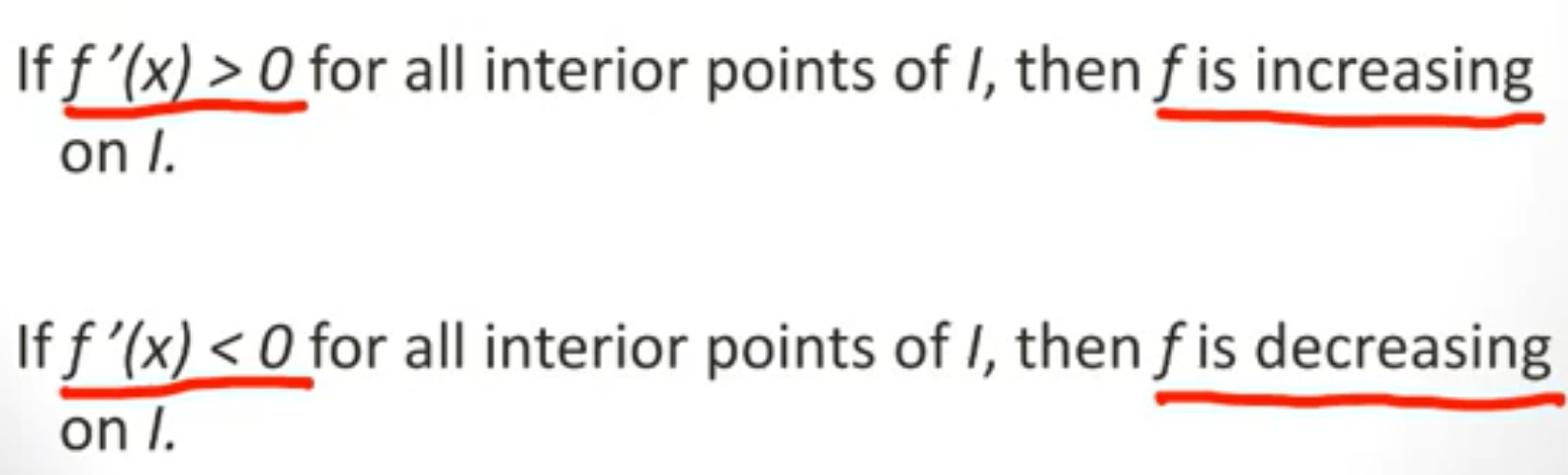
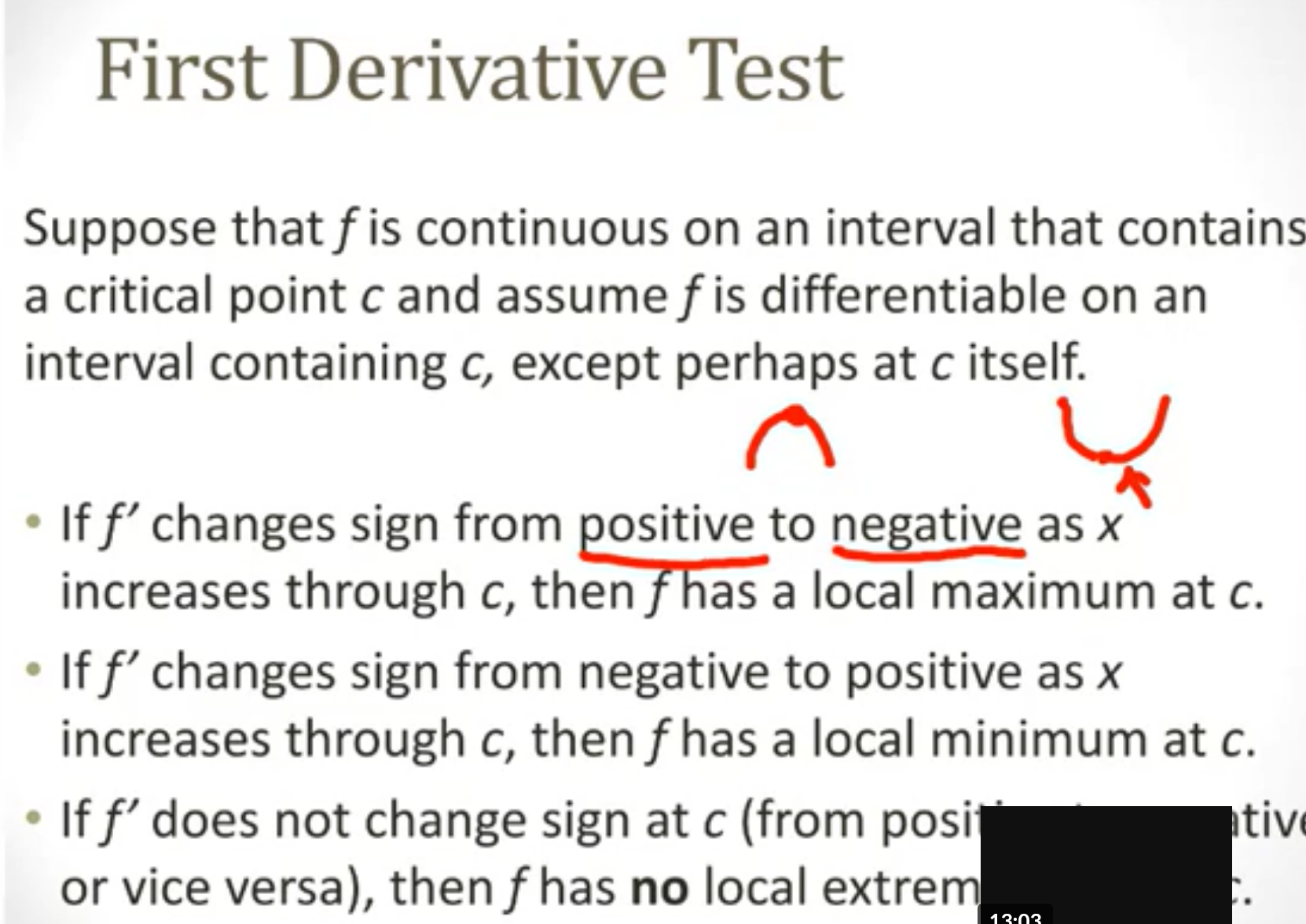
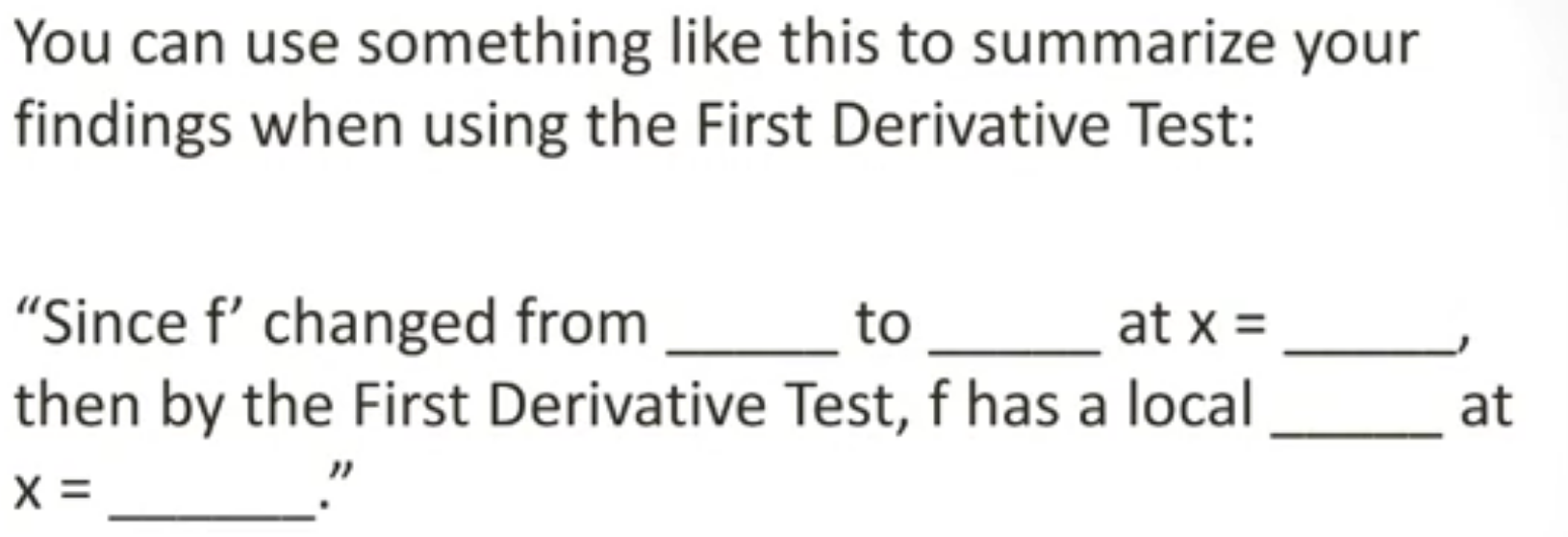
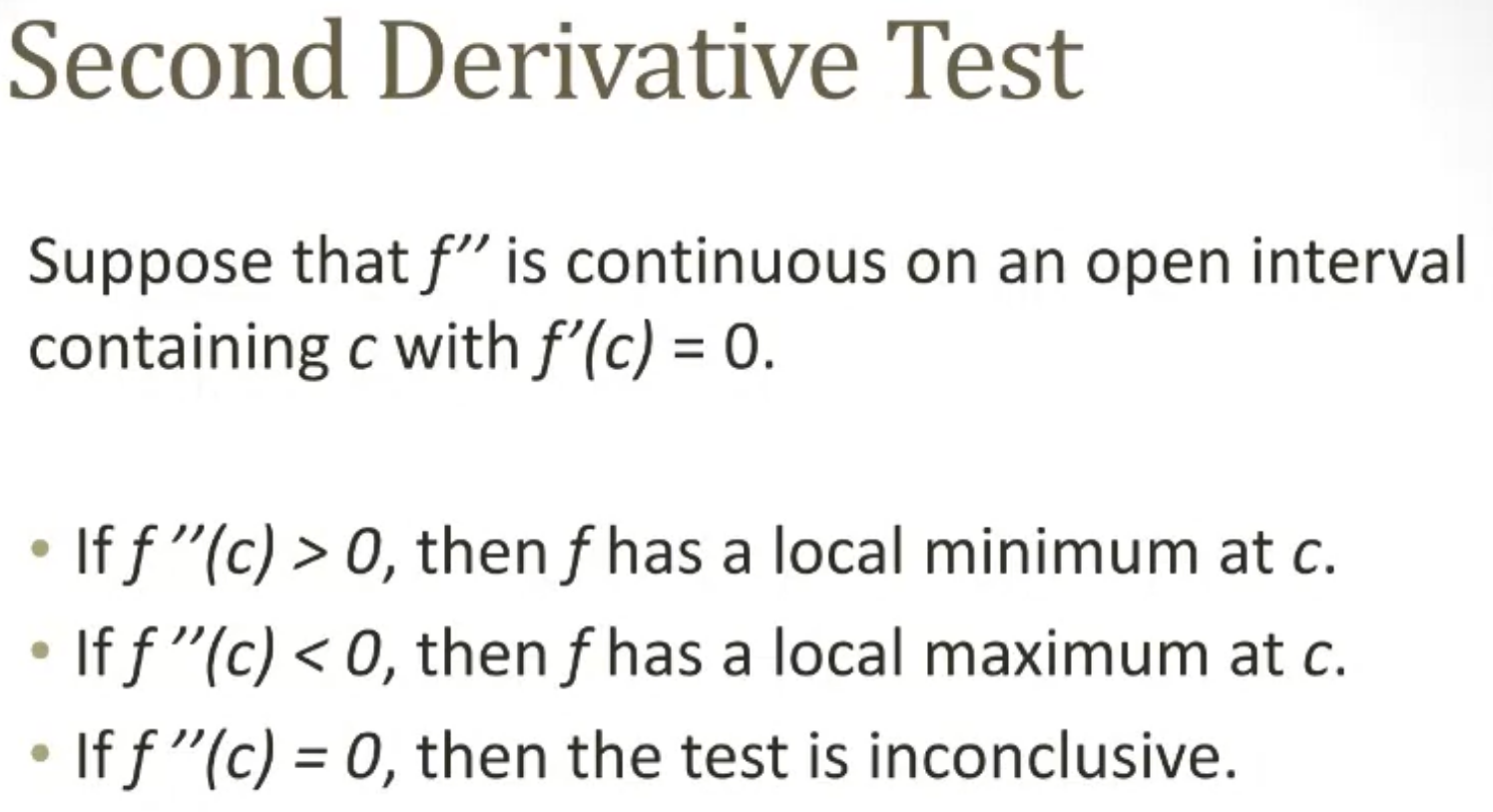
Second Derivative test
Integral
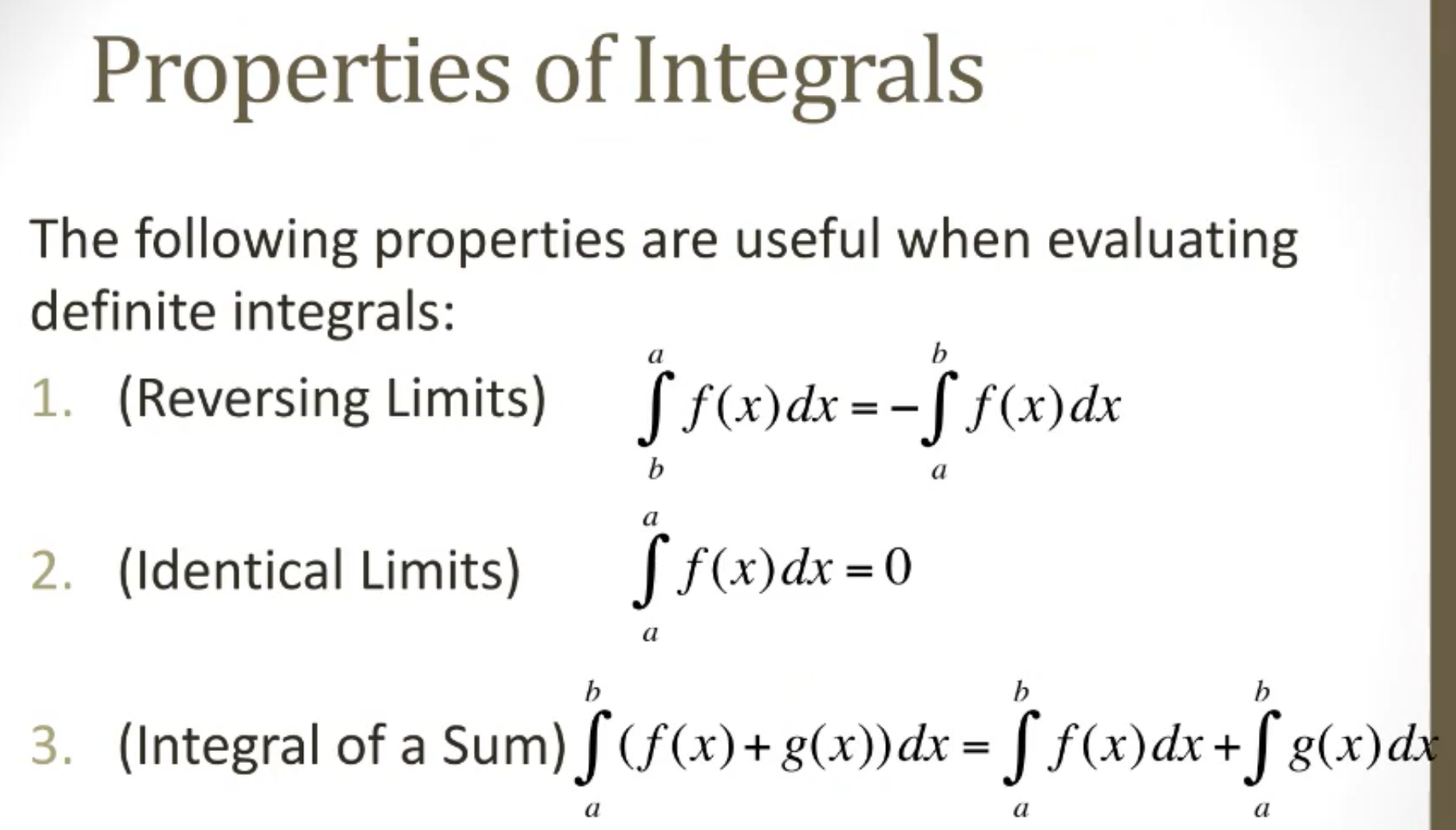
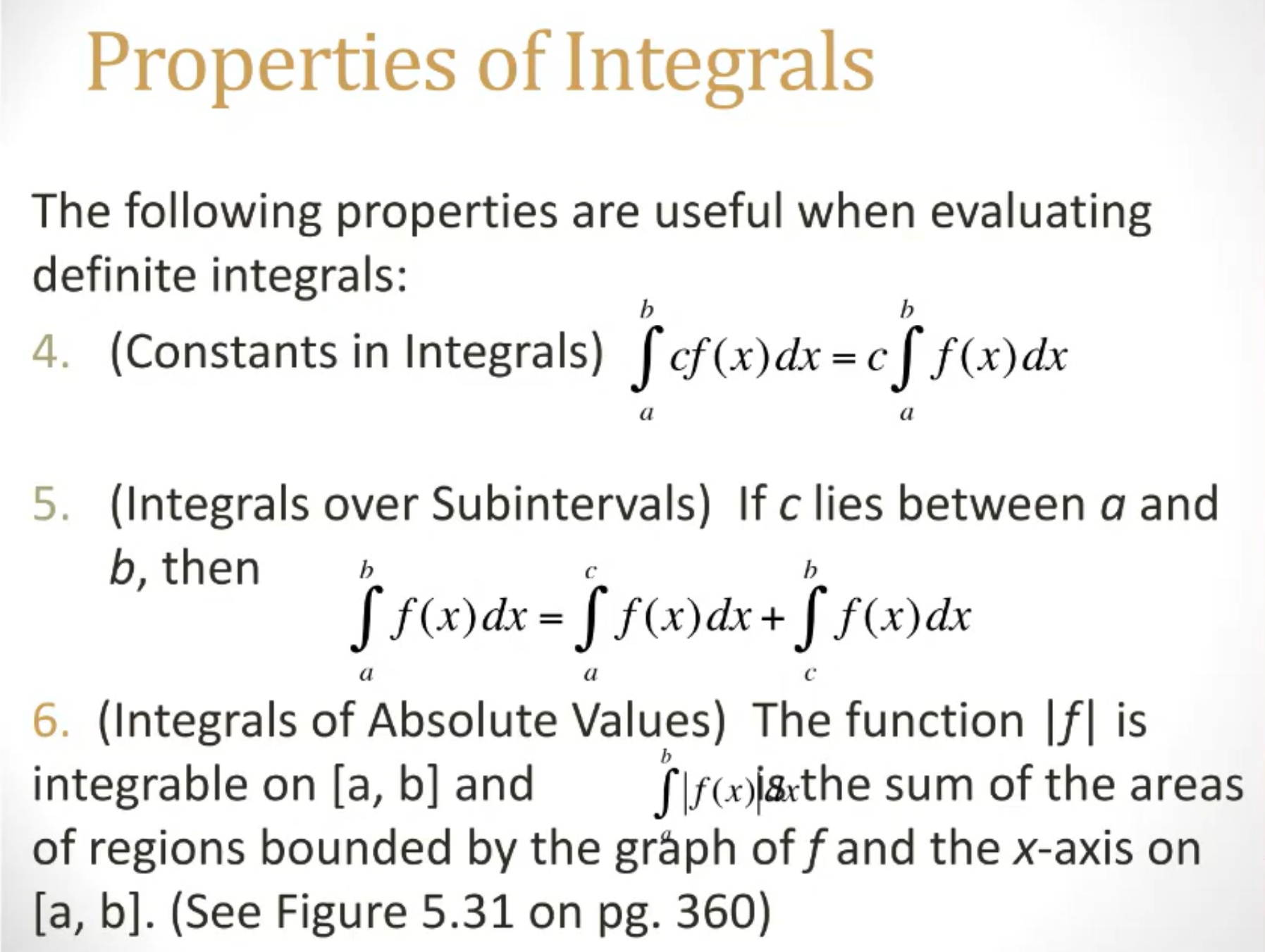
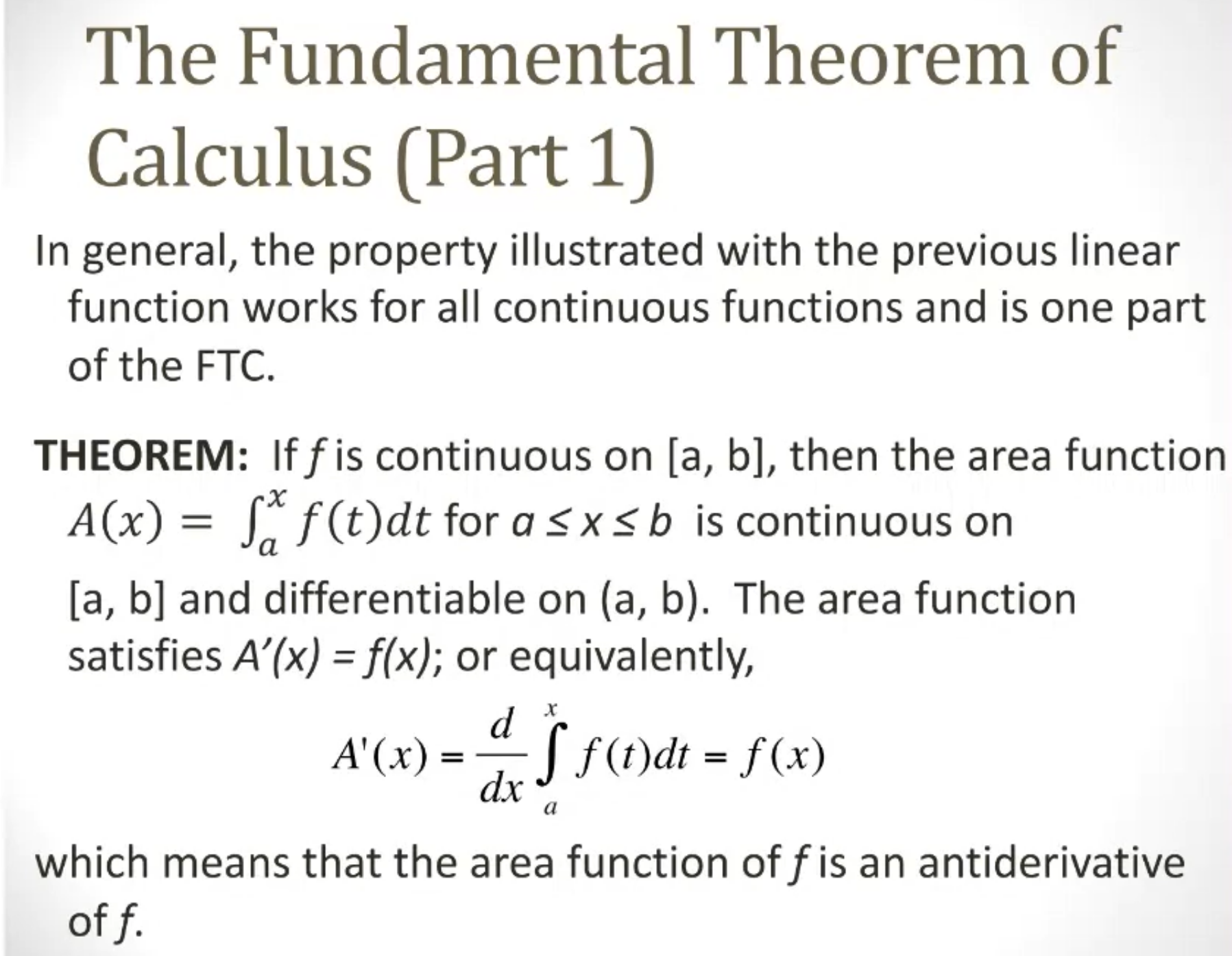
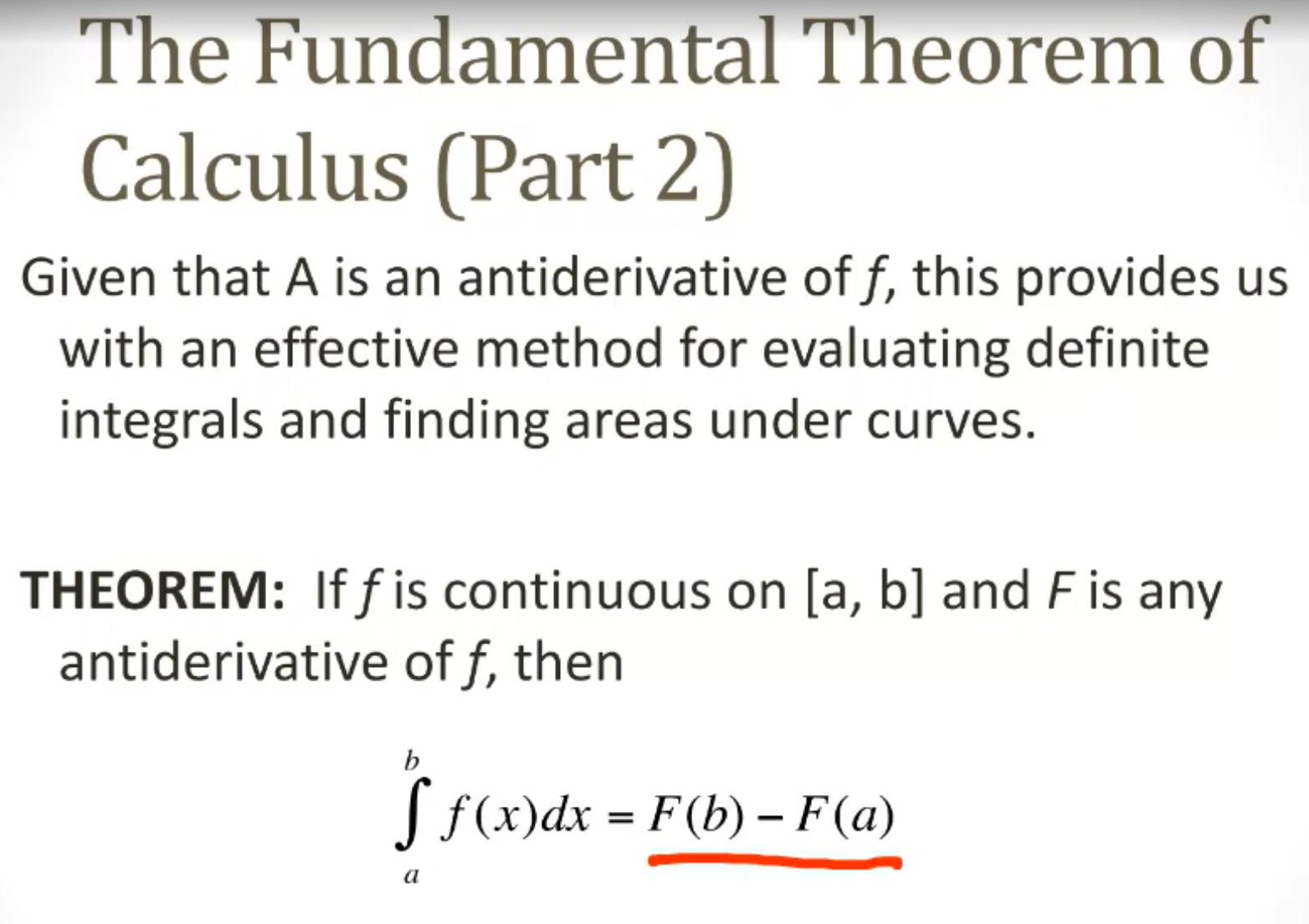
Fudamental Theorem of Calculus
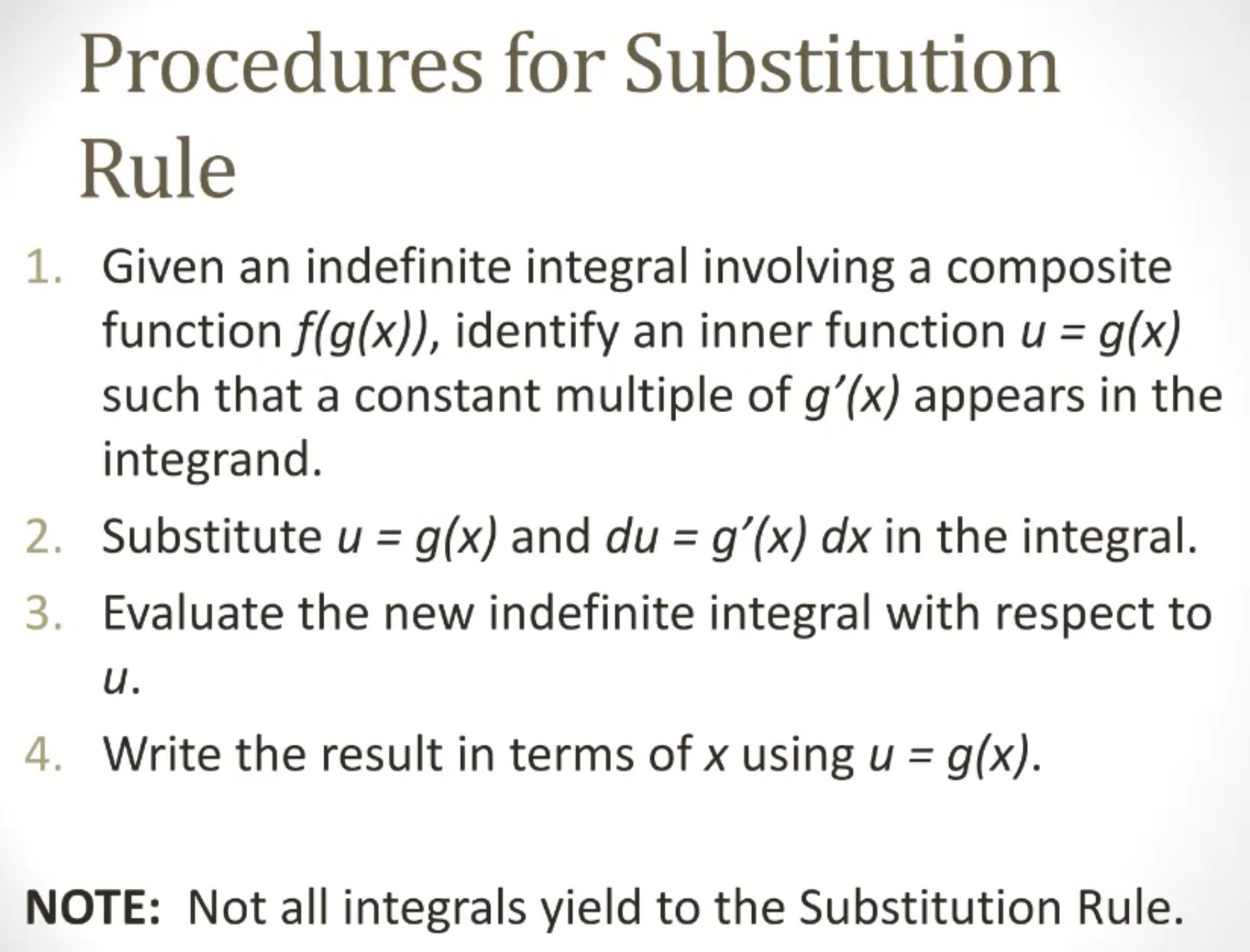
-Subsitution rule: find u, take derivative of u and that is du, see if other parts of the function is a multiple of of du. take ratio of du/other part. multiply integral by that, take integral, subsitute back in.
-Variation problems: if u=x+1, then x=u-1
Position
a