L13- Forest and Landscape Restoration
Atmospheric CO2 at the middle of the pacific ocean:
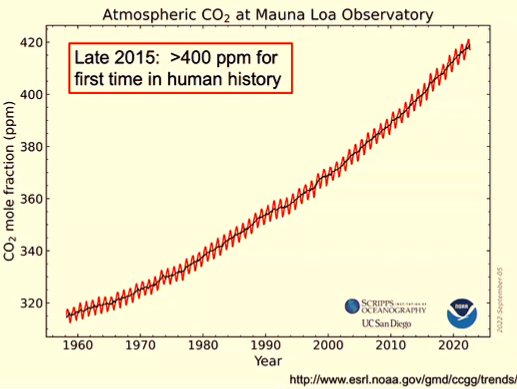
has increased dramatically→ size of global forests affect this- more CO2 is sucked up in summer
caused by converting land to agriculture, degrading forests through selective logging, burning fossil fuels
Global temperature:
dramatic increase
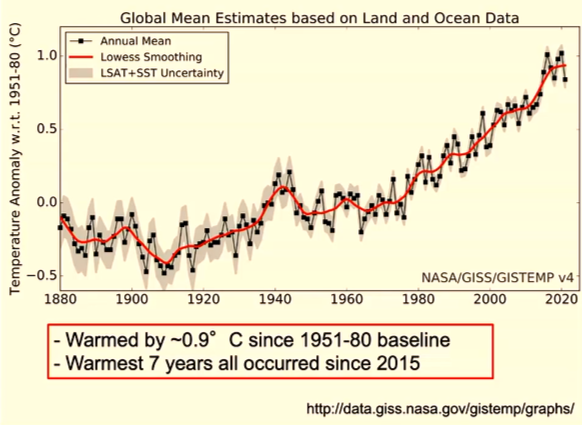
Paris Agreement (COP21):
2015 UN framework convention
restrict future temp increase to 2 degrees, preferably 1.5 degrees
emphasising the urgency to cut fossil fuel emissions, deploy solutions to remove CO2 from the atmosphere
Land Degradation:
Degraded lands:
worlds resources institute assessment→ lots in Africa, overlap with seasonal savanah woodlands- debated
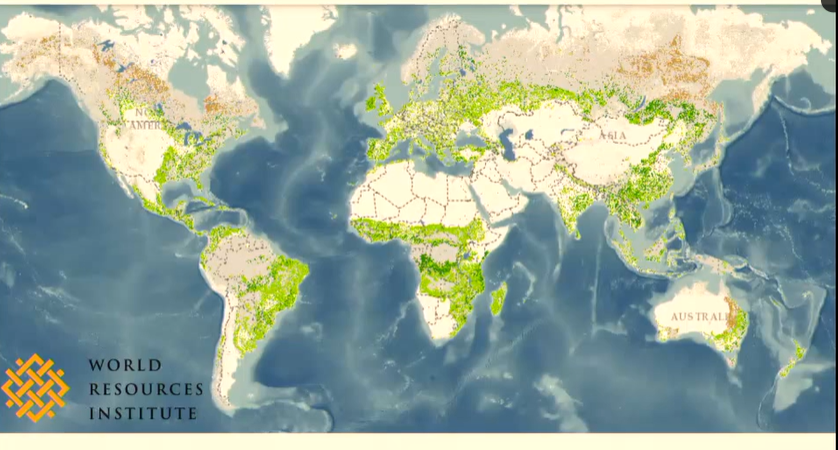
→ there is a vast area of land that is degraded
What is land degradation?
overexploitation of natural resources, magnified by climate change and biodiversity loss
UN convention to combat desertification
Impacts of land degradation:
loss of landscape productivity and resilience to extreme events
ecological, social, economic threats
40% of intrastate conflicts over 60years are linked to natural resources
will displace 135million people
>70% of countries associate this with a national security risk
Pushing the FLR agenda:
Bonn challenge→ restore 150million hectares of worlds deforested and degraded lands by 2020, 350mh by 2030
brings together lots of targets/agreements e.g. UN framework, convention on biological diversity, UN convention to combat desertification
benefit of restoring 150mh is more than $80 billion every year
worked with local people, committing areas
210mh has been pledged, 19Gt of CO2, continuing
commitments are primarily in the tropics:
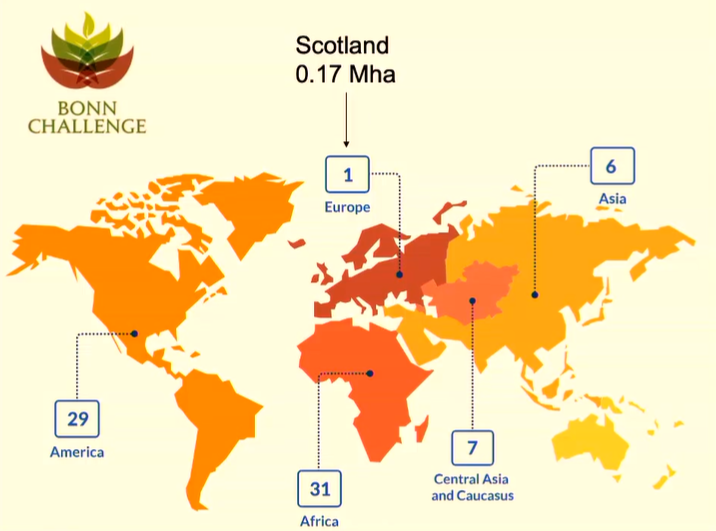
most commitments are in tropical and developing nations
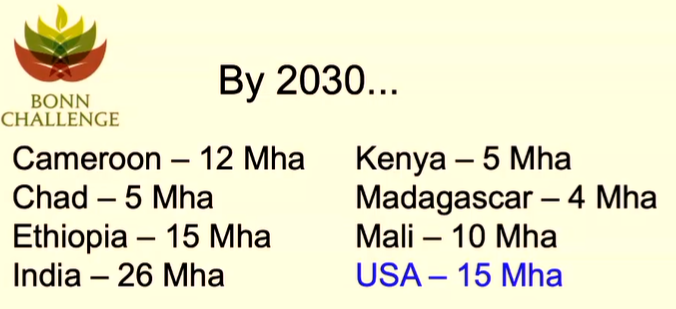
is this neocolonialism?→ western countries paying the global south to clean up damages they made
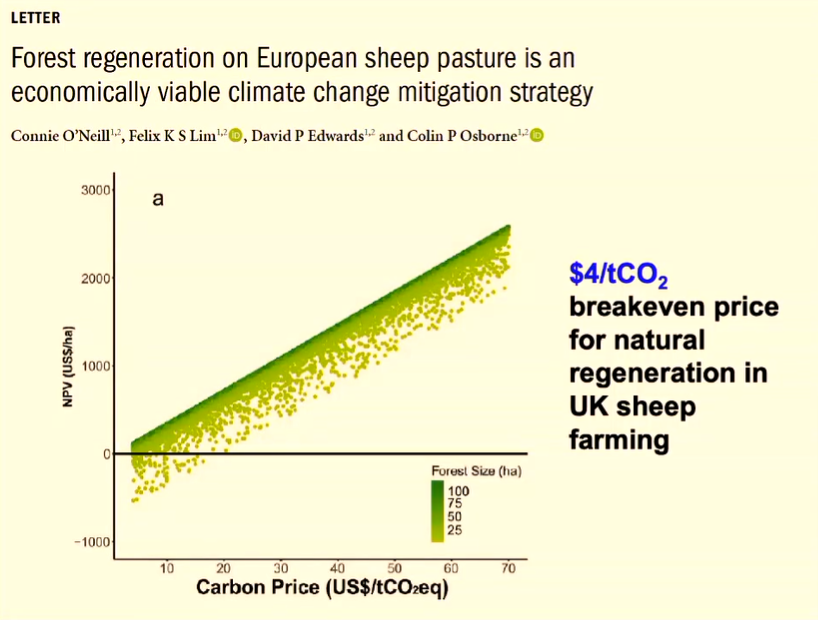
potential on converting old sheep pastures into forested areas in the UK:
increasing carbon price will turn growing trees very profitable
Key characteristics of FLR:
local stakeholders are actively involved
whole landscapes are restored→ conflicting interests
balance of ecosystem services and good
What counts as FLR:
range of activities to better human needs e.g. carbon sequestration
natural forest/habitat regeneration→ letting it grow naturally
multi-species silvicultural systems→ under-crop forested areas, trees growing over top
monoculture tree plantations→ deliver timber, pulpwood, firewood
Problems:
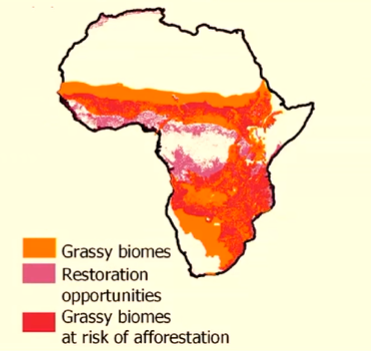
may generate afforestation (establishing a forest where there is no recent tree cover) in savanahs→ lots of carbon is kept underground and is protected from fire
there are less areas where there are real restoration opportunities:
Value for biodiversity:
natural forest regeneration→
take away cows and people from isolated areas
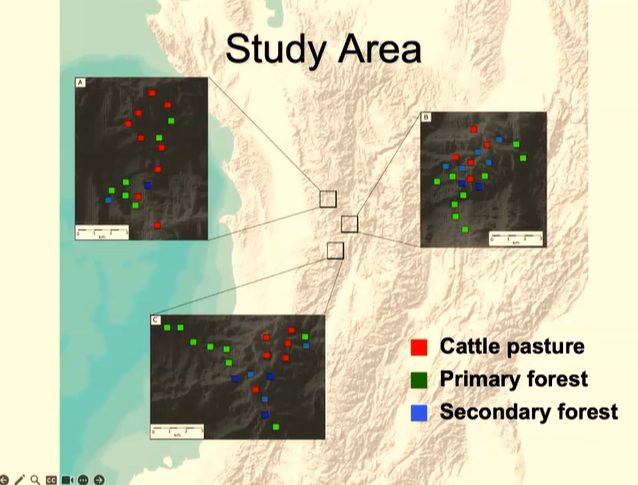
Columbian Andes, high species turnover up the slope, 75% has been deforested→ 75% has been given over to low-intensity cattle pasture
study→ birds and dung beetles (good indicators of ecosystem health) in pasture, secondary forests, mature secondary forests
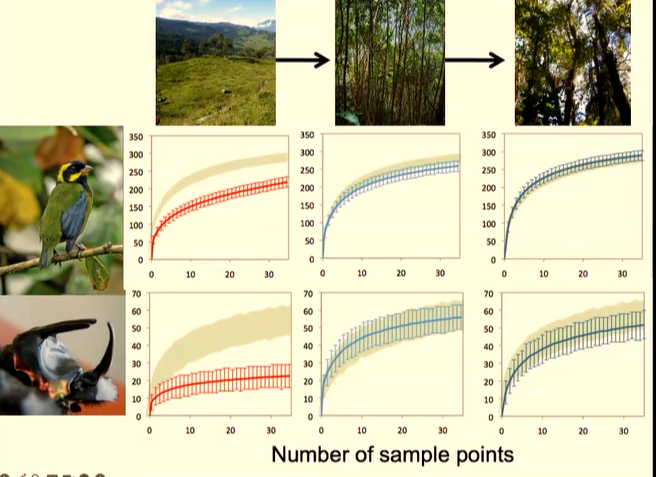
lose half of dung beetles species richness and a third of bird species richness in pasture
as the secondary forest recovers→ get same species richness as the primary forest
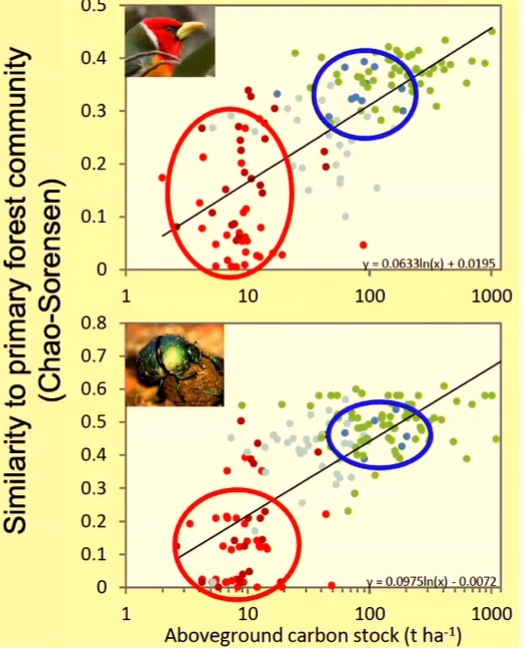
secondary forests do have a similar community to primary forests:
there are similar kinds of abundance in primary and secondary forests:
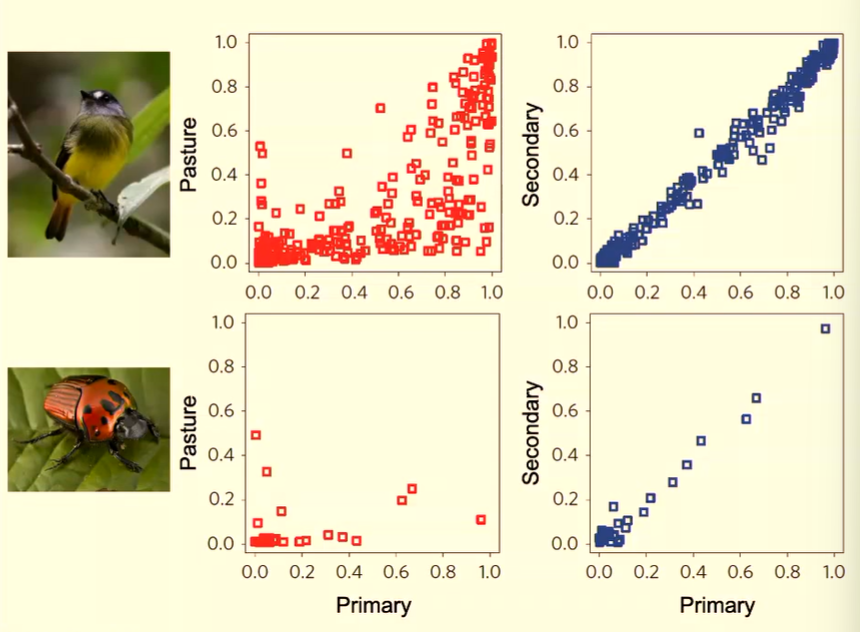
are bringing back rare bird species:
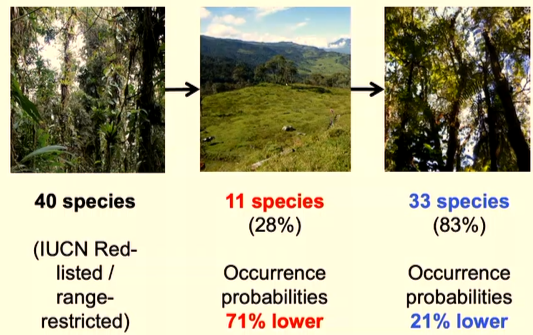
→ natural restoration does recover biodiversity in Columbia
in the Amazon
more mature secondary forests have higher biomass (are crossing red lines) are doing well in recovery of good species richness and community similarities to the primary forest
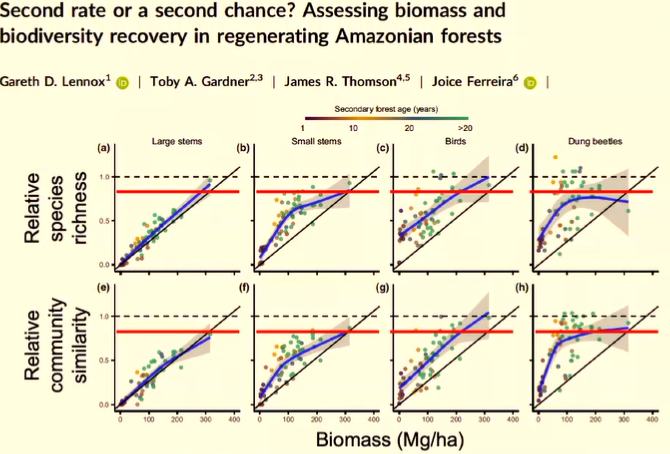
→ secondary forests can recover biodiversity levels to primary forests in decades
restorations via tree plantations:
good for carbon sequestration
grains for green program→ largest restoration program, paid rural households to re-establish forests on sloped croplands
grew 27.8mha of forest in 10 years
goals→ timber extraction, frjuits, reduce landslides, erosions and floodings, biodiversity is not an explicit goal
can do more than one activity in one space:
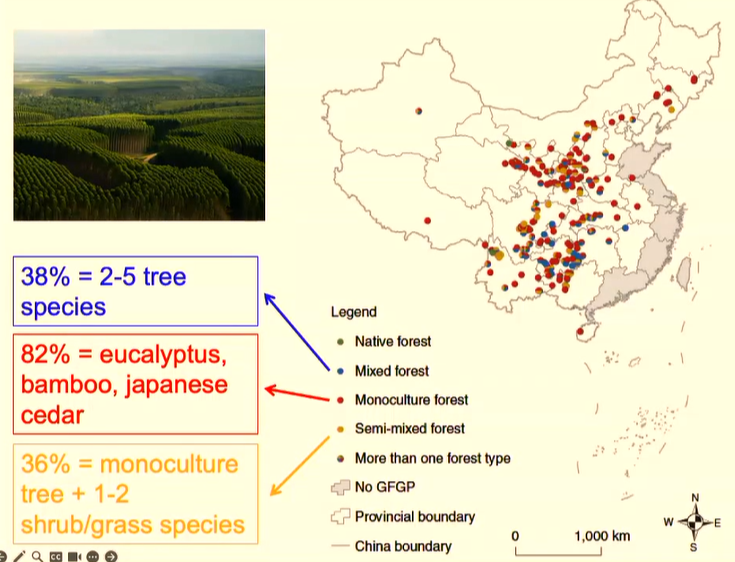
biodiversity:
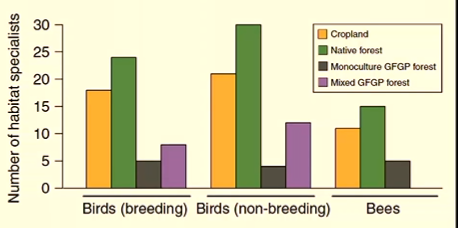
improved bird richness with mixed strategies
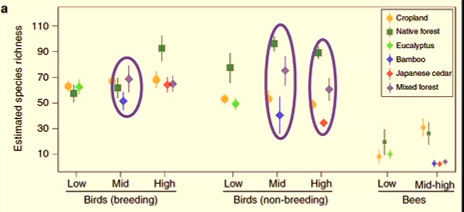
bees did not do well in mixed, did better in croplands where there are more pollinator foods
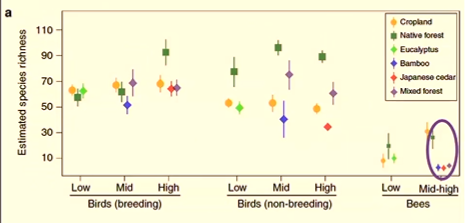
there are more specialist birds in mixed habitats but not bees:
mixed FLR is not more expensive
→ is economically viable to do monocultures and mixed FLRs but does not have huge biodiversity gains
Natural regenerations vs tree plantations:
study:
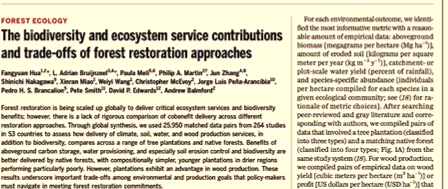
for biodiversity, soil erosion and water yield→ NR is better
carbon- neutral for both
trees- both, benefits sway more to NR when harvesting timber
timber→ pasture is better
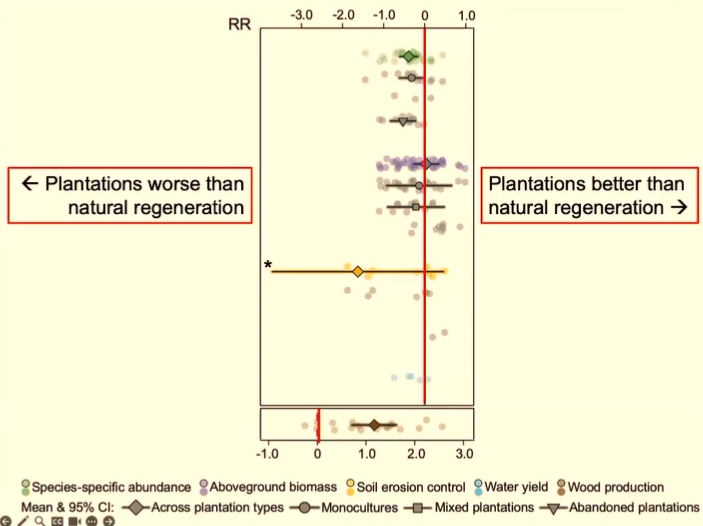
→ NR delivers biodiversity, carbon, soil and water
→ plantations are needed for timber but not for the rest
→ where timber is not an explicit goal, should promote NR
How to promote FLR at massive scales:
natural regeneration
in Latin America, 36mha were naturally restored, are marginal, dry, steep high places- abandoning lands
in areas that aren’t naturally abandoned, need governmental or inter-governmental investments
national programs→ chinas GFGP, Brazils atlantic forest restoration pact (Bonn challenge)
REDD+
cost of reforesting 1h of pasture, in Andes Columbian:
spend 300 if not using carbon market
point at which price meets cost of restoring pasture→
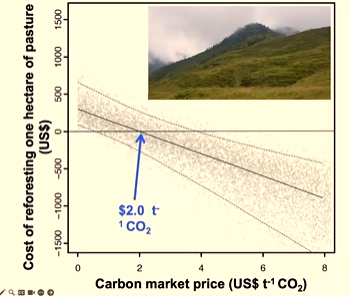
→ is very cheap
unleashing power of markets
getting businesses involved
value is more than the activity that was happening before
governments to create an incentive for positive FLR market actions
markets are very big scale→ good as many ecosystem good and services need large areas and for connectivity
businesses are going to charge for these services
ability to alleviate poverty, generate jobs and deliver EGS economic value to society
land tenure→ new policies need to let landholders engage
Will FLRs improve livelihood or deepen inequalities?
negatives of using markets:
are focusing too much on restoration
need support to see best types of restoration
need governance
may undermine interests of local people e.g. don’t need carbon but want timber instead
strategies to combat negatives of using markets:
economic mechanisms e.g. subsidise costs, loans, tax breaks
investments in technology, education, infrastructure
standards and certifications
legal mechanisms
Summary:
preventing >2 degrees will require negative emissions technology e.g. FLR
sucks carbon out and promotes ecosystem services
should focus on natural regeneration
should unleash the power of the market
need more research on the negatives of this though