Homeostasis
Increase in blood glucose
Insulin
accelerating the transport of glucose from the blood into body cells, especially those of the skeletal muscles
accelerating the conversion of glucose into glycogen in the liver and skeletal muscle (glycogenesis)
stimulating the conversion of glucose into protein (protein synthesis)
stimulating the conversion of glucose into fat (lipids) in adipose tissue, or fat storage tissue, a process called lipogenesis.

Decrease blood glucose
Glucagon
stimulating glycogenolysis, the conversion of glycogen into glucose, in the liver
stimulating gluconeogenesis, the production of new sugar molecules from fats (lipids) and amino acids, in the liver. This involves the breakdown of lipids in a process called lipolysis
having a mild stimulating effect on protein breakdown.

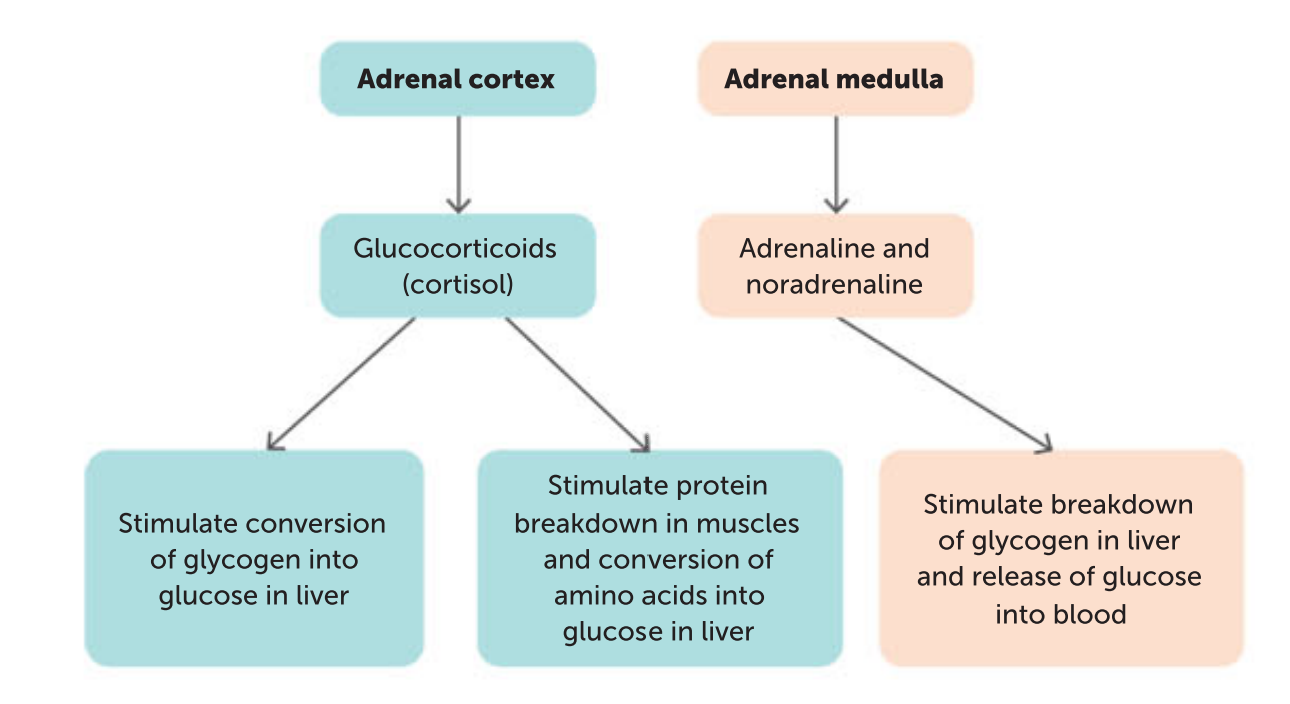
Adrenal glands
Increase in temp
Vasodilation (increase heat loss)
Sweating (increase heat loss)
Decrease metabolic rate - thyroxine reduce (decrease heat production)
Behavioural response - fan/AC (increase heat loss), remove clothing (increase heat loss), reduce physical activity (decrease heat production)
Decrease in temp
Vasoconstriction (decrease heat loss)
Shivering (increase heat production)
medulla secreting adrenaline and noradrenaline - metabolic rate (increase heat production)
Thyroxine - metabolic rate (increase heat production)
Behavioural response to reduce heat loss - jumper, shelter from wind, reduce surface area (decrease heat loss)
Fluid
ADH
Aldosterone
Thirst reflex
Gas
Oxygen concentration
Carbon dioxide concentration
Hydrogen ion concentration