sociology class 10
from theory to method
1. sociological perspectives
epistomology: nature of knowledge, philosophy of knowledge
sociology of knowledge (branch epistomology)
= the study of the relationship between social context and knowledge, interpretation
social facts (the upper bubble of Durkheim like the beginning, drawing of society pressing down on the individual)
context determines beliefs, scientists also determined by that, so scientific knowledge also subject to social influence => not 1 way of scientific thinking
Paradigm (Kuhn)
= a set of beliefs which determines the questions that can be asked, the tools that can be used, thus the results that are obtained
= science run by subjective beliefs, what we believe might be best way of science = dominant paradigm
scientific socialisation: learn to do science by the rules
paradigm → normal science (work by rules) anomalies (outcome against dominant paradigm) → anomalies set aside and pile up, then take over dominant paradigm = paradigm shift
Popper: only 1 theory good representation of reality, from theories we derive hypotheses, falsification (we can’t prove hypotheses right, we can just prove them wrong and be glad if we can’t prove it wrong); you can never prove a theory
sociological perspectives
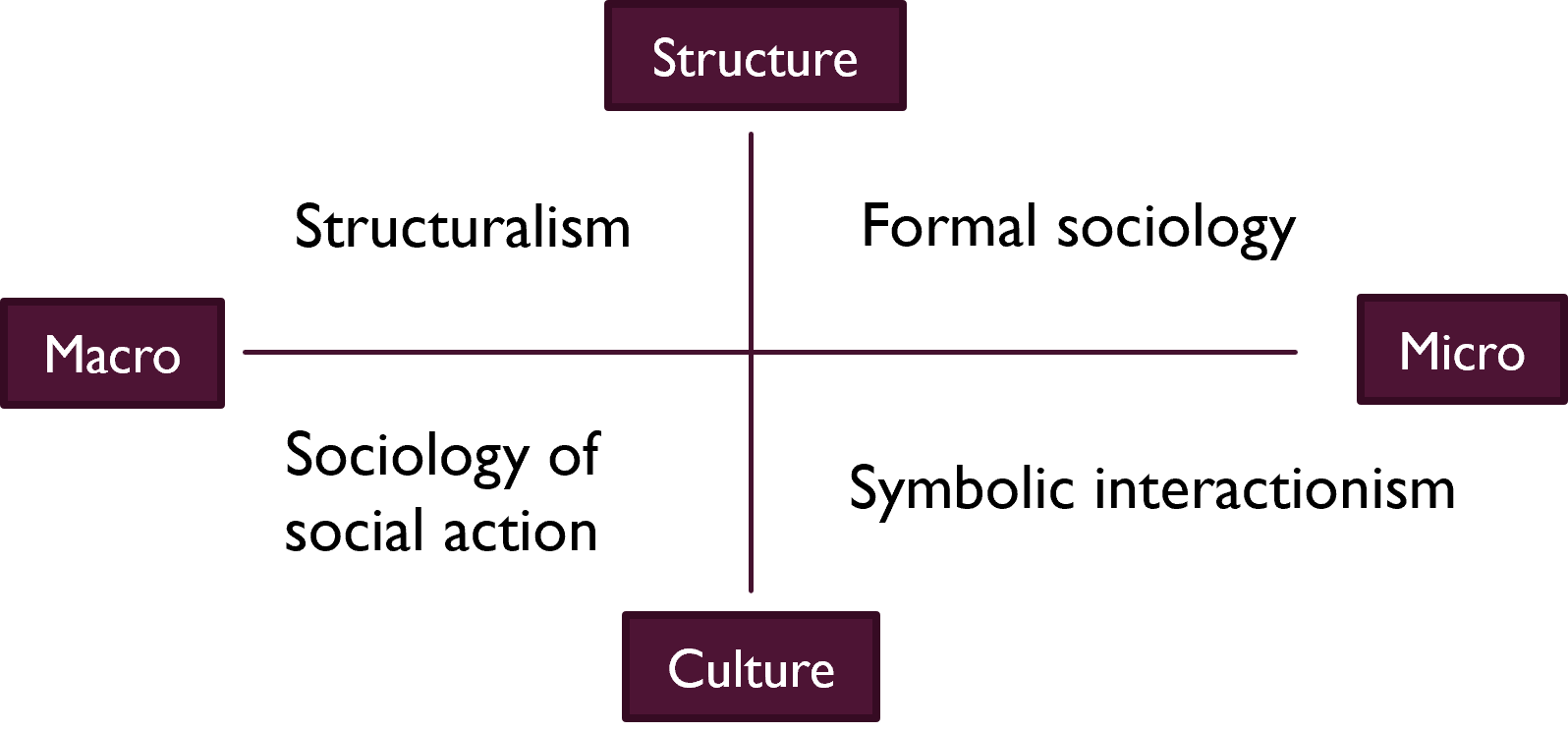
structuralism (Durkheim): social facts, deterministic (people unaware)
formal sociology (Simmel): micro-level structures, deterministic, people determined by positions
symbolic interactionism (Mead, Blumer): motivations and perceptions, context and interaction
sociology of social action (Weber): motivations, shared within a group
2. from ontology to methodology
theoretical questions
what kind of knowledge are we aiming for?
generalisation (aim for the results to apply to as many people as possible) or in-depth comprehension (aim to understand 1 specific case)
ontological/epistomological questions
technical questions
how to get that knowledge?
ethical, political, policy questions
how to react to that knowledge?
fundamental sociology (do it for the sake of sociology) or public sociology (do it to influence others, to try and change society)
technical: distinction
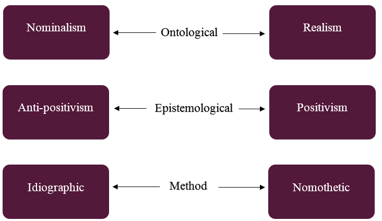
ontological assumption: where is the essence of reality?
nominalism (essence in the meaning people give it in their minds) vs reality (essence in reality itself)
epistemological assumption: what knowledge can be acquired?
positivism/objectivism (you can know essence of reality) vs anti:positivism/subjectivism (can’t know essence of reality)
method: what method should be used?
idiographic/humanistic (questioning people, their motivations etc.) vs nomothetic/positivist (try to get at essence of reality)
nomothetic
knowledge by observation: empirical evidence
natural science methods: causal laws (somethings is caused by another thing), methametics, statistics → generalisation
objectivity: separation values/facts
value-relevance and value-free research (it has to mean something to you, but in research values don’t play a part)
replication adn research: self-correction; really important to mae it more objective/better
quantitative research methods
challenges positivism
response to research: Hawthorne effects (in fabric researchers experiment how to make workers work better, but the workers worked better because they felt important and they knew they were observed);challenge = doing research chan change outcomes of the research
complex behaviour and creativity maeks it hard to treat subjects as general, not unique individuals
value-freedom is difficult and socialisation (scientists also in social context)
humanistic
symbolic creatures: subjects can be questioned, interpretation and context important
in-depth comprehension
causal statements (Weber): 2 elements
causal adequacy: action has meaning, so that meaning leads to that particular action
adequacy on the level of meaning: start from tatistics, but don’t stop there; you actually need to get approval for your conclusions from the subjects, they need to think it’s a good cause for their behaviour
qualitative methods: interpretative approach, participatory observation and/or in-depth interviews
the research cycle
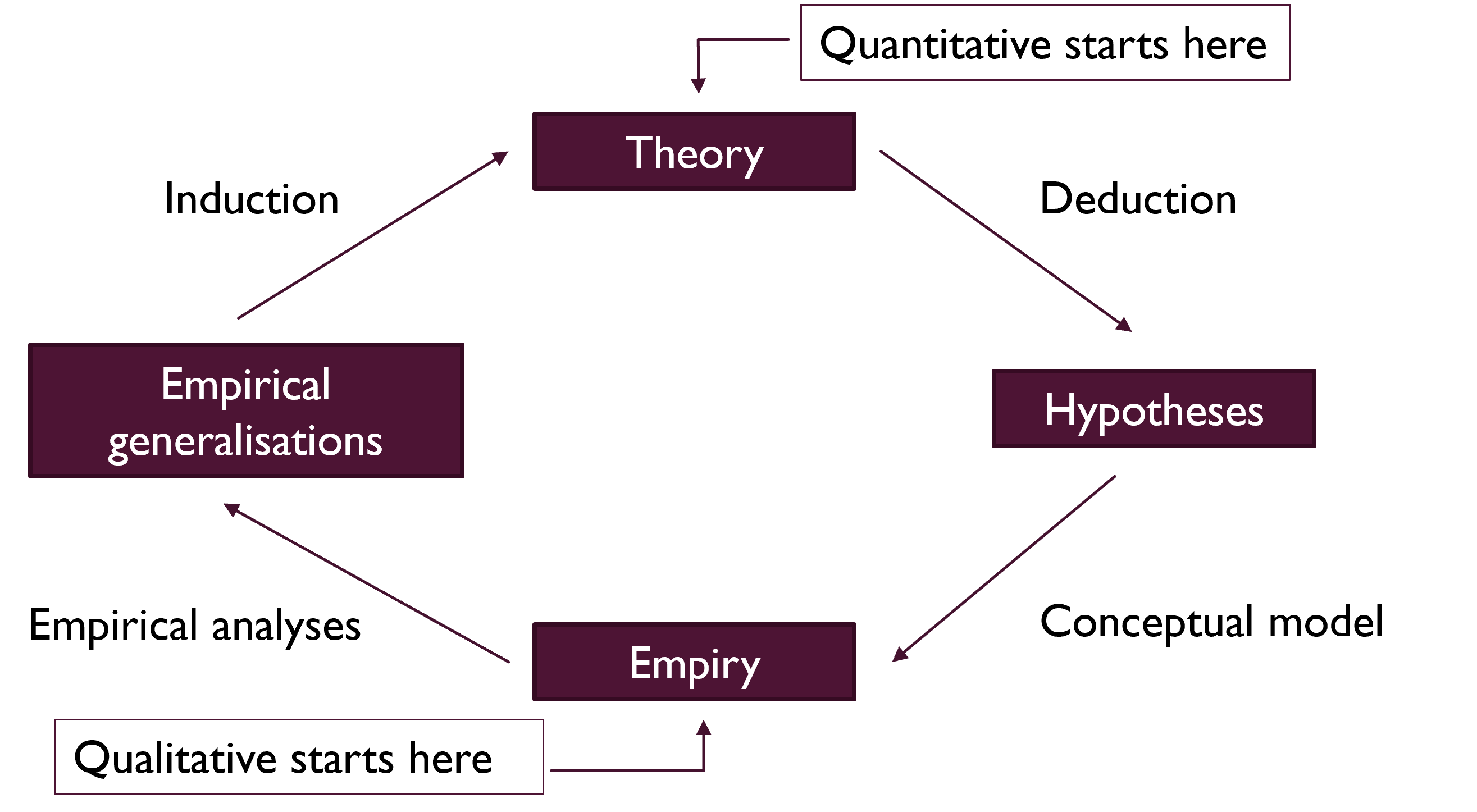
you can start from either theory or empirical research
deduction: derive hypotheses from theory
induction: bring your findings into theory
Mertonian norms of science (CUDOs)
Communalism: science is always everyone’s property
universalism: validity independent of beliefs or predispositions
disinterestedness: your benefit can’t depend on wether your result rejects/accepts you rhypotheses, you can’t get gain from aparticular result, peer review is important
organized skepticism: distrust, considering other explanations for your result