Sleep, Stress and Dependence
TILOs:
Outline the role of sleep in health and recall guidelines for optimal sleep across age groups.
Outline the role of tobacco smoking in illness.
Outline the role of alcohol in health and illness, the characteristics of alcohol dependence, misuse and problem drinking, and recall key concepts from the UK Chief Medical Officer's low risk drinking guidelines.
Outline the role of major substances of abuse in illness and well-being.
Stress
Key Definitions
Stress - state of threatened homeo-dynamic balance
Stressor - stimulus that causes stress. May be physical, physiological or psychosocial. Can be intrinsic or extrinsic and may be real or perceived.
Homeostasis - biological system’s ability to sustain a dynamic internal equilibrium in the face of changes.
Allostasis - stress-specific term which describes the ability to attain stability through change
Allostatic load - cumulative burden of chronic stress
Coping strategy - specific efforts that individuals make to resolve, reduce, tolerate or minimise stressful events. Efforts may be conscious or subconscious. Strategies may be adaptive or maladaptive.
Resilience - positive adaptation or growth following periods of homeostatic disruption
Acute Stress
When an individual perceives a threat, the hypothalamus (an area at the base of the brain) activates an alarm system in the body. Through a mixture of nerve and hormonal signals, this system stimulates the adrenal glands (located on the top of the kidneys) to release the hormones adrenaline and cortisol
Adrenaline increases HR, respiratory rate and cerebral attention
Cortisol increases blood pressure and blood glucose and suppresses the immune system
The combination of these reactions is known as the acute stress response, also referred to as the fight or flight response.
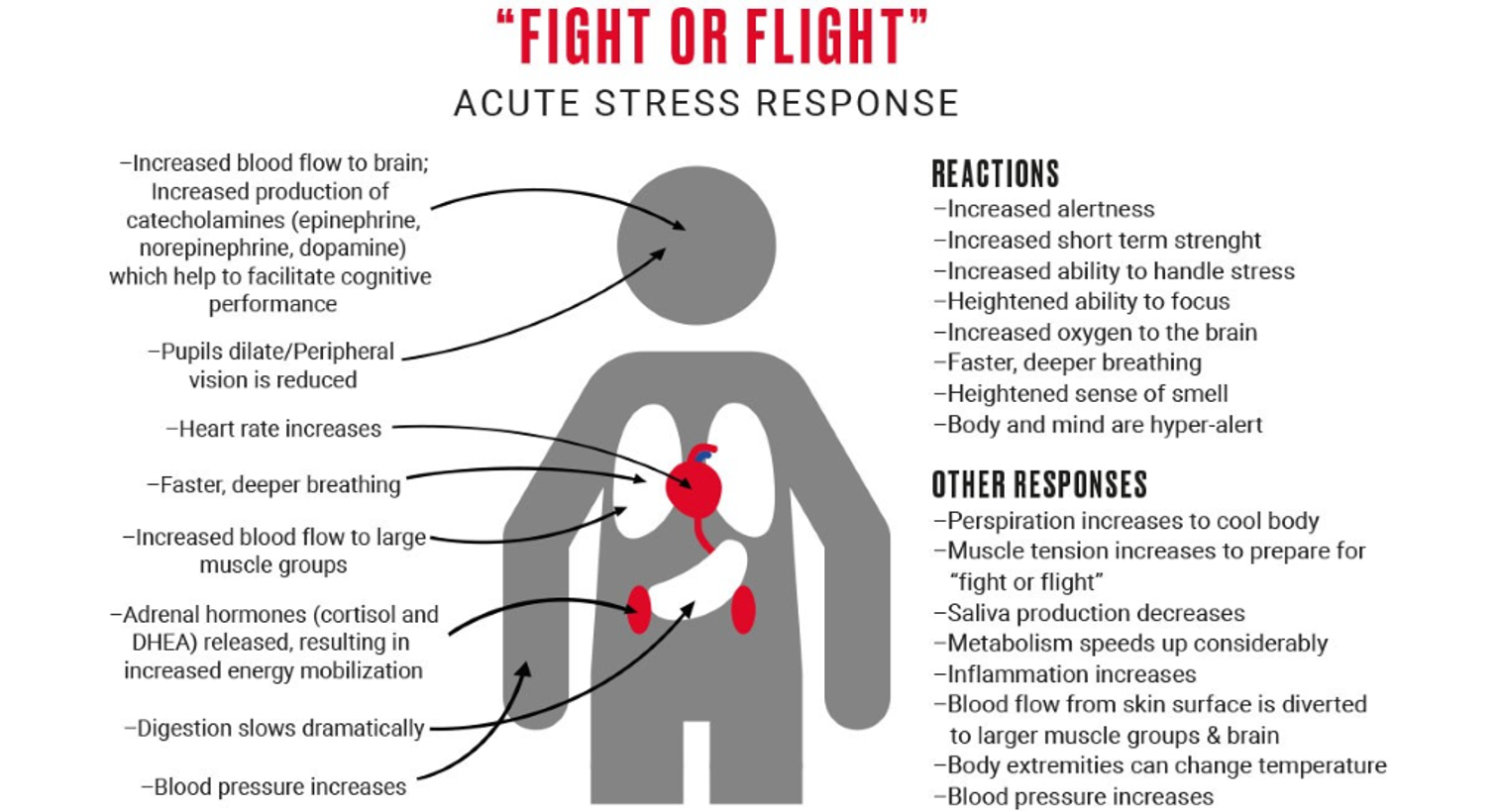
Modern day stressors are very different to the ones that our hunter-gatherer ancestors faced. Instead todays stressors include the following:
Family stressors: marriage, divorce, death, illness, pregnancy
Work environment stressors: change of job, loss of job, exams, business failure, work conflict, promotion, employee strike, deadlines, demanding hours
Living environment stressors: moving house, new community, burglary / neighbourhood crime, noise, pollution, traffic, climate, sleep, injury
Economic environment stressors: unpaid bills, student loans, unanticipated expenses, theft
Social environment stressors: isolation, peer demands, bullying, social media, personal image
Chronic Stress
The GAS response (General Adaptation