Transport in Humans
Two main functions of blood are to transport materials and to protect.
a) Plasma (fluid)
Functions: Transport dissolved substances to the rest of the body. E.g. nutrients (minerals, glucose, amino acids), hormones, vitamins, proteins and waste products.
Adaptation: Made of of mostly water
Solvent for various substances.
b) White Blood Cells- lymphocytes
Functions: Produce antibodies to fight bacteria and viruses.
Adaptation: Large nucleus > produce the antibodies.
c) White Blood Cells- phagocytes
Functions:To engulf, ingest and digest bacteria and viruses by phagocytosis.
Adaptation: Lobed nucleus > to allow the cells to move towards the bacteria and change shape to engulf, ingest and digest it.
d) Platelets
Functions: Clots blood.
Produce enzymes that coverts soluble fibrinogen to insoluble fibrin threads that entangles red blood cells to form a clot.
e) Red Blood Cells
Functions: Transports oxygen from the lungs to the rest of the body.
Adaptation: Biconcave
Increase surface area to volume ratio for faster diffusion of oxygen.
Contains haemoglobin
Bind to oxygen to form oxyhaemoglobin.
Has no nucleus
Store more haemoglobin to absorb more oxygen.
Elastic walls
Squeeze through narrow capillaries.
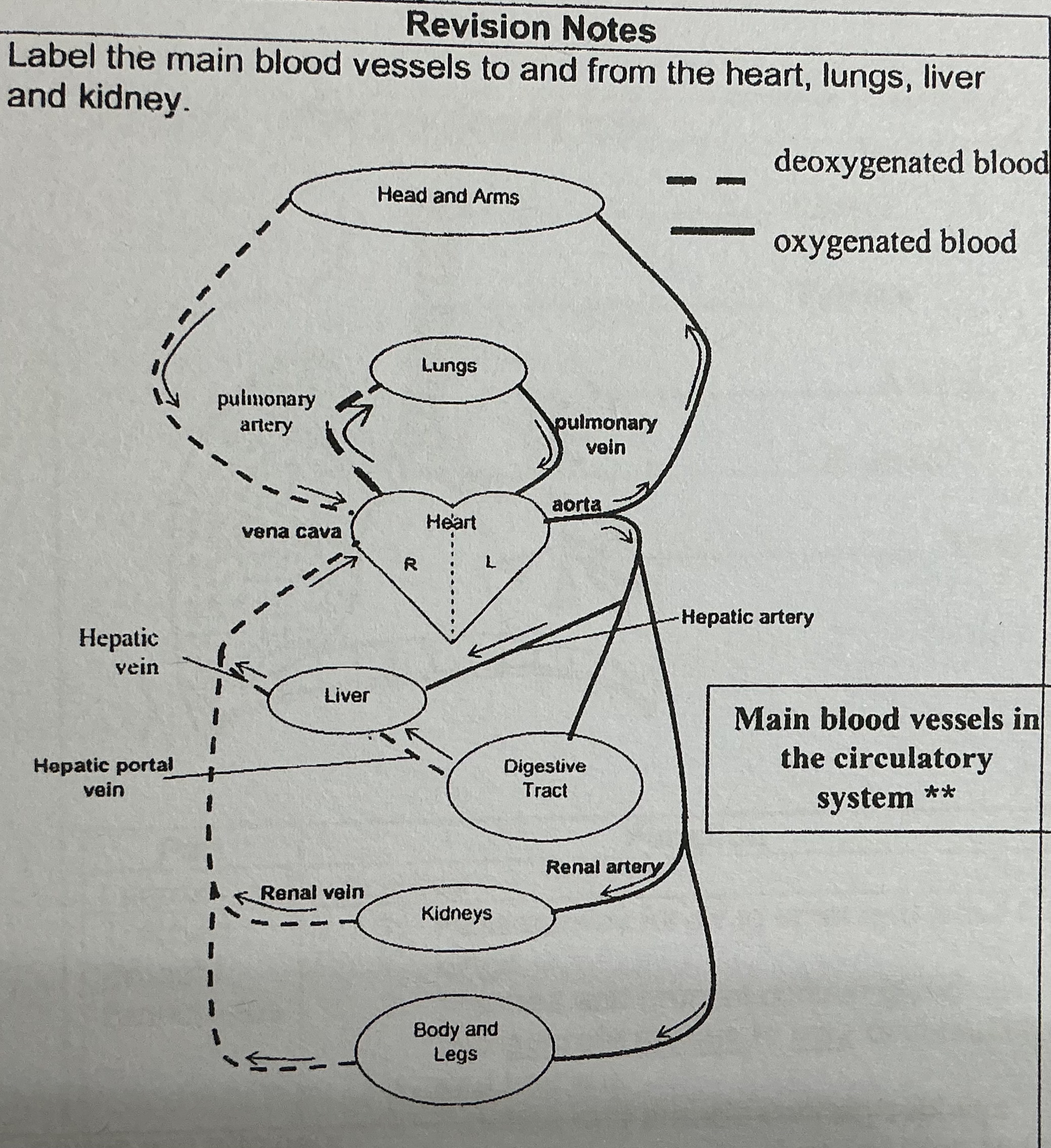
Blood vessels
Connected to Kidney - ‘renal’
Connected to Liver - ‘hepatic’
Connected to Lungs - ‘Pulmonary’
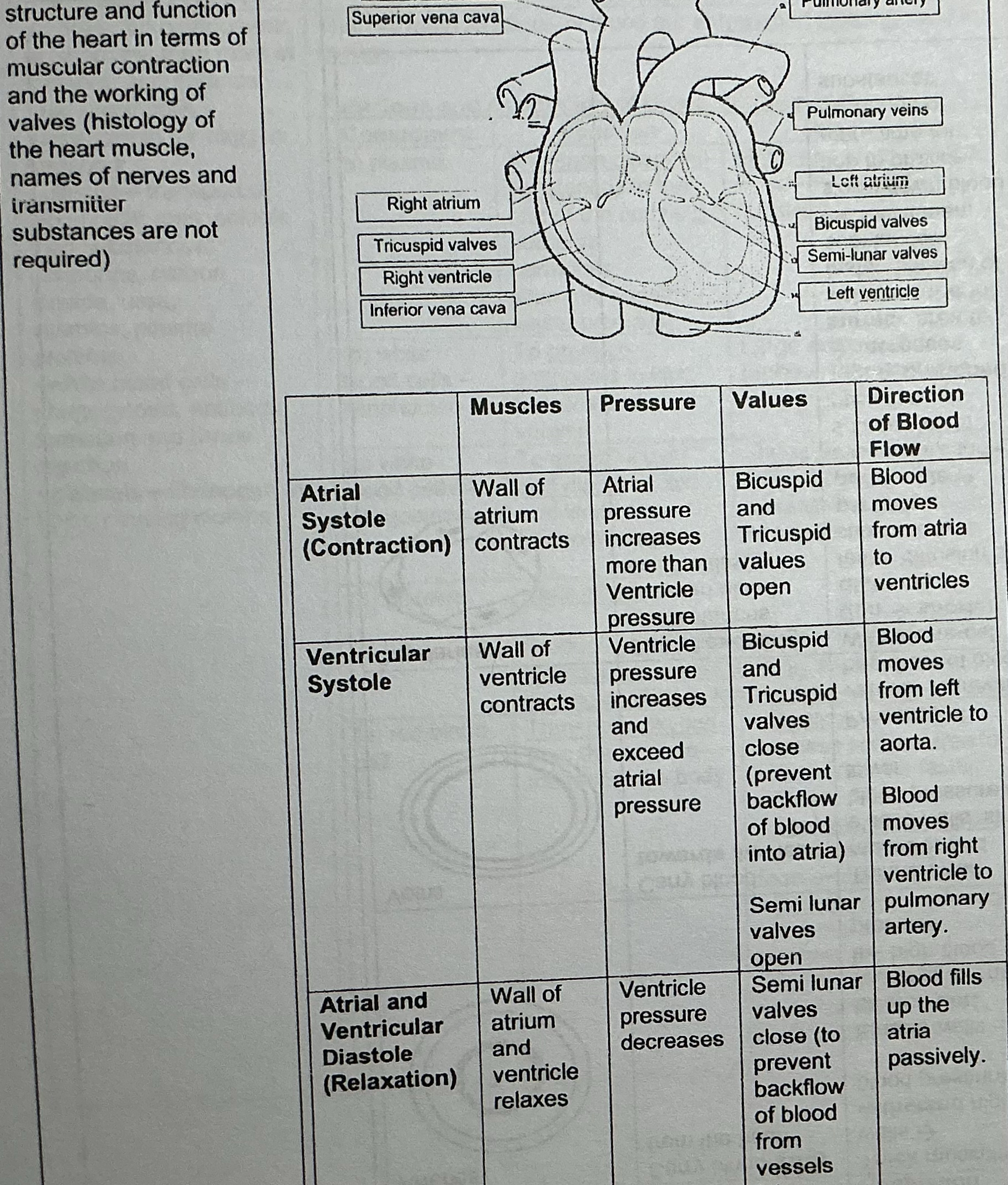
Blood vessels that transport substances to/away from heart muscles - ‘coronary’
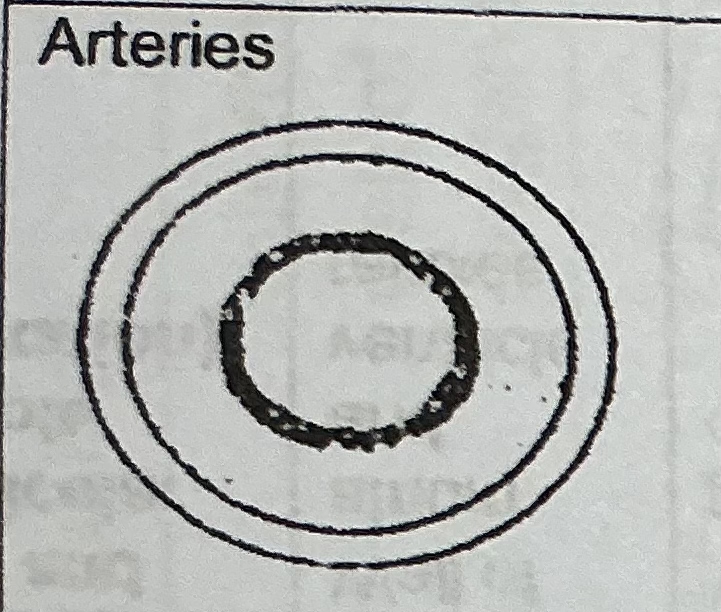
Arteries
Carry blood away from the heart
Thick muscular walls > withstand high blood pressure.
Elastic walls > stretch and recoil to maintain the high blood pressure.
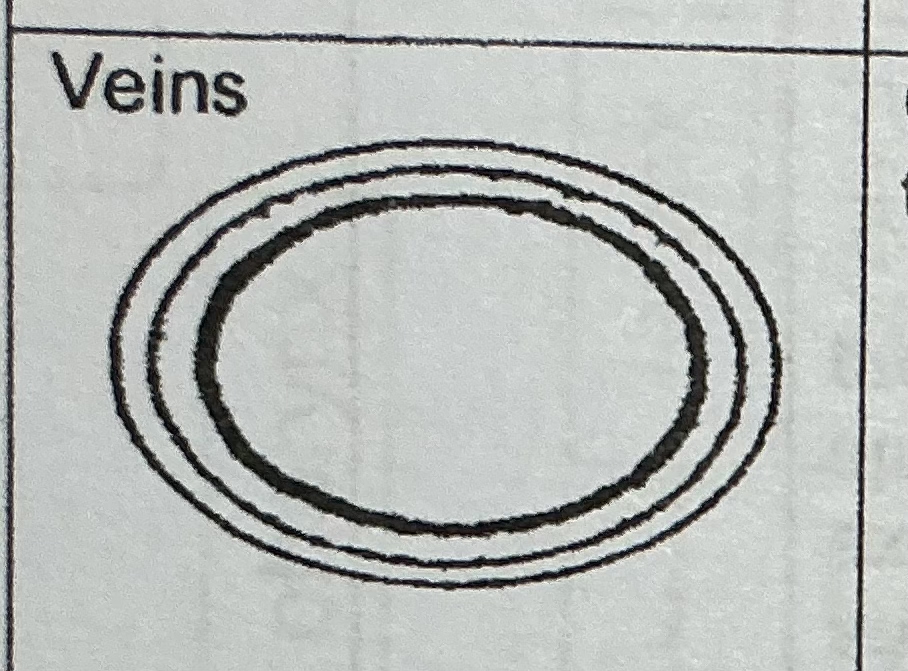
Veins
Carry blood towards the heart.
Thinner, less muscular and elastic walls as blood pressure is lower
Presence of valves > prevent backflow of blood.
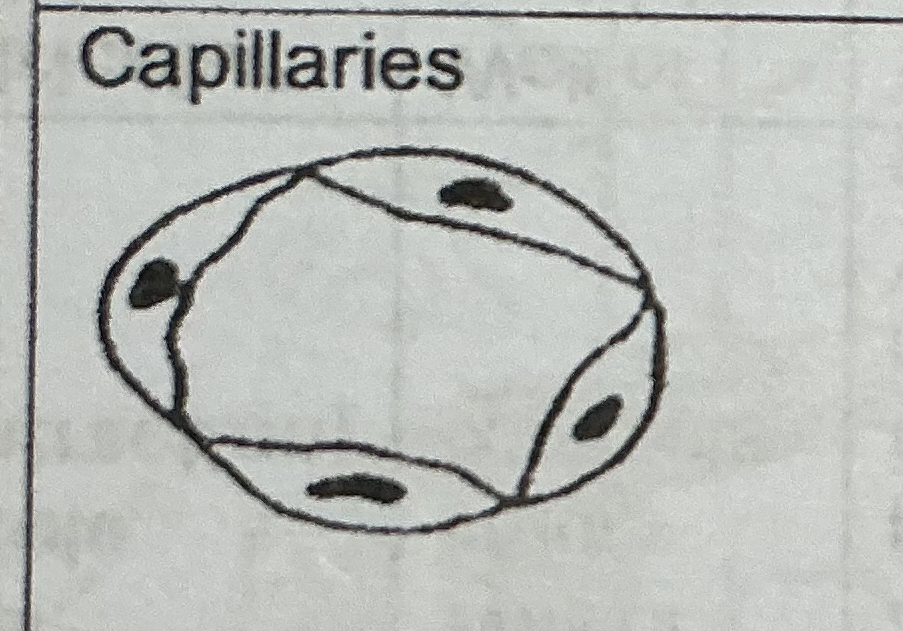
Capillaries
Site of exchange of substances between blood and the tissue cells.
Wall is one cell thick > shorter distance for faster diffusion of substances.
Partially permeable > allows only some substances to pass through.
Highly branched > increases surface area to volume ratio for faster diffusion of substances.
Narrow lumen > slows down blood flow to provide more time for exchange of substances.
Describe coronary heart disease in terms of occlusion.
Excess fat deposited on the inner walls of the coronary artery.
This causes the artery walls to become thick and hard.
Lumen becomes narrower > Decreases the blood supply to the heart muscles
Less oxygen is supplied to the heart muscles for aerobic resipiration.
Heart muscles will then die and lead to coronary heart disease
If oxygen is completely cut off, it leads to heart attack.
Causes of coronary heart disease
Diet rich in cholesterol and fats
Smoking
Genetic factors
Age
Ways to prevent coronary heart disease
Exercise regularly
Less fat intake in diet
Stop smoking
Stress management