Class 11
Foundations of Strategy
Strategic Management Process: Key elements include:
Vision & Mission: Define the purpose and direction of the organization.
Goals & Objectives: Specific targets to achieve the vision and mission.
External Analysis: Assessing market trends, competitors, and external factors.
Internal Analysis: Evaluating organizational strengths and weaknesses.
Strategy Implementation: Putting strategies into action.
Competitive Advantage: Unique attributes that provide an edge over competitors.
Feedback Loop: Process of reevaluating strategies based on outcomes.
Strategic Choice: Options available in deciding the best course of action.
What is Strategy?
Definition of Strategy:
A central integrated concept focused on achieving objectives through formulation (what to do) and implementation (how to do it).
Implementation Levers
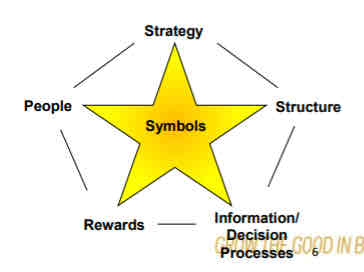
Key Levers for Strategy Implementation:
Structure: Organizing resources and defining roles.
Systems and Processes: Flow of information and decision-making protocols.
People: Human resources and their alignment with strategy.
Rewards: Incentives and motivations driving performance.
Symbols: Organizational culture and representations.
Practical Application of Framework
Alignment of Levers:
Analyze how each lever (structure, systems, people, rewards) supports or undermines chosen strategy.
Discuss implications of alignment; impacts of strategic changes.
Structure and Systems
Structure:
Defines roles, relationships, and organizing basis (functional, market-focused).
Considerations: Centralization vs. decentralization, special units.
Systems and Processes:
Focus on environmental scanning, planning, controls, and goal setting.
Evaluate internal flows and effectiveness of decision-making approaches.
People in Strategy
Human Capital:
Recruitment, training, and development of talent.
Importance of evaluating, coaching, and managing personnel transitions.
Rewards Mechanisms
Types of Rewards:
Financial incentives vs. intrinsic (psychic) rewards.
Criteria for promotions and performance advancements.
Symbols in Organizational Culture
Role of Symbols:
Visible manifestations that shape organizational life.
Variability in ease of change (e.g., physical settings vs. deep-rooted culture).
Key Takeaways – Strategy Implementation
Aligned businesses outperform misaligned observations.
Changes in strategy can temporarily hinder performance until realignment happens.
Managers often underestimate the extent of changes necessary for supporting new strategies.
Corporate Governance
Agency Theory:
Principal-agent relationship involves delegation, control, monitoring, and self-interest alignment.
Challenges include moral hazards and information asymmetry.
Internal vs. External Corporate Governance Mechanisms
Internal Mechanisms:
Board monitoring and executive incentives to ensure alignment with organizational goals.
External Mechanisms:
Market for corporate control, auditors, regulators, and industry analysts providing oversight.
Board of Directors
Composition:
Mix of insider and outsider directors to ensure balanced governance.
Executive Incentives
Compensation Strategies:
Alignment of measuring success with performance incentives to motivate desired outcomes.
External Governance Mechanisms
Control by External Entities:
Influence of auditors, regulators, and market pressures on corporate behavior.
Key Takeaways – Corporate Governance
Importance of Governance:
Ensures checks and balances, particularly for principal-agent dilemmas.
Distinction between internal (board) and external (market forces) mechanisms.
Emphasis on shareholder priorities with evolving balance among stakeholders.