Week 5- Catering and banqueting- preparing a costing and quotation
the 5w’s of food beverage service:
WHO must be fed- in a wedding it might be the photographer, the DJ, the staff that are working (the event organisers)
WHY they must be fed- psychological needs, so the staff can keep on going
WHAT they must be fed
WHEN must they be fed
WHERE they must be fed
pls note that in the presentation- you cannot be general you have to be quite precise in the presentation so if you say staff, that could include the sponsors of the event, that could be the photographer
WHO must be fed?
attendees- sustaining attendance
staff/ volunteers/ crews- paid by event organisation? externally sourced?
sponsors/ exhibitors/ media- refreshments? separetely chnaged?
WHY must they be fed?
sustaining attendance
enhancing performance- enhancing brand image/ and hospitality brand
encourage interaction- food is a diverse way of selling something, can help ppl communicate, it is a good way of bringing awarness to the cuisines there are around the world
increase attendance
satisfying hunger
raising alertness
enhancing an image
staff should be fed because food makes convo, it is a social concept, and it is important to be fed because it will motivate staff, gives pull factors, makes ppl less HANGRY, the staff will be happier when they are fed
to sell the product, the more you are supporting, the more successful ur event will be
WHAT must they be fed?
special dietary requirements- religious beliefs, food allergies, the veggie ppl, cultural considerations
quality and nutrition- healthy options- low and high calorie- meat safety
budget- cheaper options
sustainability and trends- saving resources, seasonal, food waste
WHEN must they be fed?
time of the day/ year- morning, afternoon, evening, hot and cold weather
position within the event programme- welcome reception, working lunch, closing function
speed of food service- start and end time
WHERE must they be fed?
On/ off premise- in-house or external catering: restaurant, conference center, special venue, outdoor, etc. transportation of food and attendees, prepared on-site or delivered? additional materials/ decorations need/ sanitation, safety, and licensing
banqueting room - size/ layout, location, accessibility to staff, material
break area- noise, proximity, the staff should be quiet when on their break it could affect the guests and be unprofesh
tent/ marquee- set up time and additional cost
sit down/ standing- queueing at food stations, space for staff and attendee movement
Venue approved caterer?
advantages:
they are trusted with their level of service
branding, you trust them you understand and trust that they have a certain level of excellence
disadvantages:
could be overbooked, cos they are so good that they are being used by everyone
limitation of offers
if they are venue approved, they can be more expensive to hire
if they have different branches they might not be well spread, so therefore the limitations are there that they cannot be there near you
what is a banquet service?
it is usually associated with large hotels
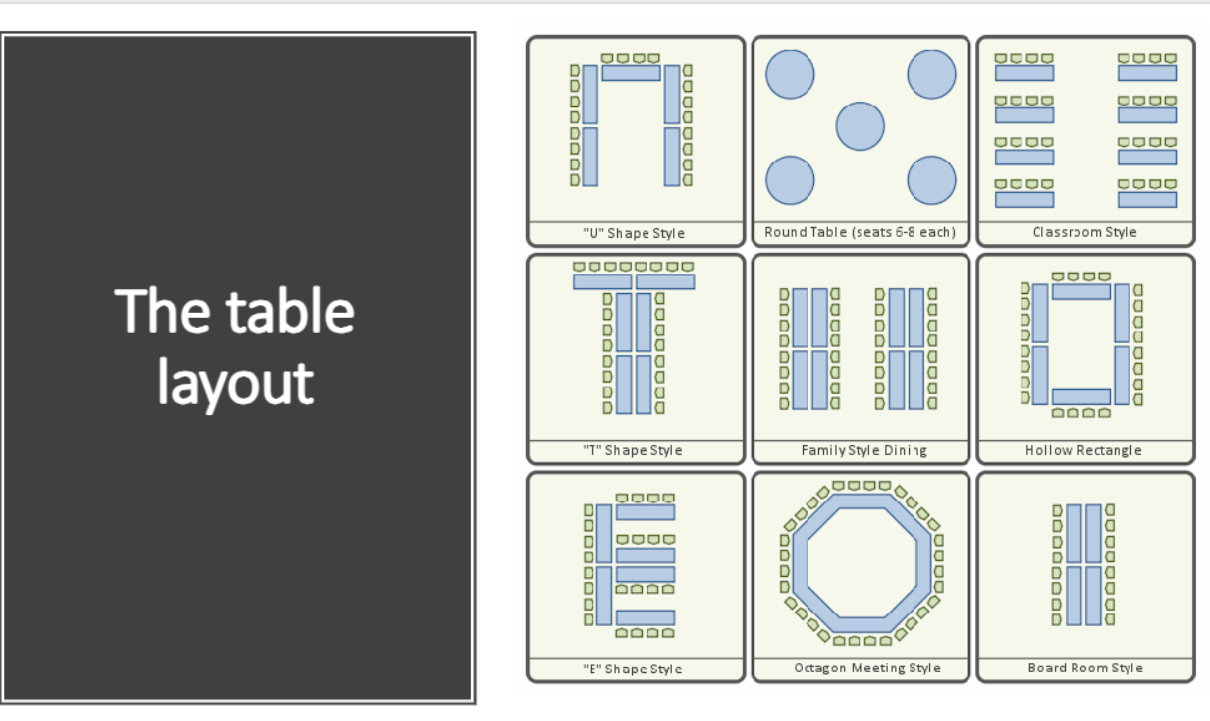
the variety of table arrangements used in banqueting service is numerous, using either round, square, rectangular, and other interlocking-shaped tables; if there is a ‘top’ table on which the host and the most important guests, this table is usually served first.
the advantage of this food service method are that the number to be catered for is known well in advance the specific time of dining is
also known, and a set menu for a set price is established.This enables the service of large numbers of people to be undertaken
by a comparatively small number of service personnel, usually one
waiter serving between 10 and 12 customers.
Davis (2018)banquet service is a range of serving styles for large catered events, such as weddings, award ceremonies, charity dinners, and sports team banquets
banquet service style may feature plate food, buffet or stations
banquet service can be as varied as the style of the event and usually, this type of service style is somewhat decided by the extent of the event, menu, and crowd. sometimes it depends on the size of the event or the menu itself
what is required to deliver a good banqueting experience for your guests?
personality
hygiene
people
food and beverage
venue
challenges of delivering a good experience:
costs
meeting ppl’s needs and expectations
it is hard to keep ppl happy constantly
a lot of ppl to serve
it is hard with space
setting it all up
staging the event itself for the banqueting experience
staff may be sick/ shortage of staff
on-site briefing- go through the whole plan with staff, before the event begins, make sure they know the menu, and make sure you allocate your staff what they are going to do
food service styles:
self-catering (walking around yourself)
canopy service- when staff walk around with plates and invite guests to try finger food
the table layout:
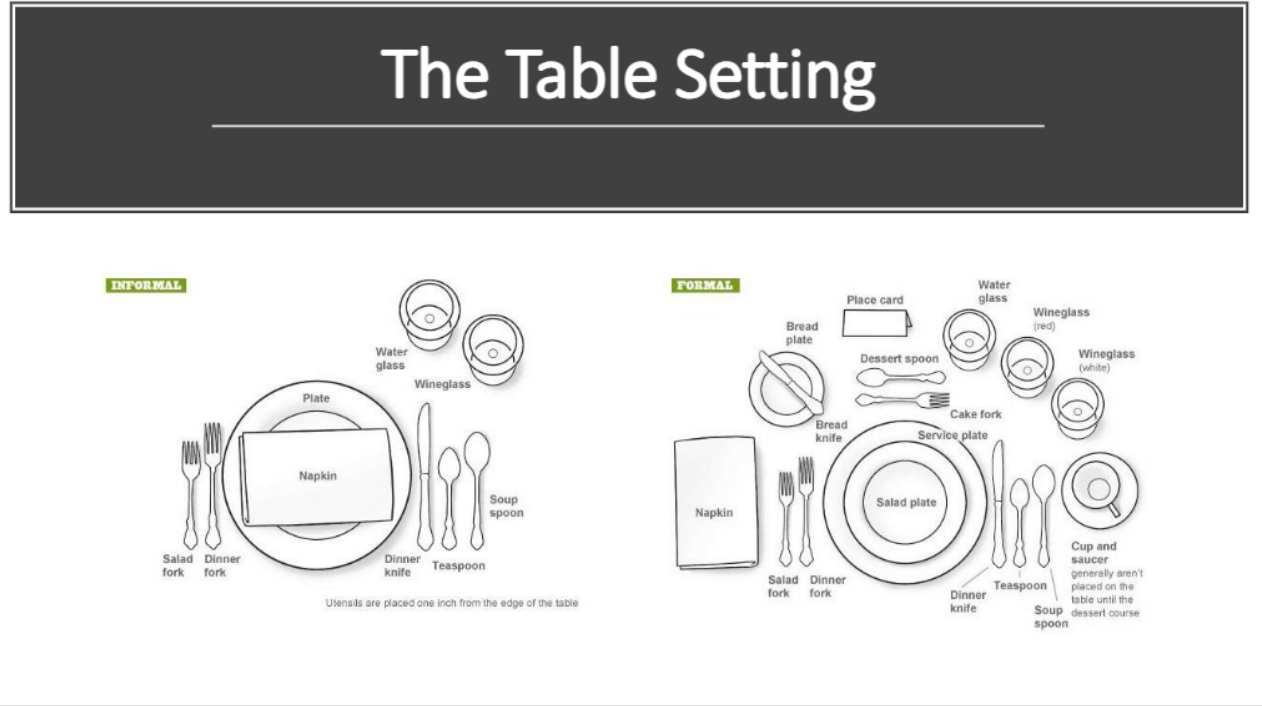
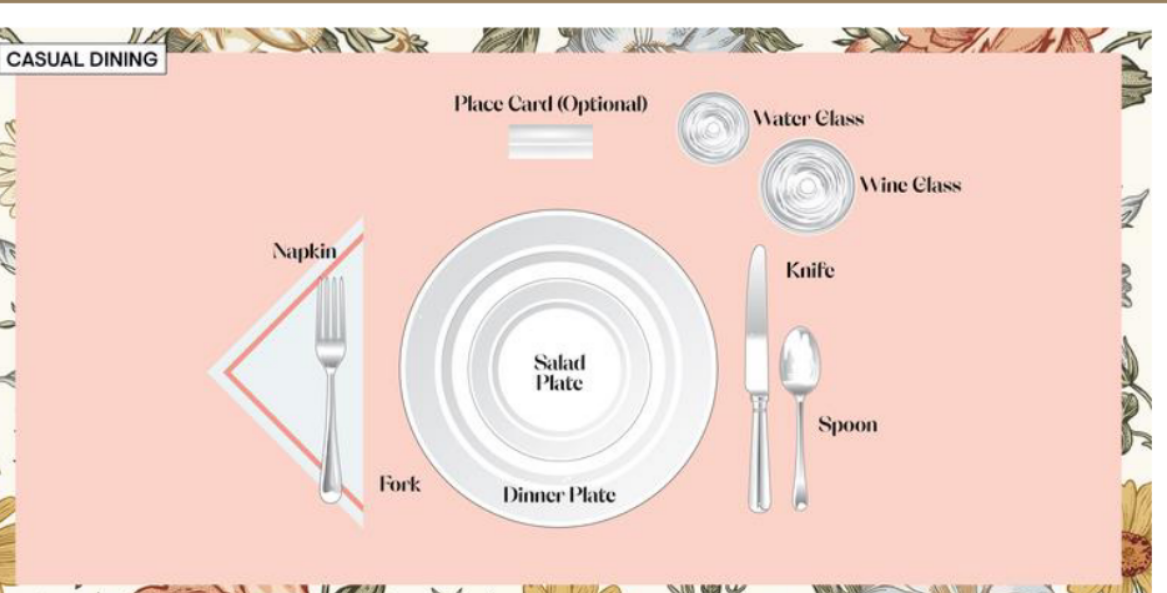
Casual dining:
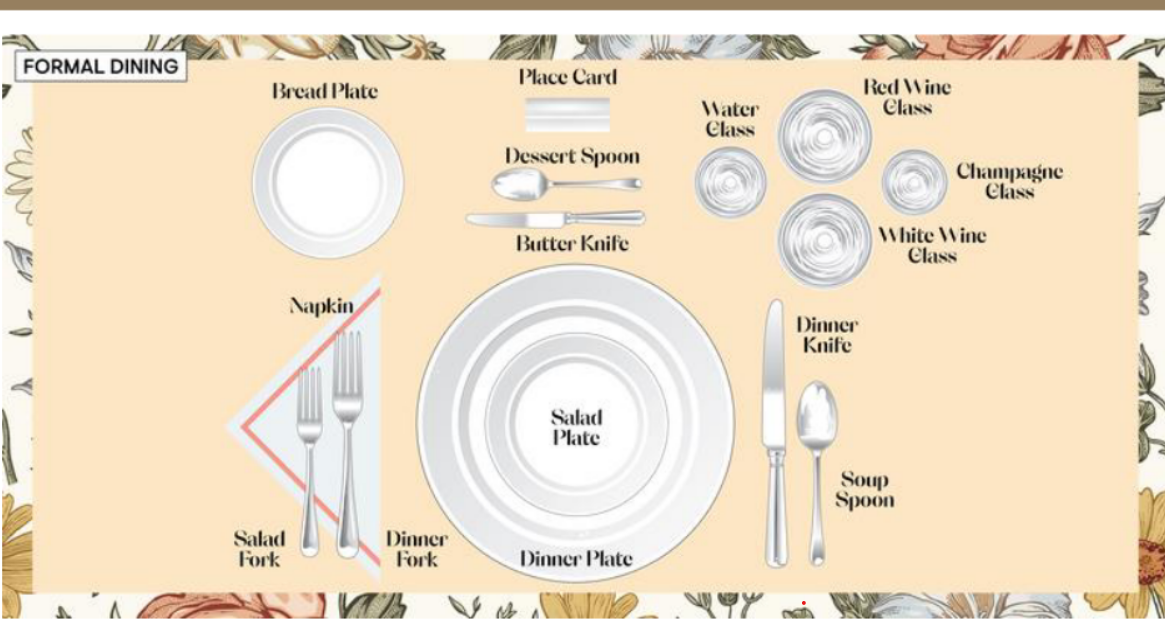
forming dining:
the tablescape:
Food and beverage service style:
fine dining- this is fine the food is bought out and is usually paired with a fancy luxurious wine
bistro service- more casual- usually meu is written on a chalkboard
counter service- guests can see the prep of their food
banquet service- get handed a menu and they choose, food will be bought out to them by staff, it is usually bougie but not as bougie as fine dining
buffet service- ppl get up and choose what they want on their plate

Summary of service styles:
English or silver service- the waiter will come out with a massive silver tray and serve the food on ur plate
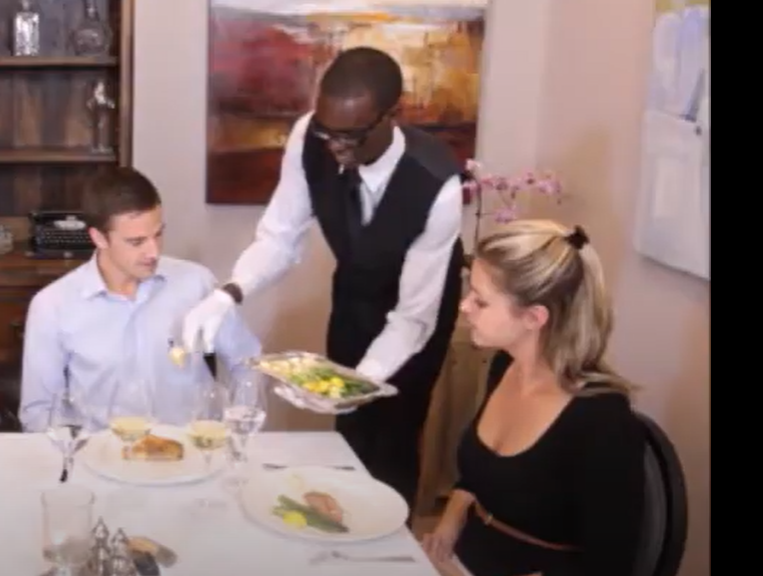
- french service- not that good because the food cannot always be served as hot, the food comes out on the table and you can help urself
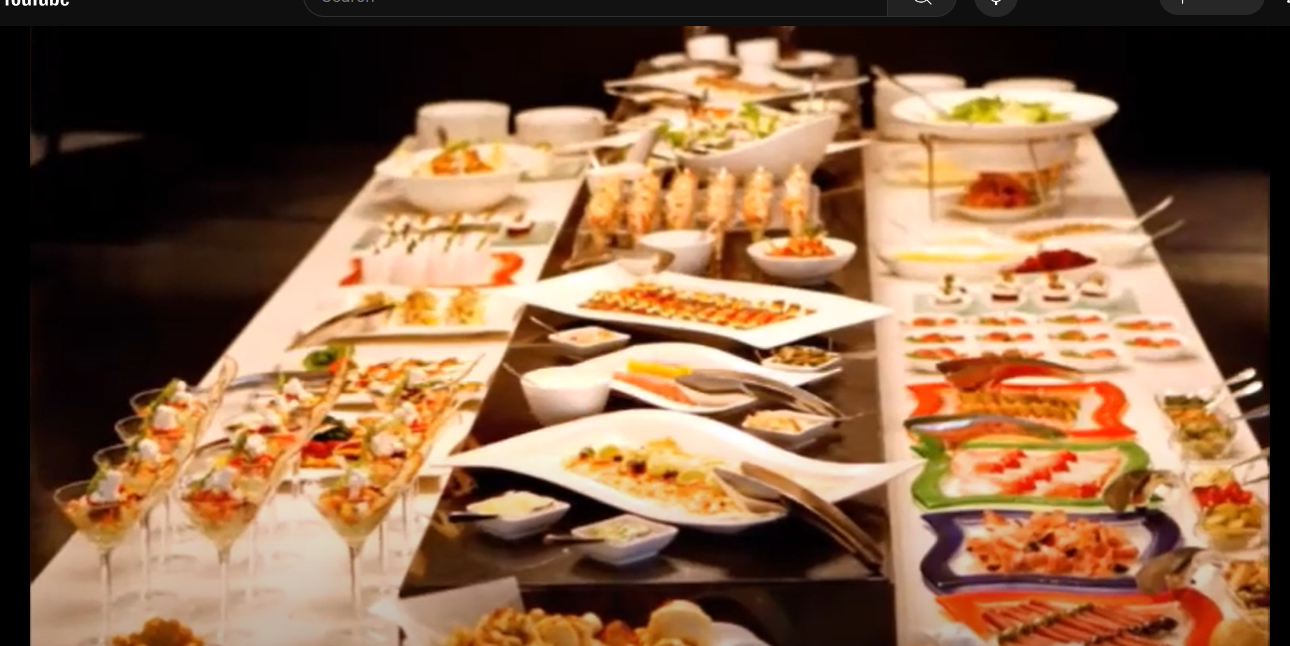
Russian service- courses are bought out one after the other
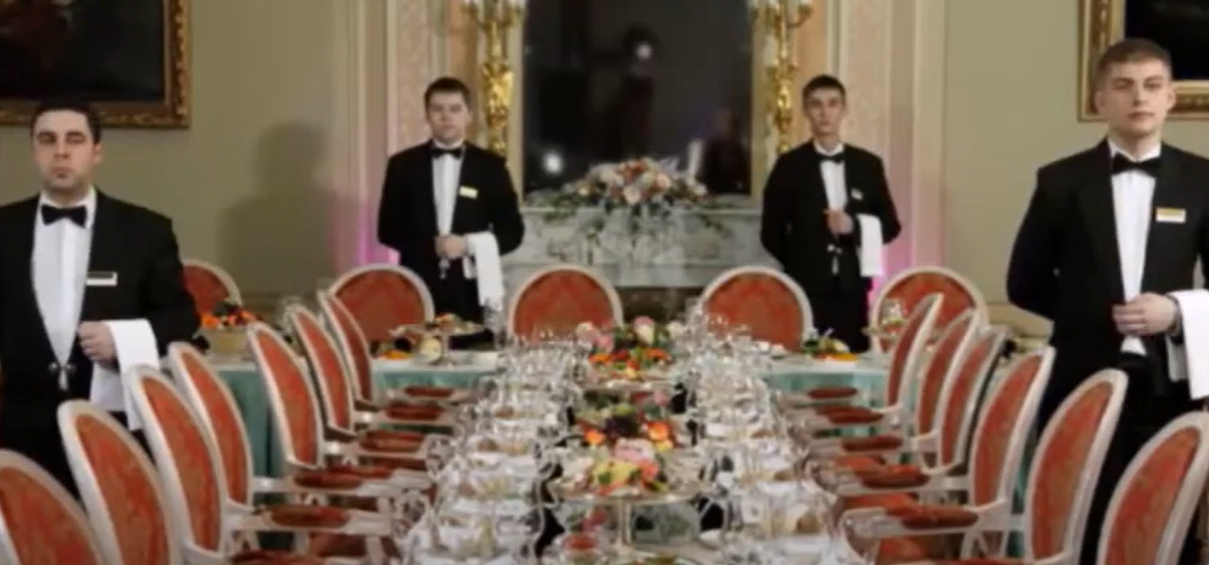
American or plated service- this is the most common- this is when you choose what dish you want and staff will come out with the plates
Food menu control:
are you making a profit or loss
menu forecasting
menu rotations
stocktaking
some menus are simpler to cost than others (ingredient variety)
Beverage menu control:
easiest products open to abuse/ theft:
wastage of a different sort
stocktaking weekly
recycling containers
strict portion control that is regulated by law
less menu rotation or no change at all on spirits, beers, and liquors
wine lists can be seasonal and updated depending on availability
Table service in-depth:
English Service:
Often referred to as the "Host Service" because the host plays an active role in the service.
Food is brought on platters by the waiter and is shown to the host for
approval.The waiter then places the platters on the tables.
The host either portions the food onto the guest plates directly or portions the food and allows the waiter to serve.
For replenishment of guest food the waiter may then take the dishes around for guests to help themselves or be served by the waiter.
French Service:
It is a very personalised service. Food is brought from the kitchen in dishes and salvers, which are placed directly on the table.
The plates are kept near the dish and the guests help themselves.
Silver Service:
The table is set for hors d'oeuvres, soup, main courses, and sweet dishes in sterling silverware.
The food is portioned into silver platters in the kitchen itself, which are
placed on the sideboard with burners or hot plates to keep the food warm in the restaurant.Plates are placed before the guest. The waiter then picks the platter from the hot plate and presents the dish to the host for approval.
He/she serves each guest using a service spoon and fork. All food is presented in silver dishes with elaborate dressing.
American/Plate Service:
The American service is a pre‐plated service, which means that the food is served on the guest's plate in the kitchen itself and brought to the guest.
The kitchen predetermines the portion and the accompaniments served with the dish and then balances the entire presentation in terms of nutrition and color.
This type of service is commonly used in a coffee shop where service is required to be fast.
Russian Service:
An elaborate silver service is thought to be the foundation of French service except that the food is portioned and carved by the waiter at the Gueridon trolley in the
restaurant in full view of the guests.Display and theatrical presentation are a major part of this service. The principle involved is to have whole joints, poultry, game, and fish elaborately dressed and garnished, presented
to guests and carved and portioned by the waiter.
Gueridon Service:
This is a service where a dish comes partially prepared from the kitchen to be completed in the restaurant by the waiter or when a complete meal is cooked at the
tableside in the restaurant.The cooking is done on a Gueridon trolley, which is a mobile trolley with a gas cylinder and burners. The waiter plays a prominent part, as he is required to
fillet, carve, flambé, and prepare the food with showmanship.The waiter has to have considerable dexterity and skill.
Snack‐bar Service:
Tall stools are placed along a counter so that the guest may eat the food at the counter itself. In better establishments, the covers are laid out on the counter itself.
Food is either displayed behind the counter for the guests to choose from or is listed on a menu card or simple blackboard.
Assisted Service:
In this type of category, the guest enters the dining area and helps himself to the food, either from a buffet counter or may get served partly at the table by waiter/ess and he collects any extras he needs from the counter. Eating may be done either at the table, standing, or in the lounge area/ banquet hall.
Buffet Service:
A self‐service, where food is displayed on tables. The guest takes his plate from a stack at the end of each table or requests the waiter behind the buffet table to serve
him. For sit‐down buffet service, tables are laid with crockery and cutlery as in a restaurant. The guest may serve himself at the buffet table and return to eat at the guest table laid out.The waiter may serve a few courses like the appetizer and soup at the table.
Self Service:
In this type of service, the guest enters the dining area, selects his tray or from the food counter, and carries food by himself to his seating place.
Cafeteria Service:
This service exists normally in industrial canteens, colleges, hospitals, or hotel cafeterias. To facilitate quick service, the menu is fixed and is displayed on large boards.
The guest may have to buy coupons in advance and present them to the counter waiter who then serves the desired item.
Sometimes food is displayed behind the counter and the guests may indicate their choice to the counter attendant. The food is served pre‐plated and the cutlery is handed directly to the guest.
Guests may then sit at tables and chairs provided by the establishment.
Sometimes high tables are provided where guests can stand and eat.