Developmental Neurotoxicity of Pesticides
Pesticeides are divided into 2 categories: Inorganic and Organic Compounds
Classified based on
chemical structure
environmental stability and toxxicity
pathway in which they penetrate and affect target organisms
Flow of Pesticides in Nature
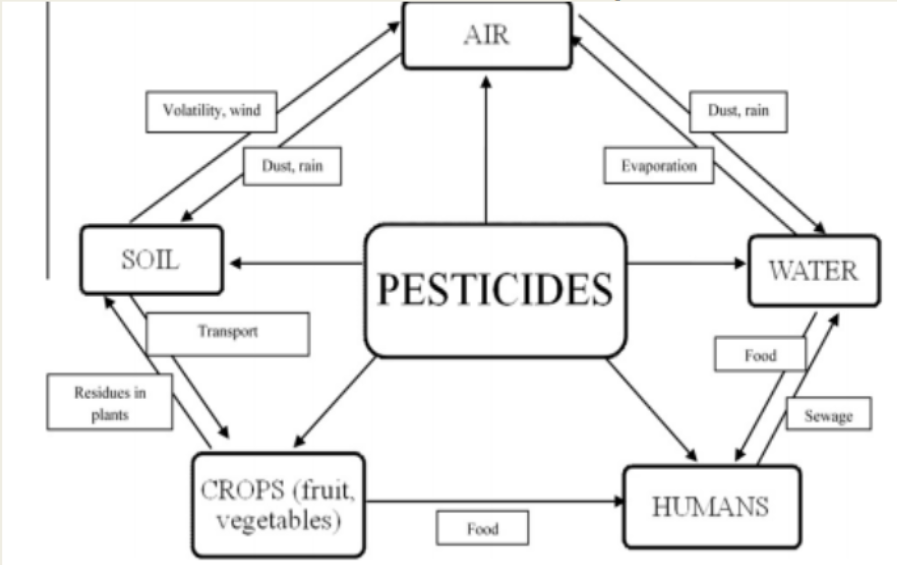
Sources of exposure:
Residential factors
Exposure for the food supply
Agricultural related exposures
Exposures from water
Types of Pesticides:
Insecticides
Fungicides
Nematicides
Rodenticides
Acaricides/Miticides
Molluscicides
Bactericides
Algicides
Avicides
Herbicides
Major Pesticides and their toxicities
Organophosphates → Most are highly toxic
Organochlorines → HIgh Toxicity
Pyrethrins and Pyrethroids → Low to moderate
N-methyl carbamates → moderate to highly toxic
Neonicotinoids → lowe than Ops and carbamates
Effects of Organophosphates
highly toxic
half-life is shorter than organochlorine pesticides (DTT)
affect attention, mental and conceptual flexibility
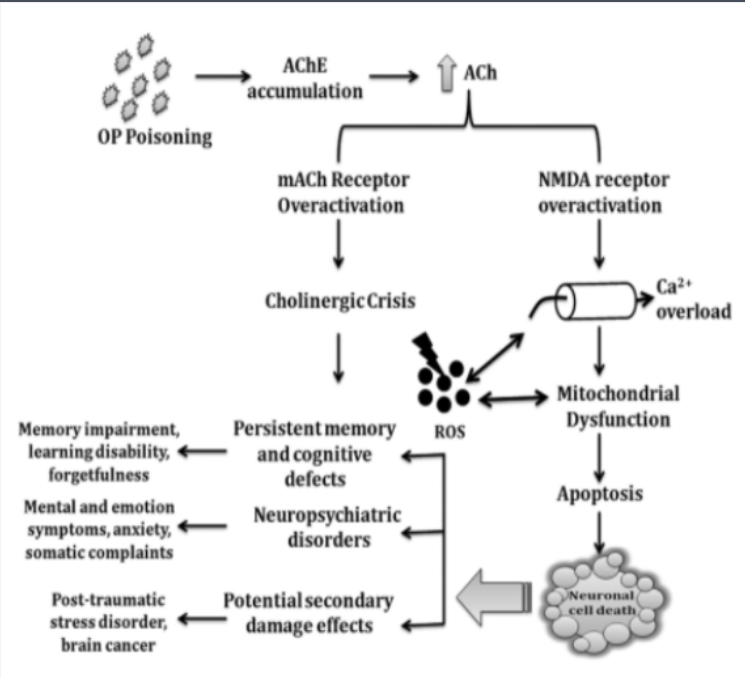
How do Organophosphates affect the brain?
Apoptosis:
As Developmental Neurotoxicant
Examples of Ops:
Acetyl Cholinesterase(AChE) inhibitors → building AChE levels in the synaptoc cleft → overstimulation of ACh muscarinic and nicotinic receptors → causing organophosphate poisoning
This occurs in the brain, neuromuscular junction and autonomic ganglia
typically AChE breaks ACh into choline and taken back into the axon terminal
increased ROS
Activates BAX (pro-apop)
Activates Bcl-2 and Bcl-X (anti-apop)
Then activate cyt-c
memory loss, anxiety and neuropsychological development
Cross the placental and causes developmental neurotoxicity
Maternal exposure impairs motor and cognitive development in newborns and infants
may contribute to autism
locomotor deficits
Chloropyrifos (a type of Ops): exerts opposing effects on axonal and dendritic growth in primary neuronal cultures
affects cerebellar granule neurons at different stages of development
Causes apoptosis by excitotoxicity, oxidative stress, and irreversible inhibition of AChE
Malathion: targets cholinergic neurtransmitter systems
causes memory and cognitive disorders
shown neuronal degeneration in the cortex, and hippocampus
Effects of Organochlorine
Effect on Neurotransmitters
alters expression of protein associated with neurotransmission in the frontal cortex
GABA
GAT1 → Removes GABA from cleft
vGAT → Loads GABA in vesicles
GABAa → inhibitory neurotransmitter
Glutamine
vGlut → Loads Glut in vesicles
GluN2B → NMDA receptor subtype
Dopaminergic
DAT → reuptake protein
Dopamine D2 Receptor → Postsynaptic receptor
Endosulfan: neurodevelopmental disruptor resposible for neurobehavioral deficits. Affects frontal cortex proteins