Week 2 | Day 3 | BIOA02
Week 2 | Day 3 | BIOA02
Two Mobile Life Cycle Stages
- Seed Dispersal Syndrome
- Pollination Syndrom
- Seed Dispersal Syndrome
- Without seed dispersal adaptations, most seeds are deposited close to the mother plant
- Parent-offspring competition for space & resources
- Mating between closely related individuals, inbreeding depression
Ingenious Adaptations
- Explosive self-dispersal DIY: ballistochory
- Shoots out seeds
- Eg. Jewelweed (touch-me-not)
- Wind dispersal: anemochory
- Hairs/wings that can float away with the wind easily
- Eg. dandelions, winged maples
- Water dispersal: hydrochory
- By water, usually only occurs in plants that live near water
- Eg. sea bean, coconuts
- “External hitchhiking”: exozoochory
- Stick to fur of larger animals (or even stick to birds)
- Eg. Burdock
- “Internal hitchhiking”: endozoochory
- Animals eat them
- Actually may germinate less if it isn’t digested through an animal gut because it damages the seed just enough to let it grow
- Ant dispersal: myrmecochory
- Elaiosomes: food for ants (etymology: elaios= oil, some= body)
- Fleshy structure attached to seeds
- Rich in lipids and proteins
- Symbiotic relationship: plant gets seed dispersal, ant gets food
- Elaiosomes: food for ants (etymology: elaios= oil, some= body)
- Gravity: barochory & secondary dispersal by animals
- Big, heavy seeds
- Starch-rich, oil-rich = great food
- Survive winter: seed caching
- Some cashes are forgotten, tree seedling recruitment
- Scatter hoarding: one or a few seeds per cache
- Larder hoarding: many seeds per cache
Seed Anatomy (Angiosperms)
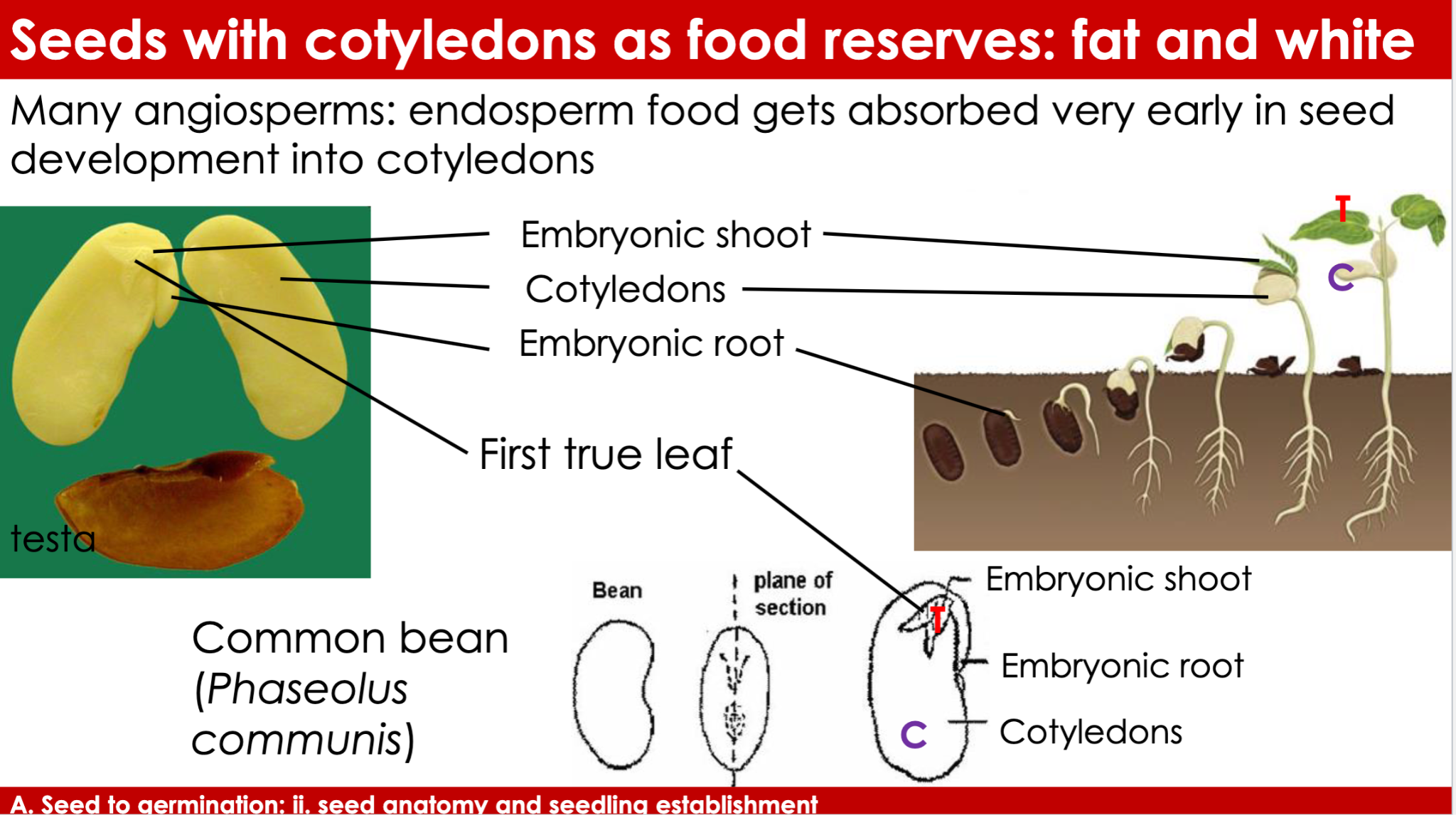
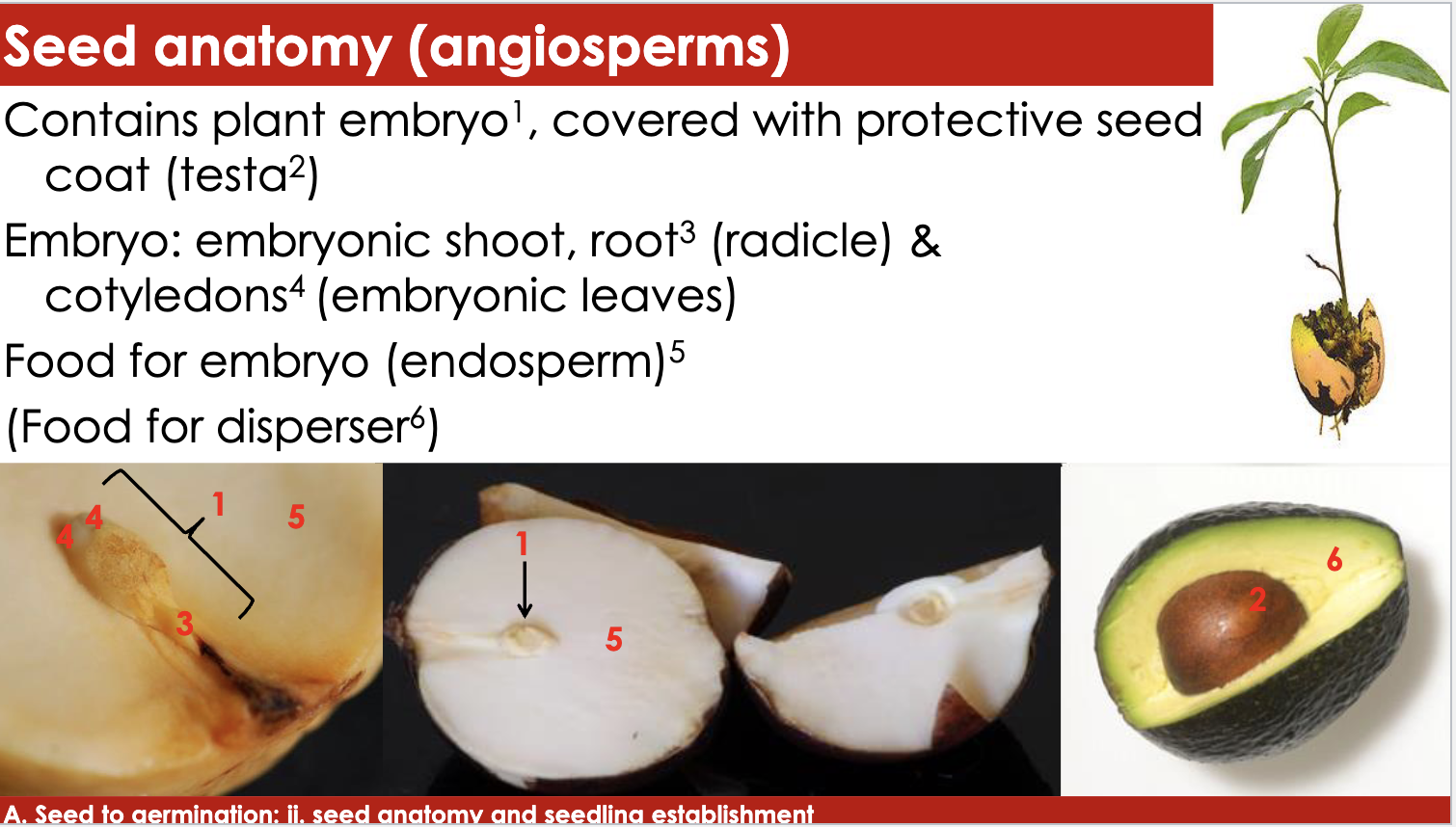
- Contains plant embryo, covered with protective seed coat (testa)
- Embryo gives enough food to give seedlings a start
- Embryo: embryonic shoot, root (radicle) and cotyledons (embryonic leaves)
- Food for embryo (endosperm) (Food for disperser)
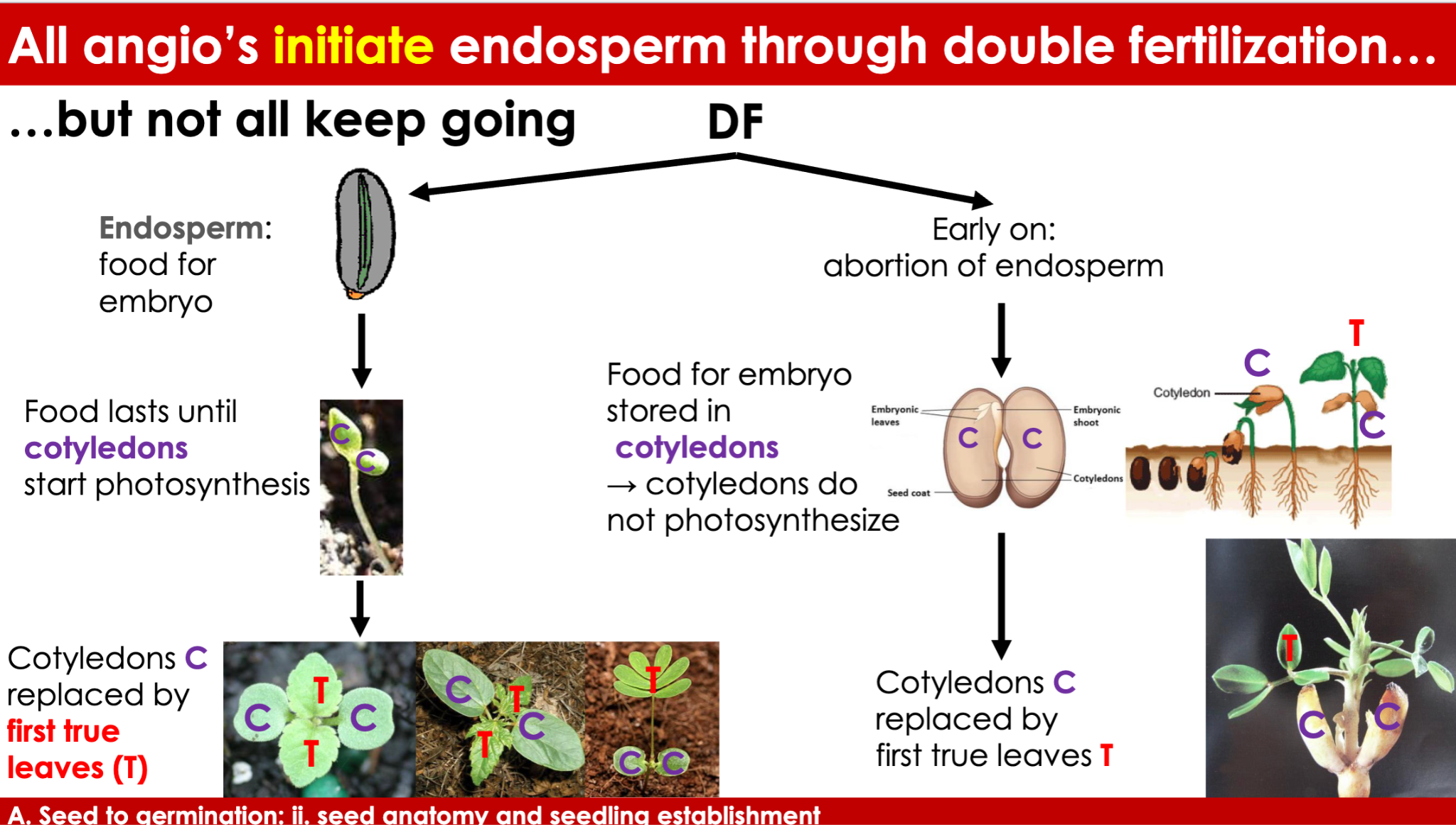
Food for the embryo: endosperm
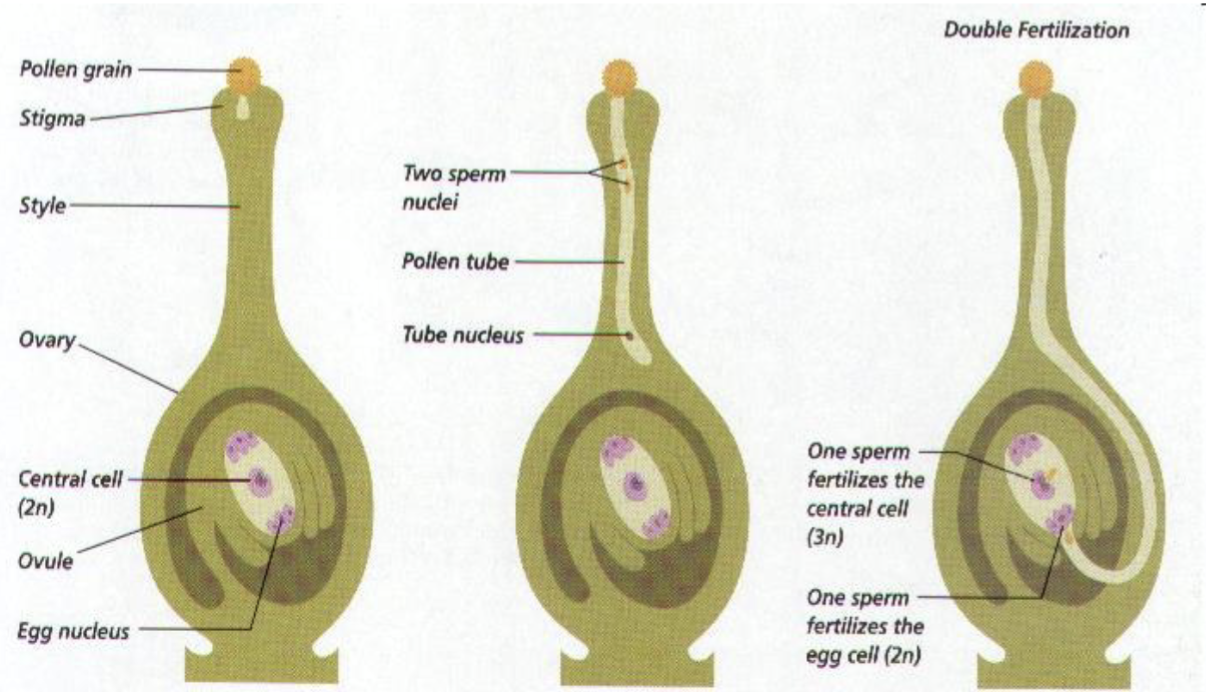
Endosperm: food storage cells inside seed; not part of embryo; developed through double fertilization (df)
Double fertilization (angiosperms only): parallel to fertilization of egg by pollen (to embryo), one pollen nucleus (1n) fertilizes the ‘central cell’ (2n) inside ovule to the endosperm (3n)