W6: Perceptual Constancies
Perceptual Constancies
Definition: Perceptual constancy describes our perception that object properties remain constant even when other conditions of stimulation are changed
Types include:
Lightness Constancy
Shape Constancy
Size Constancy
Colour Constancy
Lightness Constancy
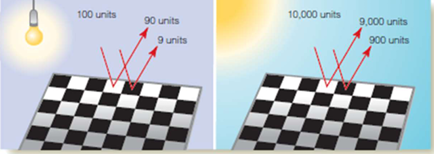
Definition: The perceived lightness of a surface remains constant regardless of differing light conditions illuminating it, provided the object is not self-luminous.
Depends on the percentage of light reflected by the surface rather than the absolute amount.
Models of Lightness Constancy
Lower-Level Models:
Based on physiological mechanisms, such as lateral inhibition, which explains certain lightness illusions like the Hermann grid and Mach bands.
these illusions show that lightness perception is not vertical. Lateral inhibition is invoked to help explain these illusions.
Lateral inhibition serves to emphasise edges.
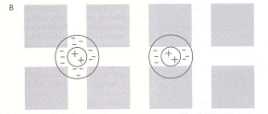
Strengths of Herman Grid Illusion:
number of intersections
regularity in the pattern of the intersections.
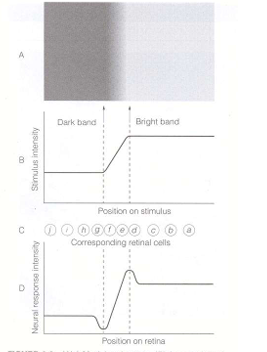
Mach Band:
serves to emphasise edges.
works similarly to Herman grid with lateral inhibition.
Higher-Level Models:
Emphasise the influence of distance and surface perception, and the perception of spatial layout.
Cues can be provided by: outline contours, binocular cues, perceived layout of illumination sources, characteristics of shadows, perception of lightness
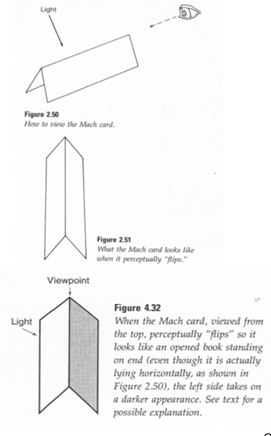
Mach Card - strongest when one eye is shut because depth is ambiguous in monocular images.
instead of looking like a roof, it looks like a valley
misinterpretation of light input, due to reduction in stereo cues.
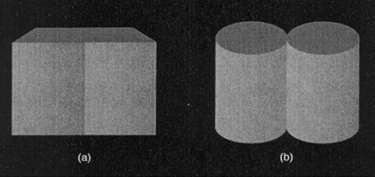
Surface curvature: Can influence way we perceive lightness and shading.
Physiological Models
Lateral Inhibition:
A neural mechanism that enhances contrast by emphasizing edges, which can lead to lightness perception illusions.
Lightness Illusions:
Examples include the Hermann grid illusion, where intersections appear darker due to lateral inhibition effects.
Perceptual Models
Influenced by factors such as:
Distance Perception: Changes in viewpoint can alter how we perceive lightness.
Cues: Outline contours, binocular depth cues, perceived illumination layout.
The Mach card demonstrates the effect of lightness perception under varying visual conditions.
Shape Constancy
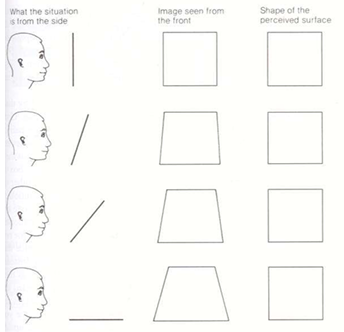
Definition: The perceived shape of an object remains stable despite changes in viewpoint, facilitating recognition from different angles.
Depth Information: Requires adequate depth cues for accurate perception.
Allows objects to be tilted and perceived from a different perspective and yet still be recognised.
retinal image may change, but if we can judge depth we can properly interpret the shape as staying constant.
Shape Constancy in 2-D vs 3-D Objects
2-D Objects: Generally maintain shape constancy, though biases towards symmetrical shapes can occur.
If slants are extreme, recognition may be more challenging (e.g., ellipses appearing as circles).
perceived shape is biased towards the retinal projection if there are poor distance cues.
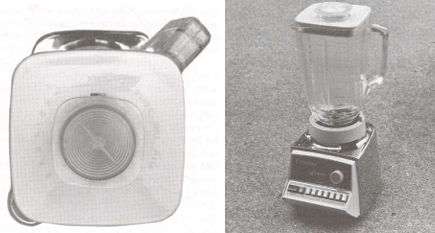
3-D Objects: Recognition can decline for unfamiliar objects, especially during rapid viewpoint changes. Familiar objects tend to be recognized better.
Size Constancy
Definition: The perceived size of an object remains consistent despite changes in distance or visual angle.
Relates to the concepts of visual angle, physical size, and perceived size.
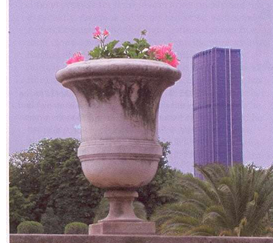
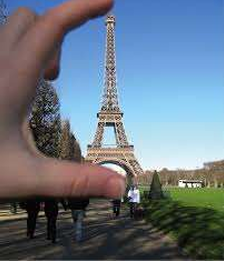
Different types of ‘sizes’
visual angle: retinal image size proportional to visual angle
physical size: the actual size of the object in space (measured with a rule)
perceived physical size: the visual estimate of the physical size.
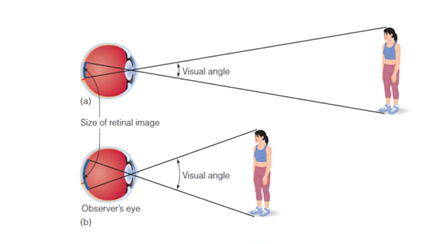
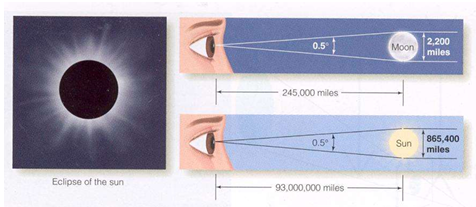
Size Judgments and Distance Perception
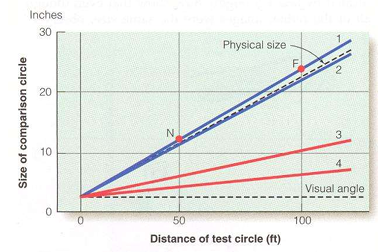
Key Study: Holway and Boring's experiment (1941) explored size perception under varying depth cues.
Physical size and distance of test circle from observer varied from near (N) to far (F), but visual angle of test object remained constant (1°)
Findings showed judgments become less accurate without depth information.
Condition 1 - clear binocular
condition 2 - monocular
condition 3 - monocular + peephole
condition 4 - monocular + peephole + drapes to stop shadow
As depth cues were reduced (3 and 4), observers’ judgement of the size of object was based more on visual angle
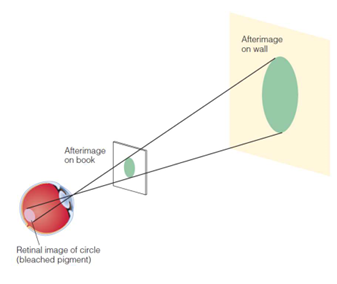
Emmert’s Law
Based on demonstration of after-images:
Formula: Sp = k × α × Dp
Sp = perceived physical size
α = visual angle of afterimage
Dp = perceived distance
k = contast
S = R x D (perceived size = retinal image size x perceived distance)
The further away the afterimage appears, the larger it is judged to be.
Depth Perception Cues
Pictorial Depth Cues:
Monocular cues like interposition, perspective, compression, and shape that convey depth in static images.
Interposition: nearer objects occlude more distance object
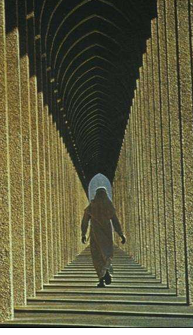
Perspective: Parallel lines converge in the distance.
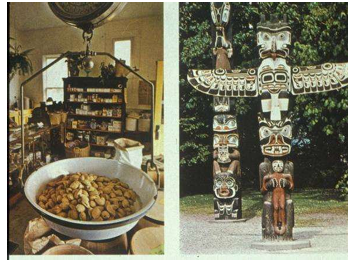
Compression: texture becomes finer with increasing distance

Aerial perspective: contrast is reduced and colours de-saturate with increasing distance

Elevation: distance objects are more centred in the visual field (closer to horizon)

Lighting and shadows: object closer to a source pass shadows behind themselves.
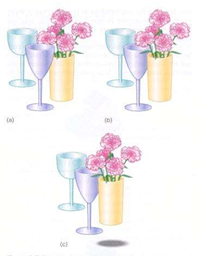
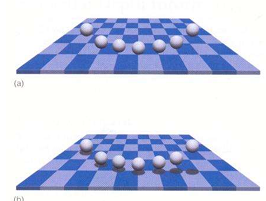
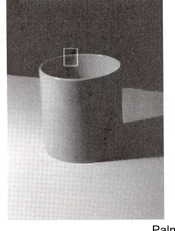
Surface Shading: provides cue to surface shape of the object
Bias to assume light from above
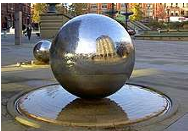
Specular reflections: provides cue to surface shape of object

Size: angular size (smaller objects appear further away), familiar size (can provide accurate distance estimates).
Motion Depth Cues:
Changes in visual perspective cue distance through motion parallax and deletion/accretion effects.
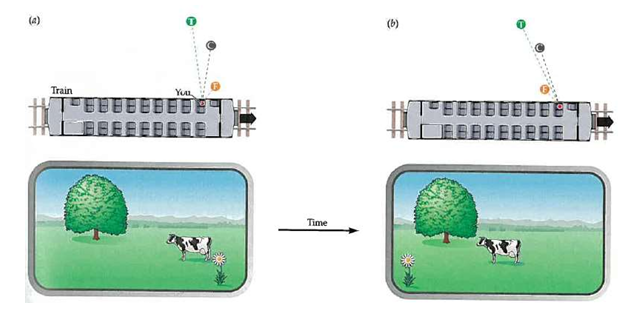
Motion parallax: nearer objects appear to move faster and to a greater extent than distance objects
Nearer objects appear to move faster and to a greater extent than distant objects
Objects further than fixation point move in the same direction as subject’s movement
Objects nearer than fixation point move against subject’s movement
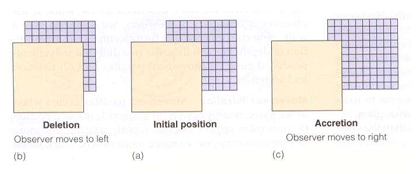
Deletion and Accretion: Occurs when an observer moves in a direction not perpendicular to two objects / surfaces that are at different depths
deletion: close objects seem to move and the object at back is covered up
accretion: is where the object at the back becomes uncovered.
Binocular Depth Cues:
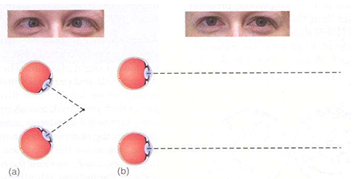
Utilizes retinal disparity and oculomotor cues (convergence and accommodation) to assess depth.
Retinal disparity: Slightly difference in location of corresponding points in retinal images in two eyes. Does not require visible object detail.
Random dot stereograms
magic eye stereograms.
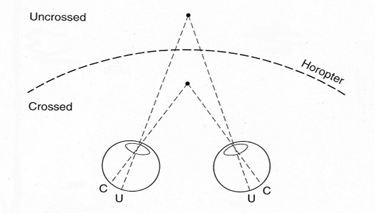
Oculomotor cues: convergence and accommodation
possibly rely on proprioception
not used by everyone
only useful at near distances.
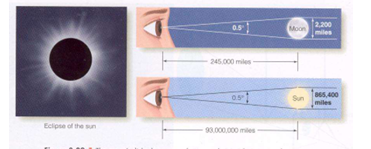
Equidistant theory: without depth cues, objects are all projected to the same distance, e.g., moon versus sun.
Visual Illusions and Perception
Definition: Illusions arise when perceptual interpretation diverges from reality, often due to breakdowns in constancies.
Moon Illusion:
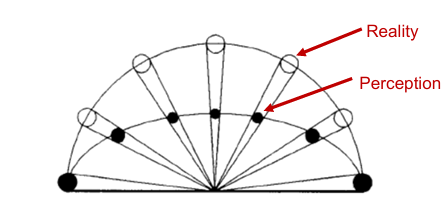
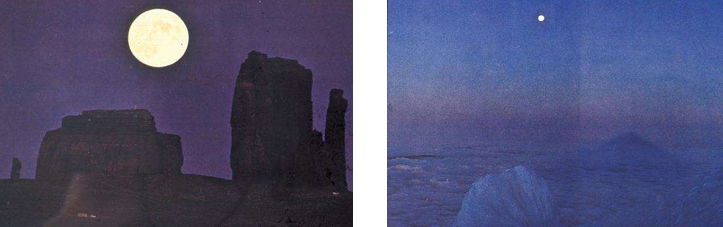
Differing perceptions of size. Appears larger on horizon and smaller at its zenith.
regardless of its elevation, the distance between the observer and the moon remains constant
moon is perceived as growing closer as its elevation increases
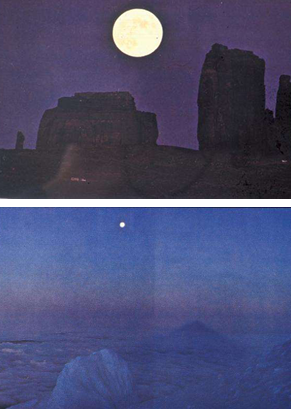
Theories about the moon illusion: ongoing debate.
Misjudgement of distance (apparent distance theory):
For moon near the horizon: Moon viewed across terrain which contains depth information may make it look further away
For moon at zenith: there are few distance cues
Size of moon 3,520 km at 392,000 km
Visual angle remains constant regardless of position in sky
Emmert’sLaw: S = KxD
If the visual angle is the same but the moon appears to be farther away at the horizon than at the zenith it will look larger at the horizon
Size-distance paradox: At the horizon the moon looks close
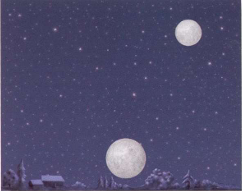
Relative size theory (angular size contrast theory): moon appears smaller when it is surrounded by large amount of sky
Eyes and Head Tilt theory: zenith moon looks smaller due to tilting of eyes or head upward. Reduced effect if looking through legs, but reduced effect simply if world is upside-down
Accommodative micropsia & macropsia: increased accommodation leads to reduced perceived size. Increased accommodation for zenith moon.
Factors that may influence moon illusion:
Atmospheric effect: looking through atmospheric haze on horizon increases perception of size
When the moon is red it looks larger.
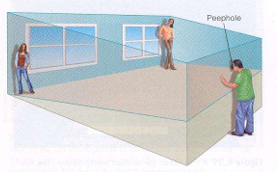
Ames Room:
People of the same height can appear to be very different sizes.
Based upon breakdown of size constancy – resulting from shape of the room:
Constructed with sloping walls and floors
Two people of same physical size have:
different visual angles because they are at different distances
but the room is designed so they appear at the same distance thus we perceive them to be different physical sizes.
peephole takes away distance cues.
Müller-Lyer Illusion:
The central lines of this illusion appear to be of different lengths even though they are the same length and have the same visual angle.
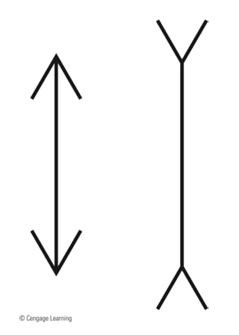
Misapplied size-distance scaling theory:
Arrows appear either as the inside corner of a room or the outside corner of a building.
Lines appear at different distances:
Left (outer corner): nearer.
Right (inside corner): further away.
Using Emmert's Law:
Inside corner (right) appears further away, for the same angular size:
S (perceived size) = R (retinal size) × D (perceived distance).
Perceived size should be greater.
Cultural influences on perception of illusion
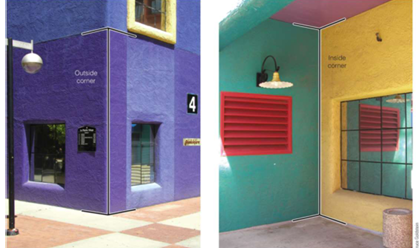
Does not explain dumbbell and 3-D versions of the Muller-Lyer illusion
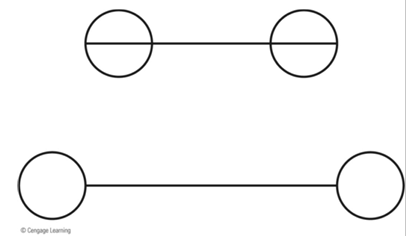
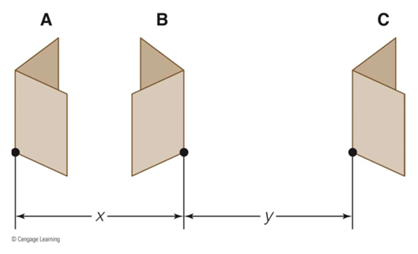
Conflicting cues theory: perception of line length depends on:
actual length of the vertical lines and the overall extent of the figure
because overall length of right figure is larger due to its outward-orientated fins, vertical line appears longer
in lower image, space between dots in (b) appears greater because overall extent of figure is greater than (a)
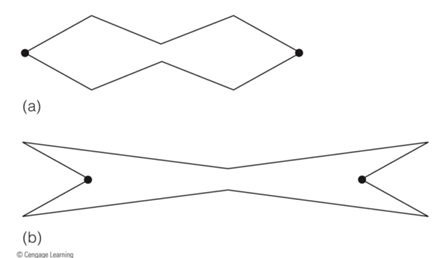
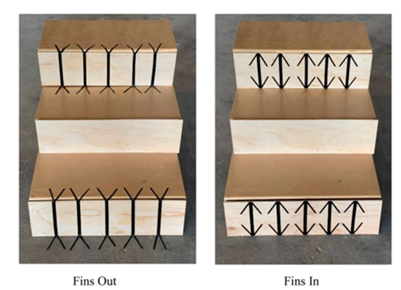
Application of the Muller-Lyer illusion:
improving step clearance
perception of step height was greater for fin out condition and step clearance were greater when mounted on outdoor steps