stages of reading development
the different episodes of a reader’s life
different eras 😜
pre-reading | stage 0
“i want” stage (0-6)
no reading occurs
the child’s curiosity to learn the language used starts here (speaking incomprehensible things)
it is important to learn how to speak first before actually reading
initial reading | stage 1
“i start” stage (7-8)
child acquires basic skills in reading
recognizes the symbols that represent each letter in the alphabet
realizes that when letters are connected, it creates words, phrases, etc
confirmation and fluency | stage 2
“i improve” stage (9-11)
when the child’s learning are confirmed or rejected
what is learned in the previous stage is put into practice in this stage
reading for learning the new | stage 3
“i acquire” stage (10-13)
child realizes that there is something to learn in every material
expected that you can read on your own
child reads anything and everything to collect pieces of information
reading not to practice, but to learn
multiple viewpoint | stage 4
“i explore” stage (14-18)
there can be more than one version of a story and certain points of view
teen is trying to figure out what they like
construction and reconstruction | stage 5
“i decide” stage (18+)
expected to create own judgements and evaluations when reading a book
figure out what you like
pyschological process of reading
schemata
learnings acquired over time
everytime we experience something, we gain info/knowledge from it
background/stock knowledge
what helps us understand stuff
reading and schema
schema is what we use whenever we read in order to understand the texts
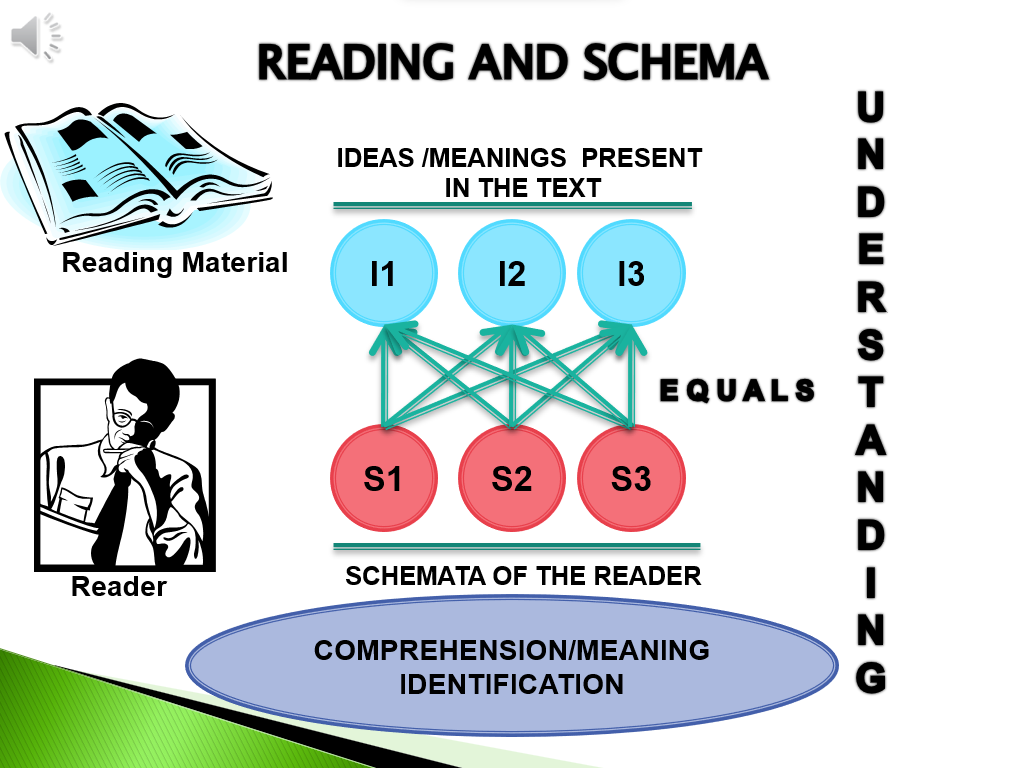
we tap into our schemata to look for reasons to undderstand what we are reading
there are 4 steps to the process of reading:
recognizing the language being used
assigning meanings of the text presented based on the schema
find connections to the text presented and link it to past experiences/schemata
when connection is made, previous knowledge can be modified based on new ideas presented
it is important to level up our schemata, the higher knowledge we possess, therefore increasing our schemata, the higher our capability of understanding any texts will be
three ways of processing info when reading
bottom-up | reader < book
relies heavily on the details of the text rather than on schemata due to lack of knowledge however:
through reading the book, you can gain more schemata
top-down | reader > book
when the schemata is wider than the text on the book
relies more on the schemeta to understand the book
interactive reading | reader = book
reliant on both the text provided and the schemata