PE
Cheer Dance
a team physical activity that utilizes organized routines
three primary motives:
To motivate a specific sports team during play.
To entertain a surrounding audience.
To participate in competitive events.
Fundamental Core Attributes:
Team Activity: Cheer dance is strictly performed by a group.
Time limit constraints: Performances are governed by a set time frame and require a specific minimum and maximum number of performers.
Organized Nature: Routines are not spontaneous; they are planned and highly structured.
History of Cheerleading
First recorded cheer (1898)
led by Thomas Peebles
University of Minnesota football game
First organized Squad (1903)
established with the the founding of the Gamma Sigma fraternity.
Women joining cheerleading squads
from 1920s to specifically during the World War II
Creation of pom poms & megaphones (1930 - 1948)
1930 - pom poms and megaphones were introduced
1948 - Lawrence “Herkie” Herkimer founded the National Cheerleaders Association (NCA)
Cheerleading in the Philippines
national governing body - Cheerleading Philippines (CPF)
CPF operates under the Gymnastics Association of the Philippines (GAP)
Principal Purposes / Objectives:
Show spirit for the team
to boost the energy and overall morale of athletes during competitions or games.
Perform & Cheer for the team
the execution of organized routines specifically to support and rally a chosen sports team.
Build Camaraderie & Teamwork
Participation is intended to foster deep friendships and cooperation among the individual team members.
Pump Up the Crowd
Routines are designed to engage and energize the audience, encouraging them to provide vocal support for the team.
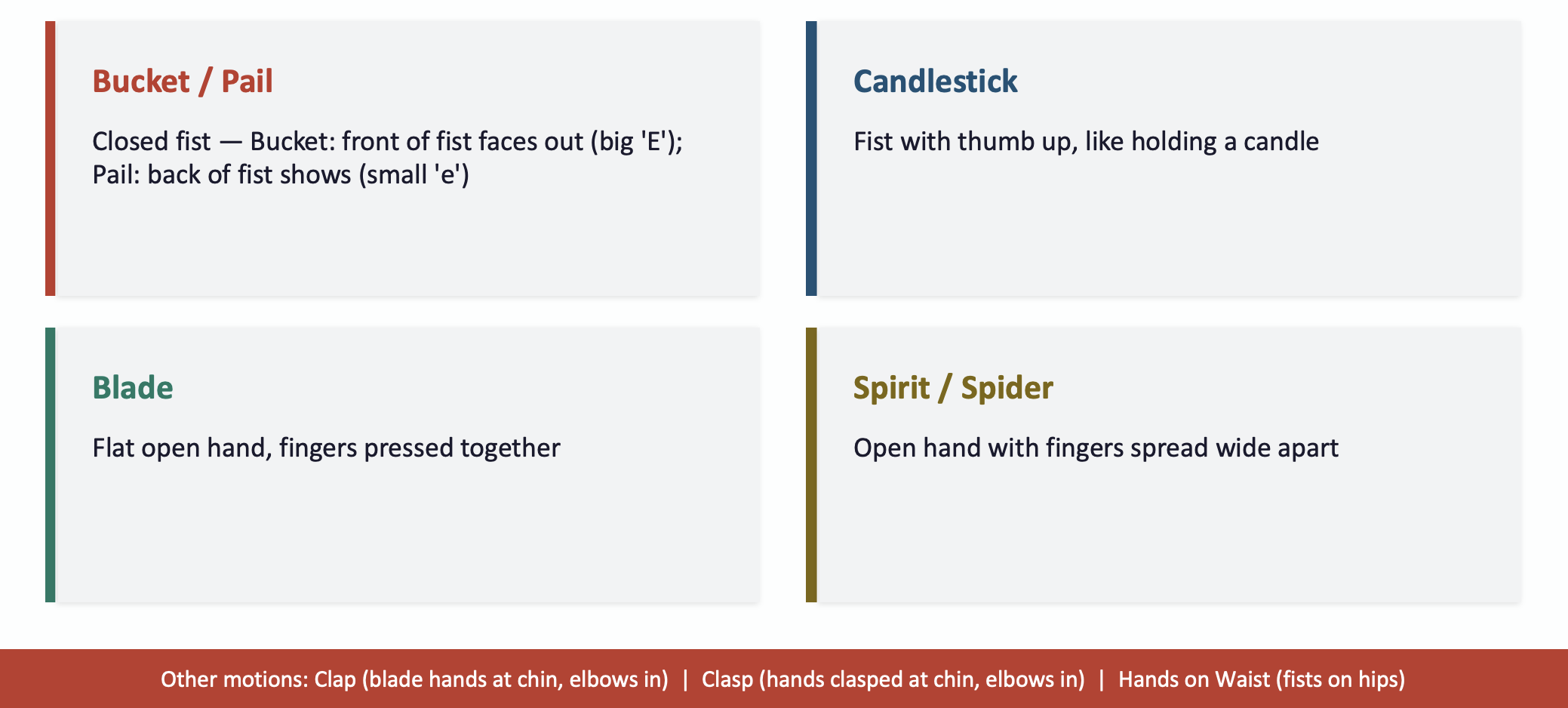
Basic Hand Positions
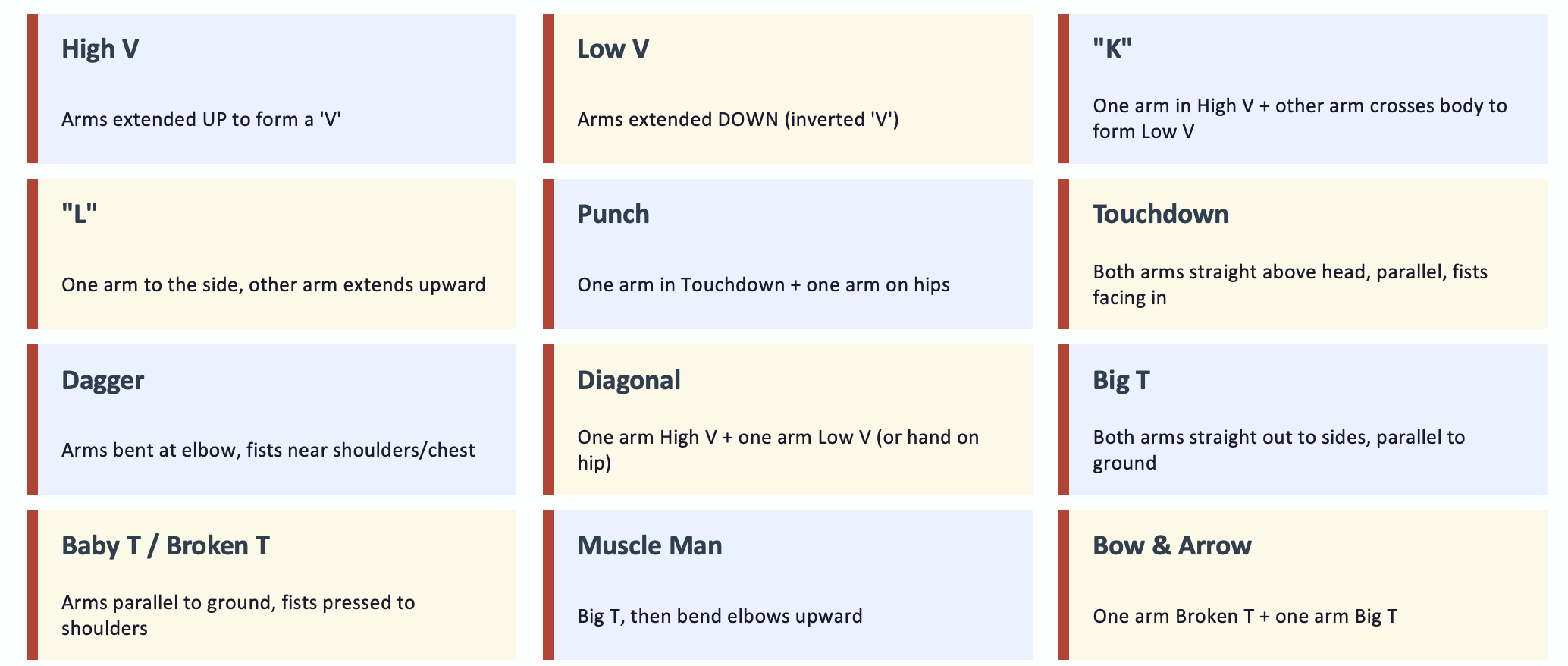
Arm Positions / Motions
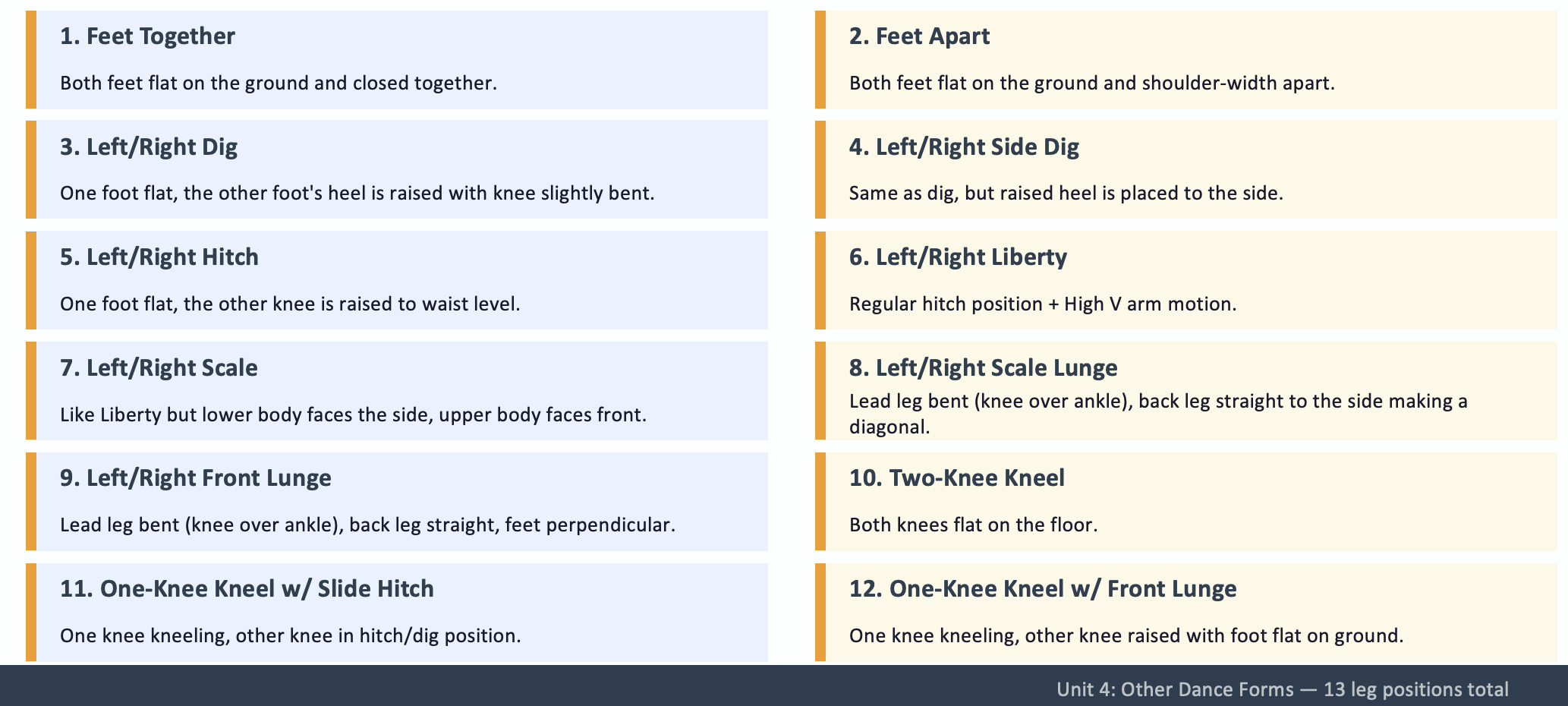
Statistical Note: There are a total of leg positions recognized in this module.
Basic Leg Positions