Unit E: Fresh and Saltwater Systems
74% of Earth's surface is covered with water.
Water Distribution
Potable water is water that is safe to drink. On Earth, 0.3% is usable by humans. 99.7% is unusable.
Source: % Potable
oceans 97.24% no
ice caps/glaciers 2.14% yes, but it’s frozen
groundwater 0.61% yes, but it’s not accessible
inland seas 0.008% no
freshwater lakes 0.009% yes
atmosphere 0.001% yes
rivers 0.001% yes
Watershed: is a region of interconnected rivers and streams, also known as a drainage basin
Reservoir: Artificial way for storing water
Water Quality
Describe how clean the water is.
What does it contain?
Living organisms
organic material
chemicals
metals
Substances Dissolve in water
salts. Salinity is the total amount of all salts found in water. Saltwater has a salinity of 3.5%
Hardwater: water that is made of dissolved minerals, can cause a build-up in plumbing fixtures
Testing water quality
taste and odor
turbidity (cloudiness)
toxins
bacteria
mineral content
pH (acidity)
Dissolved O2
suspended solids
dissolved solids
2.0 Water in its Various States Affects Earth’s Landforms and Climate
Waves and Tides
Waves: are surface movements. A disturbance or variation, transferring energy from point to point in a medium occurring whenever a force comes in contact with water
Waves cause a “wash” or “wave action” that can affect objects and shorelines.
Tides: Regular rising and falling of large bodies of water
The Movement of Waves
Waves are changes in pattern. The water doesn’t move: it acts as a medium for the wave action. Within each wave, the particles of water move in a circular motion. Their bottoms drag the ocean floor and their tops rise and break on the shore, causing damage by force
Effects of Waves on Shorelines
Erosion: Wearing away from the shoreline
Deposition: depositing material, building up the shoreline
Tsunamis
“Tidal” waves caused by earthquakes, volcanos, and landslides
Tides
The water level is called a tide. They are caused by the gravitational force of the moon and the rotation of the Earth on its axis
Distillation
Distillation: Removing water from a solution by boiling off the water, collecting the steam, condensing it, and leaving its impurities behind
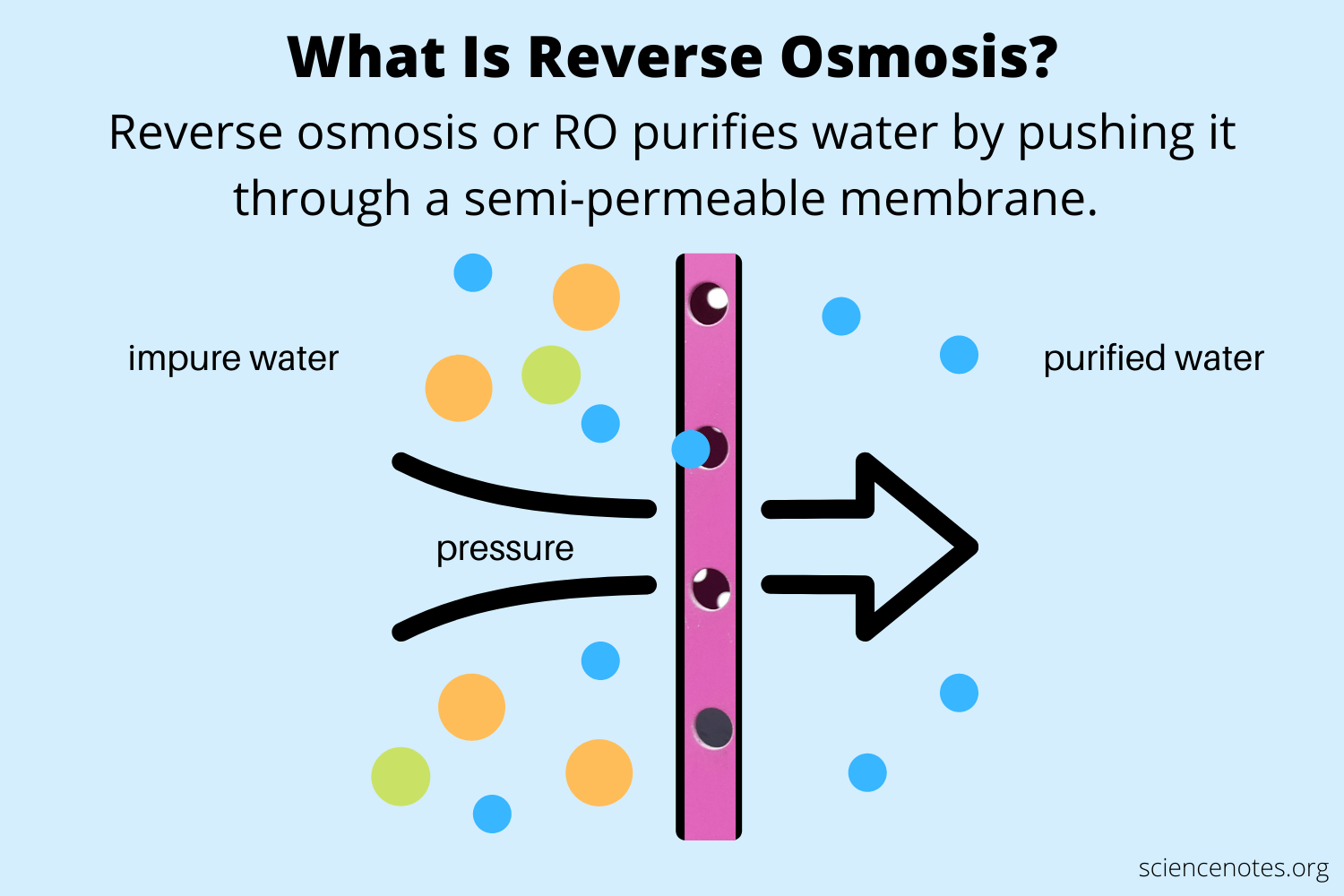
Reverse Osmosis
Osmosis(passive): the diffusion of water across a selectively permeable membrane
Reverse Osmosis(requires energy): Forging water through a selectively permeable membrane
 Erosion and Deposition
A stream profile is a description of its characteristics including flow rate, steepness of the flow rates bed, and erosion rates of its banks
Source: usually a glacier melting
2. Channel: small trickles from the source trickle into the channel.
Streams flow faster as they leave from the source. The stream slows and meanders at lower elevations until it reaches a fairly flat floodplain. Sediment is deposited in a fan-like structure called a delta
Chemical weathering: Erosion or the wearing away of rock due to chemicals in the water (acid rain/snow)
Watershed: A watershed is like a big bowl, water falls into it. The watershed drains into a big river, lake, or ocean.
Watershed: Think of it as a big bowl-shaped area of land. When it rains or snows, water falls into this bowl.
Rivers and Streams: These are like the veins and arteries of the land. They carry the water downhill like the bloodstream carries blood around your body.
Lakes and Rivers: They are like big puddles or pools within the bowl of the watershed. Water collects in them as it flows downhill.
Outlet: This is where all the water eventually leaves the watershed. It could be a larger river, a lake, or even the ocean.
So, in simple terms, lakes and rivers are like big pools and streams within the watershed, and they all work together to carry water downhill and eventually out of the watershed.
the highest point on the continent determines which way the water will flow. The highest point in North America is in the Rockies, called the continental divide.
Continental Drainage Systems
The changing lithosphere(crust) affects the continental drainage systems. They are also affected by moving ice. Moving ice or glaciers helped to shape and create the original drainage basins
Glaciers are large bodies of moving ice
If they cover large areas of moving land they are called continental glaciers or ice Capps (Antarctica and Greenland)
In the peaks of mountains, they are called valley glaciers
As glaciers move, they not only gouge out pieces of the crust but deposit them as well
Glacial Features
Kettle lake- a round lake formed by chunks of ice left behind and melting
moraines- deposits of rocks and gravel at the edges and ends of glaciers
drumlins- small tear-drop-shaped hills formed over moraines
eskers-snake-like structures formed by the deposition of the rocks and gravel as the glacier melts and the water drains away in a tunnel
Water and Climate
climate: The average weather measured over a long period
Water had a high specific heat capacity. Heat is a transfer of thermal energy
The Effect of Large Bodies of Water on Climate
Due to its ability to hold heat, weather can affect climate
near water(large bodies) temperature extremes are less likely to occur.
In drier places (Lethbridge,) the land heats up and cools down quickly
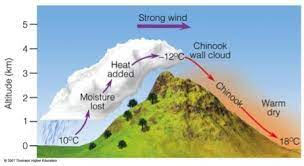
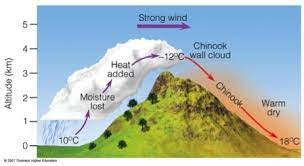
Chinook:
 Ocean Currents
Currents occur because of wind, convection, salinity, and earth rotation.
Ocean currents also affect temperature and precipitation.
warm air has more moisture than dry air
Section 1-2 helpful questions!
1. What is meant by the term fresh water?
2. What percent of water on Earth is fresh?
3. How can saltwater be made fresh?
4. What does a water's hardness refer to?
5. Where do waves form?
6. What causes daily tides?
7. What happens in a river's early stage?
8. Where is and what is the Continental Divide?
9. What kind of winds move up the western slopes of the Rockies?
10. How can water be categorized on Earth?
11. What is a reservoir?
12. What does potable mean?
13. What is the total amount of a body of water's dissolved salts?
14. What does hard water do to the formation of soap bubbles? Formation of scale on plumbing fixtures?
15. What are drumlins and eskers? What do they look like?
16. What processes are involved in distillation? How does it work?
17. Why are watersheds important? How do they affect the growth of human populations?
18. How are large waves formed when there is no wind?
Answers
What is safe for humans to drink, but not all water is safe
3%
reverse osmosis
mineral content
on the surface of the ocean
the gravitational force of the moon and rotation of the earth on its axis
it starts with small trickles from the source, Yjeu flow faster and fairly straight as they leave the source
the continental divide is the highest point on the continent, In Canada, it is located in the Rockies
chinook winds
Its location, and fresh or saltwater
An artificial way to store water
water that is safe for humans to drink
salinity
hard water makes it difficult for soap to lathe. Hard water causes mineral deposits called scale to form in plumbing fixtures
Drumlins are small tear-drop-shaped hills formed over moraines. Eskers are snake-like structures formed by the deposition of the rocks and gravel as the glacier melts and the water drains away in a tunnel
Boil impure water, collect water vapor, condense it, and leave behind impurities
They prevent flooding and provide a primary source of freshwater. It provides a safe source of water for humans
The circular movement of water particles
3.0 Living things in aquatic environments are affected by many factors.
Diversity- all the various life forms in an environment. Animals plants, bacteria, fungi, diatoms, etc.
Saltwater has a greater diversity of organisms than freshwater
Lake diversity- Lakes have different zones
Lake zones
Upper zone: Area from the shore to where aquatic plants STOP growing. Plants: bulrushes, lilies. Animals: small fish, insects, worms, frogs
Middle zone: Open water area that still has light penetration. Phytoplankton
Lowest or Deepest zone: No light penetration. Food sources are mainly waste from upper zones. Deepwater fish
Ocean Zones
Estuary- where fresh water and salt water mix (salty water), a very diverse ecosystem
Intertidal zone: Shoreline of an ocean. Plants and animals have adapted to waves
Continental shelf: Warmer water than the deep ocean, FULL light penetration. Plants as well as many animals because of the nutrient-rich food sources
Oceanic (Deep ocean) zone (LOW 02, NO light)
NO plants. Animals feed on waster from upper zones
Absysmal zone: Deepwater
Fish adapted to NO light and EXTREME PRESSURE
Adaptations of organisms in Aquatic Environments
Adaptation- and physical or behavioral characteristic that increases an organism’s chance of survival
Physical: ex. Fish have swim bladders that help them rise, float, or sink.
Behavioral: A fish hides in the reeds to avoid predators
An organism’s ability to adapt increases its survival rate
Five Factors in Aquatic Adaptations
Temperature. Ex. Whale blubber. Some fish have “anit-freeze” in their blood
Light: Is needed for photosynthesis. Photophores: Light-emitting parts of the body
Pressure. At greater depths, there is a greater pressure
Salinity Some organisms are adapted to water while others are not
Water Movement. Some organisms can handle fast-flowing water and the crushing force of waves. Ex. barnacles
Populations in Fresh and Saltwater
Species- (goose)individuals that resemble each other who can reproduce together and produce viable offspring (offspring can reproduce)
Population- (gaggle: group of geese)Members of the species living in a particular area
Community (fowl: group of birds)- different populations living in a common area
Changes in Population
Populations can increase or decrease based on a variety of factors. (It can also change with a population as well ex. males v. females)
Three types of changes in the population
Seasonal change. Temperature changes, wet/dry season
Short-term change. Human activity, extreme weather events. The population recovers from the change
Long-term change. Human activity (Chernobyl), extinction, and invasive species can use up resources
Water Quality and Living Things
The quality of the water supply can change when unnatural events or human activities affect what is added or taken from the water
Species have a range of tolerance. Ex. brine shrimp are intolerable to freshwater. They have a minimum and maximum amount of a substance they can put up with
Ex. Acid rain/snow. Caused by pollution from industrial activities, can lower the pH
The fertilizer runs off into a body of water. There is more production of algae on the surface. This is known as algal blooms. They prevent light from reaching below the surface. Plants die because they cannot perform photosynthesis. Organisms soon die as a result of this.
Human activities affect aquatic environments
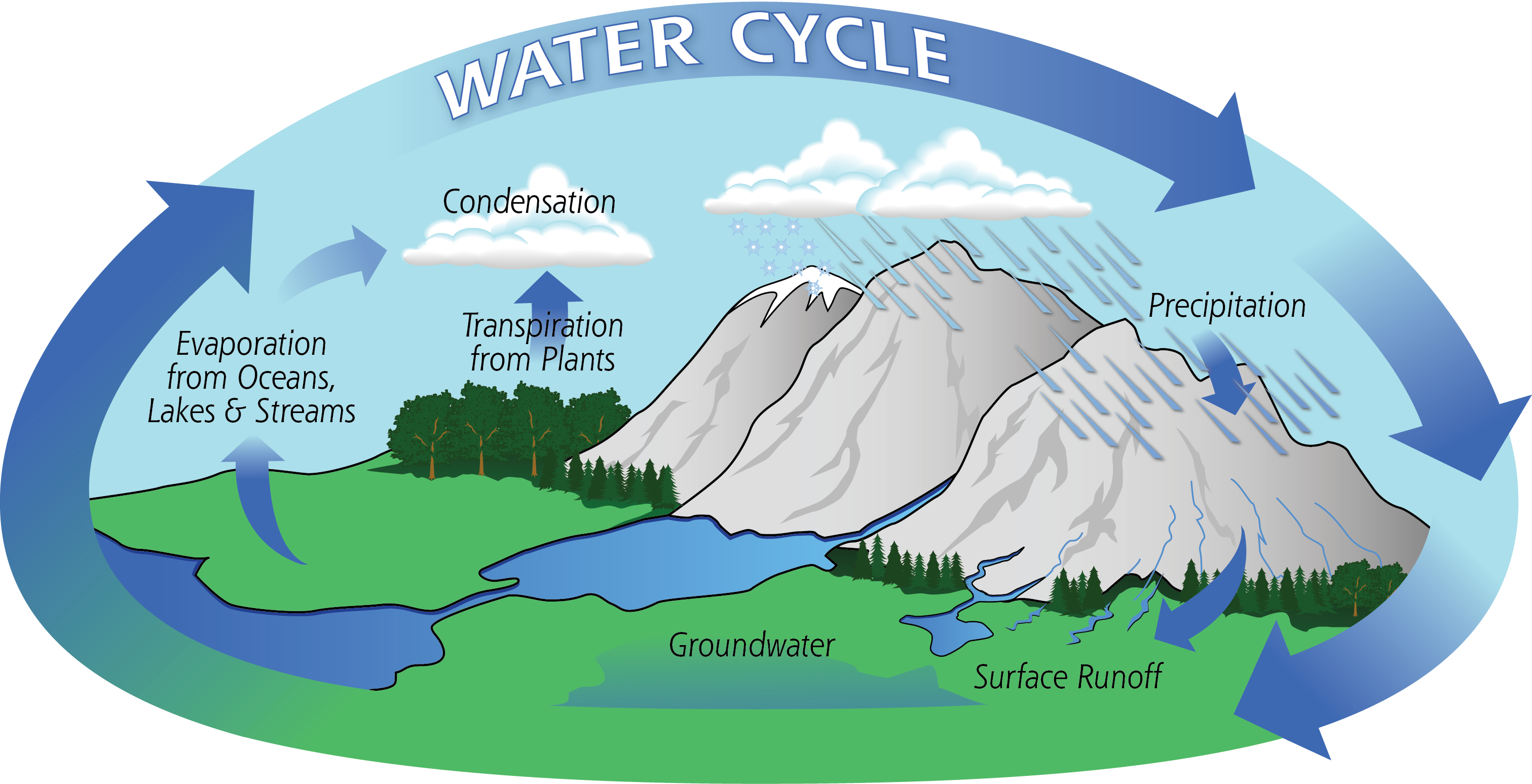
water cycle
 How humans use water
Direct use: Domestic and personal
Indirect use: Agriculture and Industrial
Use of water
negative effects: pollution of surface and groundwater. It can deplete our water sources
Major Uses of Water
Agricluture:73% of indirect use. Pro: increased yield of food, increase in economy. Cons: increased salinity in the soil, decreased vegetation, and decreased groundwater
Industry: 22% indirect use. Pros: consumer goods and jobs. Cons: pollution and depletion of water sources
Domestic: 5% direct. Pros: contaminate. Cons: pollution and depletion of water sources
Helpful Section 3 Questions
1. Where are there greater numbers and types of organisms in an open ocean or a freshwater pond?
2. What is the zone between land and the high tide mark?
3. What forms an estuary?
4. What makes a population?
5. Is the zebra mussel an invasive species?
6. Where are North America's most important food and game fish?
7. What happened to the cod fishery in Canada?
8. How do Alkali lakes form in the prairies?
9. How readily do freshwater organisms adapt to changes in temperature and salinity?
10. Can some saltwater organisms live in freshwater?
11. What are adaptations to aquatic life? Can you give specific examples?
12. What does salinity have to do with Oceans?
13. What constitutes a short-term change?
14 . What is an algal bloom? What effect can it have on water quality?
15. How does water quality affect populations?
16. What is diversity?
17. What is an adaptation?
18. What type of population changes are there?
19. How can cattle and feedlots affect streams, lakes, and watersheds?
20. What is a spring thaw? Can it be contaminated? How?
Answers
Open ocean
Intertidal
when freshwater from streams and rivers to salt water from an ocean
When members of a species live in a particular area
yes
Salmon
the cod population is decreasing
Alkali lakes form from deposits of natural chemicals called carbonates and bicarbonates. That happens when the water has dissolved out of soil and rock in the area. When water has a high concentration of these chemicals it is called alkaline. The chemicals are essential for plants, But with high concentrations of alkaline, not many different organisms can survive
Not very fast. It takes a long time for a freshwater organism to adapt
Yes. Some, but not most
Temperature Light salinity, pressure, and water movement. Water movement: barnacles grow on the rocks on the shore. They press themselves firmly to the rocks to not be taken away by the wave. Salinity: Salmon can survive in saltwater and freshwater. Light and Pressure: The dragonfish can survive without light. They produce light from the spot on their body called Photophores, they can serve under lots of pressure. Temperature: Tropical fish can only survive in warm temperatures
Oceans have a high level of severe
human activity and extreme weather events, and the population recovers
An algal bloom happens when natural fertilizers run off into a body of water, causing the growth of algae on the surface. When they grow they blow out any light. Other organisms are unable to survive.
They can make bodies of water inhabitable. Ex. avid rain makes the after too acidic for organisms to survive
All the various life forms in an environment
An adaptation is a physical or behavioral; characteristic change that programs, develop to increase its rate of survival
Seasonal change, Long-term, Short-term
Cattle are kept in feedlots, Nutrients can run off into a watershed, contaminating it. It will carry the water into the watershed outlet which can be a large river, lake, or even ocean
A spring thaw means a period of warm weather when snow and ice melt. It can be contaminated by animal waste, oil, anti-freeze, and road salt that collects on the snow and ice. Now the snow and ice that melts now contaminated by chemicals and such. Yje, meltwater will flow off into a body of water or sewage
Practices and technologies that affect water quality
Agricultural run-off. Fertilizer: increased plant growth, increased decomposition, decreased dissolved oxygen
Urban run-off: salts oils, chemicals water
Habitat destruction Wer land naturally filters. Destruction of wetlands affects the ability of an area to filter its water
Sewage: increased natural fertilizers(nitrogen), increased decomposition, decreased dissolved oxygen
Measuring impacts of water use
Monitoring- means to observe, check, or keep track of
Municipal Supplies are routinely monitored to ensure safety and portability
Monitoring can lead to preventing problems, finding solutions, and maintaining a stable, safe
supply
1. What do you know about acid rain? see pg 388
2. What are adaptations to aquatic life?
3. What are shallow areas adjacent to the continental lithosphere called? pg 362
4. What are oceanic ridges? pg 362
5. What are the most abundant minerals found in seawater? pg 339
6. Where can most of Earth's freshwater be found?
7. Why do mud and silt settle out at the mouth of a river? pg 359
8. How do limestone caves form? pg 359
9. What effect does hard water have on soap bubble formation?
10. Read page 406. What effect does too much aluminum have on some people?
11. What percentage of the Earth's surface is covered in water?
12. What would be a short-term change in populations? pg 384
13. What is the Continental Divide? pg 360
14. Where would you find a starfish? pg 376
15. What is the fan-shaped deposition that forms at the mouth of a river as it flows into a lake or river called? pg 358
16. What is Thermal Pollution? pg 389
17. What is distillation? What is reverse osmosis? pg 345
18. What are alkali lakes? pg 386
19. What is the difference between the terms ecosystem and ecology?
20. What could you use to demonstrate simple wave action?
REVIEW AND KNOW THE FOLLOWING DIAGRAMS!!
PAGES: 358, 362, 364,375, 376, 377, 398