Money Market
Introduction to the Money Market
Presented by Jer Breed from Revieweon.com
Focus: Understanding the money market for micro and macroeconomics exam preparation.
The Money Market Structure
Definition: The money market is similar to other markets, characterized by supply and demand curves.
Components: Focus on the demand curve.
Demand for Money
Concept: People choose to hold their wealth as money rather than other assets.
Effects: Leads to two key components affecting the demand for money:
1. Asset Demand for Money
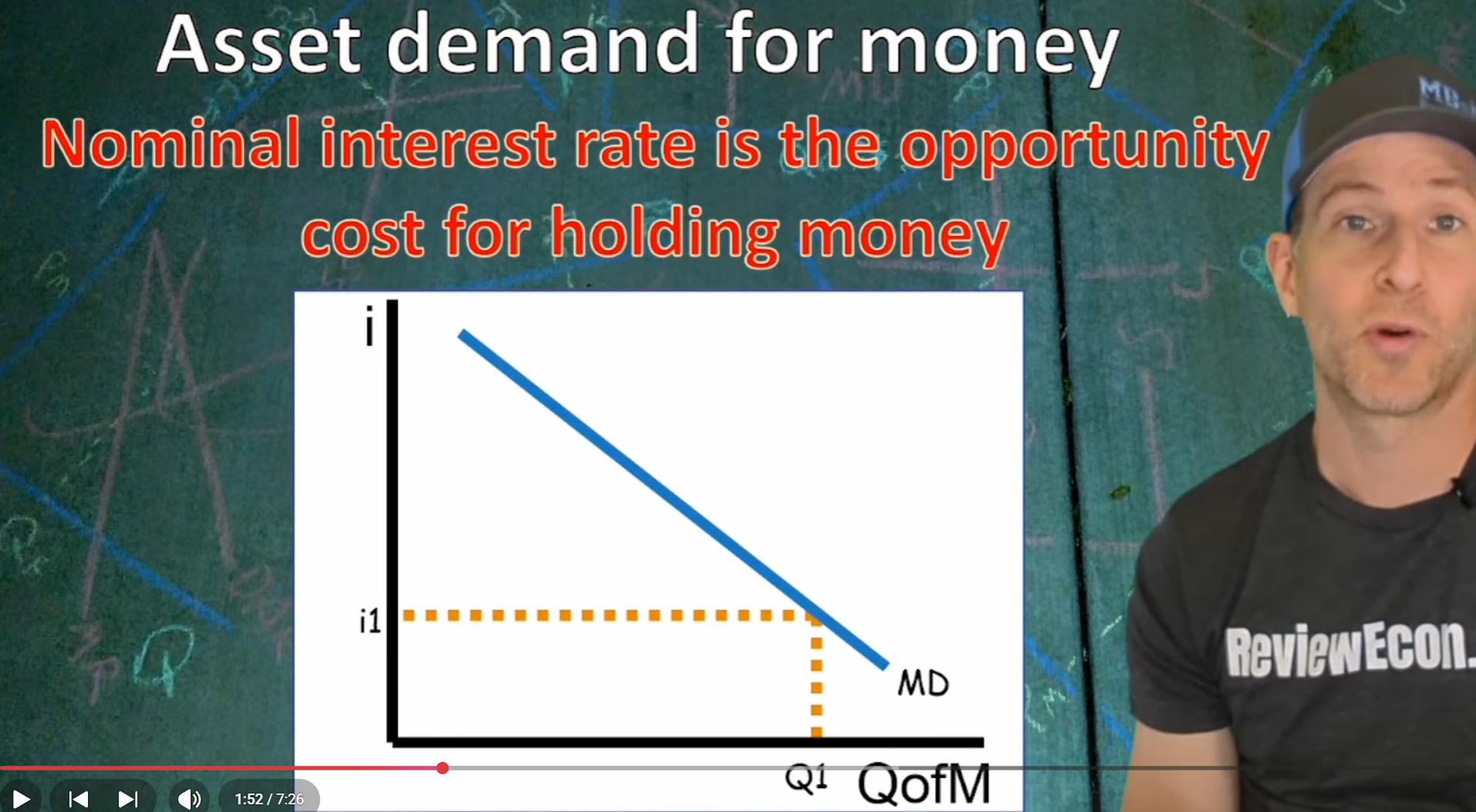
Definition: The demand for money that arises when individuals opt to hold their wealth in liquid form, as opposed to investing in interest-bearing assets.
Examples of Interest-Bearing Assets:
Certificates of Deposit
Money Market Mutual Funds
Treasury Bonds
Graph Definition:
X-axis: Quantity of Money
Y-axis: Nominal Interest Rate (can be abbreviated as $ i $)
Nature of the Curve:
Downward sloping due to opportunity cost associated with holding cash (i.e., forgoing interest earnings).
Liquidity Preference: When interest rates are low, individuals prefer to hold more money due to liquidity concerns; conversely, a rise in interest rates decreases this preference.
2. Transaction Demand for Money
Definition: The demand for money that arises from the necessity to carry out economic transactions.
Related Factors:
Output Expenditure Formula for GDP: Changes in components of GDP (C + I + G + X) can alter this demand.
Price Level: Higher prices increase the amount of dollars needed for transactions, while lower prices reduce it.
Expected Inflation: Rising expectations of inflation lead to increased demand for money, while lower expectations decrease demand.
Combining Demands
Overall Demand Curve:
Combines both asset demand and transaction demand.
The resultant curve is typically downward sloping, analogous to other demand curves.
Shifts in Demand Curve:
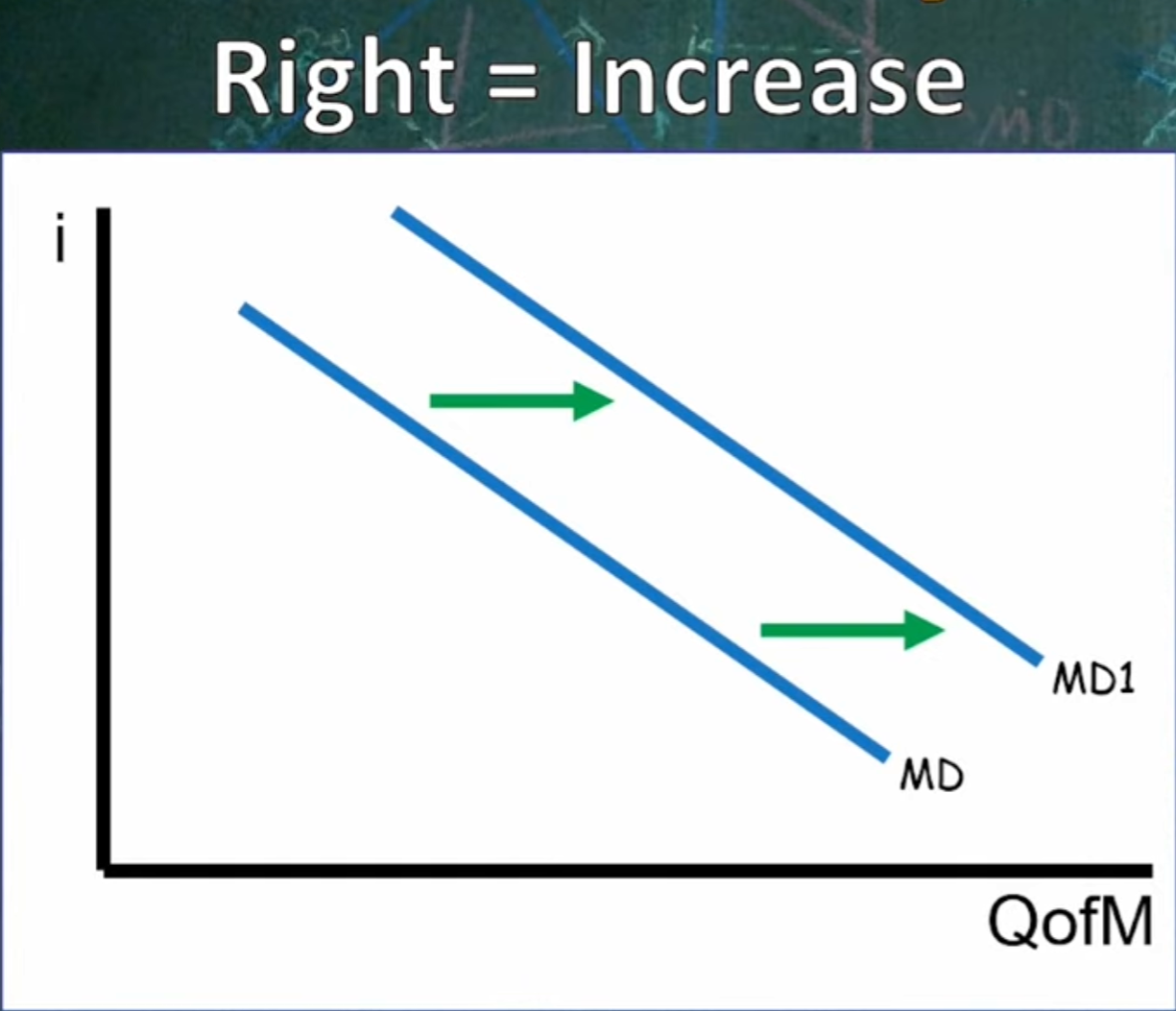
Rightward Shift: Represents an increase in money demand, attributable to positive changes in any GDP component, increased price levels, inflation expectations, or a heightened desire to retain wealth as money.
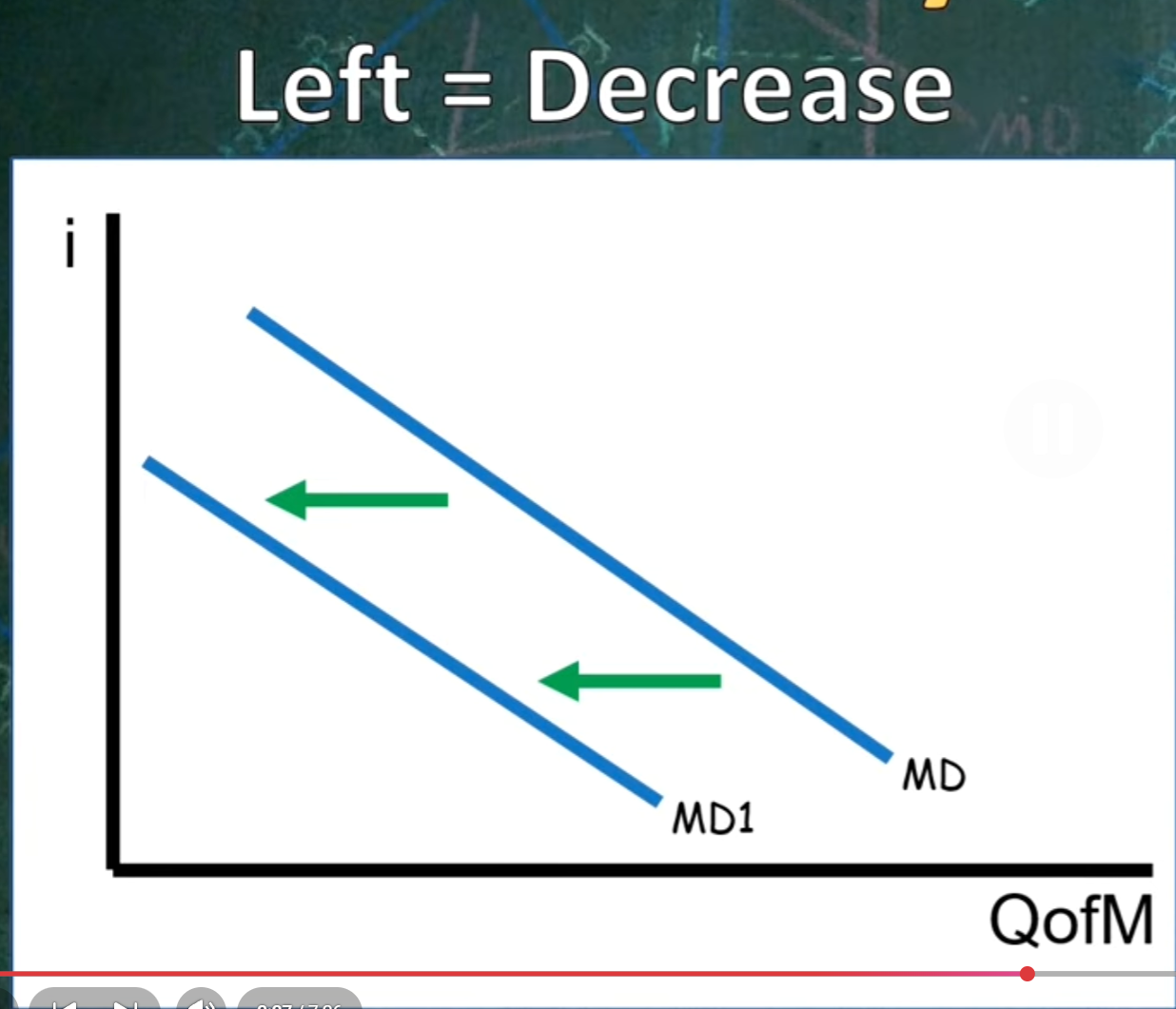
Leftward Shift: Indicates a decrease in demand, influenced by decreases in GDP components, price levels, inflation expectations, or diminished liquidity preference.
The Money Supply
Definition: The money supply is primarily determined by the central bank's actions.
Central Bank's Role:
Influences reserve availability and banking lending practices.
Supply Curve Behavior:
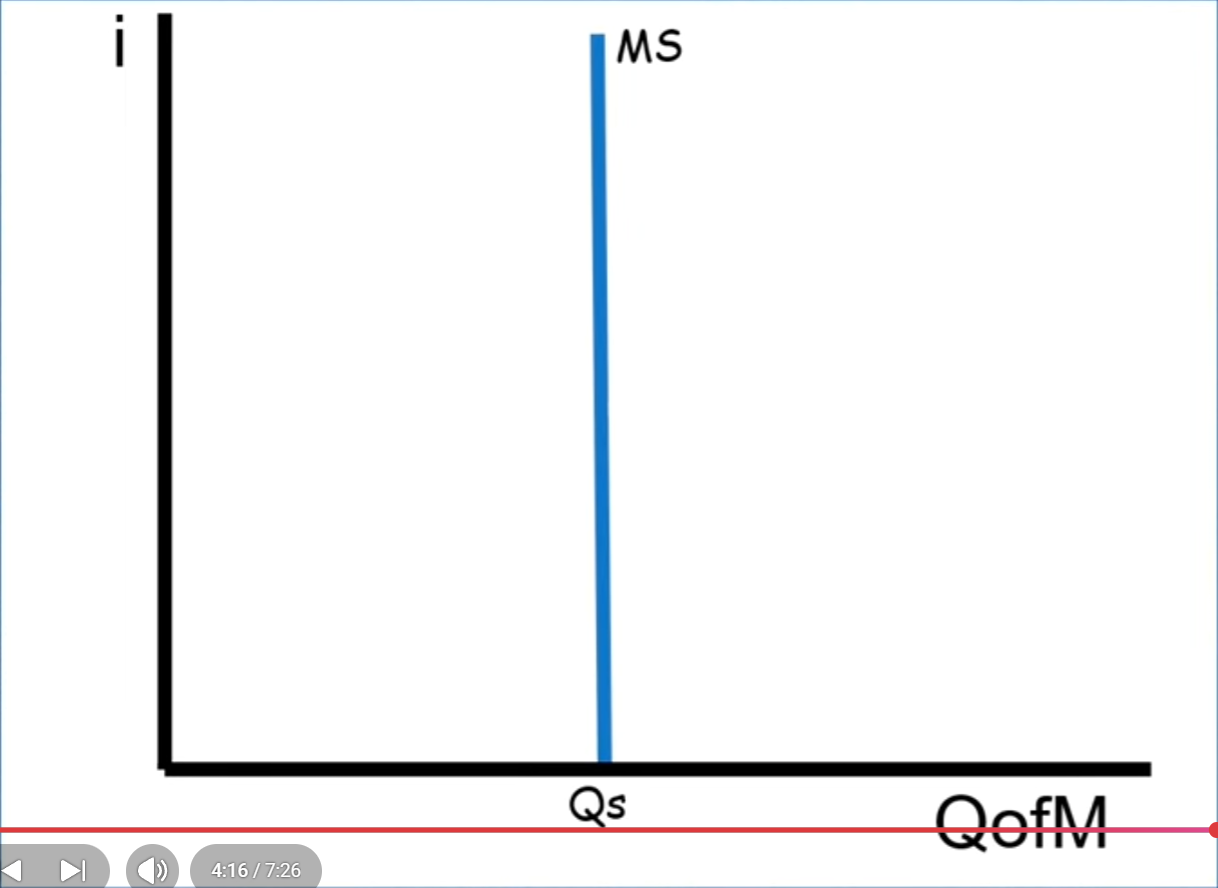
Vertical Supply Curve: Reflects that the money supply does not change with interest rates because the central bank establishes a fixed supply irrespective of rate fluctuations.
Shifts in Money Supply:
Rightward Shift: Occurs due to increased lending or expansionary monetary policies.
Leftward Shift: Results from reduced lending or contractionary monetary policies.
Graphing Money Supply and Demand
Equilibrium Interest Rate: Determined at the intersection of the money supply and demand curves.
Surplus Scenario: If interest rates exceed equilibrium, demand will be less than supply, prompting rates to decrease.
Shortage Scenario: If rates are below equilibrium, demand will exceed supply, causing rates to rise.
Effects of Shifts on Interest Rates
Supply Curve Shift:
An increase in supply lowers equilibrium nominal interest rates.
A decrease in supply raises equilibrium nominal interest rates.
Demand Curve Shift:
Increased transaction demand raises nominal interest rates.
Decreased demand (shift towards interest-bearing assets) lowers nominal interest rates.
Economic Implications of Interest Rates
Lower Interest Rates: Encourage more gross investment, as borrowing costs decrease for purchasing physical capital.
Fosters higher rates of economic growth reflected in:
Faster outward shifts of the Production Possibilities Curve (PPC).
More rapid rightward shifts of the Long-Run Aggregate Supply (LRAS) curve.
Higher Interest Rates: Deter gross investment due to increased borrowing costs, resulting in slow economic growth and sluggish shifts in LRAS and PPC.
Conclusion
Familiarity with the money market structure is essential for economic analysis.
Suggested further action: Watch the associated monetary policy video for deeper insights into the central bank's role in managing the money supply and interest rates.
Practice opportunities are available via Revieweon.com to reinforce understanding of the money market dynamics.