Arithmetic Hardware
1-Bit Half Adder
Used to add single bit numbers, doesn’t take no Carry-in, but their is a carry out, sum and carry-out
Sum = A’B + AB’ = A Xor B
Count = AB
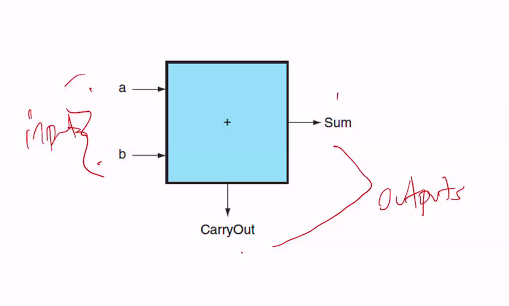
Using the half-adder, we can’t use the carryout from the previous one, a limitation, basically can’t add the adders(can’t link them)
1-Bit Full Adder
Sum = A Xor B XOR Cin(carryin)
Cout = AB + ACin + BCin
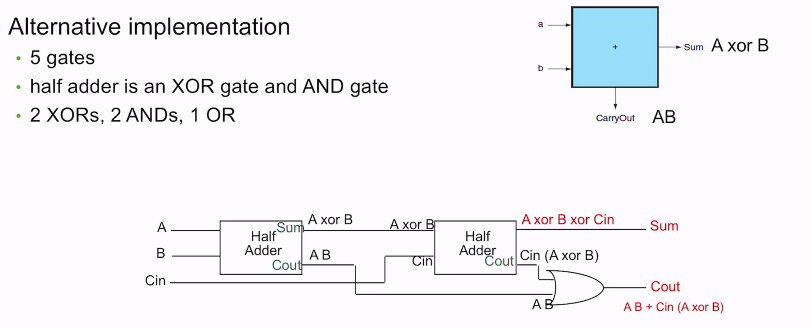
It can be constructued using two half adders and one OR gate
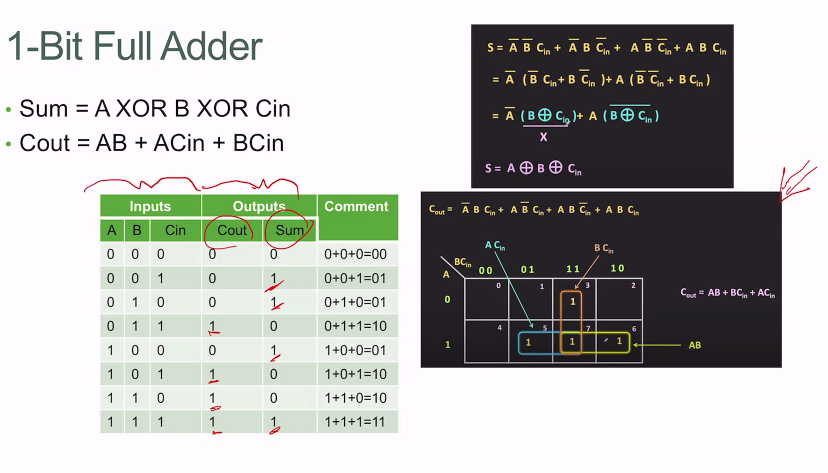
More explanation on how the sum was gotten.
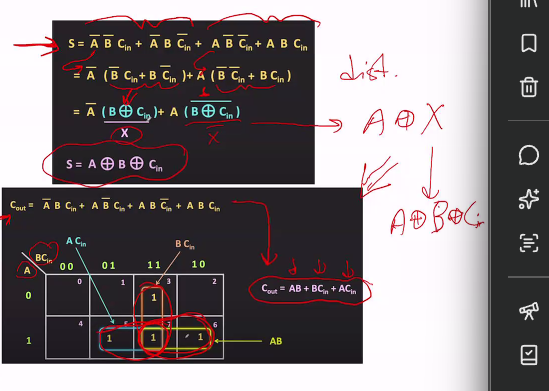
Standard Gate Logic Design Apporach
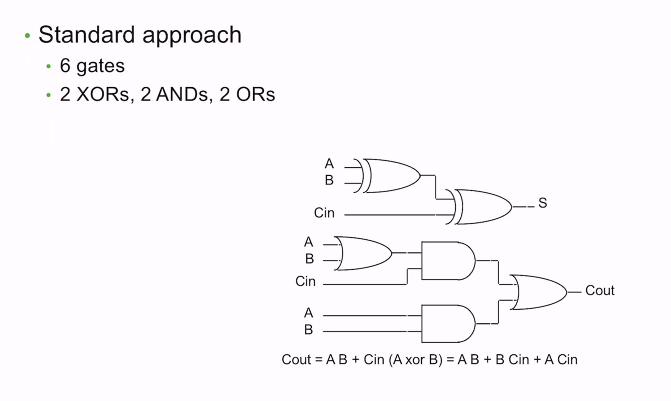
Alternative implementation
Ripple-Carry Adder
We cascade 1-bit adders together
Parallel Adder
Example of logic implementation
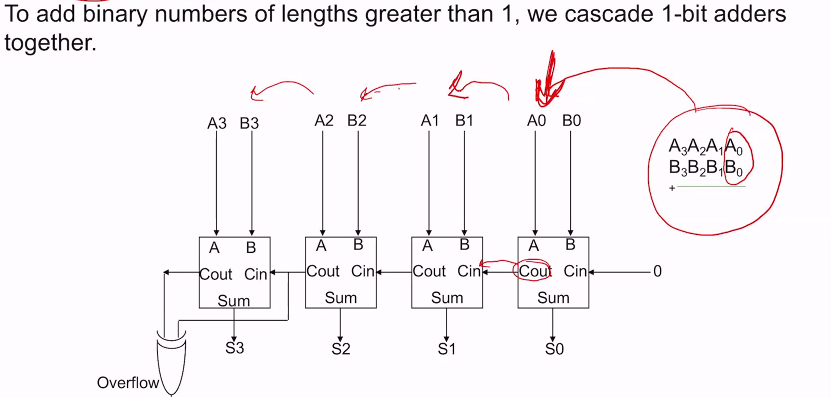
With overflow, when it is 0, there is no overflow, and when there is 1, there is overflow
The reason why it is a XOR gate is because the only conditions to have overflow is 01 and 10, which match the definition of overflow
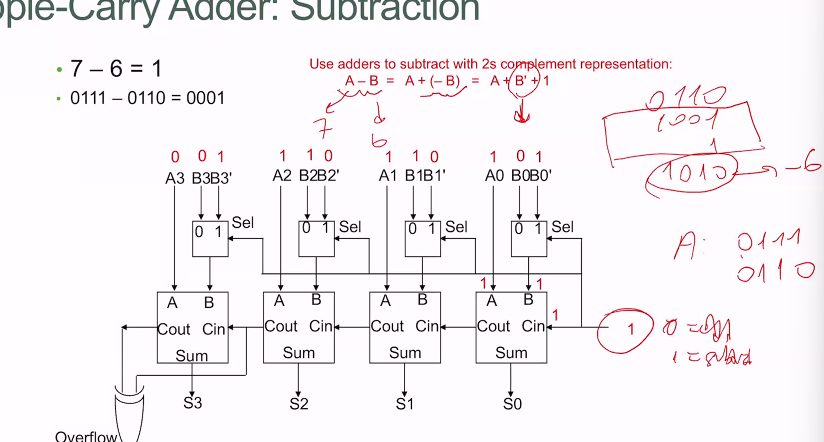
Subtraction with Ripple-Carry adder
Disadvantage with Ripple-Carry Adder
Very long delay
Carry bit may have to propagate from LSB to MSB
Worst case delay for n-bit adder = 2n gate delays
Carrys from low to high order stages
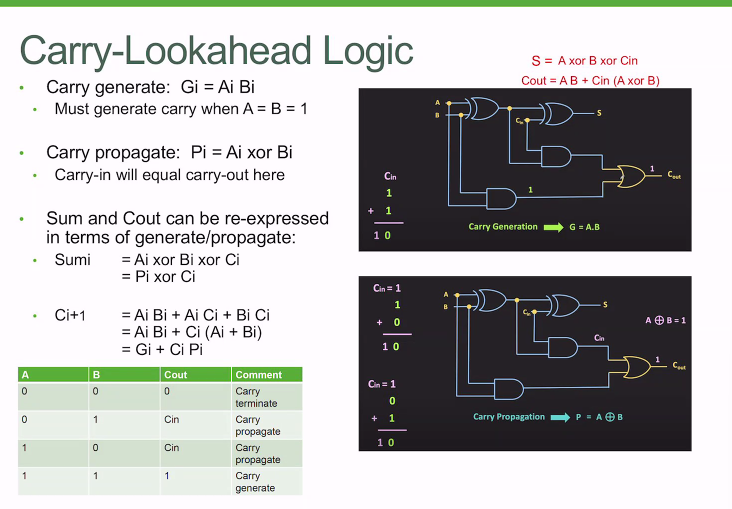
The key to speeding up addition is determining carry values sooner/quicker
Carry -Lookahead Logic
32-Bit ALI
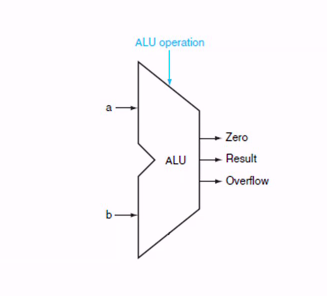
Computer Arithmetic
(Arithmetic logic unit) = ALU
Integer Multiplication
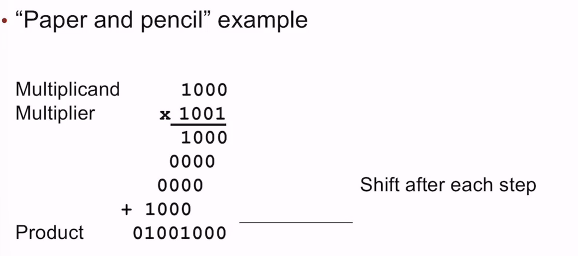
Combinational Multipier
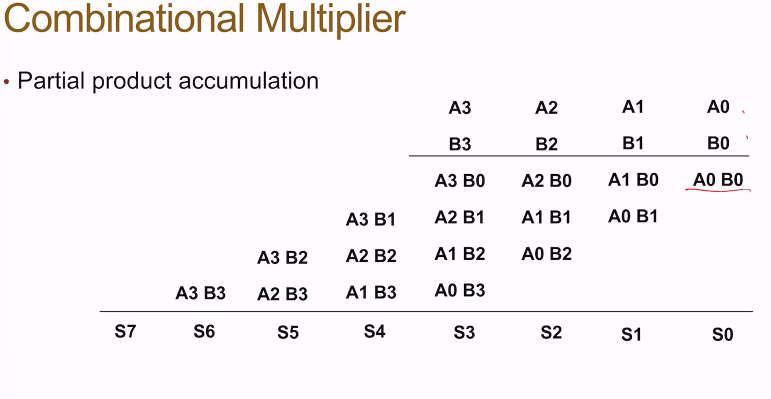
Problem is it is waaay to many gates, 12 adders, need 88 gates total.
Some obervations:
The # of bits in the product is larger than the number in either the multiplicand or the multiplier(factor a and factor b)
m bits x n bits = m + n bit product
Overflow is a possible issue
Binary rule “choices”
0 => place 0
1=>place a copy
3 versions of unsigned multiplication hardware
sucessive refinement
Version 1
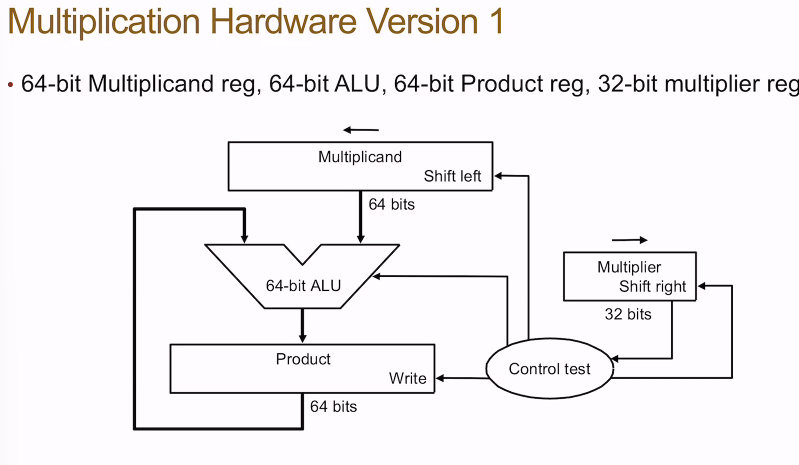
If the LSB of multiciand is 1, add that to the product, other then, keep going
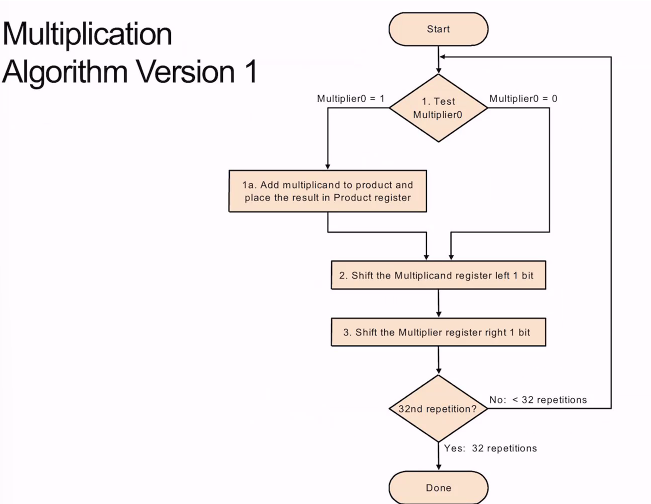
Example 1 with this version
11 × 9
0000 1011(11) times 1001(9), initializing currently, with iteration 0 and step 0, and product currently at 0000 0000
iteration 1, steps 1a. 2, 3, wiht the action adding and shift, product is currently the multipcant, and the multiple is shifting the value of everything to the left(0001 0110) while the other one shift to the right(0100)
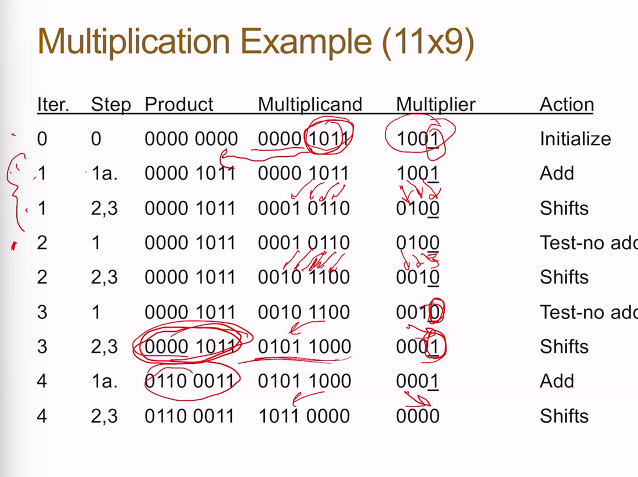
96 Steps, around 100 clock cycles.
Observations on Version 1:
Half the bits of the miltiplicand are always 0, so the 64-bit adder is wasted
Version 2
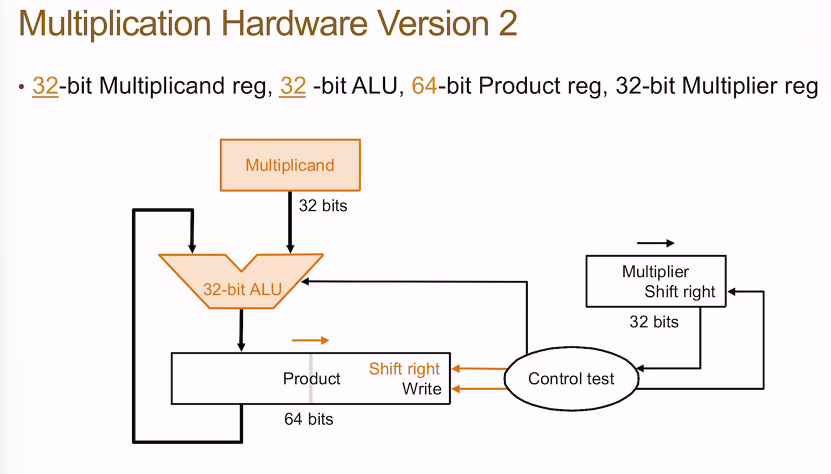
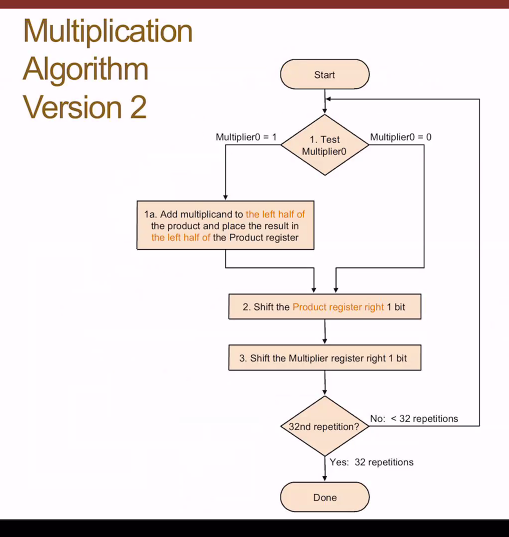
Version 2 Example(11 × 9)
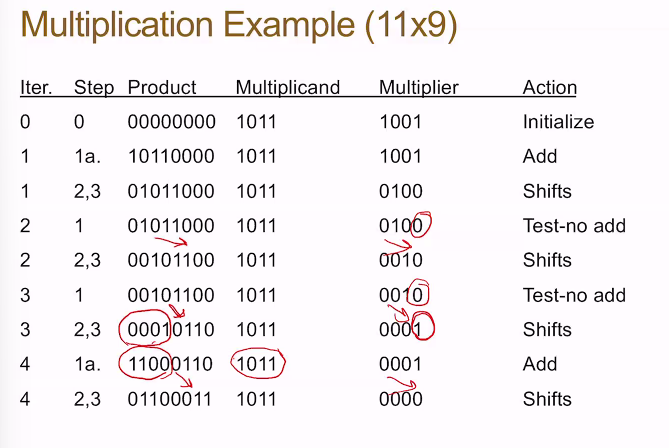
Observations
Product register wastes space, so
Version 3
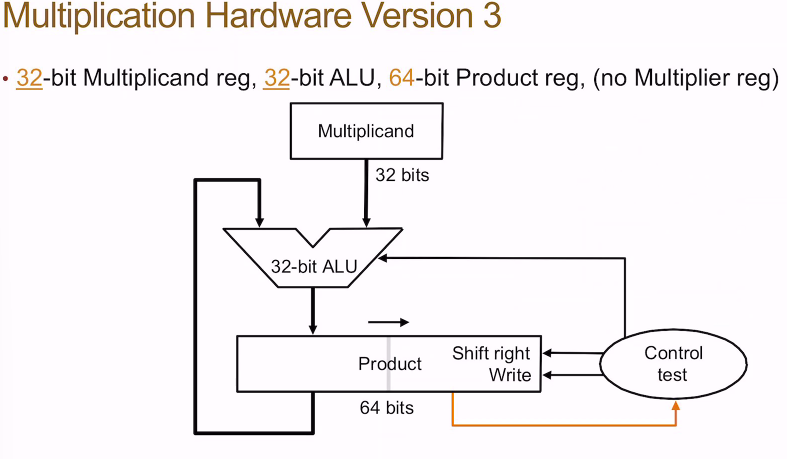
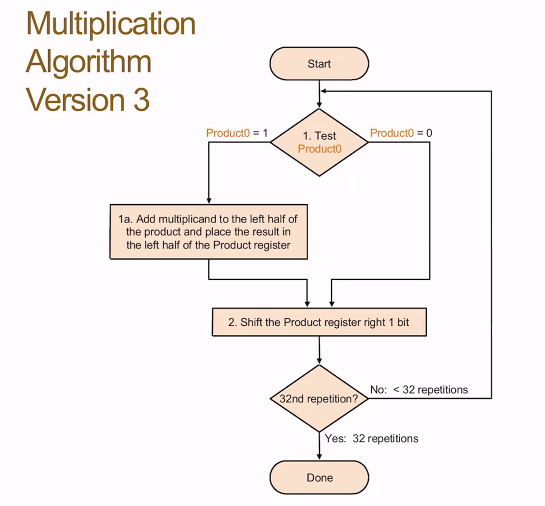
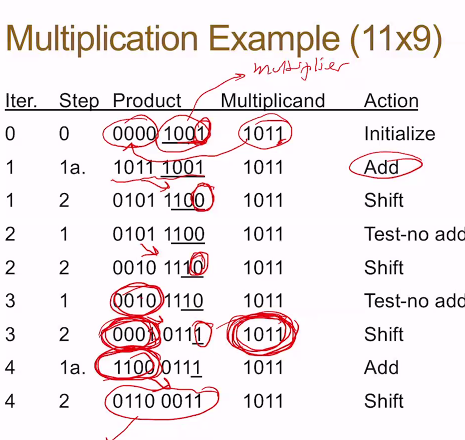
it places the multiplier in the lower half of the product(essentially using the product as a multiplier)
Example 3(same numbers, just how to implement it)
Multiplying by a Constant
Essentially, it mutlplies short constants with a series of shifts and adds, with it having the same effect as multplying 2² or 2³, stuff like that.
Signed Multiplication
Make moth positive, leave out the sign bit, run for 31 stpes, nad set sign bit negative of signs of inputs differ( + / - = -)
Booth’s Algorithm
Multiply two-s complement signed numbers, uses the same hardware as before, and reduce the number of steps
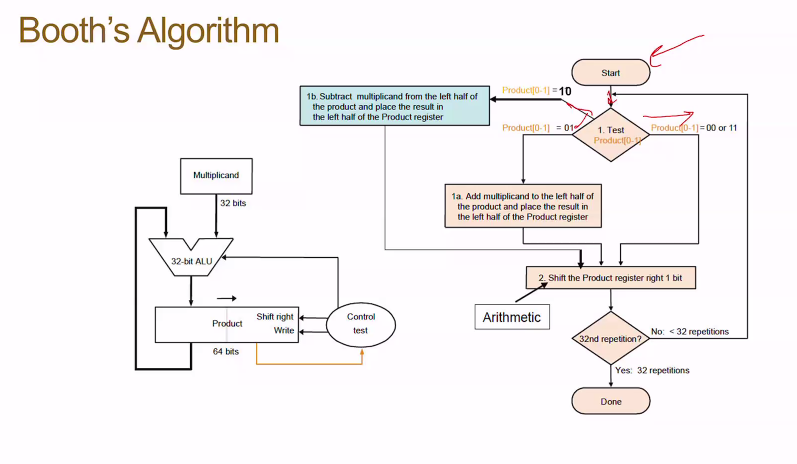
The multiplcation is handled by algorithm 3 from last time for multiplying(the one where the product is a representation of the multiplyer)
When product is 10, substract multiplcand from the left half of the prpduct and place the result in the left half of the Product register.
When prduct is 01, add multiplcand to the left half of the prpduct and palce the result in the left half of the Pruduct register
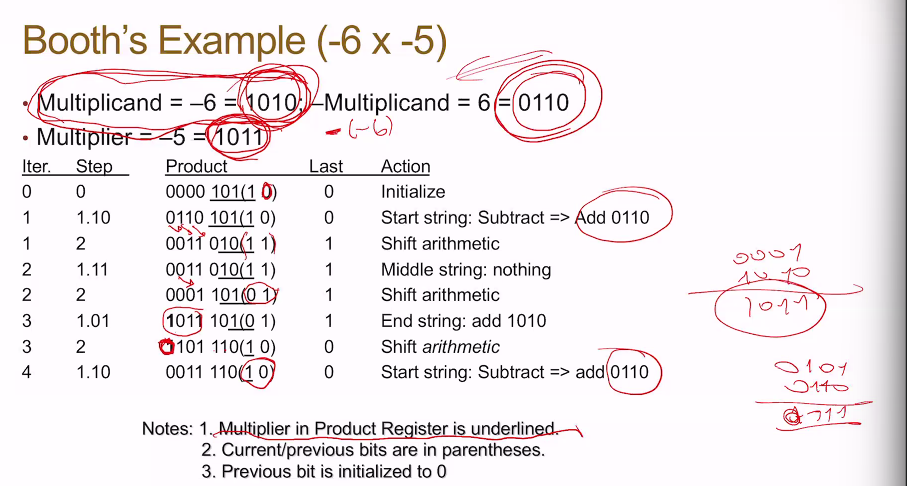
Example(-6 X -5)
-6 = 1010 = 0110
-5 = 1011
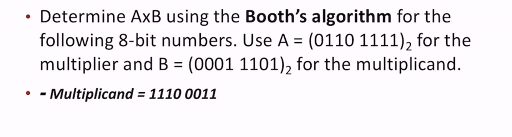
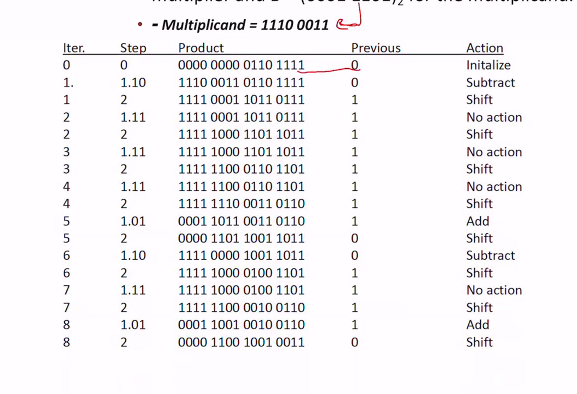
Another Example:
Solution:
Orginally for speed, since shifts are faster than adding and works proprerly for 2’s complement numbers without the specifal fix for sign