Unit 5 Long–Run Consequences of Stabilization Policies 🪙
Topic 5.1 Fiscal and Monetary Policy Actions in the Short Run
Why are policies implemented?
A policy is implemented to close output gaps.
If we have. a recessionary gap, lower unemployment
If we have an inflationary gap, lower inflation.
How are policies implemented?
A fiscal policy manipulates aggregate demand by changing spending and taxes.
A monetary policy manipulates aggregate demand by changing interest rates.
A combination of expansionary or contractionary fiscal and monetary policies may be used to restore full employment when the economy is in an inflationary or recessionary output gap.
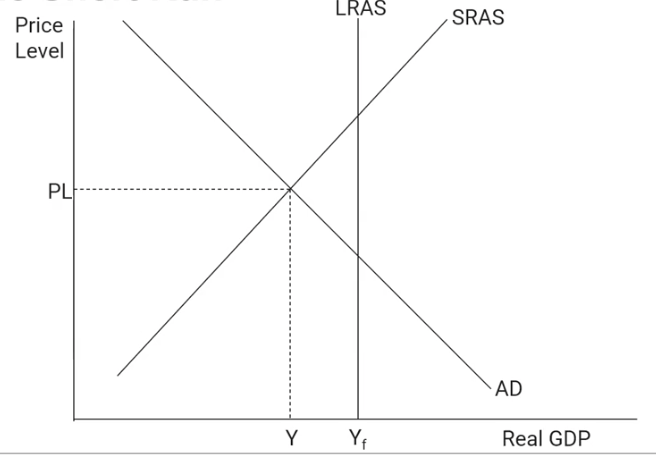
In a recessionary gap, increase spending, lower taxes, increase aggregate demand, and decrease unemployment.
In an inflationary gap, decrease spending, increase taxes, decrease aggregate demand, and decrease price level.
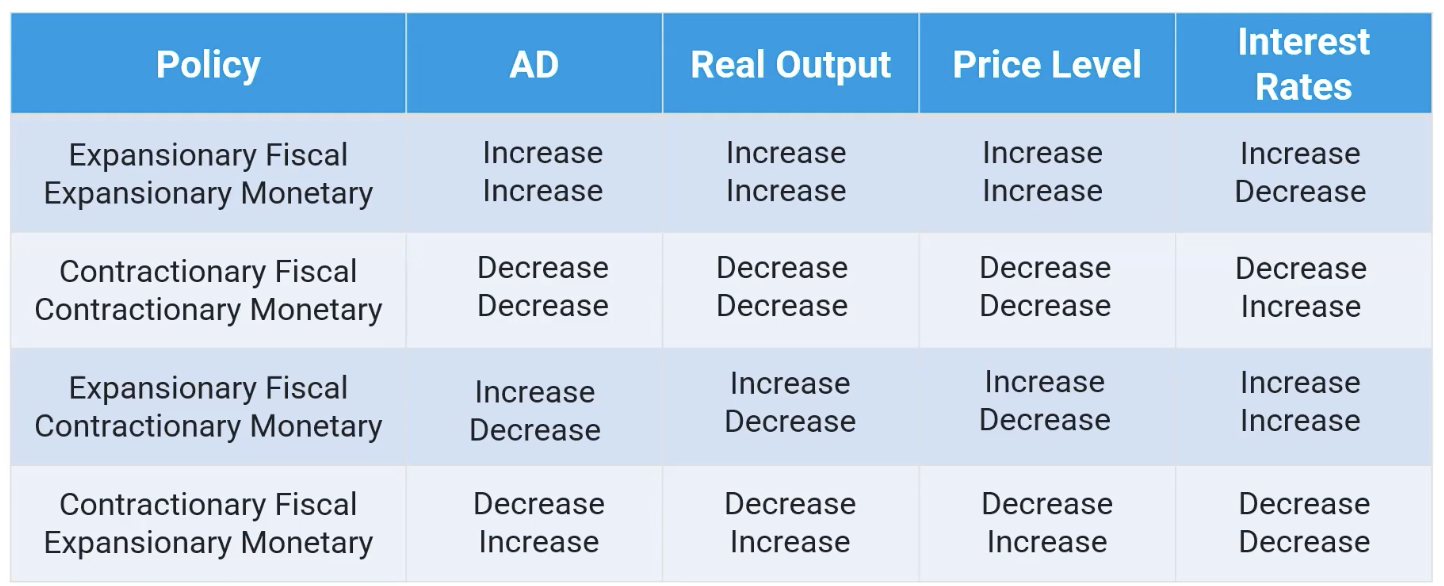
A combination of fiscal and monetary policies can influence aggregate demand, real output, price level, and interest rates.
Topic 5.2 The Phillips Curve
The short-run phillips curve shows the inverse relationship between inflation and unemployment.
As inflation decreases, unemployment increases.
When inflation is high, it means that the value of dollars decreases.
Erosion in purchasing power causes wages to go down in value. as well as the cost of materials
When inflation increases, companies can hire new workers, they can expand production
So, the interest or the inflationary rate goes down in value, unemployment increases.
The rate of inflation and unemployment (a point on the curve) moves up or down as GDP or AD changes.
The long run phillips curve shows the natural rate of unemployment.
It is also called full employment.
There is an equilibrium hen the SRPC and the LRPC intersect.
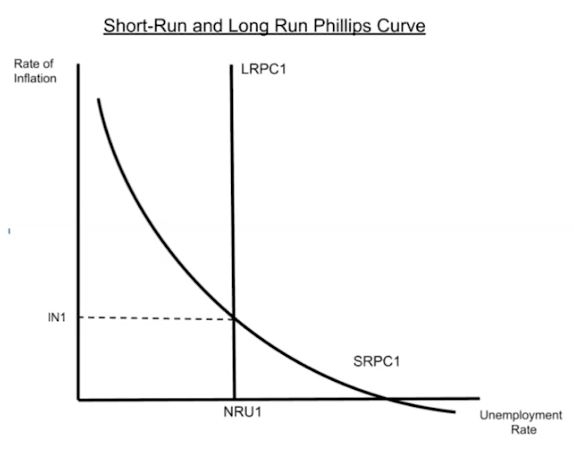
An inflationary gap is on the left of the SRPC.
A recessionary gap is on the left of the SRPC.
Topic 5.3 Money Growth and Inflation
An inflation or deflation is an increase or decrease in price level.
Inflations or deflations result from increasing or decreasing the money supply at a very rapid rate for a sustained period of time.
A demand pull inflation occurs when aggregate demand increases faster than the economy’s capacity to produce.
More government spending.
Increased consumer confidence.
Lower taxes.
Lower interest rates.
A cost push inflation occurs when the cost of production increases. Also known as stagflation because inflations occurs with production issues.
Rising wages
Oil/commodity price shocks.
Supply chain shortages.
Natural disasters.
Theory of money neutrality explains why printing more money doesn’t actually help economic growth in the long run.
Doubling the money supply doubles all prices, but nothing “real” changes — no rise in output or employment.
Households’ purchasing power stays the same because wages and prices rise together.
Firms face higher costs but also get more revenue — so production doesn’t change.
This theory supports the idea that inflation is a monetary phenomenon.
When the economy is in long run equilibrium/full employment, changes in the money supply have no effect on real output in the long run.
In the long run, the growth rate of the money supply determines the growth rate of the price level (inflation rate) according to the quantity theory of money.
Equation of Exchange: MV=PY
M = money supply.
V = velocity of money.
P = price level.
Y = real output.
In the long run, changes in the price level are directly proportional to changes in the money supply.
In the long run, change in the money supply have enough effect on real variables.
In the short run:
Expansionary monetary policy can increase output and lower unemployment.
This helps fix recessionary gaps temporarily.
In the long run:
The economy returns to full employment.
Real GDP returns to the natural rate (Y stays the same).
All that’s left is a higher price level.
Consistent with the quantity theory and monetary neutrality.
U.S. 2008-2020: Large monetary stimulus, but low inflation due to low velocity and underutilized resources.
COVID stimulus: Boosted demand faster than supply increased, which led to inflation concerns.
Topic 5.4 Government Deficits & National Debt
The total amount owed or an accumulation of deficits and surpluses is debt.
When spending is greater than income, we have a deficit.
When income is greater than spending, we have a surplus.
A statement or plan of a government’s receipts and expenses required to function is budget.
The difference between tax revenue and government spending is the government budget balance.
Government receipts, revenue, and income is earned through taxes.
Government expenses or outlays are government spending and transfers.
The state of the government budget balance can be in 3 states.
Balanced budget: income=expenses.
Budget surplus: income, revenue, taxes> expenses, outlays, and transfers.
Budget deficit: expenses, outlays, and transfers> income, revenue.
A government adds to the national debt when it runs a budget deficit.
An expansionary fiscal policy leads to a budget deficit. I
A contractionary fiscal policy leads to a budget surplus.
Over time, continuous deficit spending is what creates the national debt.
Topic 5.5 Crowding Out
When government borrowing raises real interest rates and reduces private investment, the government is crowding out.
It happens most often during expansionary fiscal policy when the government increases spending or runs a deficit to stimulate the economy.
The higher interest rates make it harder for households and businesses to borrow, which pulls down investment spending—especially on interest-sensitive things like capital purchases, construction, or consumer durables.
Government borrowing can be seen in the loanable funds market.