Neurobiology II
Net difference in electrical charge occurs at the inside and outside surfaces of the membrane
large potential changes caused by minuscule ionic concentrations changes
rate of ion movement is proportional to the difference between the membrane potential and the equilibrium potential (driving force)
Type of membrane potentials
1) resting membrane potentials
at rest
created by Na/K pumps
persists due to leaky channels
2) Graded potentials
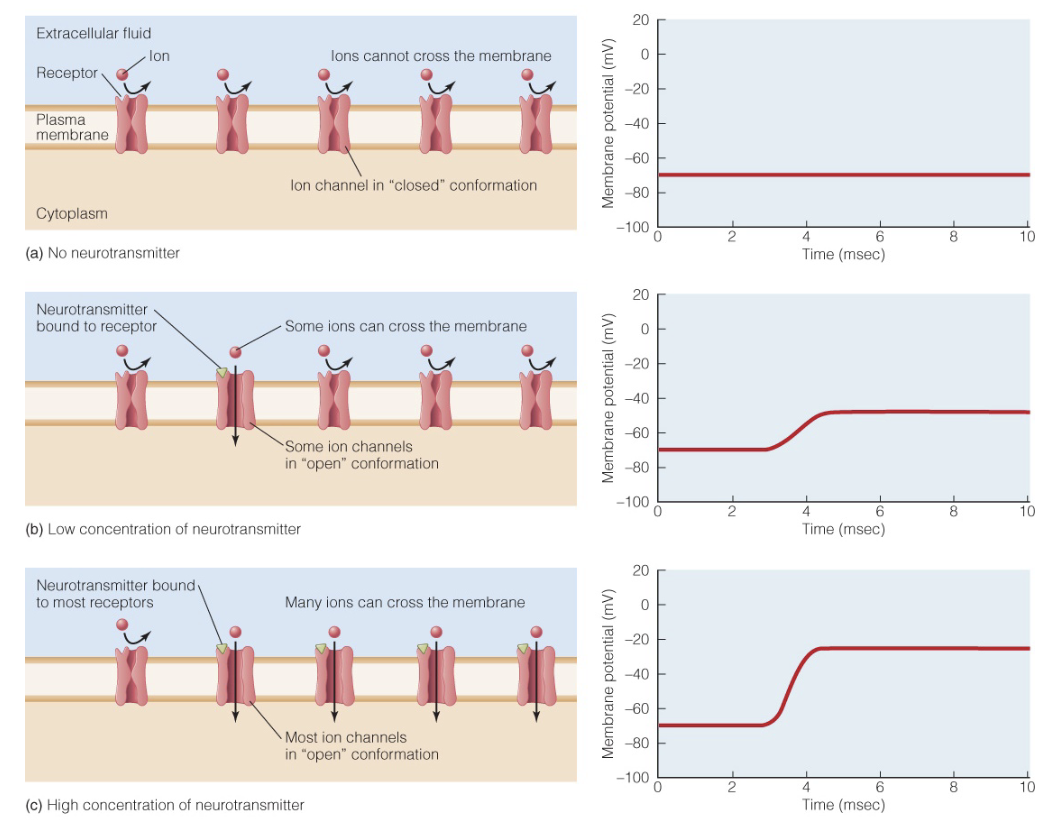
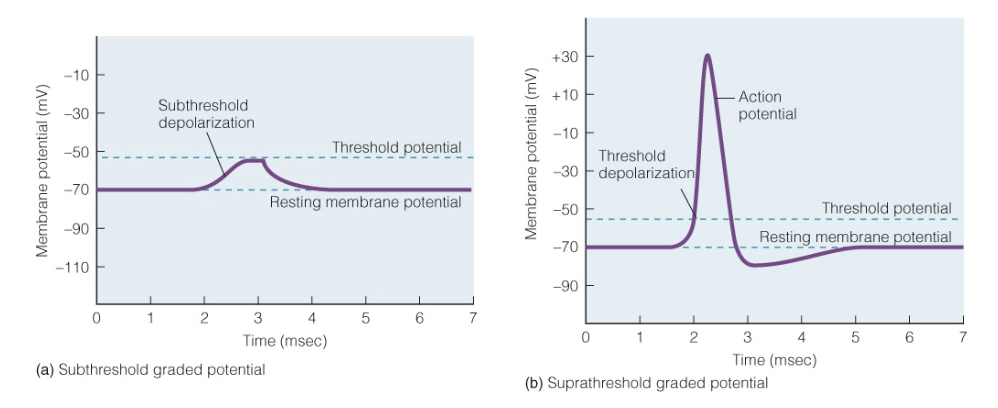
transient changes that occur locally
short distance signals
vary in magnitude and duration
occur in dendrites and cell bodies
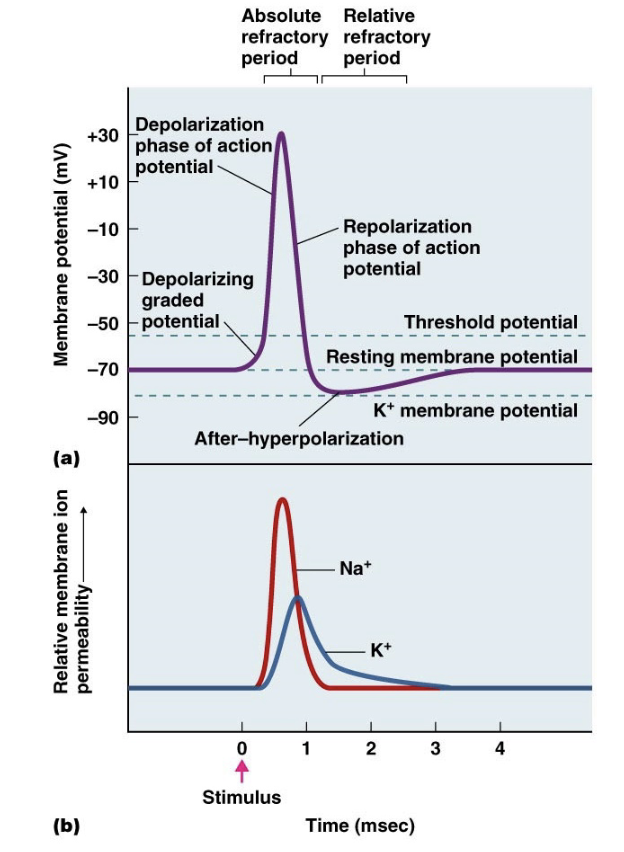
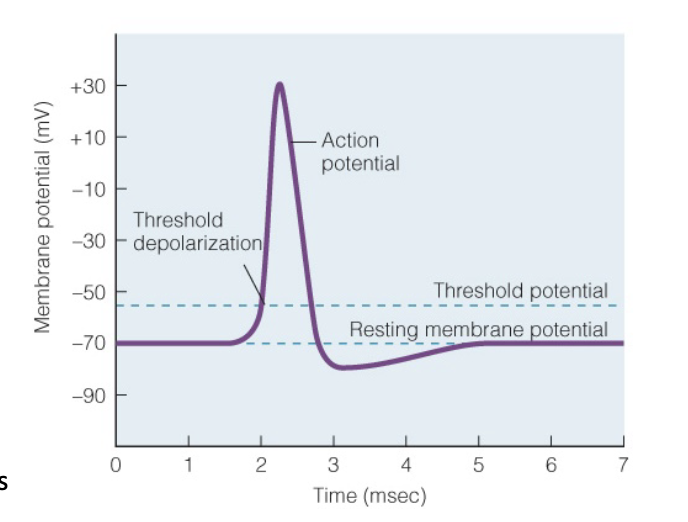
3) Action potential
all or none
Ligand gated ion channels cause graded changes
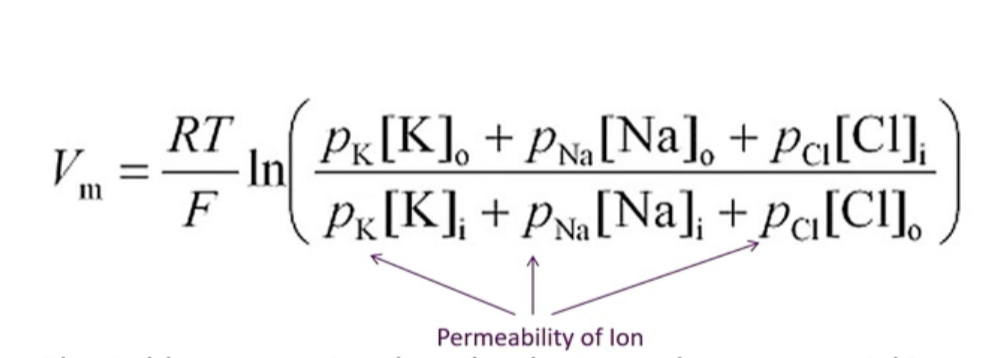
Goldman equation
describes how membrane potential is determined by ionic concentration gradients and permeabilities
Graded potentials decay over short distances
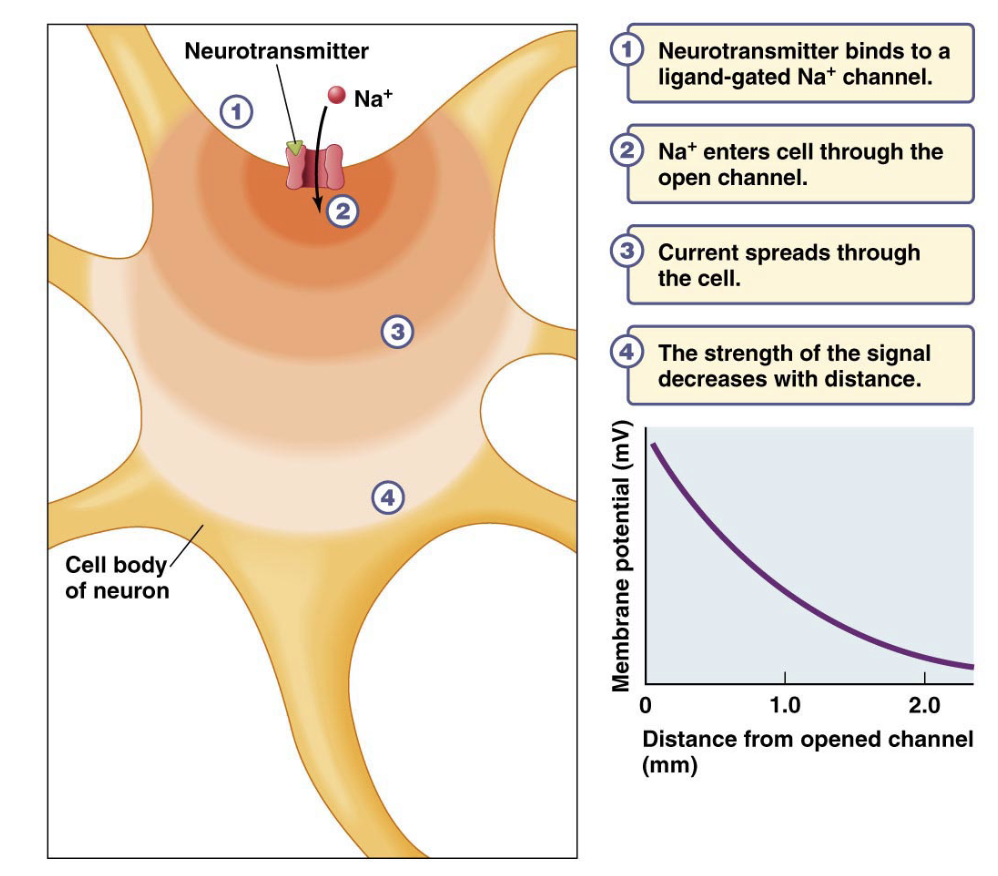
length constant - the distance that electronic current can spread along the membrane
distance to decrease to 37% of original value
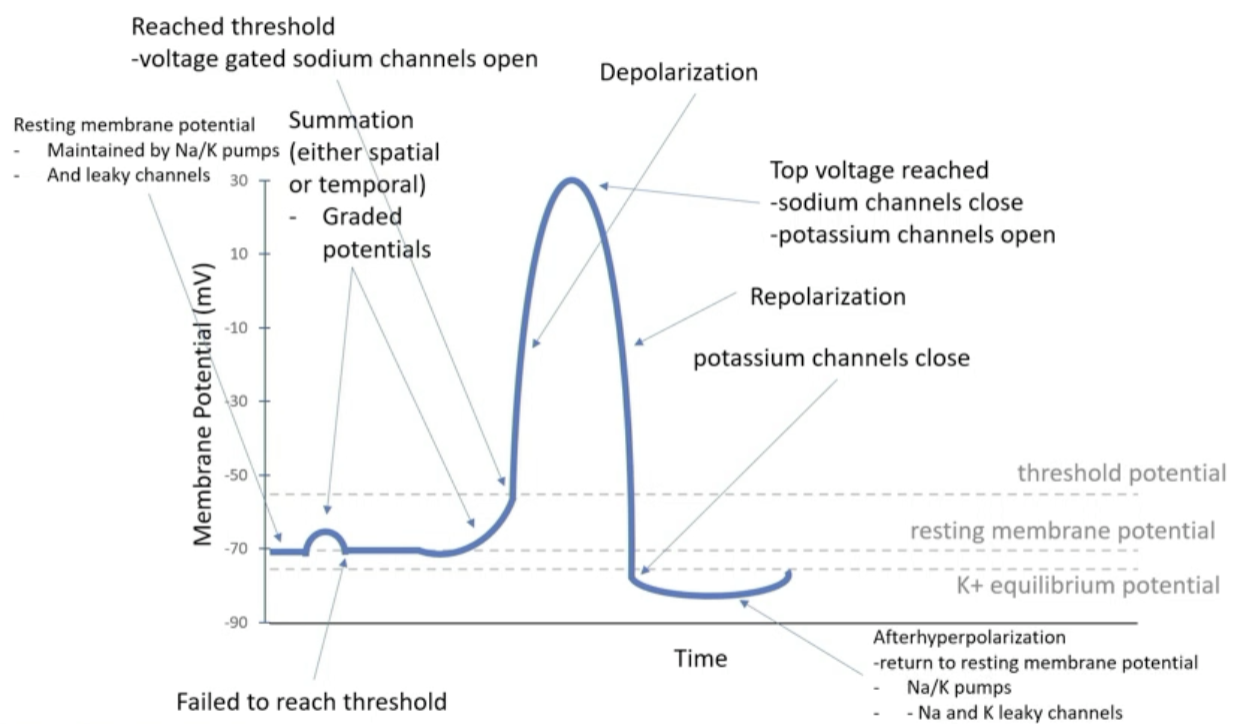
Threshold potential
membrane potential required to initiate an action potential
usually around -55mV
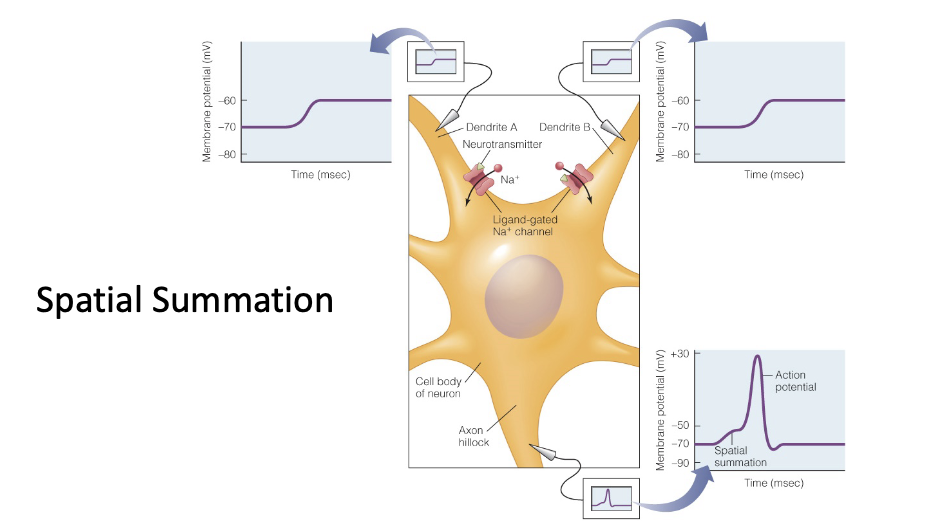
Spatial Summation
integration of graded potentials occurs in space
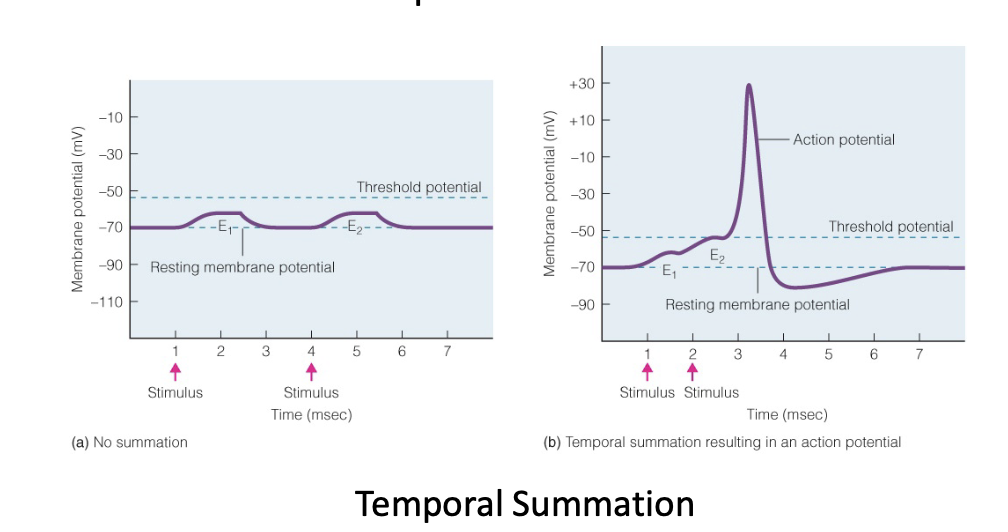
Temporal summation
integration of graded potentials occur in time
Graded potentials cause depolarization or hyper polarization
Excitatory post-synaptic potential (EPSP)
a temporary depolarization of the postsynaptic membrane caused by the release of neurotransmitters from a presynaptic neuron.
make the postsynaptic neuron more likely to fire an action potential.
Neurotransmitter - glutamate and involve the opening of ligand-gated ion channels, allowing the influx of positively charged ions such as sodium (Na+) or calcium (Ca2+).
Inhibitory post synaptic potential (IPSP)
temporary hyperpolarization of the postsynaptic membrane potential caused by the opening of ion channels that allow the influx of negatively charged ions (e.g., chloride ions) or the efflux of positively charged ions (e.g., potassium ions).
IPSPs make it more difficult for the neuron to generate an action potential, thus inhibiting the transmission of signals between neurons.
Action Potential
all or none
long distance signals
maintain amplitude
same magnitude and duration for a given cell
occur in axons
caused by opening and closing of voltage-gated channels
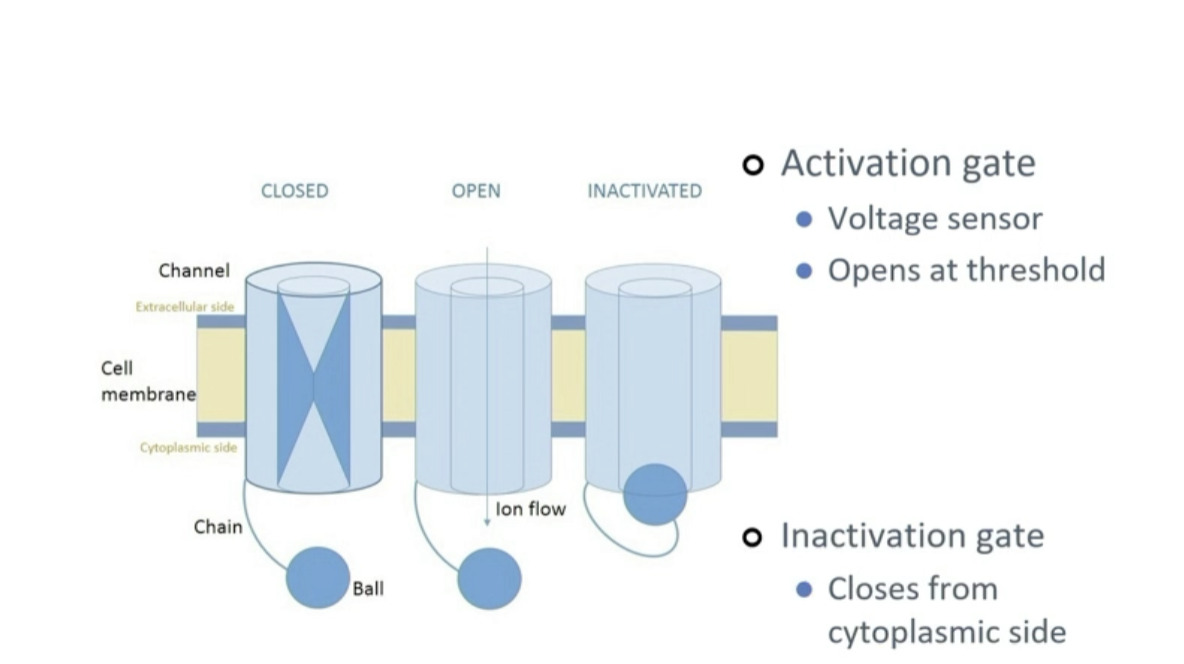
Gates
Activation gate
voltage sensor
opens at threshold
Inactivation gate
closes from cytoplasmic side
Depolarization of the membrane