Week 9 Readings
17.2 Transcription and RNA Processing in Eukaryotes (M/T)
Additional levels of gene regulation
mRNA processing
DNA packaging
separation of space of transcription and translation
Transcription is a key control point in gene expression
we need a group of coordination actions of proteins to regulate gene expression
Regulatory Transcription Factors
has two binding sites
one will bind with a DNA sequence (enhancer)
other binding site will recruit general transcription factors and will attract RNA polymerase complex (will make an RNA transcript complementary to the template)
Binding with silencers will repress transcription
All protein coding genes will use the same RNA polymerase complex
Combinatorial Control: transcription of a gene with multiple silencers and enhancers depends on the presence of a particular combination of regulatory transcription factors
RNA Processing is also important in gene regulation
Transcription in the nucleus
Translation will happen in the cytoplasm
the separation of these processes will allow for evolution and modifications
the addition of the 5’ cap and a string of 250 adenosine nucleotides to the 3’ end (poly (A) tail)
The poly a tail will help determine the length of the RNA
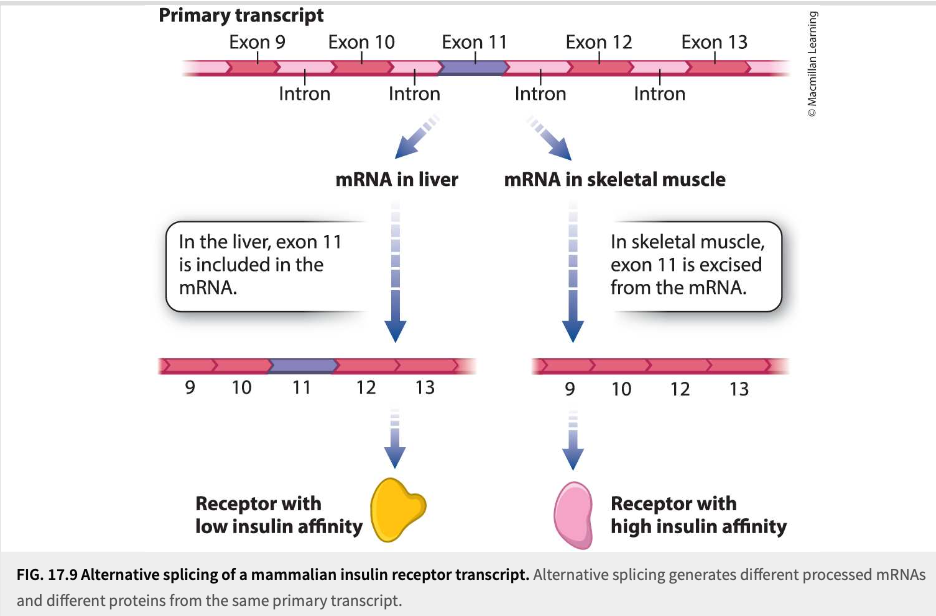
The length of the primary transcript is longer than the actual mRNA
since it will contain exons (expressed regions) and introns (removed)
exons are joined together through RNA splicing and the removal of the introns → spliceosome
Alternative splicing: regulating gene expression since the primary transcript can be spliced in different ways to yield different proteins
spliceosome recognizes an exon as an intro
generate different processed mRNAs and different proteins
RNA Editing: RNA molecules can become a substrate for enzymes that modify particular bases in the RNA
not all transcripts are edited and some copies may be edited more than others
transcripts from the same genes can produce multiple types of proteins
17.3 Messenger RNA to Phenotype in Eukaryotes (M/T)
mRNA travels through nuclear pores and can be modifies in the cytoplasm
Small Regulatory RNAs promote mRNA degradation or inhibit translation
Small Regulatory RNAs: regulatory RNA molecules
siRNA (small interferring RNA)
miRNA (microRNA)
Translation regulation control the rate,timing, and location of protein synthesis
Almost all mRNA contain
5’ cap
5’ untranslated region
open reading fream
3’ untranslated region
poly (a) tail
regions will cause for mRNA to be translated in certain places in the cell
Cap structure is one of the main recognition signals for the translation initiation
3’ UTR and the poly (a) tail will create a loop in the mRNA to bring the 3’ end to the start site for translation
the secondary folded structure of the 5’ UTRR, the distance from the 5’ cap to the AUG initiation codon, the sequences flanking the AUG initiation codon will make the mRNA molecules accessible to translation
Protein structure and chemical modification modulate protein effects on phenotype
Posttranslation Modification: protein are modified after translation to regulate their structure and their function
ex. having some protein be activated at some points
Chaperones: will help portein fold properlly
Modifications helps with protein activity
17.4 Chromatin Remodeling and Epigenetics (M/T)
Chromatin: DNA is packaged in this form
when coiled then the DNA is not accessible for transcription
Chromatin remodeling: nucleosome are repositioned to expose different stretches of DNA
Gene expression can be influence by chemical modification of DNA or histones
Histone Tail: strings of amino acids that protrude from the histone proteins in the nucleosome
histone modification occurs to ensure that the proper genes are turned on or off
Methylation: repression of genes
occurs in CpG islands
Epigenetic: changes to the way the DNA is packaged → the modification of cytosine bases, posttranslation modification of histone tails, alteration in chromatin structure
affects gene expression
Imprinting: preprogrammed epigentic changes
occurs forever in somatic cells
Gene Expression can be regulated at the level of an entire chromosome
Each copy of the gene is regulated independently of other copies
dosage compensation: the differential regulation of x chromosomal genes in females and in males
repressing the expression of an x chromosome in females
Gene expression can be regulated at different levels
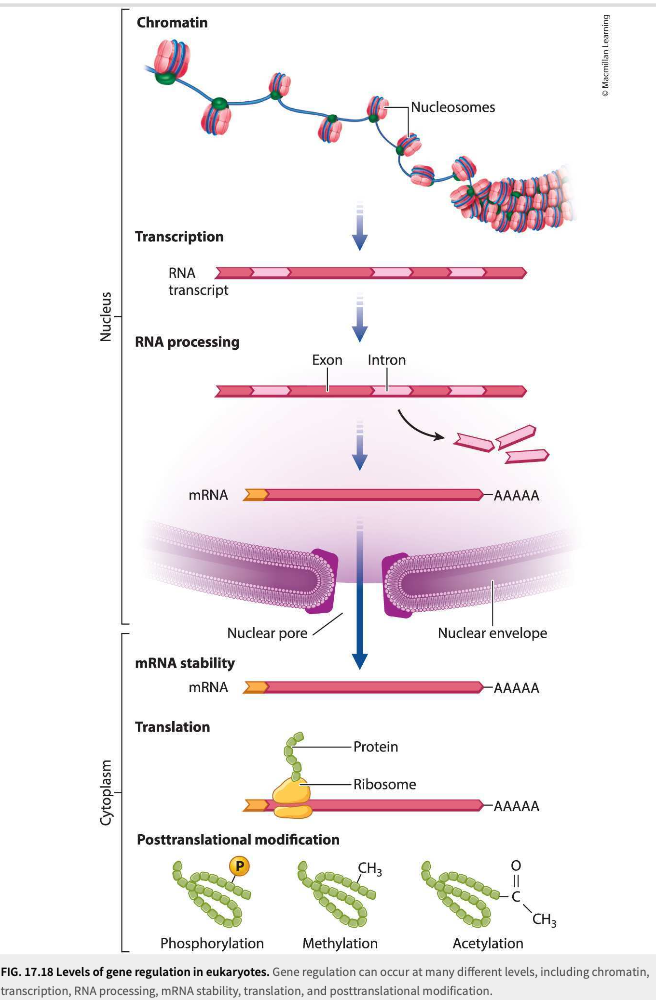
chromatin
transcription
RNA processing
mRNA stability
translation
posttranslation
Your lifestyle choices can affect gene expression in your own genome
most of the regulation steps are determined by physiological state of cells which is determined by the environment
there will be feedback with gene expression and the environment since if the individaul is intaking the protein through food then the body will not express that protein
Genome Browser Video:
how to set up the window:
reset the settings
use the gene code v48
look at comparative genomics
Exploring the reference Human Genome:
conservation of the genome shows the importance of the gene
Isoforms: splice variants of a gene
how to idenitfy promoter region, start end of transcription, nucleotides in mRNA
promoter you would look at the start of the transcript
click on the gene to see the length of it in base pairs
will also show the length of the coding region
how to determine start and end of translation?
translation with start at the broad region of the first exon
zoom in to see the stop codon, 5’ UGA 3’
open reading frame: codes for a protein and starts with a start codon
mRNA will first be processed to remove the introns and translation will begin
UTRs are not include in translation
zooming in will tell you the amount of amino acids or zooming in at the end of the 3’ region
How to distinguish between the forward and reverse strands
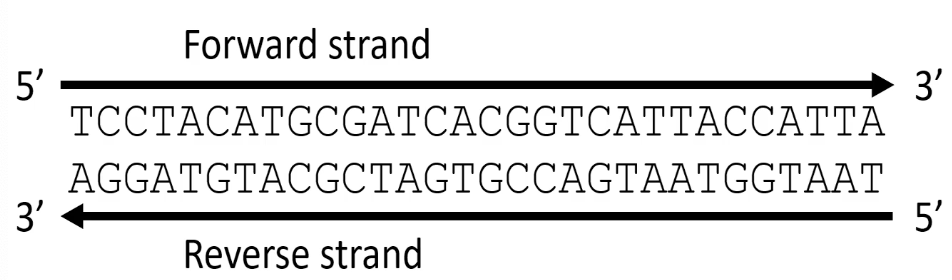
forward: 5’ to 3’
reverse: 3’ to 5’ but will got 5’ to 3
Reverse strand represents an identical copy to the mRNA sequence but the t’s will be u’s
protein coding DNA will contian the instruction need to make proteins
contains exons and introns
how to read acetylation data associated with genic and intergenic regions?
how to distringuish between conserved and not conserved regions
genic: contains introns and exons
intergenic: spaces between genic regions
acetylation in the layered region
12.2 Recombinant DNA and DNA Editing (W/R)