Urinary System
Urinary System
Filters 200L of blood daily, removing toxins, metabolic wastes, excess ions, etc.
Regulates volume and chemical makeup of blood
Maintains the proper balance btwn water and salts; acids and bases
Important system for excretion—removal of cellular waste
Urine = trash
What is Excretion?
Removing cellular waste from the body
Also performed by other systems (respiratory system excretes CO2)
Urinary system excretes urine
Other Renal Functions
Gluconeogenesis during prolonged fasting
Production of renin to inc BP and erythropoietin to stimulate RBC production
Activation of vitamin D to form calcitriol to inc blood calcium
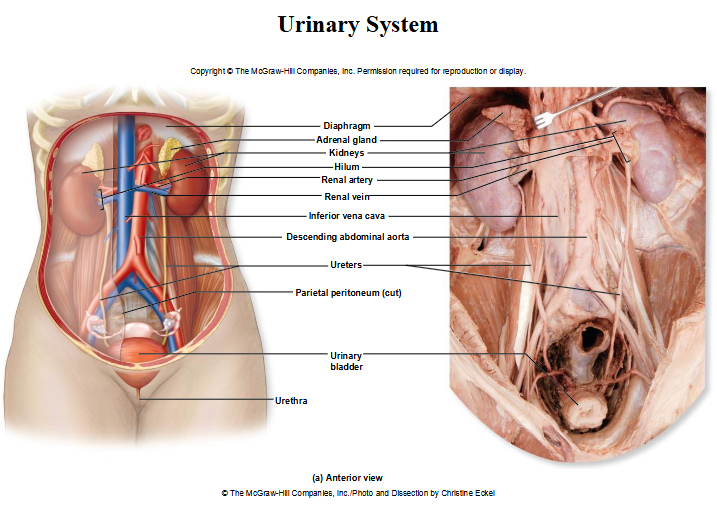
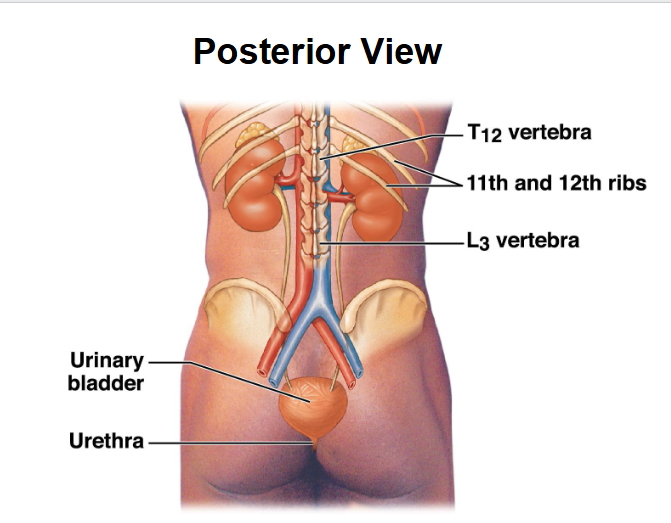
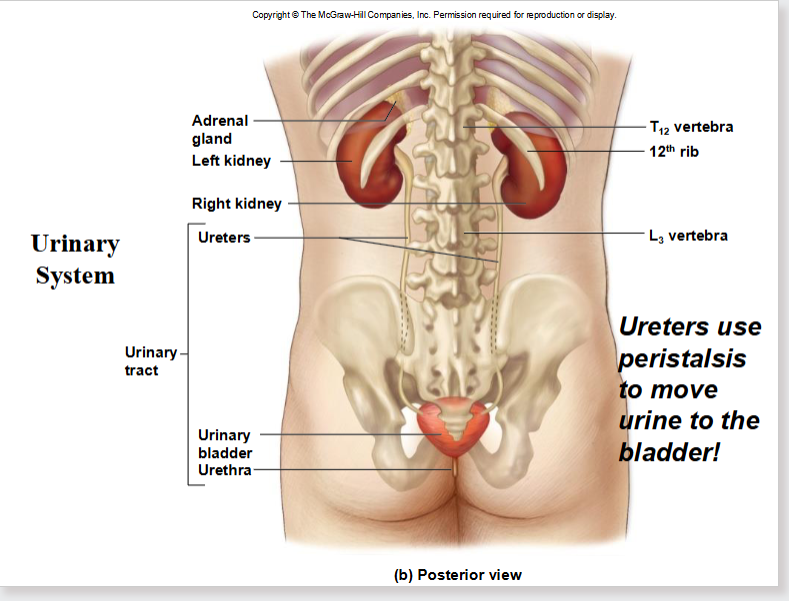
Urinary System is Retroperitoneal
Kidneys
Form urine from blood substances and transport it to the ureters
The surrounding fibrous capsule prevents infection
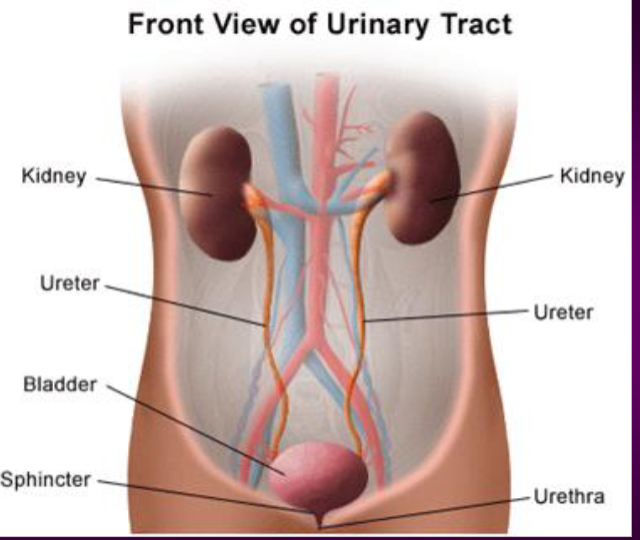
Ureters—transport urine from kidneys to bladder by peristalsis
Urinary bladder—stores urine
Urethra—transports urine from bladder → outside of body
Urinary Bladder
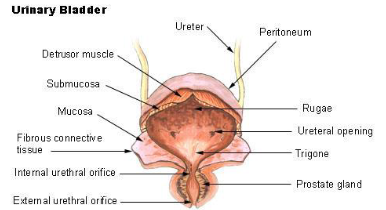
Collapsible, smooth muscle sac (detrusor muscle) lined w/ transitional epithelium
Trigone—a triangular area outlined by the openings for the ureters and the urethra
Clinically important bc infections tend to persist in this region
Blood Supply
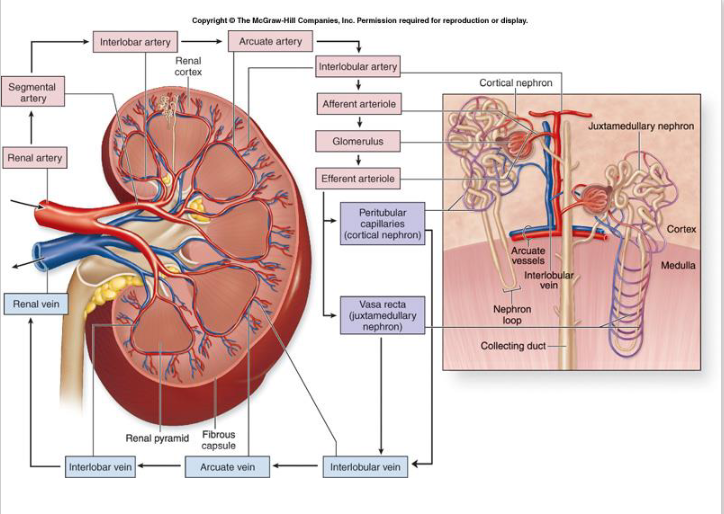
~1/4 (1200 ml) of systemic cardiac output flows through the kidneys each minute
Arterial flow into/venous flow out of the kidneys follow similar paths

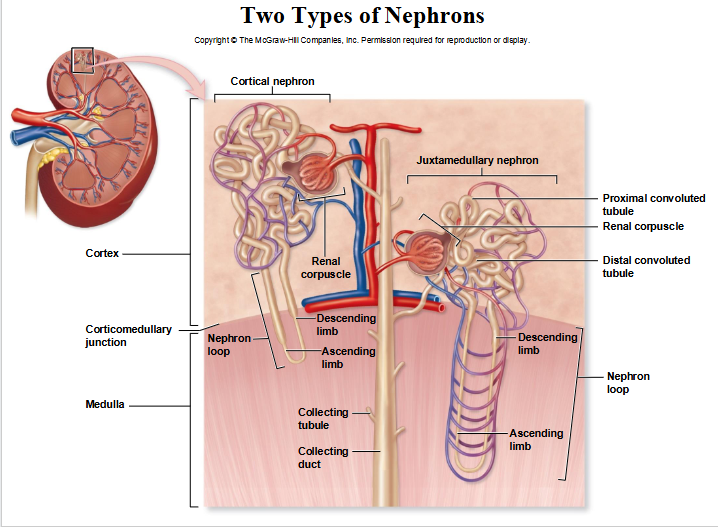
Vasa recta are only found on the nephron loop of the juxtamedullary nephrons, which dip far down into the medulla, shown in the next figure
The Nephron
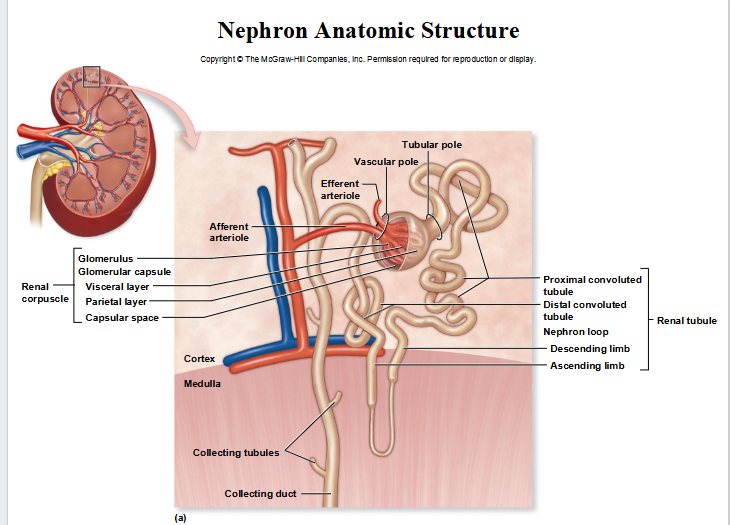
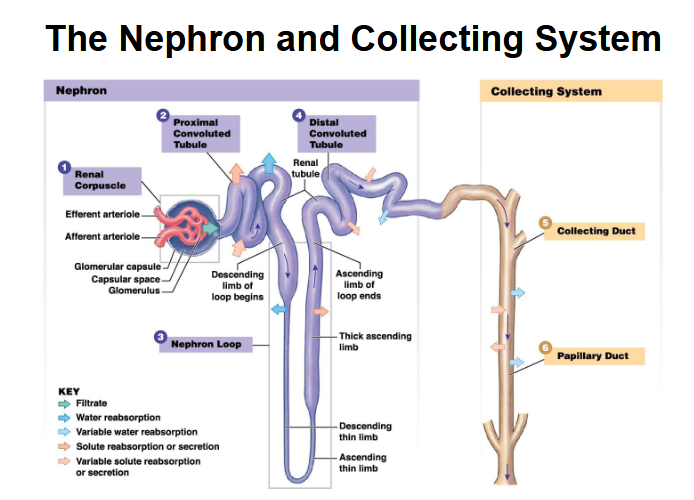
Structural and functional units that form urine, consisting of
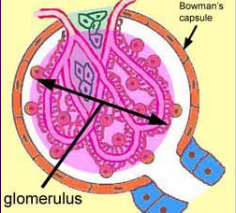
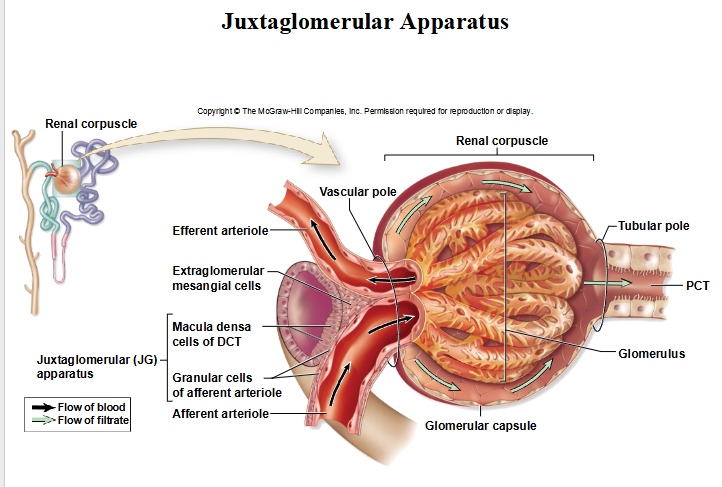
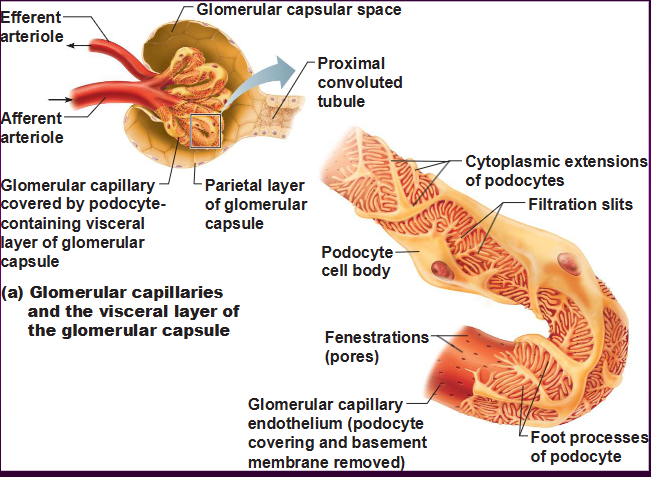
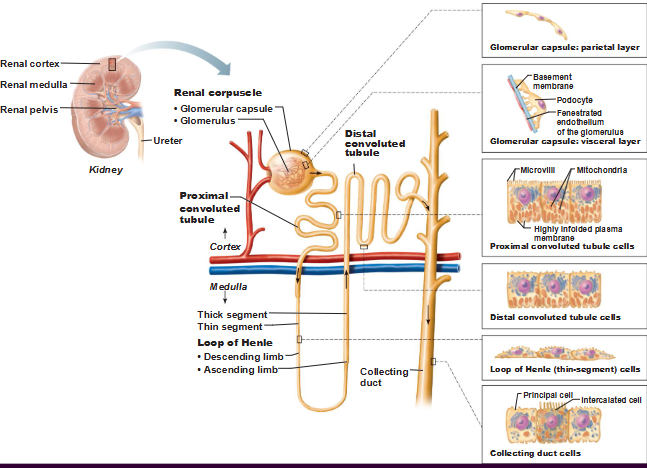
Glomerulus—a tuft of capillaries assocaited w/ a renal tubule
Glomerular (Bowman’s) capsule)—cup-shaped end of a renal tubule that completely surrounds the glomerulus
Renal corpuscle—the glomerulus and its Bowman’s capsule (the combination)
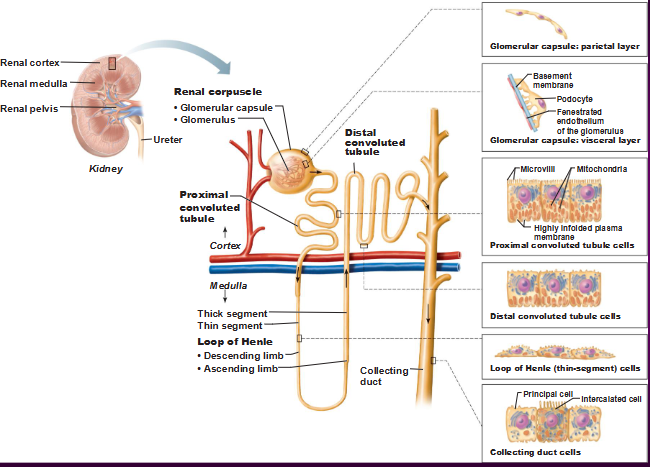
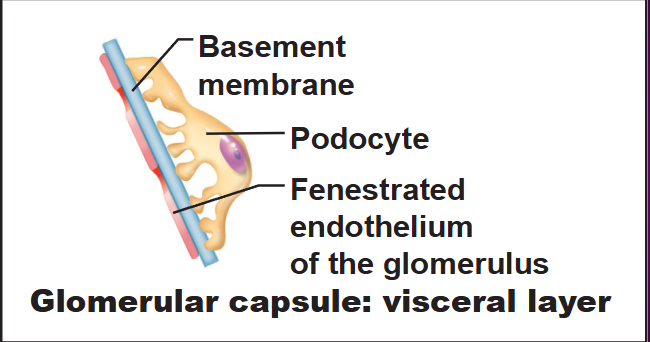
Glomerular endothelium—fenestrated endothelium that allows solute-rich, virtually protein-free filtrate to pass from the blood into the glomerular capsule
Fenestrated—has holes in it
Like a pasta strainer; holds the solids back but lets the fluid flow freely
Filtrate—fluid that is removed from the blood and is modified to form urine
Both glomerular capillaries and pertibuluar capillaries are fenestrated
Nephron Filtration Membrane
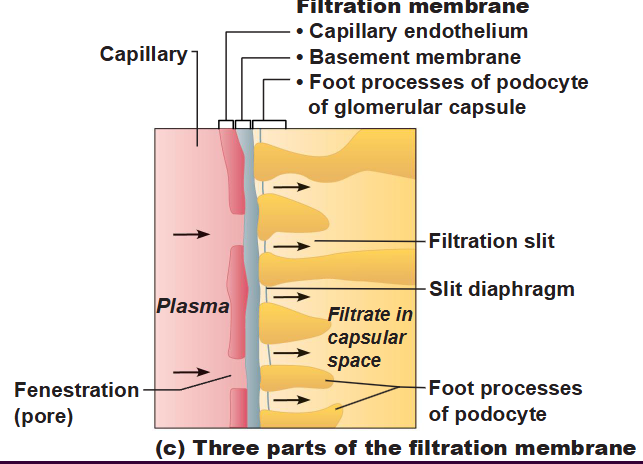
Filter that lies btwn the blood and the interior of the glomerular capsule
Composed of three layers
Fenestrated endothelium of the glomerular capillaries
Visceral membrane of the glomerular capsule (podocytes)
Basement membrane composed of fused basal laminae of the other layers
Nephron Renal Tubule
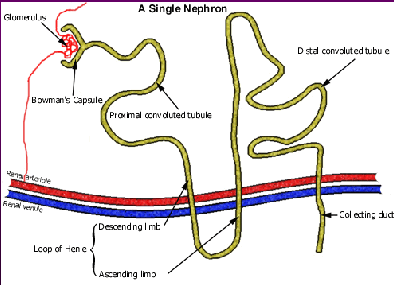
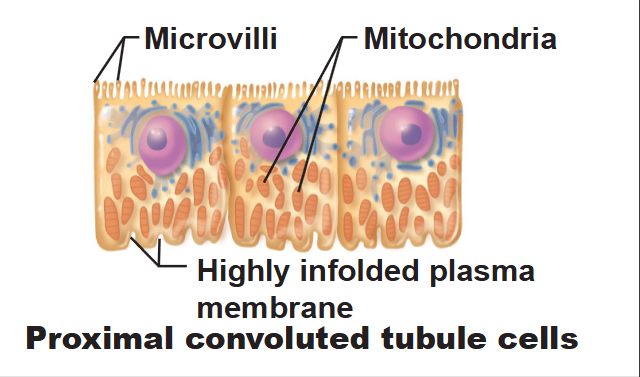
Proximal convoluted tubule (PCT)—composed of cuboidal cells w/ numerous microvilli and mitochondria
Reabsorbs water and solutes from filtrate and secretes substances into it
Reabsorption—mvmt of substances from the filtrate to the blood
Secretion—mvmt of substances from the blood to the filtrate
Nephron Renal Tubule
Nephron loop (loop of Henle)—a hairpin-shaped loop of the renal tubule
Proximal part is similar to the proximal convoluted tubule
Proximal part is followed by the thin segment (simple squamous cells) and the thick segment (cuboidal to columnar cells)
Descending limb allows water reabsorption, while the ascending limb allows NaCl reabsorption
Distal convoluted tubule (DCT)—cuboidal cells wi/o microvilli that function more in secretion than reabsorption
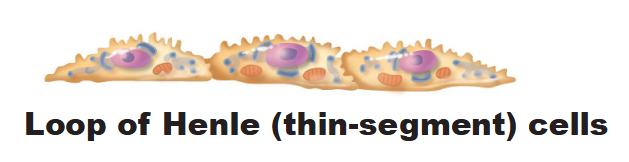
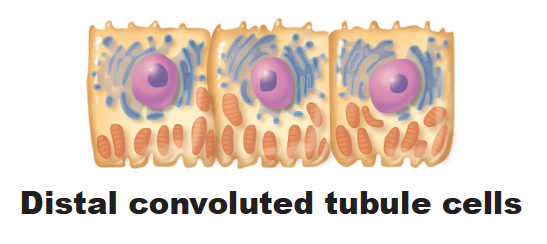
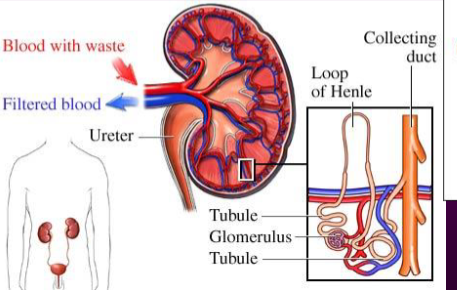
Kidney Nephrons Form Urine
Over 1 million nephrons (filtering stations) per kidney
Renal corpuscle is location of blood filtration (blood comes in from renal artery/arterioles)
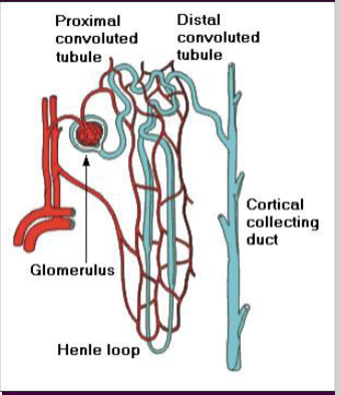
Nephron Urine Formation
Glomerular filtration—filtration of blood plasma by the glomerular capillaries
Filtrate (which will be modified to become urine) is similar to blood plasma but lacks large proteins
Tubular reabsorption—selective body reabsorption of substances such as water, amino acids, glucose, etc., by the kidney tubule back to the blood
Water is reabsorbed by osmosis
All other substances reabsorbed by diffusion, passive, or active transport
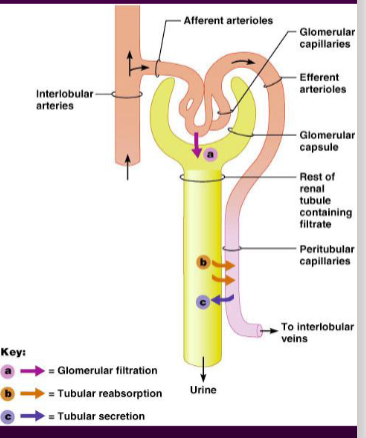
Tubular secretion—rapid removal of toxins (i.e., ammonia, hydrogen ions) from blood plasma to the kidney tubule for removal through the urine
Ammonia (NH3) is a byproduct of protein processing
The liver detoxifies it to form urea, which is filtered out by the kidney
Urine Flow
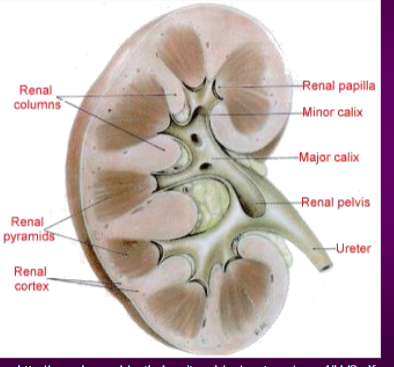
Urine flow—renal pyramid (renal cortex, renal medulla), minor calyx, major calyx, renal pelvic, ureter, urinary bladder, urethra
Urination is referred to as micturition/diuresis and is a reflex controlled by the spinal cord and pons
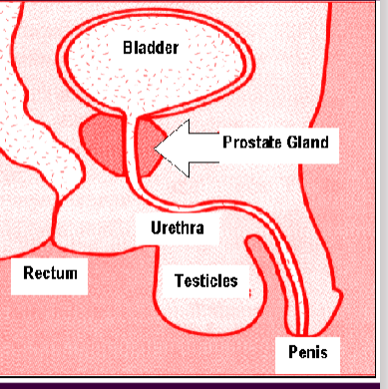
Male urethra ~18 cm
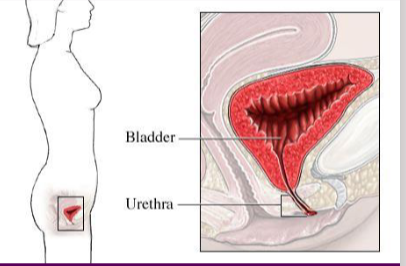
Female urethra ~4 cm
Male Urethra
Fibromuscular tube from urinary bladder to end of penis
Lined w/ mucous membrane
Nearby prostate gland may affect urination
Internal urethral sphincter (smooth muscle) at base of bladder
External urethral sphincter (skeletal muscle) at base of prostate gland
Female Urethra
Much shorter than male urethra
Location of opening may vary greatly - may even be slightly inside the vaginal opening
Internal urethral sphincter (smooth muscle) at base of bladder
External urethral sphincter (skeletal muscle) about halfway down urethra
Urine Chars
0.6 - 2.5L excreted per day (more w/ diuretics)
Clear to amber in color (urochrome pigment)
Acidic odor
pH 4.5 - 8.0 (avg 5.5 - 6.5)
Wide range may prevent kidney stones (renal calculi)
Composed of water, urea, salts, and minerals
Very small amounts of albumin protein and blood or body cells
Urine is trash; a healthy person should NOT dump nutrients or any other substances that are needed by the body
Diuretics—cause incd urination
Hormones Affecting Urine Concentration
Aldosterone
From the adrenal glands
Causes Na+ reabsorption and corresponding water reabsorption in the DCT, which incs BP and results in concentrated (darker) urine
Antidiuretic hormone (ADH)
From the pituitary gland
Acts on the DCT and collecting duct to cause water reabsorption and prevent blood dehydration, resulting in concentrated urine
Dark urine is an indication of dehydration in the body