Variation Over Time theories
CHEN AND BAILEY – THE S CURVE:
Any new form of speech is just competing against others for prominence.
A new form gradually increases before taking off:
New words take off slowly.
A tipping point is reached where rate of increase accelerates rapidly.
Curve flattens out showing innovation has become dominant.
Older form may still exist and continue in some contexts.

SUBSTRATUM THEORY:
Different forms of language (other languages/dialects etc) come into contact with English through invasion, borrowing, etc.
Labov noticed the Jewish community in NYC hyper-corrected English and changed pronunciation patterns (e.g ‘caw-fee’ for coffee).
Hypercorrection is the use of non-standard forms of language when a language rule is mistakenly over-applied. The desire to be ‘correct’ has an ‘incorrect’ result.
Links to functional theory.
Now typically due to social network and immigration.
Accounts for changes in phonology and grammar as well as lexis.
CHEN AND WANG – WAVE THEORY:
Language change spreads in concentric waves from an epicentre (the point of change) and gradually reaches people further away – both geographically and in other ways (e.g ethnicity, class, gender, etc.)
This can spread verbally, or via written texts.
Impact of internet and social media reduce the effects of this, as change is much more rapid and easily transmitted, therefore the change does not need to travel ‘through’ a society – it can bounce from individual to individual.
LEXICAL GAP THEORY:
Words not existing in language are either due to…
Systemic gaps:
A combination of graphemes that do not go together because of the rules set by the language (e.g pfnk – English should have a combination of vowels and consonants).
Lexical gaps:
A combination of graphemes could exist but doesn’t (yet) – e.g fip. A lexical gap is a plausible word that is missing in a language.
Words that are not currently in use links to phonology of language.
Morphology – adding morphemes to existing words.
DETERMINISM/REFLECTIONISM:
The Sapir-Wharf hypothesis (1929):
The structure of language determines a native speaker’s perception and categorisation of an experience.
Determinism:
A weaker version of the Sapir-Wharf hypothesis suggesting language can influence thought but doesn’t have total control over it. For example, negative perceptions are created by negative language so we can challenge or change words to alter opinions held by people.
Reflectionism:
Says that language is shaped by our thought and is a reflection of how we think.
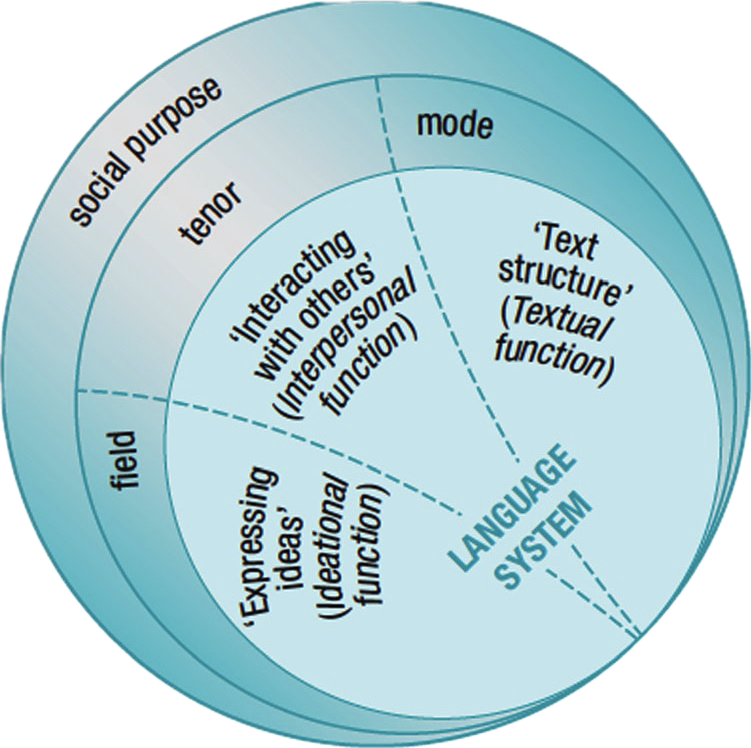
HALLIDAY’S SYSTEMIC FUNCTIONAL LINGUISTICS (SFL) MODEL OF LANGUAGE:
For Halliday, language is ‘meaning potential’ and linguistics is the study of ‘how people exchange meanings by languaging’.
He believes that language changes because we need it to fulfil a function.
Words leave the language when they become obsolete, and enter it when required (coinage).
This mainly covers lexical change.
Can take the form of…
New discoveries/learning/inventions
Technological words
Slang
HOCKETT’S RANDOM FLUCTUATION THEORY:
Change is often not predictable or logical – e.g ‘pwned’ started as an error due to thumbs hitting the wrong key on small phone keyboards (‘owned’); then became adopted and had its own meaning attached by the online gaming community.
Sometimes an error in language might be adopted more widely.
There’s two distinct phases:
Innovation
Diffusion/cultural transmission.
Criticisms:
This would lead to ‘linguistic chaos’.
The changes that occur in different languages are too similar to be random.
Not all elements change (e.g grammar).
DAVID CRYSTAL – TIDE METAPHOR:
Agrees with Aitchison (descriptivist).
His metaphor is that language is of a tide in that it’s constantly changing.
The change brings in new words and takes out others in a naturally progressive way.
AITCHISON’S PID(C) MODEL:
A model for how change takes place:
Potential for change: a speaker makes a linguistic choice.
Implementation: the choice becomes selected as part of a language.
Diffusion: the change is imitated beyond the site of origin.
Codification: the word is accepted and placed in the dictionary.