Energy Flows In Ecosystems
(Food chains/webs & primary productivity)
Life cannnot exist without matter (physical substance that has mass and volume) and energy (ability to do work)
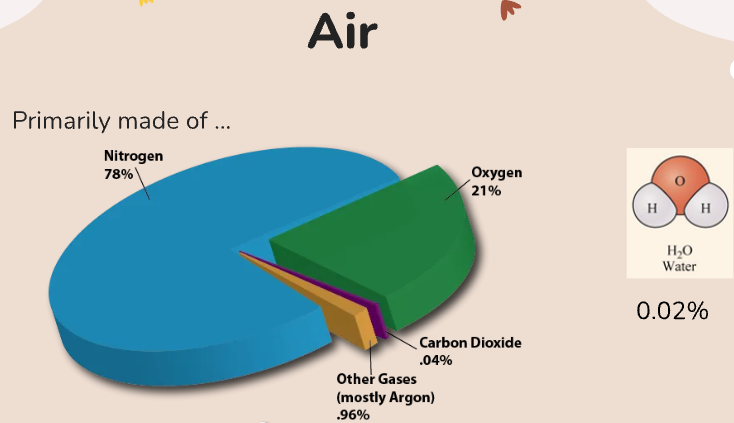
All matter is made of atoms, and all periodic table contains all types of atoms (eleements)
protons, neutrons, and electrons
System: set of componetns that interact in a regular way
e.g. human body, the earth, economy
Feedback look: any process that increases or decreases a change in system
positive feedback loop: causes system to change in the same direction (e.g. global warming)
e.g. decreasing vegetation → more erosion and nutrient loss → even more vegetation loss
tipping point: the point at which a small change makes an irreversible/significant shift
negative feedback loop: causes system to regress/reset
Energy:
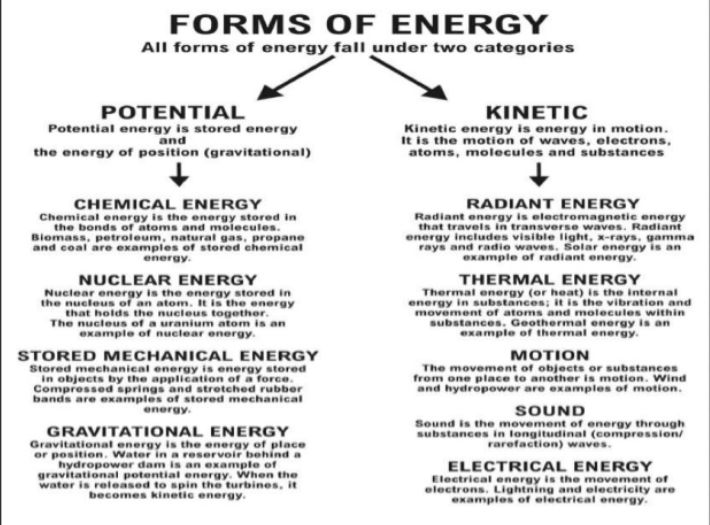
two forms: potential (result of position/chemical structure) and kinetic (in motion)
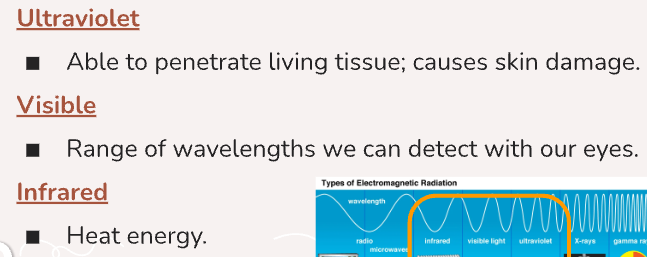
Electromagnetic Spectrum:
energy travels in waves; each type of energy has its own wavelength, and therefore its own strength
most energy that supports life comes from sun
solar radiation contains 3 wavelengths of energy:
*** Plants & Energy:
Plants utilize wavelengths of visible light as a source of energy (doesn’t absorb green though)
photosynthesis: plants and autorophs taking in energy from sun, water, carbon dioxide to convert to sugars and oxygen

cellular respiration: process where carbohydrates (sugars) are broken into ATP energy

Energy flow in ecosystem:
1st law of thermodynamics: Law of conservation of energy: energy is not created/destroyed, and only changes form
During each transformation, heat is given off (this energy cannot do work anymore)
Food chains (and their arrows) show energy flow between trophic levels
Food web: contains all food chains in a community (interwoven)
tend to be simpler in harsher environments
Each trophic level represents an organism w/ seperate energy source
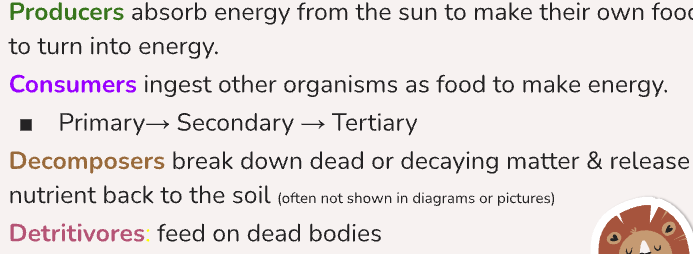
2nd law of thermodynamics: energy lost w/ each transformation
specifically, 10% = how much energy goes to trophic level above (energy loss in heat)
LEARN HOW TO DO
Productivity:
Photoautotrophs: provide energy for most ecosystems
Productivity varies → affects how much life ecosystem supports
Measured in energy per unit area per unit time
*** Gross primary productivity (GPP): rate that producers convert solar energy to chemical energy + biomass
*** Net primary productivity (NPP): rate that producers convert solar energy to chemical energy (minus rate that producers use energy for aerobic respiration)

Factors that affect productivity: