final exam
Lecture 13-14 Communication
communication in relationships
couples spend about 14 hours a week in communication with one another
couples who communicate with warmth, positivity, affection experience higher relationship quality than couples who communicate with anger, hostility and contempt
the sensitivity and accuracy of a couple’s communications predicts their relationship well-being
but can be subject to errors of encoding and decoding (or both)
gender and communication (noller, 1980, 1981)
examined husbands’ and wives’ abilities to encode and decode messages
48 married couples took turns encoding (sending) and decoding (interpreting) a message
sample “wife” card
you and your husband are sitting alone on a winter evening . you feel cold
intention: you wonder if it’s only you who’s cold, or if he’s cold too
statement: “im cold, aren’t you?”
sample “husband” card
husband would choose from:
a. your wife wonders if it’s only she who is cold, or if you are cold too
b. your wife wants you to warm her with physical affection
c. your wife is feeling that you are inconsiderate by not having turned up the heat, and wants you to turn it up
sample “husband” card
“your wife just presented you with your birthday present. you had been expecting a completely different gift.”
intention: “you are very disappointed and annoyed that she didn’t get you what you had expected”
statement: “you really surprised me this time.”
sample “wife” card
wife would choose from:
a. he is quite satisfied with the gift although he really would have preferred what he was expecting
b. he is very disappointed and annoyed that you didn’t get him what he was expecting
c. he is pleasantly surprised
accuracy in communication
if there is a communication error, who is at fault?
noller had a separate group of participants observe the interactions and serve as decoders
this provides a “benchmark” to determine if people accurately encoded the message they were meant to send
if encoding problem, neither spouses nor strangers should be accurate
if decoding problem, spouses should be less accurate than observers
results
wives were better encoders than husbands, especially when the messages were positive
might explain why communication difficulties are associated with marital quality
further analysis: men who did well in the task reported being in more satisfying marriages
follow-up study (noller, 1981)
people who were bad at encoding and decoding messages: are these skill deficits generalized, or do they relate only to the marital partner?
called back the same participants
shown a video tape of strangers sending similar messages
married people served as decoders for someone who was not their spouse
in this study, marital satisfaction and decoding abilities were unrelated
dissatisfied couples show differences in performance, not in skill
those with low marital quality are worse at decoding their spouse than decoding strangers
gender and commuinication
if gender differences not due to skill, can they be altered?
affected by motivation?
motivation or ability? (klein and hodges, 2001)
empathic accuracy is the ability to correctly infer another person’s thoughts and emotions
accuracy, not amount of empathy
gender differences: conflicting evidence
some studies find no differences, some find women better than men
107 undergraduates (53 women, 54 men)
watched a video of a female discussing an academic problem
had taken GRE and her math scores were not high enough to make cutoff for graduate school
completed empathic accuracy procedure
before completing this, participants assigned to one of three conditions
control condition
feedback condition
told they were going to be given feedback on their performance
money condition
told they would get $2 for every ‘correct’ response
motivation (either being evaluated or receiving money) eliminates gender differences between men and women’s decoding
extra motivation (money) makes people more accurate
empathic accuracy procedure
original video created by actual person
this person then watched the video and stopped it each time they changed how they were thinking and feeling
first minute might be calm, then might shift to anxious, then might be sad, then might be determined, etc…
participants watch this video
video is stopped at each point that target person in the video reported a thought or feeling
participants asked to infer what the target was thinking/feeling at this moment
communication in context
attraction: communicating for connection
most relationships begin with a form of nonverbal communication
flirtatious looks
flirting
male and female students interviewed by an attractive opposite-sex person for a potential date
videotaped and shown to two groups of raters
group 1: rated amount of time each participant spent:
smiling, making direct eye contact, open body posture, leaning toward camera, looking down, tilting head
also rated number of times each P smiled, laughed, made hand gestures, looked down, eyebrow flash, gave flirty look
group 2: rated each participant on 34 attributes representing five general factors
social engagement/dominance: good at drawing attention, social presence, engagement, self-disclosing, self-confident, charming, socially skilled, etc.
interest: inviting, ingratiating, bold, flirtatious
comfort: anxious, relaxed, self-conscious
provocativeness: sex appeal, provocative, seductive
arrogance: phony, arrogant, nice
attraction and direct communication
highest rated pickup lines among women (from men):
hi
do you want to dance? (at a bar)
want to play frisbee? (at a beach)
highest rated pickup lines among men (from women):
since we’re both sitting alone, would you care to join me?
hi
i’m having trouble getting my car started. will you give me a hand?
lowest rated pickup lines among women (from men):
is that really your hair?
bet i can outdrink you (at a bar)
did you notice me throwing that football? good arm, huh? (at a beach)
lowest rated pickup lines among men (from women):
didn’t we meet in a previous life?
it’s been a long time since i had a boyfriend
hey baby, you’ve got a gorgeous chassis. mind if i look under the hood?
recall from attraction lecture that people generally prefer direct pickup lines
opening lines that are intended to be cute or flippant are consistently rated as the least appealing
women rate sexually loaded pickup lines even more negatively than direct requests for sex
clark and hatfield (1989)
undergraduate confederate hired to approach opposite sex peers on campus
pretested to be 7.3-7.7 out of 9 on attractiveness
script: i have been noticing you around campus. i find you to be very attractive
condition 1: “would you go out with me tonight?”
condition 2: “would you come over to my apartment tonight?”
condition 3: “would you go to bed with me tonight?”
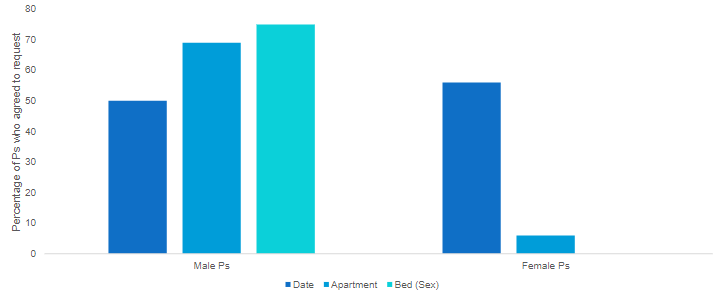
explanation
men more receptive than women to direct requests for sex. why?
evolution: men are more comfortable with casual sex than women are
socialization: women are socialized to be sexually conservative
may have more to do with the gender of the proposer (conley et al., 2011)
women perceive men who make sexual propositions as more dangerous, more likely to have an STD, and less likely to pleasure them sexually, relative to how men perceived women who offer them the same propositions
sexual communication: communication for fornication
how do people communicate to initiate sex?
directly: “do you want to have sex?”
indirectly: “are you sleepy?”
also use a lot of nonverbal communication
start removing clothing
touch a partner seductively
lying on a bed
initiate hugging and kissing
most consent happens nonverbally
people being undressing or touching their partner, or just start to have sex
verbal communication tends to limit to general comments such as “okay”
couples who communicate well with one another about sex tend to feel happier about their sex lives, and happier about their relationship in general
in particular, those who share more about their sexual preferences with their partners tend to be more satisfied with their sex lives
not everyone finds it easy to communicate about sex
people may worry their partners may not share their preferences
may also believe discussing sex is not necessary
ashamed or embarrassed to admit their preferences
may be concerned about making partner feel inadequate
macneil and byers (2009)
104 couples
mean length 14.5 years
84% married
given sexual self-disclosure questionnaire
how much have you told your partner A about:
the way you like to be kissed
the way you liked to be touched sexually
the way you like to have intercourse
the way you like receiving oral sex
the amount of variety in your sex life
rating scale from “nothing at all” to “everything”
also rated sexual satisfaction with items “in general, how would you describe your sexual relationship with your partner?”
good-bad, pleasant-unpleasant, positive-negative, satisfying-unsatisfying, valuable-worthless
most couples don’t communicate about sex
even couples who had been together for >14.5 years did not fully disclose likes and dislikes to each other
follow up analyses showed that partners only understood 62% of each others’ “likes” and 26% of others’ “dislikes”
partners who reported more sexual self-disclosure also reported greater sexual satisfaction
but effect 6x bigger for men than for women
greater inaccuracy associated with less satisfying sex life and less frequent orgasms (for women)
communication
communication is difficult but is important to many relationship processes
attraction, intimacy, partner regulation, sex, etc
the quality of couples’ communication is closely linked with relationship quality
particularly important in conflict situations
self-disclosure: communicating for intimacay
disclosure and liking (collins and miller, 1994)
people who disclose personal information tend to be liked more than those who disclose less
people disclose more to those they initially like
people like others who disclose to them
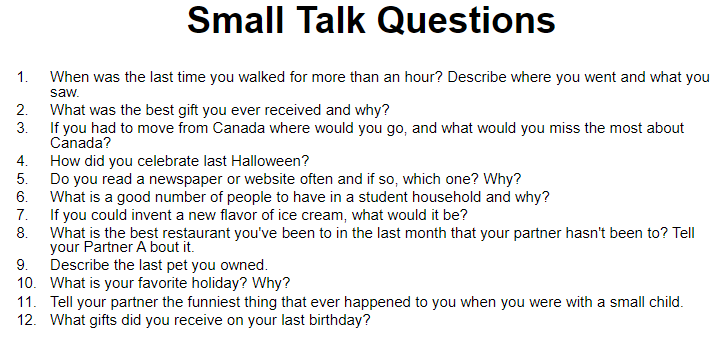
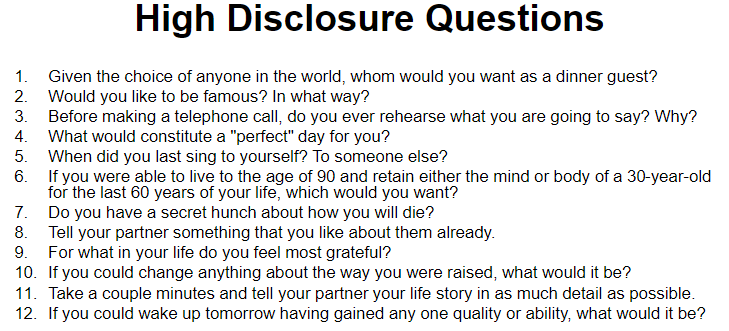
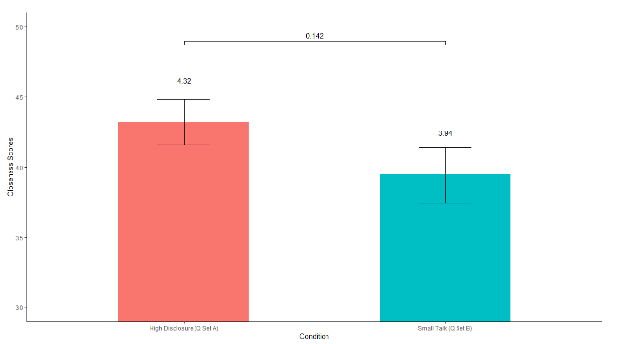
results of in-class demonstration
based on Aron et al. (1997), the experimental generation of interpersonal closeness
participants given one of two question sets:
set a: high disclosure questions
set b: small talk questions
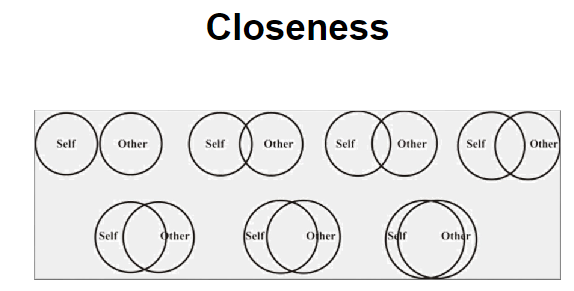
self-disclosure and intimacy
social penetration theory
relationships develop through changes in communication
as relationships develop:
increase breadth - the number of topics people talk about
increase depth - the personal meaning of the topics they discuss
interpersonal process model of intimacy
just disclosing is not enough to build intimacy
people must be responsive - understanding, validating, and caring
partner regulation: communicating for change
people in relationships communicate strategically
to convey what they are thinking and feeling
also to improve their relationships
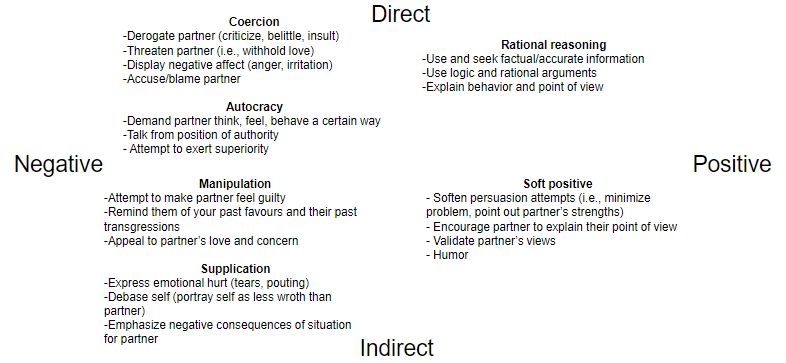
how do people communicate to try and change their partners?
regulating partners
how do individuals try to change partners?
examined strategies varying in valence and directness
assessed perceived short-term effectiveness as well as demonstrated change (assessed every three months for one year)
61 couples (18 to 43 years old)
identified something they would like to change in partner
discussed issues (2 male and 2 female; counterbalanced) in front of camera
tapes were coded
rated the issue immediately, and then every three months for a year (via phone interviews)
women used more negative strategies than men
right after the conversation:
negative and direct strategies rated least successful
positive/indirect strategies rated most successful
but one year later:
direct strategies produced greater change, whereas indirect strategies did little at all
even negative ones
different communication styles
Lecture 15 Support I
social support
actions that communicate caring to partner and validate others’ thoughts, feelings, or actions
facilitate coping with problems by providing information, assistance, or tangible resources
people can receive support from all members of their social networks (i.e., friends, family) but romantic partners have special status as support providers
quality of support interactions is associated with marital quality over time
the positive effects of social support
romantic partners
help us reach our goal
support and goal pursuit
self-regulation: the ability to energize one’s thoughts, feelings, and actions in a goal-directed fashion
self-regulation usually done in social context
individuals with strong social support networks
adhere better to medial regimens
engage in more physical activity
keep regular sleep hours
eat more fruits and vegetables
more likely to quit smoking
drawing closer to instrumental others (fitzsimons and shah, 2008)
49 undergraduate students
participants asked to think about the goal of achieving in university and nominate:
one friend who is instrumental (i.e., helps you make progress toward achieving your goal)
one friend who is successful, but not instrumental
one friend who is not instrumental
returned 4-5 weeks later
completed one of two tasks:
goal prime condition
control condition
goal prime manipulated by scrambled sentence task
control group
“begin you green will when”
when will you begin”
“beautiful total here is everything”
everything here is beautiful
achievement prime group
“strived car finish to he”
he strived to finish
“did achieve knife what they”
what did they achieve
to wants he wash succeed”
he wants to succeed"
participants were asked to indicate how close they felt to friends they nominated at time 1
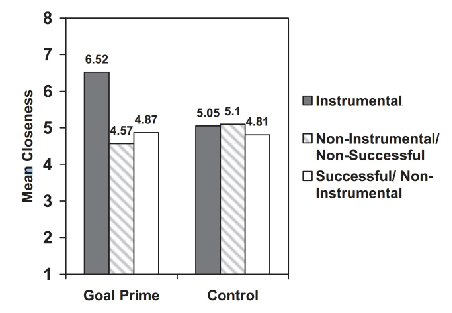
we feel closer to others who help us with our goals
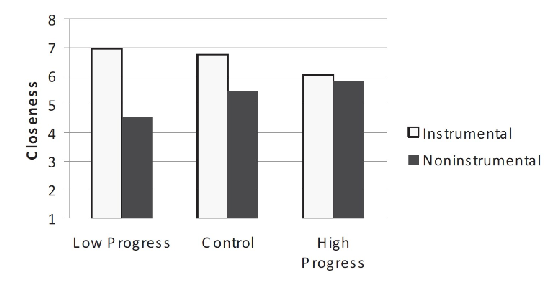
what happens when we make progress or complete the goal?
56 undergraduates
nominated one friend who was instrumental to their achievement goals and one who was not
manipulated to feel like they were making lots of progress toward their goal (how much have you done) or low progress (how much do you still have left to do?)
completed measure of closeness
the positive effects of social support
romantic partners:
help us reach out goals
help us become our ideal selves
the michelangelo phenomenon
close others help us pursue our goals
help us become our ideal selves
reach our dreams and aspirations
partners “sculpt” us by:
seeing us in ideal ways
behaving in ways that “bring out” our ideal selves
the michelangelo phenomenon (drigotas et al. 1999)
longitudinal studies of dating and married couples
participants completed measures of their ideal selves by listing four traits most important to them
partners rated:
how much of these trials they perceived in the participant
how much they helped their partner reach their goals
both people rated relationship quality
results (3 months later)
people whose partners saw more of their ideal selves reported making progress toward these ideals
people whose partners helped them made more progress toward these ideals
receiving support for the ideal self led to improved relationship quality in both partners
sharing good news
people often turn to others to share good news, particularly close to others
when partners respond in an active and constructive manner, can actually enhance the importance of the effect
can also affect relationship quality
capitalization (gable et al., 2006)
79 couples in the lab discussed a recent positive event with one another (took turns)
interactions were videotaped and behaviour coded for patterns of responding
capitalization efforts - responses to good news - fell into four major categories
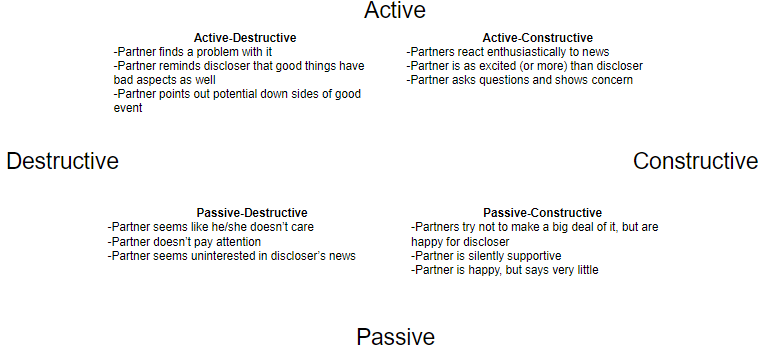
intrapersonal benefits of capitalization
people whose partners respond in an active-constructive manner:
experience more positive emotions
even after controlling for the positivity of the event itself
remember the event better later on
interpersonal benefits of capitalization (reis et al., 2010, study 3)
76 undergraduates
participants interacted with a confederate
3 conditions
capitalization condition
asked to recall one of their most positive events from the past few year and describe the event to the other person and confederate responded enthusiastically
“that’s really great!”; ‘what a great opportunity”
notes condition
same as above, but C acted neutrally and took notes
“how did you feel at the time of the event? why?”
fun condition: participants were given pictures from Dr. Seuss books and asked to describe them to C without using literal descriptions, who was supposed to redraw them
“this is so funny!”; “i can’t wait to see how these pictures compare”
measured liking and closeness for the confederate after interaction and 1 week later
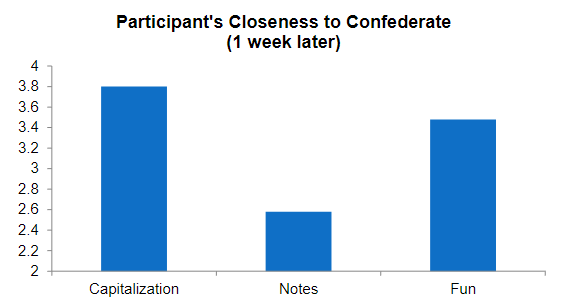
interpersonal benefits of capitalization study 4
205 undergraduate participants asked to participate in exchange for $1
participants approach by experimenters on campus
asked to recall one of their most positive events from the past few year and describe the event to the experimenter
experimenter’s reaction manipulation
experimenter responded by giving:
active constructive feedback
“that’s really great!”; “how exciting!”
disparaging feedback
“what’s so positive about that?”; “that’s your best event?”
neutral feedback
no verbal nonverbal expressions
candy
same as neutral feedback, but participants given small candy
participants then given $2 instead of $1 they were promised
did they return the money?
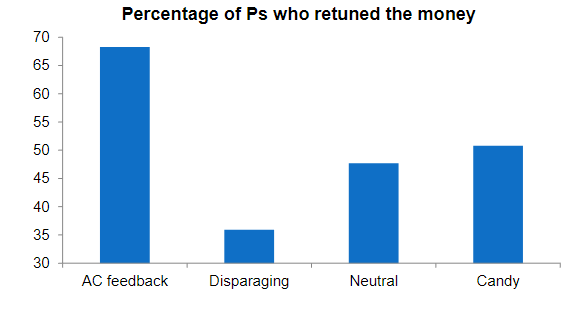
when bad things happen…
people turn to their partners for emotional and practical support
stress-buffering hypothesis
we often experience stressors (acute or chronic) and we are unable to address them alone
social support helps us cope with these stressors and “buffers” us against the negative outcomes of stress
social support is good
people who receive a lot of social support from their partners for stressful events:
are more satisfied in their relationships
experience more positive (and less negative) moods
experience increases in self-esteem
experience better health outcomes
these effects accumulate over time
newlyweds who show lots of support to each other are more satisfied 2 years later
social support is bad
wives more likely to lose weight when husbands are instructed to be an uninvolved as possible
individuals suffering from heart attacks recover more slowly when their partners are supportive
people who perceive that support is available to them often experience better outcomes than people who actually receive support
why does social support go wrong?
the situation:
social support processes go wrong
when support goes wrong (bolger, zuckerman, & kessler, 2000)
study of law students preparing for the bar exam
daily diary for 32 days before the exam
each day, examinees reported on their:
negative mood (anxious, uneasy, on edge, sad, discouraged, worthless)
if their partner listened to or comforted them that day
examinees’ partners reported
if they listened to or comforted their partner that day
on days partners reported providing support, examinees’ experienced less negative mood
on days when examinees reported receiving support, negative mood increased
support that is invisible (given without being noticed) is often more effective than visible support
why is invisible support better? (bolger & amarel, 2007)
86 female participants
led to believe they were giving a speech, while another participant (a confederate) was assigned to write an essay
participant given a few minutes to practice, and other participant commented on it
experimenter asks confederate: do you have any questions for me before we proceed?
visible support condition
not really. but i would like to say something to [participant] if that’s all right. look, you’ve got nothing to worry about, you’ll do fine. i understand if you were nervous, but i really think it’s going to be okay
invisible support condition
yes. can you please tell me more about what i’m doing? i mean, [participant] is going to do fine, she’s got nothing to worry about, but i still don’t know what i’m supposed to do
control condition
not really. unless you’re going to tell me more about what i’m supposed to do?
DV: participant’s ratings of distress immediately before giving speech
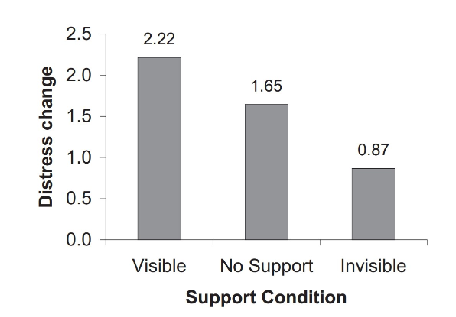
visible support often backfires because it:
draws attention to the problem
makes the recipient feel like they can’t handle the problem themselves
is not always carried out well, and may add stress to the recipient
Lecture 16 Support II
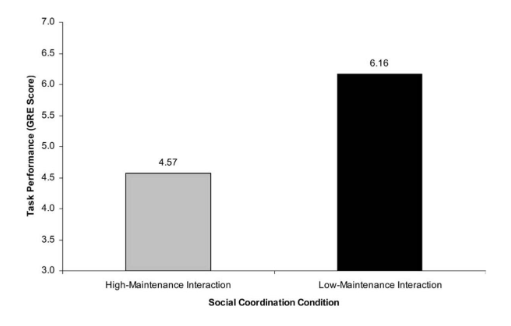
high maintenance interactions (finkel et al., 2006)
people often have difficulty coordinating when doing tasks with others
when these social interactions are difficult (“high-maintenance”) they can be exhausting, and deplete mental resources for subsequent tasks
support giving and receiving can be high maintenance
undergraduate participants led to believe they would be completing two tasks:
one with another person
one alone
first completed the joint task
P assigned the role of “tracker”
confederate assigned the role of “communicator”
P and C sat at a table that was divided by a partition
P given joystick to use
C could see a computer with a maze on it
P told to control the movements and move through the maze
had to listen to C for instructions
two conditions:
low maintenance: confederate stuck to a script and made no mistakes
high maintenance: confederate made a series of scripted errors and became out of sync with P
wait
right… i mean left
participants then went on to complete a number of difficult GRE problems
DV: performance
why does social support go wrong?
the situation:
social support processes go wrong
the person
individual differences in provider
individual differences in recipient
gender differences
in married relationships
men report receiving more support than wives
men report receiving better support than wives
after a stressful work day
wives more likely than husbands to increase their workload at home in response to partner’s stressful day
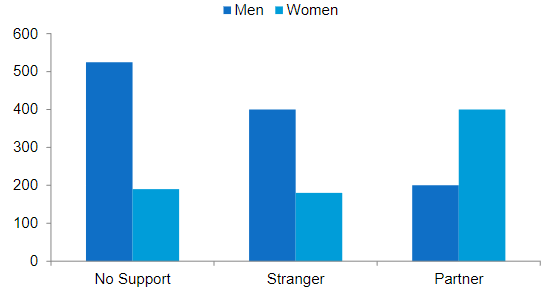
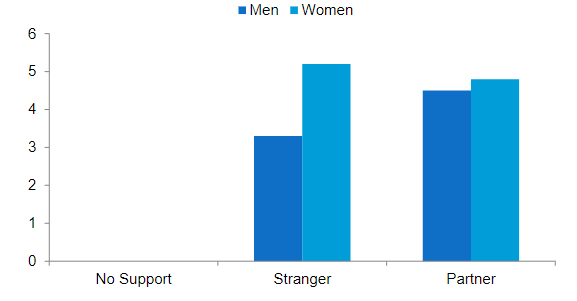
gender and social support (kirschbaum et al., 1995)
participants completed trier social stress (TSST)
TTST
phase 1
participants asked to prepare a speech as part of a ‘job interview’
allowed to use pencil and pen… but this is taken away before they begin
phase 2
participants give the speech and the judges observe without comment
if it does not go to five minutes, participant is asked to continue
phase 3
participant is asked to count backwards from 1022 in steps of 13
if make a mistake, have to start again
assigned to one of three conditions
no support
support provided by stranger (confederate trained to be supportive)
support provided by romantic partner
measured physiological stress (cortisol) and perceived supportiveness (e.g., “the presence of my partner had a relaxing influence”)
cortisol
perceived supportiveness
types of social support
emotional support
providing warmth, nurturance, and reassurance
information support
providing information that helps person understand stressful event; advice
instrumental support
providing tangible assistances such as services, money, etc
gender and social support
why are men less helpful than women?
skill: men are less capable of giving effective support
responsiveness: men don’t understand when their partners need support
tested in a daily diary study (7 days)
do men provide more advice than women?
no
do women provide more emotional support than men?
no
they say they do
they do when interacting with men
for 7 days, both partners report on:
external stressors that happened to them
bad evaluation at work/school; overwhelmed with work, sickness/injury, arguments with friends
negative spousal behaviours
argument with spouse, spouse broke promise, spouse
spousal support behaviours
spouse said something nice, spouse listened/comforted you, spouse helped you with something important
across the 7 days
no gender differences in amount of support or negative behaviours generally
husbands and wives did differ in when they provided support
when husbands had a really stressful problem, wives increased their support
when wives had a really stressful problem, husbands didn’t increase their support
wives even reported more negative husband behaviour
attachment styles and social support
attachment anxiety
concerns about rejection
attachment avoidance
concerns about the trustworthiness of others
highly anxious recipients
less optimistic about receiving support
are more likely to see negative intent when support is ambiguous
more likely to remember support as being negative
highly avoidant recipient
less likely to seek support
more likely to hint and sulk rather than ask directly
direct attention away from close others
highly anxious providers
intrusive and over involved
controlling
provide less instrumental support
out of sync with partner’s needs
more mentally distracted
high motivation, low ability
highly avoidant providers
neglectful
also controlling
unmotivated to provide support
high ability, low motivation
support seeking
participants asked to approach strangers and ask them for one of two favours
“can i borrow your cell phone to make a phone call?”
“can you show me where the gym is? can you walk me there?”
before doing this, asked to predict how many people they would need to approach before people agreed to their request
people tend to underestimate others’ willingness to help
focus on costs of saying yes, rather than social costs of saying “no”
helpers also underestimate how uncomfortable help seeking is
“why didn’t you just ask?”
when people seek support in indirect ways (e.g., sulking, looking sad but not providing details, being irritated without explanation), partners provide worse support
when support goes wrong (and it’s the recipient’s fault)
if others help us with our goals, do we also rely on them?
study: participants asked to think of
one example of how their partner helped them with health and fitness goals
one example of how their partner helped them with their career goals
one thing they liked about their partner
DV: how much time do you plan to spend pursuing health and fitness goals in the coming week?
social support is a complex phenomenon
relationship partners often help us in a number of ways and helping partners is good for relationships
but its very easy for this to go awry
most important thing is that partner feels supported
lecture 17 conflict in relationships
conflict
conflict is an inevitable part of close relationships
relationships are interdependent and people often have competing interests
most common topics in marriages
children (differences in parenting styles, discipline, childcare duties)
chores (who does what)
money (spending, wages, bills, etc)
free time (spending together, vs activities)
communication (spouse not listening, understanding)
is conflict bad
frequent conflict lowers relationship quality
but people argue all the time, even with long-term partners
most fights arise from nothing
what matters most is how conflict is handled
john gottman
studies of distressed couples for 30 years
based on observations
what do strong couples do well, and what do distressed couples do poorly?
much of what we know about conflict originates with gottman
but interpret with caution
not empirically tested
gottman’s “four horsemen”
criticism
attacking partner’s personality and character
“kitchen-sinking”
contempt
trying to insult or psychologically abuse partner
name-calling, sarcasm
defensiveness
seeing self as victim
cross-complaining
yes-butting
mind-reading (e.g., i know how you think)
rubber man/woman (e.g., im rude - youre rude)
stonewalling
stoney silence, removing self physically
withdrawal
demand/withdraw pattern
demander: person criticizes, nags, makes demands
withdrawer: avoids confrontation, withdraws, becomes defensive
strong link to gender
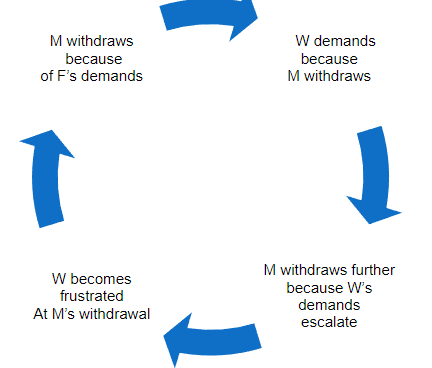
gender and demand/withdraw
sociostructural account
women are more likely than men to ask their partner to change, specifically to be more helpful around the house, to take a greater role in caring for children, and to express more intimacy
women are often thrust into the demander role and men respond with withdrawal
physiological account
men tend to get more aroused by conflict with their partners and tend to withdraw to regulate this arousal
demand/withdraw
demand-withdraw is reliably associated with:
relational outcomes (r = 0.423)
wellness outcomes (r = 0.249)
communication outcomes (r = 0.418)
effect is more pronounced for distress than non-distressed couples
conflict and relationship success
“the most important advice i can give to men who want their marriages to work is to try not to avoid conflict” - gottman
in general, it’s not whether you fight that matters so much as how you fight
resolving conflict
separation
withdrawal of one or both partners without conflict being resolved
domination
one partner continues to pursue his or her goals, while the others give in
compromise
both partners give up their original ideal in favor of a mutually acceptable alternative
integrative agreements
satisfy both partners’ original ideas
structural improvement
when argument results in fundamental positive change in the relationship
when is conflict good?
can vary depending on the personality of the individuals (e.g., self-esteem, attachment style)
can vary as a function of a person’s “implicit theories” about relationships (growth vs destiny)
can vary depending on whether conflicts are resolved
can depend on whether a person has the motivation and ability to accommodate a partner’s bad behaviour
accommodation
our partners behave badly all the time… and we behave badly in return
partners can be thoughtless, uncaring, inconsiderate
partners often fail to be ‘good” all the time
how do we react to these breaches of good behaviour?
four general types of responses
active strategies
exit
separating, moving out of a joint residence, actively abusing one’s partner, breaking up, divorcing, threatening to leave, or screaming at one’s partner
voice
discussing problems, seeking help from a friend or therapist, suggesting solutions, changing oneself, or urging one’s partner to change
passive strategies
loyalty
waiting and hoping that things will improve, supporting the partner in the face of criticism, or praying for improvement
neglect
ignoring the partner or spending less time together, avoiding discussing problems, treating the partner poorly (being cross with him or her), criticizing the partner for things unrelated to the real problem, or just letting things fall apart
accommodating a partner’s bad behaviour
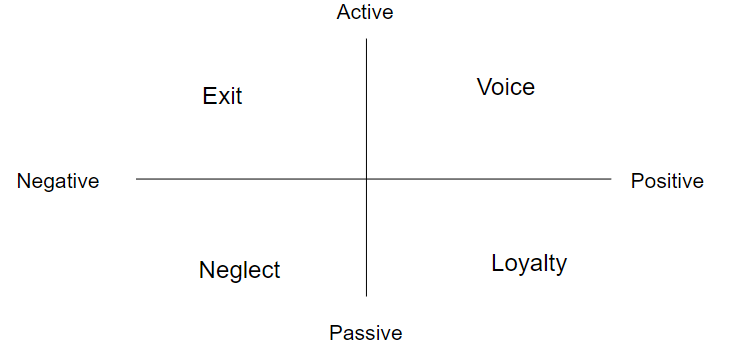
positive responses to relationship dissatisfaction
avoidance of issues: loyalty
“good manners” policy
breaks negative reciprocity cycle
can be extended too far; resentment can build
under-adjustment
engagement of issues: voice
related to satisfaction (“short-term pain, long-term gain”)
conflict in itself is not diagnostic of relationship quality
accommodation
this is very difficult
people’s automatic response is to react negatively
requires self-control and time (i.e., counting to ten) to respond positively
both partners’ tendency to accommodate linked with higher relationship quality
both loyalty and voice work (constructive)
exit and neglect do not (destructive)
pro-relational responses to provocations always a good thing?
forgiveness is very good for relationships
aggressive husbands with less forgiving wives become less aggressive over time
aggressive husbands with more forgiving wives don’t change
conflict and intimate partner violence
police reported 129 876 victims of family violence in canada in 2022
females about 2x more likely to be victims
117 093 victims of intimate partner violence in 2022
women and girls 12-24 most likely to be victims
3x as likely to be victims vs. men and boys
more likely to result in injury
79% of intimate partner homicide victims are women
straus, 2004
international dating violence study
31 universities, 8666 students total
asked students to complete questionnaire about major and minor assaults against their partners (i.e., how many times in last year?)
minor assault
threw something at my partner that could hurt, twisted my partner’s arm or hair, pushed or shoved my partner, my partner, slapped my partner
major assault
used a knife or gun on my partner, punched or hit my partner with something that could hurt, choked my partner, slammed my partner against a wall, beat up my partner, burned or scalded my partner on purpose, kicked my partner
29% of university students reported physically assaulting a dating partner in last 12 months (range 17% to 45%)
9.4% of students reported severe assault (4-20%)
at 21 of 31 schools, a larger percentage of women (vs. men) reported assaulting a dating partner
similar pattern for severe assaults, but not as robust (18 out of 31)
male assault more likely to result in injury in 21/31 sites
common misconceptions
violence is common among married couples but dating couples even more so
gender differences in perpetration not as strong as assumed
men and women report assaulting partners at equal rates
among couples where only one partner is violent, women are more likely to be perpetrators
controversial finding
male violence much more likely to result in injury
some argue that these data minimize the effects of violence on women
others argue that discussions around gender violence are biased against men
understanding gender differences
most studies on intimate partner violence comes from self-report data
much evidence for gender symmetry
but sociologists and the general public think about “domestic violence” differently than psychologists
survey data misses out on the coercive/controlling aspect
types of IPV
situational couple violence
arises in the context of specific arguments that turn aggressive, then violent
gender symmetrical (50/50 male female)
equally likely to occur in same-sex and opposite-sex relationships
typically more frequent, less intense
data from surveys
intimate terrorism
arises from one partner using violence to coerce or exert control over the other
over 90% male perpetrated
most common in heterosexual relationships
data from shelters, hospitals, police records
typically less frequent, more intense
distinguishing IPV
finding evidence of Intimate Terrorism is difficult
rarer than situational couple violence
perpetrators and victims refuse to participate in surveys about it
surveys of ex-spouses are most informative
9% of ex-wives reported to be violent (4% SCV, 5% IT)
30% of ex-husbands (7% SCV, 22% IT)
83% of intimate terrorism is male perpetrated
predictors of violence
numerous attempts to find predictors of violence
socioeconomic status (weak/moderate effect)
race/ethnicity (weak)
childhood victimization (small-medium, but consistent)
personality (depression, drug/alcohol use, personality disorder; strong predictors)
relationship variables (satisfaction, jealousy, partner hostility; moderate effects)
I³ theory (i-cubed theory) of intimate partner violence
individuals are violent when their impulses to aggress exceed their restraint of this impulse
instigating triggers
perceived provocation
perceived rejection
goal obstruction
violence-impelling
testosterone
attachment anxiety
long-standing jealousy
violence-inhibiting
strong legal legal sanctions
high self-control
high commitment
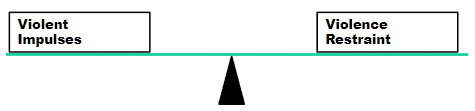
jealousy and violence
IPV often linked to sexual jealousy as a violence-impelling force
mullen and maack (1985) assessed 138 cases of jealousy-induced violence:
partner attacked in 71 cases
rival attacked in 7 cases
other victims?
violence accompanied by jealousy changes the meaning
people see jealousy as a rationalizing factor
jealousy and the meaning (or nonmeaning) of violence
can male jealousy be viewed as a rationale for IPV?
puente and cohen (2003) study 1
156 students (89 women, 66 men) were randomly assigned in a 3 × 2 design
participants told they were going to provide their opinion about the results from another study
they were told about a male participant who was imagining his wife and another man
three conditions
innocuous: wife talking a man you don’t know
flirting: wife is touching other man’s thigh, gives him kiss on the cheek
cheating: you find wife in bed with other man
man’s supposed reaction varied: either jealous (6 on a 7-point scale) or not jealous (2 on a 7-point scale)
also heart rate and blood pressure spiked (did not spike)
dependent measure
how much did husband love his wife
how much does husband respect his wife
how long should their marriage last
how understandable/acceptable is the husband’s reaction
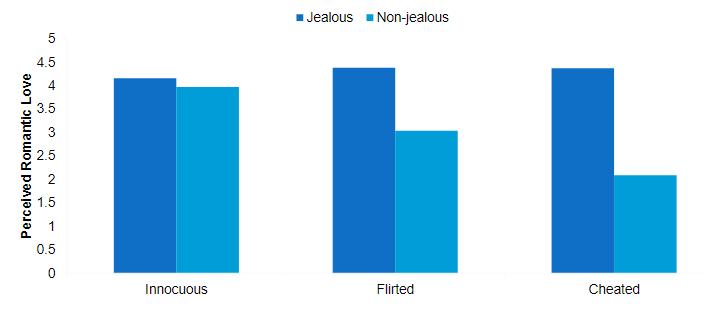
same pattern of results for:
how much does husband respect his wife?
how long should their marriage last?
how understandable/acceptable is the husband’s reaciton?
no gender differences among participants
study 2
49 students (24 women, 25 men) listened to “real husband” talk about conflict in audio tape
manipulated two independent variables
conflict topic
wife flirted at a party (jealousy) vs. wife maxed out credit card (non-jealousy)
man’s reaction
hit wife (violence) vs. went to a friend’s house to cool off (non-vioence)
participants asked whether man loved his wife, whether the wife should stay or leave, whether they understood the husband’s actions, and whether he was morally bad
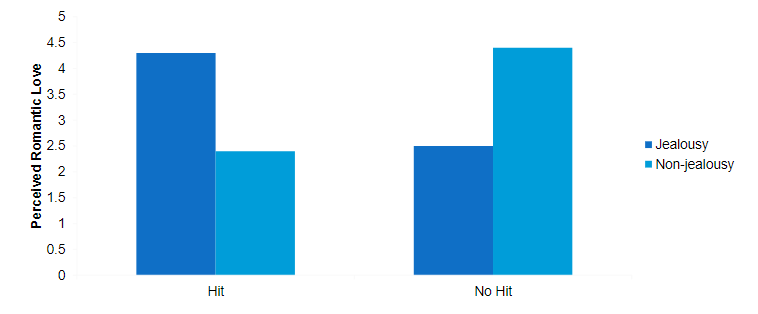
study 3
replicated and extended study 2
included a sexual assault condition
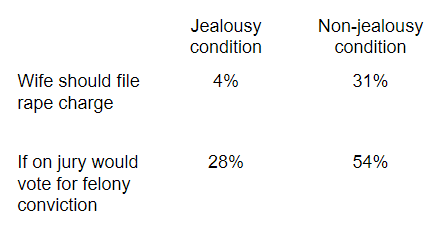
jealousy and IPV
people are more likely to justify men’s violence when perpetrated by jealousy
people also justify women’s violence in other ways
people find it more acceptable for women to hit men to “keep them in line”
people erroneously less likely to judge punching/slapping as illegal when perpetrated by women (vs. men)
people perceive men’s violence as more intentional/controlling than women’s
self-control and IPV
do people engage in intimate partner violence think this is acceptable, or do they lose control
violent impulses: people can act on them or over-ride them
recall I³ model
what predicts the likelihood that one will self-regulate in response to violent impulses?
33 couples participated together
manipulated self-control (depleted or control)
participants then given paper and pencil crayons and told to draw the most creative picture possible including a house, car, tree, and two people
told their partners would evaluate this and could get $0.50 for each point partner evaluated them on scale up to 10
led to believe partner was rating the drawing and then given bogus feedback
non-provoking condition
partner has rated you a 9/10 on creativity. said your drawing was fantastic and they are really proud of you
provoking condition
partner has rated you a 3/10 on creativity. said your drawing was really boring and they are disappointed in you
dependent measure
Participants decided how long their partners would have to maintain demanding yoga poses
self-control
linked to
responses to conflict
aggression toward partner
stresses importance of practice (making habits)
lecture 19-20 sex and infidelity (sexual behaviour)
the mystery of sex
sexuality is the primary feature distinguishing romantic relationships from others
why dont we know much about it?
it’s so hard to study
unlike almost every other relationship construct, it cannot (should not) be directly observed
mostly self-report
subject to individual inhibitions and social taboos
very little experimental control
viewed as an important part of relationships, but not more important than other constructs (satisfaction, commitment, love)
sex in relationships
how often do couples have sex?
cohabiting couples: average 12.2x a month
married couples: average 6.5x a month
but…
married couples happier, less likely to break up
sexual frequency
many studies have examined how demographic factors influence sexual frequency
ethnicity
geography
income
education
religion
age
relationship length
seen in almost every published study
people will have more sex in the first year of their relationship than they will ever have again
reasons for decline in sexual frequency
habituation
longer term relationships report less sexual desire and arousal
hints at primary psychological function of sexual activity - to develop relationships
intimacy development is stimulus for sex
children
pregnancy is uncomfortable and tiring
reestablishing sexual intimacy less important to women after childbirth
kids are exhausting
getting older
sex in relationships
biggest predictors of sexual frequency in marriages (all decrease):
age
poor marital satisfaction
poor health
having a baby/young child
being catholic
much smaller predictions (all increase)
being a newlywed (years 1-3)
being remarried
being sterile
wanting a child
getting older
getting older affects sexual frequency
50-54 year olds have sex 5.5x a month
65-69 approximately 2.4x a month
75 and over, less than 1x a month
but not a uniform decline
some couples stop having sex altogether as they age
other couples who remain sexually active continue at stable rates
getting older usually affects health
but where there’s a will, there’s a way
couples sometimes replace vaginal intercourse with oral or manual stimulation, or with other physically affectionate behaviours to maintain sexual intimacy
how important is sex to relationships
sexual frequency associated with relationship satisfaction, commitment, and stability
sex may be part of calculating rewards/costs (remember interdependence theory)
but sexual satisfaction may be more important
frequency and satisfaction are correlated
sexual frequency declines over time, but sexiaul satisfaction doesn’t
having sex more than once a week doesn’t provide any additional relationship benefits
what predicts good sex?
relationship quality
relationship satisfaction
happier couples more satisfied with sex
feelings of love
attachment security
commitment
seems to be a reciprocal link between sexual satisfaction and relationship quality
actual sex
sexual satisfaction derived from
more frequent sex
greater variety of sexual activity
occurrence and consistency of orgasm (especially female)
communicating about sex (reciprocity in initiating, accepting; disclosure of likes/dislikes)
macneil and byers (2009)
104 couples
mean length 14.5 years
84% married
given sexual self-disclosure questionnaire
how much have you told your partner about
the way you like to be kissed?
the way you like to be touched sexually?
the way you like to have intercourse?
the way you like receiving oral sex?
the way you like giving oral sex?
the amount of variety in your sex life?
rating scale from “nothing at all” to “everything’
also rated sexual satisfaction with items “in general, how would you describe your sexual relationship with your partner?”
good-bad, pleasant-unpleasant, positive-negative, satisfying-unsatisfying, valuable-worthless
most couples don’t communicate about sex
even couples who had been together for >14.5 years did not fully disclose likes and dislikes to each other
follow up analyses showed that partners only understood 62% of each others’ “likes” and 26% of others’ “dislikes”
partners who reported more sexual self-disclosure also reported greater sexual satisfaction
but effect 6x bigger for men than for women
motivations for sex
why do people have sex?
more reasons than you think
reproduction, pleasure
to promote intimacy, to gain sexual experience, to avoid conflict, to impress friends, etc
do the various reasons people have sex affect their relationship with their sexual partner?
1221 undergraduates participated in 14-day study
each days, participants indicated
relationship well-being (feelings of closeness, satisfaction, conflict)
sexual behaviour
motives for sex
approach motives
avoidance motives
approach sexual motives
aimed toward obtaining positive outcomes
“to pursue my own sexual pleasure”
“to feel good about myself”
“to please my partner”
avoidance sexual motives
aimed toward avoiding negative outcomes
“to avoid conflict in my relationship”
“to prevent my partner from becoming upset”
“to prevent my partner from losing interest in me”
results
when people had sex for approach-motivated reasons, they experienced more satisfaction, closeness and less conflict
when they had sex for avoidance-motivated reasons, they experienced less satisfaction, closeness and more conflict
also more likely to break up 1 month later
these were true even controlling for how frequently people had sex and how much they wanted to have sex (sexual desire)
hooking up
physical intimacy with a stranger, friend, or acquaintance without mutually agreed upon commitment
often fall in gray area between traditional friendship (e.g., shared activities, trust, mutual reliance) and romantic relationships (e.g., sexual intimacy)
394 undergraduates
measured a number of variables at time 1
assessed number of hook-ups at time 2 (4 months later)
how common is hooking up?
78% of participants reported at least one hook up
20% reported a “non-penetrative” hook up
58% reported oral sex or intercourse
what predicts frequency of hooking up
biggest predictors of hooking up
+ alcohol use
+ previous hook up experience (particularly positive experiences)
- relationship awareness (e.g., “i usually weigh the pros and cons before allowing myself to take the next step in relationships”)
- religiousity
gender (52% of women, 68% of men)
- loneliness
consequences of hooking up
500 participants who reported hooking up within last year
assessed emotional experiences the following day
people report more positive emotions (e.g., happy, desirable, pleased, excited) than negative emotions (e.g., empty, confused, awkward, disappointed)
men even moreso than women
condom use
women who reported greater condom use reported fewer positive emotions and more negative emotions
men’s condom use did not predict emotions, but associated with fewer negative emotions
alcohol use
more alcohol use associated with fewer positive and more negative emotions
hooking up and relationships
people often report wanting to start relationship with hookup or FWB
25% of men and 40% of women hope their hookups will develop into a committed relationship
but only 10 to 20% actually transition to a committed relationship
is it healthy to have FWB relationships?
becoming committed to FWB
764 participants in exclusive relationships; 150 of which started as FWB
compared to no-FWB, people who started as FWB had
lower relationship satisfaction
but did not differ on
quality of communication
ambiguity of commitment
likelihood of breaking up a year later
although hooking up beforehand is not necessarily bad for a relationship, it is a relatively rare pathway to commitment
infidelity
is this cheating?
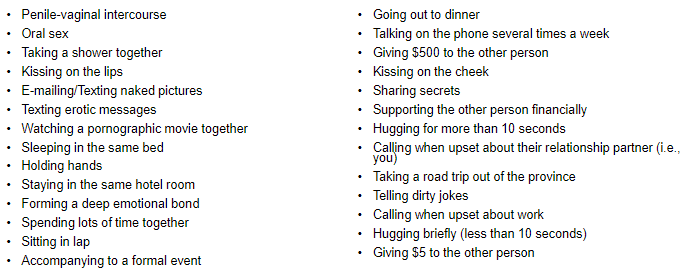
what is cheating?
gave participants each of the 27 items and asked them to rate to what extent it constituted cheating (on a scale from 0 to 100)
most representative
penile-vaginal intercourse (M=97.7)
least representative
giving $5 to other person (M=8.1)
asked people to list as many behaviours as they could that might be considered “unfaithful” if they or their primary partner engaged in them in a dating relationship
behaviours mentioned by >5% of the sample
general agreement on what defines cheating
some ambiguity for less commonly cited behaviours
how common is infidelity?
study of 700 college students
kissed or had some sexual contact with someone else?
50% women
75% men
intercourse with someone else?
33% women
50% men
study 1: 14 men, 60 women, all exclusive daters
completed infidelity questionnaire
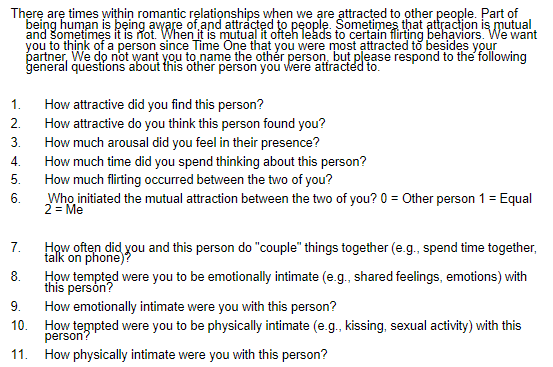
commitment and fidelity results
72% of people reported emotional infidelity
48% reported physical infidelity (27% > midpoint)
prevalence of infidelity
bad news
rates of cheating relatively high
despite the fact that it’s hard to get accurate estimates due to self-report biases
people don’t want to admit cheating
also may be differences in how one defines cheating
good news
no gender differences
the most extreme behaviours are least common
men
most common
casually flirted with, fantasized about sexual play, mild romantic feelings, was sexually attracted to, group study, and fantasize about intercourse
least common
gave oral sex to, received oral sex from, engage in intercourse, went on a date with, engaged in sexual play with, formed deep romantic attachment
women
most common
casually flirted with, group dinner, group study, had mild romantic feelings, group lunch, was sexually attracted to
least common
gave oral sex to, received oral sex from, fantasizing about both, engaging in intercourse and forming deep romantic attachment
cheating among married couples
survey of 1250 married people asked “how many people (either men or women) have you had sexual intercourse with in the past 12 months?”
2.3% (29 people) of respondents said more than 1 (i.e., were unfaithful)
sample of 4884 women married for at least 13 months
asked the same question first face-to-face, and then again on a computer
face-to-face interview: 1.08% of people were unfaithful (N = 48)
computer questionnaire: 6.13% (N = 275)
% of people who were only with partner this year
95% married men and women
82% cohabiting (divorced)
75% cohabiting (never married)
% of people who never had extra-marital sex
88% married women
78% married men
why do people cheat
people report a variety of reasons for cheating
sexuality (need for variety)/sexual incompatibility
emotional satisfaction (e.g., self-esteem; marital quality)
social context (opportunity, separation)
attitudes/norms (liberal)
revenge/hostility (partner treatment)
can we trust these reasons? based on retrospective self-report
who is most likely to cheat?
research has looked at a variety of factors that might predict cheating
demographic factors
interpersonal factors
personality factors
demographic predictors of cheating
gender
most commonly studied
men tend to report cheating more than women in early studies
but… more recent studies show no differences
also, if you define cheating broadly (i.e., not just intercourse), then no gender difference in infidelity
religiousity
routinely found as predictor of infidelity
people who report being more religious tend to cheat less
education
highly educated individuals more likely to report infidelity than less educated individuals
income
individuals with higher income more prone to infidelity
likely have more opportunities to do so
one study found that 50% of cheaters found their extradyadic partner through work
interpersonal predictors of cheating
relationship quality
low marital satisfaction associated in many studies with infidelity
but not all
commitment
less committed people more likely to cheat
because they are less satisfied, have higher quality of alternatives, and less investment
who is most likely to cheat?
107 newlywed couples
completed a number of personality measures for themselves and their partners
asked to indicate how likely it was that they would engage in 6 types of cheating behaviour in the next year
flirting, passionately kissing, going on a romantic date, having a one night stand, having a brief affair, having a serious affair
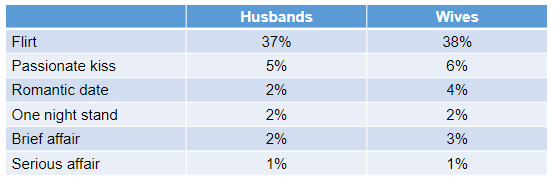
self-predictors
narcissism
conscientiousness (negative)
impulsivity, low self-control
partner predictors
partner sexualizing others (commenting on others’ attractiveness)
partner is jealous and possessive
partner withholds sex
partner abuses alcohol
contextual predictors
marital dissatisfaction
sexual dissatisfaction
detecting cheaters
people believe they can detect cheating, but how accurate are they?
study of 90 couples (surveyed at STD clinic) asked to report whether they had sex partners outside of the relationship, and whether they they believed their partner did
about 66% of inferences were correct
study of 203 undergraduate couples revealed that men were correct 89.7% of the time, whereas women were correct 79.8% of the time
how do people know?
cues for physical infidelity
how do (people think) you know your partner is physically cheating on you?
physical evidence
e.g., partner contracts STI, partner smells like sex
partner gets caught or admits it
partner becomes uninterested in sex
partner changes normal routine (clothes, diet, sleep)
partner displays more sexual interest than normal; acts overly affectionate
cues for emotional infidelity
how do (people think) you know your partner is emotionally cheating on you?
partner becomes dissatisfied/falls out of love
partner is inconsiderate and rejecting
partner is angry and critical
partner doesn’t want to spend time together
partner doesn’t want to discuss another person
partner acts guilty
how do you actually know?
detecting cheaters
51 participants came into lab with partner
asked to complete infidelity questionnaire assessing physical and emotional intimacy with another person
couples then completed drawing task
one partner blindfolded and instructed by other partner about what to draw
this was videotaped
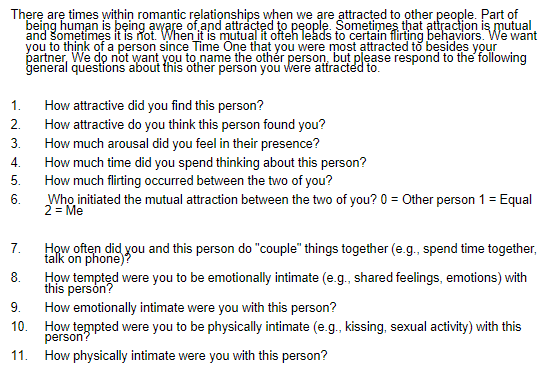
coders then rated:
how likely is it that this person has shown interest in someone other than his/her partner?
how likely is it that the person flirted or made advances on someone other than the partner?
how likely is it that this person has had sexual intercourse with someone other than their partner?
results showed a significant correlation between participants actual infidelity and coder ratings
researchers had 10 males and 10 females make a voice recording
recorded them counting to 10 (pace:1 number per second)
5 men and 5 women had self-identified as having had sexual intercourse with someone outside of a committed relationship
tested whether “cheaters” differed from “noncheaters” in attractiveness of voice and vocal pitch
they did not
also tested and did not find differences in physical characteristics (height, weight, BMI, WHR) and other sexual behaviours (e.g., number of sex partners)
recruited 152 participants (64 men, 88 women)
asked to listen to each of the voice samples and asked “how likely is it that the person speakers has ‘cheated’ on a romantic partner with whom they are in an exclusive, committed, relationship”
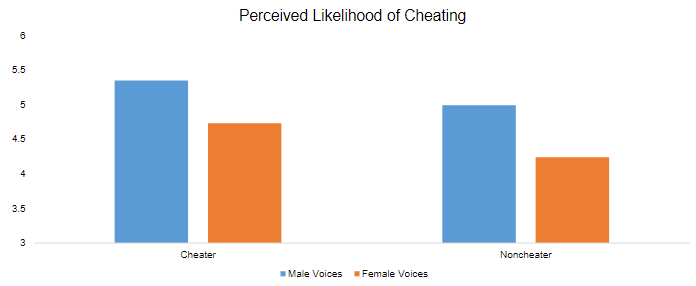
participants were able to detect cheating based on vocal samples
also main effect of speaker voice
why?
no idea
measured a number of acoustic properties of the vocal samples, but found no differences between cheaters and non-cheaters
what about participant sex?
female participants more likely to perceive cheating than male participants
participants shown pictures of 189 faces (101 male, 88 female) with neutral expressions
the faces in the data set reported whether they a) had ever had sex with someone other than their partner and b) whether they ever had sex with someone already in a relationship
participants shown opposite-sex faces and asked to rate how unfaithful each face was on a 1 to 10 scale
among female participants
their own rating of unfaithfulness showed small but significant correlations with faces’ own cheating behaviour
among male participants
little evidence of accuracy
ratings of unfaithfulness unrelated to faces’ cheating behaviour
but were correlated with attractiveness and femininity
men rate attractive and feminine women as more likely to cheat, but no evidence that is the case
detecting cheaters based on face alone
when rating “unfaithful” faces
false negative (e.g., believing someone is faithful when they are not)
women made errors 38% of the time
men made errors 77% of the time
when rating “faithful” faces
false positive (i.e., calling someone a cheater when they are not)
women made mistakes 62% of the time
men made mistakes 67% of the time
not significantly different
detecting cheaters
people seem to be able to detect cheating with some accuracy based on minimal information
but it’s not clear exactly why
evidence of gender differences are mixed
men assume the worst of female partners
men generally overestimate partner’s infidelity and get it wrong
can interpret this through evolutionary lens
useful to be able to detect infidelity
but perhaps more necessary for men (vs. women)
once a cheater, always a cheater?
unclear, since few studies follow people over time
marital studies show less prevalent cheating
but one study found that participants who cheated once before in a relationship were highly likely to do it again
cheating behaviour predicted by prior cheating behaviour
lectures 21-22 jealousy
reactions to cheating
do men and women differ in how they feel about infidelity?
202 undergraduate students complete the following question
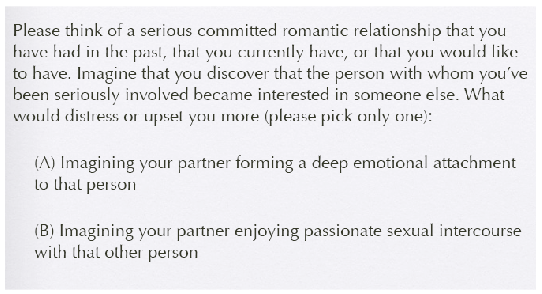
results
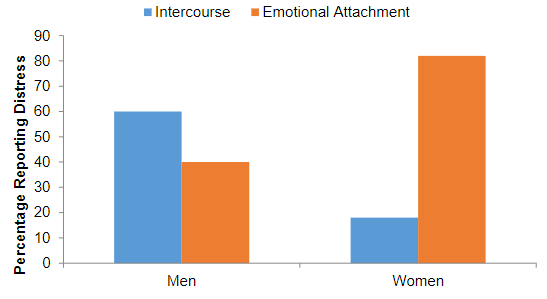
men are more upset than women by sexual infidelity, whereas women are more upset than men by emotional infidelity
effects have been replicated in 25 countries
evolutionary explanation
evolutionary explanation
men and women have different reasons for jealousy
men: paternity uncertainty
men uncertain of paternity, so evolution favoured men who were sensitive to sexual infidelity
men must avoid being “cuckolded” meaning they should control women’s sexual behaviour
women: differential investment hypothesis
women invest more in parenting, so evolution favoured women who were more sensitive to threats of loss of investment from mate
women must avoid getting ill, or abandoned
harris and christenfeld (1996)
137 undergraduates given similar paradigm

results
but also gave them two more questions
please think of a serious romantic relationship you have had in the past, currently have, or would like to have. imagine that you discover that your romantic partner is engaging in sexual intercourse with someone else. how likely do you think it is that your mate is in love with that person?
please think of a serious romantic relationship you have had in the past, currently have, or would like to have. imagine that you discover that your romantic partner is in love with someone else. how likely do you think it is that your mate is also engaging in sex with the other person
results
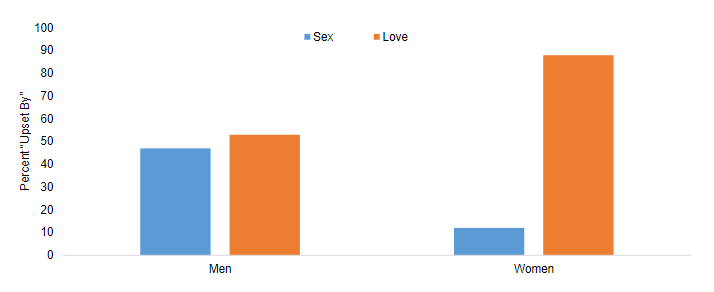
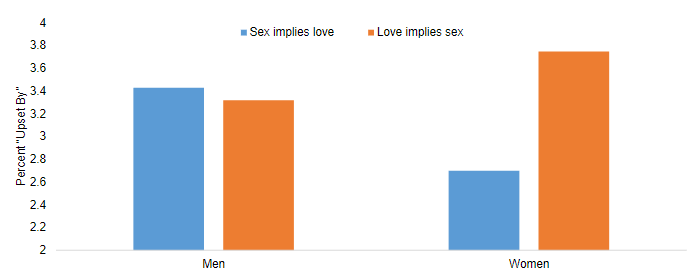
double-shot explanation
“double-shot” hypothesis
responses to hypothetical infidelity based on differential implications learned through socialization
gender differences in what each type of infidelity implies
men believe that women’s sex implies love
women believe men’s love implies sex
thus, gender differences are due to different assumptions about sex, not necessarily different feelings toward it
methodological explanation
effects have been replicated in 25 cultures
23 were samples of undergraduates
effects replicate when people are asked about hypothetical infidelity but no differences when people asked to recall partner’s actual infidelity
both men and women more distressed about emotional infidelity when it actually happens
methodological challenge
these findings rely on the use of the terms “upset” and/or “distressed”
these terms are emotionally ambiguous
effects should disappear when more specific terms are used
sabini and green (2004)
participants in three samples
46 male and 37 female undergrads at a state university
53 male and 99 female undergrads at a private university
66 males and 63 females recruited at a train station
asked to imagine partner “falling in love” or “having sexual intercourse’
asked
which one would upset you more
which one would make you more angry
which one would hurt you more
which one would cause you to blame your partner\
results
in the school samples, men reported being more “upset” by physical vs. emotional infidelity whereas women reported the opposite
this was not significant in the non-student sample. both genders more upset by emotional infidelity
men and women both reported that they would be more hurt by emotional than sexual infidelity
no gender difference
both men and women reported that they would be more angered by sexual than emotional infidelity
no gender difference
both genders assigned more blame to their partners for sexual infidelity vs. emotional infidelity
no gender difference
reactions to jealousy
jealousy vs. envy
jealousy: intolerance of a rival
envy: chagrin or discontent at the good fortune of another
dealing with romantic rivals
jealousy triggered by threat of loss of partner
but not just losing a partner… losing a partner to an interloper
this does particular damage to self-esteem
loss to a rival more distressing than sheer rejection
the interloper
what characteristics of a rival would bother you most?
do men and women differ?
physical attractiveness vs. dominance
characteristics of the interloper
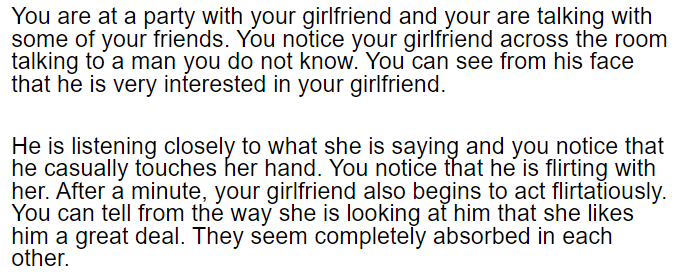
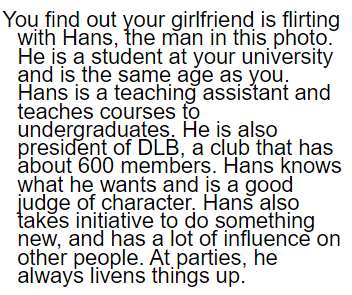
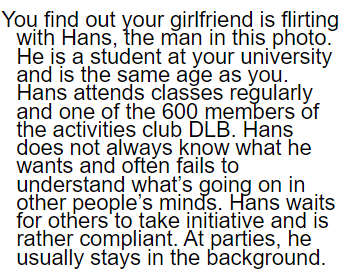
participants asked to imagine partner flirting with an opposite-sex person at a party, then are presented with a photo and personality profile of the “interloper”
picture was someone who was high vs. low in attractiveness
personality depicted someone high vs. low in dominance
DV: how jealous would you be in this scenario?
reacting to rivals
the presence of a threatening rival may motivate people to try and retain their partner’s interest
how might they do this
by trying to be similar to a romantic rival
71 participants, all in dating relationships
rated themselves on 10 traits (athletic, artistic, warm, intelligent, funny, etc)
each scenario began by asking the participants to imagine they are meeting their partner for lunch on campus, but are running a few minutes late. as they make their way toward their partner they see and overhear their partner being asked for directions by an attractive individual…
neutral condition
the partner provides the rival with directions and the rival thanks the partner. the partner then turns around and notices the participant who he/she rushes toward with a smile on his/her face
rival flirtation
the potential rival unabashedly flirts with the partner, despite the fact that the partner mentions being in a romantic relationship. the rival comments on how “cute” the partner is, even offering the partner his/her phone number for a future coffee date
during this flirtation, the partner remains cordial but clearly rebuffs the rival, again rushing toward the participant with a smile
partner flirtation
the partner unabashedly flirts with the rival, never mentioning being in a romantic relationship. the partner comments on how “cute” the rival is, even offering the rival his/her phone number for a future coffee date
during this flirtation, the rival remains cordial but unreceptive of the partner, and the partner trudges toward the participant with an annoyed look on his/her face
reacting to rivals
viewed a photo of the supposed “romantic rival” accompanied by a personality profile of the romantic rival
four traits: three similar to participant and one different
completed another personality measure at the end of the study
beliefs about jealousy
jealousy is an emotional reaction to a perceived or real threat
is a very negative experience
harmful to relationship quality
major trigger for intimate partner violence
some people (i.e., people high in romantic beliefs) see jealousy as a sign of love
jealous people perceive other jealous people as being more in love
but also can elicit positive reactions from partners
making our partners jealous
do people sometimes try to elicit jealousy in their romantic partners?
75% of people report doing this
why induce jealousy?
to seek reward
to test the relationship
to bolster self-esteem
to improve the relationship
it’s fun
to punish partner
teach him/her a lesson
for revenge
for control
how do people induce jealousy?
relational distancing
make plans with own group of friends without partner, vague about plans and people we are with, say we’re too busy to hang out, make plans with known rivals
flirtation facade
send flowers to myself, leave fake numbers around for partners to find, leave pictures of others around
highlight alternatives
talk about past partners, other men, compare partner to past partners, tell partner about others flirting with you
behavioural reactions to jealousy
when people are threatened by a potential rival, they often feel angry and fearful
but they also feel guilty as well
embarrassed about feeling insecure
responsible for their partner being interested in someone else
engage in negative behaviours they regret (e.g., snooping, yelling)
jealousy is an aversive state
mate guarding
people are motivated to think and behave in ways that minimize jealous feelings
mate guarding behaviours keep partners close
intersexual directed at one’s own mate
intrasexual directed at same-sex rivals
intersexual mate guarding
direct mate guarding
vigilance - calling partner unexpectedly
concealment of mate - taking partner away from party where other same-sex rivals may be present
monopolizing time - spending all free time with mate
intersexual negative inducements
infidelity threat - flirt with others in front of partner
punishing mate’s infidelity threat - getting angry with partner for flirting
emotional manipulation - making partner feel guilty for talking to members of opposite sex
derogation of competitors - insulting same-sex rivals in front of partner
violence
intersexual positive inducements
resource display - giving gifts to partner
sexual inducement - giving into partner’s sexual requests
appearance enhancement - dressing nicely, grooming
submission and debasement - doing whatever partner wants
public signals of possession
verbal signals - loudly introducing partner as boyfriend/girlfriend/wife/husband
physical signals - holding hands in front of same-sex rivals
possessive ornamentation - giving partner visible jewelry
intrasexual negative inducements
derogation of one’s own mate to same-sex rivals
intrasexual threats - yelling at same-sex rivals
violence toward same-sex rivals
mate guarding and deterring rivals
137 female participants
four conditions
mate guarding condition - women imagined themselves at a party with a date and noticing another woman flirting with him while getting drinks
mate attraction condition - women imagined themselves single and on vacation meeting on attractive man
neutral condition - women imagined themselves doing laundry
negative condition - women imagined themselves looking for lost keys
participants asked to indicate their favourite brand of luxury handbags, shoes, t-shirts and sports car
given a blank image of each and asked to draw the logo of their favourite luxury brand
results
women in the mate-guarding condition drew larger logos for luxury goods
follow-up study found that women who imagined male partner flirting also reported more willingness to spend money on cars, shoes, and jewelry relative to control participants
why
women who are feeling jealous have implicit preference for luxury products as way to signal to potential rivals that they have a partner that is able and willing to devote resources to them
a form of intrasexual deterrence
mate guarding
evolutionary psychologists point out that mate guarding occurs in all human societies as well as many other species
men who mate guard more have sex with their partners more frequently
men mate guard more when married to younger and attractive wives
women mate guard more when husbands have higher income
men guard mates more when they are closer to ovulation
women mate guard more against rivals who are ovulating
all serves to prevent infidelity and cuckolding for men
but men also have other “contingency” tactics they employ
one study found that the less time men had spent from female partners since last sexual encounter, the more they found their partners attractive and were interested in having sex
another study found that men with more attractive female partners reported last sexual intercourse to be longer and also reported thrusting more deeply
why does this matter
this behaviour serves to displace semen of a potential rival
rivals
most research on jealousy doesn’t specify whether rivals known they person they are flirting with in is in a relationship
when they do, they are called mate poachers
frequency of mate poaching
knowing, from the start, that a person was already in an exclusive relationship, have you ever attempted to attract this person as a short-term sexual partner
men 54%
women 24%
even if you did not initially know that a person whom you were attempting to attract was already in an exclusive relationship, have you, after finding out about the person’s existing relationship, ever continued to pursue this person as a short-term sexual partner?
men 40%
women 27%
mate poaching
mate poaching is risky
risk retaliation from the poachee’s current partner
also risk reputational damage if they become known as a serial poacher
mate poachers often try to disguise their efforts
by initiating friendships with poachees first
by selecting targets who are easier to poach
mate poachers tend to be higher in risk-taking, competitiveness, manipulativeness and narcissism
moran & wade (2022)
male participants shown three photos of a man sitting with his arm around a woman
manipulated differences in attractiveness
results showed that women as rated easiest to poach when with a man less attractive than she was
does mate poaching work?
mate poachers have more lifetime sex and more dating partners than non-poachers
might be because they target less committed individuals
also might be power of reciprocity
people in friendships with people trying to poach them become less committed to romantic partners over time
one study showed that participants who were flirted with by an attractive confederate reported more desire and fantasizing about having sex with people other than their romantic partners
people in “mate poached” relationships report lower relationship quality, less trust, more jealousy and are more likely to commit infidelity
conclusion
fear of losing a partner to a potential rival is distressing because it threatens their relationship and self-esteem
we have a number of strategies to guard against the real or imagined threat of rivals
much of this research guided by evolutionary theory
jealousy and infidelity are closely related and are a leading cause of relationship dissolution
lecture 23 later relationship stages
relationships are hard
maintaining long-term relationships is very difficult
trajectory of satisfaction
historically, and in this course, we have noted that marital satisfaction declines over time
due to advances in statistics, we now know that this is not true for everyone)
most marriages start out happy and stay that way
declines primarily among those with low relationship quality at time of marriage
why are relationships hard?
require a lot of effort, practice, and good luck
which relationships last?
many of the things we talked about already are important
but environment also plays a role
knowledge does not guarantee success
karney and bradbury (1995)
meta-analysis of 115 longitudinal studies assessing marital stability
top 5 predictors of stability were:
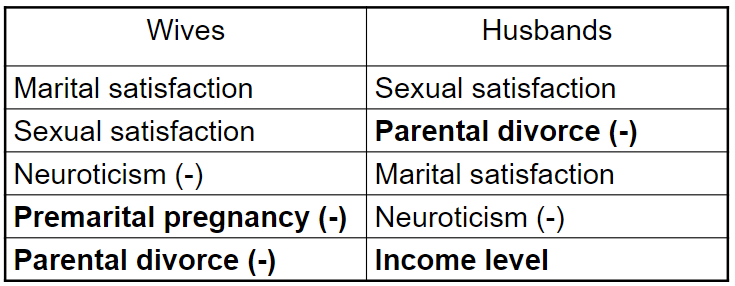
parental divorce
parental divorce has some negative intrapersonal effects of children
during childhood and continuing into adulthood
effects are relatively small
parental divorce has consistently negative interpersonal effects
parental divorce predicts marital quality
children of divorced parents have significantly higher divorce rate than children whose parents never divorced
many studies
“intergenerational transmission”
parental divorce and marital quality
why does intergenerational transmission occur?
two explanations:
parental divorce causes marital discord
statistics are misleading
causal explanation: parental divorce causes discord
why would this be?
strains parent-child relationship quality
children experience negative affect
emotional insecurity results in bad life choices (getting married young, having child outside of marriage)
interferes with educational attainment and results in low SES
observational learning
spurious explanation
what are some third variables that could cause why parents marital quality is associated with child’s marital quality?
parents’ education
parents’ income
parents’ negative affect
parent's’ poor life choices
amato and booth (2001)
taken from a national longitudinal study of 297 families
parents married at time of assessment in 1980; children married at time of assessment in 1997
assessed relationship between parents’ marital quality and children’s subsequent marital quality
does parents’ marital quality predict children’s marital quality?
yes
more accurately, parental marital discord predicted children’s marital discord
effect size moderate (about 0.20 to 0.30)
is this relationship spurious?
no
stayed significant and did not decline appreciably after controlling for parent’s education, income, religiosity, negative affect, age at marriage, prior divorces
what seems to mediate the relationship between parental marital discord and marital discord in children?
observational learning
the items that significantly predicted child’s marital discord were evidence that parent(s) were: jealous, domineering, easily angered, critical, moody, uncommunicative
didn’t matter whether it was mom, dad, or both
consequences of dissolution
baxter (1994)
76% of students reported using indirect strategies to break up
mostly withdrawal-avoidance (88%)
manipulation less common
24% of students reported using direct strategies
mostly open confrontation (73%), with no opportunity for discussion
others (27%) are direct but leave room for discussion (e.g., “State of the relationship” talks)
consequences for well-being
divorce is associated with negative physical and mental health
higher mortality rates among divorced individuals (if not remarried)
breakup predicts diverse forms of emotional distress, including depression
failing relationships predict impaired life satisfaction, which doesn’t fully recover over time (on average)
exes
exes complicate adjustment to breakup
evaluating an ex-partner negatively facilities coping
women tend to evaluate exes more negatively than men
also adjust better
the more contact one has with an ex, the more distress about separation they feel
one thing that helps
finding a new partner
maintaining relationships
how to make relationships good?
relationship scientists are good at studying how to avoid making relationships bad
accommodate partner’s bad behaviour
engage in constructive conflict
provide (invisible) social support
don’t cheat or be jealous
have secure attachment
etc
how do we make relationships better?
capitalize on good news
what else?
doing new things
how can we keep excitement alive?
novelty and arousal normally decline
can recapture arousal by sharing new, self-expanding activities together
63 couples in experimental procedure
participants crawl on hands and knees carrying a pillow between them
cannot use hands, arms, or teeth
told if they could do it under 1 minute, they would get a prize
randomly assigned
novel task: pillow carrying
mundane task: partner 1 rolls ball to center of room, partner 2 retrieves it; repeat for 7 mins
no activity
DV: relationship quality
why?
classical conditioning
misattribution of arousal
cooperation enhances interdependence
perception of relationship as exciting
doing secret things
groups of 4 unacquainted students
formed mix-sex pairs to play a card game
one pair received instructions to play “footsie” while playing cards
“try to work out nonverbal communication system using your feet”
manipulated secrecy
secret condition: “don’t let other couple know what you’re doing”
nonsecret condition: “it’s acceptable for you to let the other couple know what you’re doing”
good relationships
do new things, excitedly and share them with partners
avoid doing harmful things
practice (make it a habit)
short-term pain, long-term gain
pay attention to the environment
try to anticipate stressors
try to avoid biases in judging partner