Human Respiration
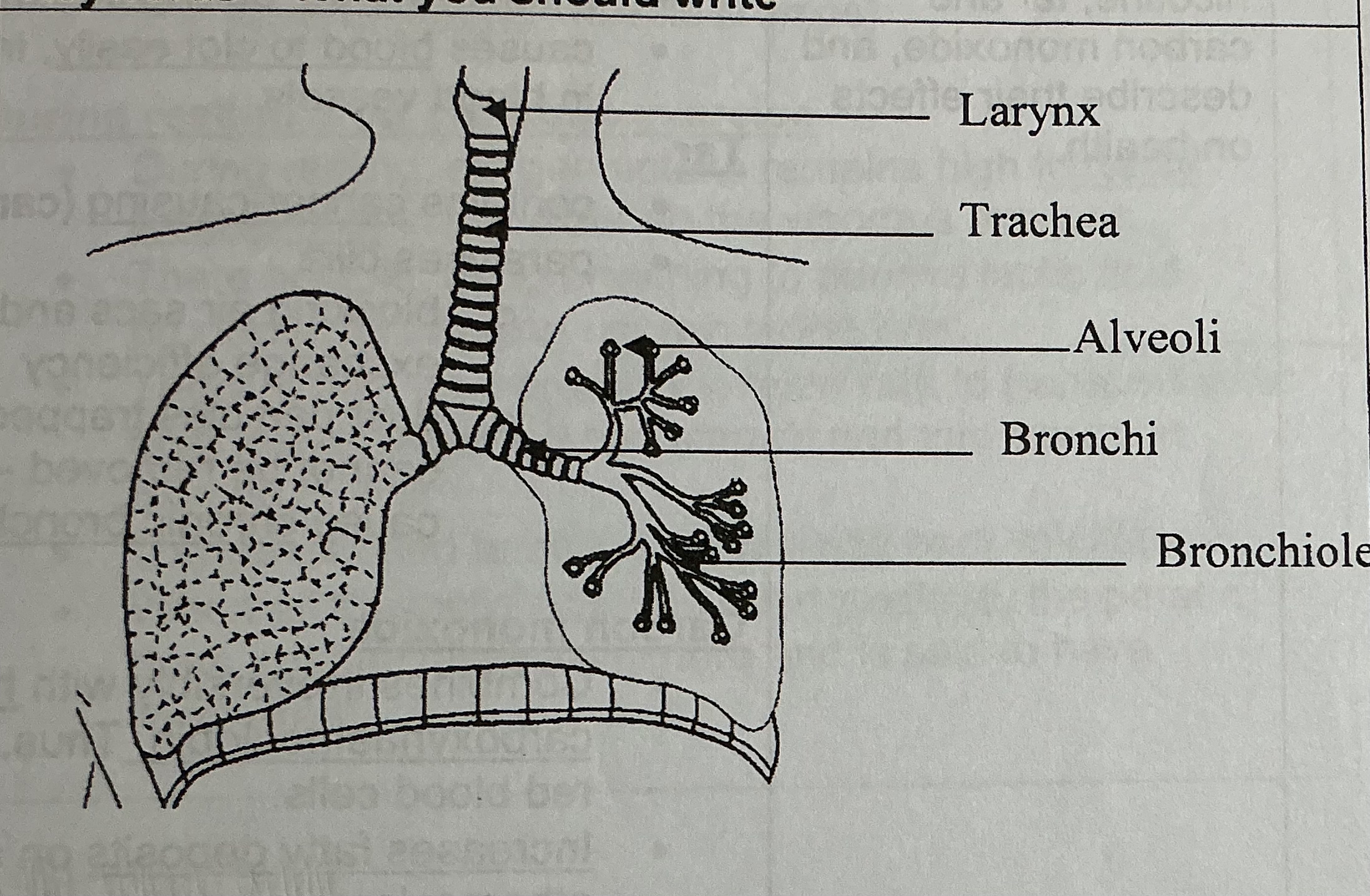
Larynx
Voice box
Trachea > Bronchi > Bronchioles
Passageway for air to enter and leave the lungs
Trachea and bronchi contain gland cells that secrete mucus to trap dust particles and bacteria
Trachea and bronchi contains cilia that sweeps up dust particles and bacteria into pharynx and swallowed into oesophagus
Alveoli
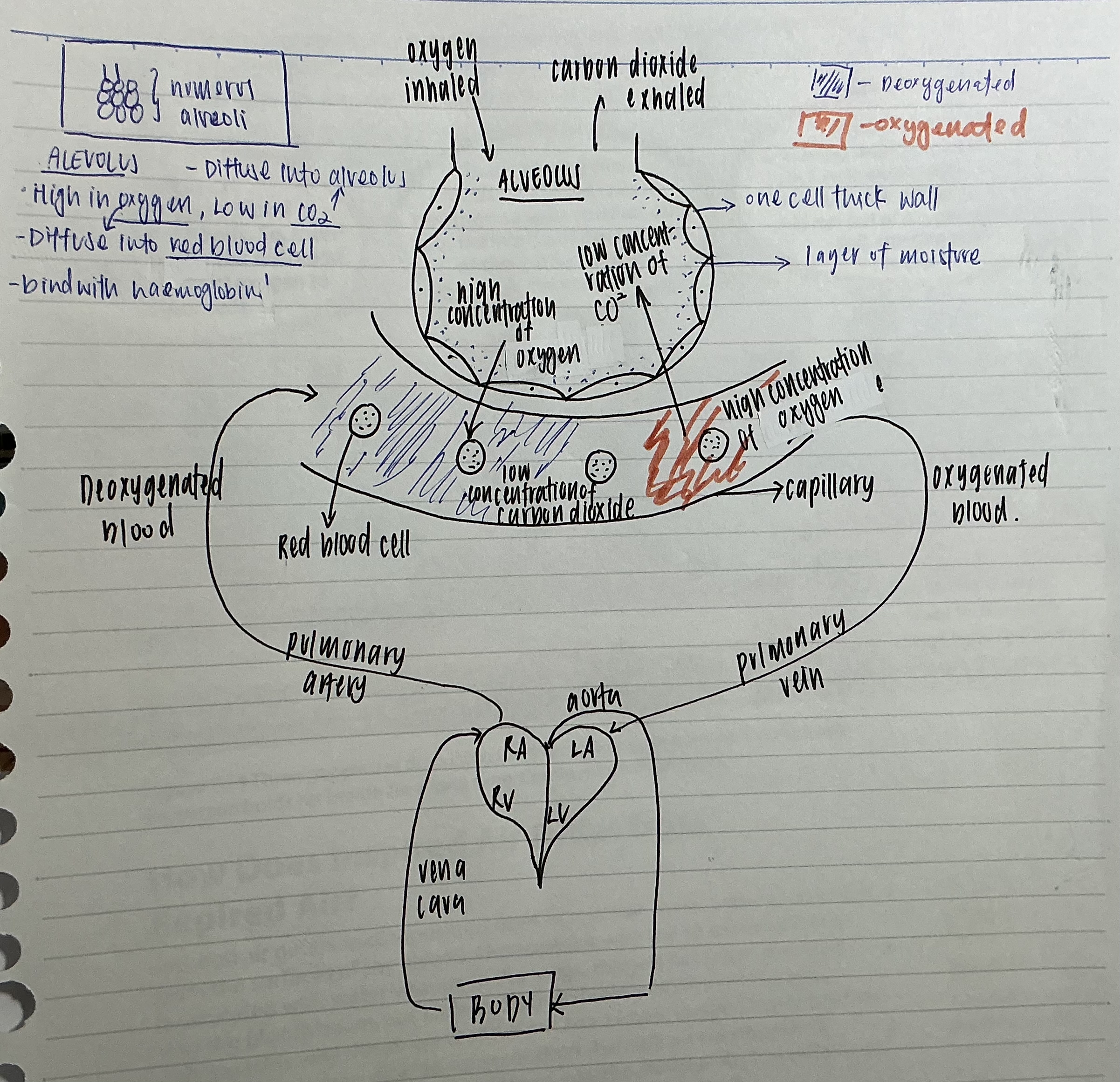
Site for gaseous exchange
Adaptation of alveoli for gaseous exchange
Presence of numerous alveoli: provides a large surface area to volume ratio for faster gaseous exchange
Alveolar walls are only one cell thick: faster diffusion of gases
The alveoli are supplied with a lot of capillaries: ensures continuous blood flow to maintain diffusion gradient for oxygen and carbon dioxide between alveolus and blood
Surface of alveoli has a thin film of moisture: allows oxygen to dissolve before diffusing into blood capillaries
Major toxic components of TOBACCO SMOKE
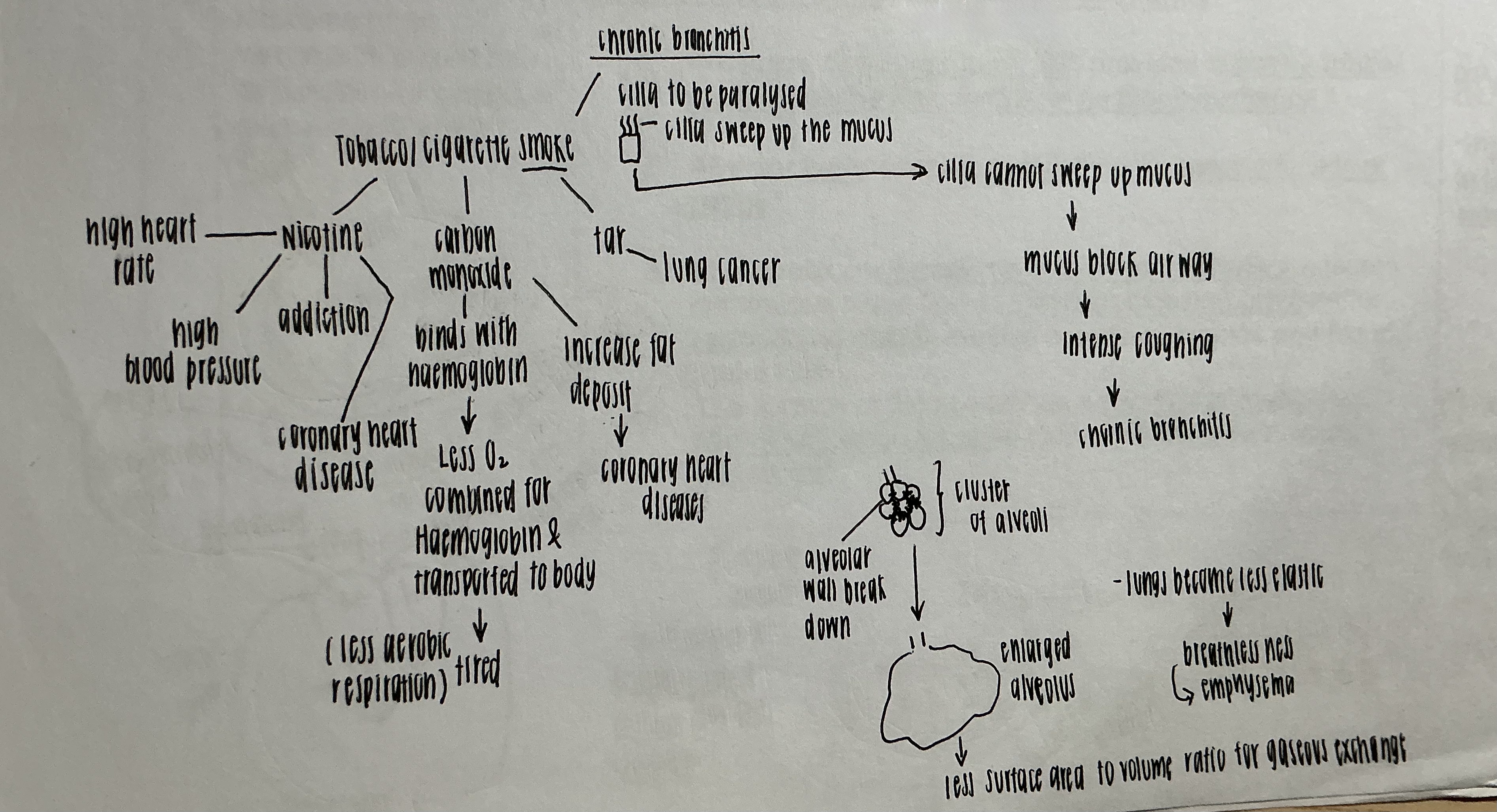
Tobacco smoke consists nicotine, tar and carbon monoxide
Nicotine
Addictive drug, dulling brain and senses
Causes blood clot easily, increasing risk of blood clots in blood vessels
Tar
Contains cancer-causing (carcinogenic) chemicals
Paralyses cilia
Blocking air sacs and reduction in gaseous exchange efficiency
Dust particles trapped in mucus inside the airways cannot be removed > persistent coughing > may cause chronic bronchitis or emphysema
Carbon monoxide
Combines irreversibly with haemoglobin to form carboxyhaemoglobin. Less oxygen is carried by red blood cells.
Increases fatty deposits on artery walls increasing risk of atherosclerosis and blood clotting in arteries.
Aerobic respiration
Definition: Is the breakdown of glucose, in the presence of oxygen to release a large amount of energy.
Word equation: Glucose + oxygen > carbon dioxide + water + large amount of energy released (cell growth to make proteins)
Anaerobic respiration
During vigorous exercise, anaerobic respiration occurs together with aerobic respiration.
Anaerobic respiration occurs due to insufficient oxygen
Definition: Is the breakdown of glucose in the absence of oxygen to release a small amount of energy
Word equation: Glucose > lactic acid
Lactic acid causes muscle fatigue
Explain why cells respire anaerobically during vigorous exercise resulting in oxygen debt that is removed by rapid, deep breathing after exercise.
During vigorous exercise
Muscular contractions increase
Muscle cells respire more to release more energy
However, insufficient oxygen is supplied to muscle cells to meet oxygen demand
Thus, muscle cells carry out anaerobic respiration to release extra energy and produces lactic acid
When this occurs, the muscle cells is said to occur an oxygen debt
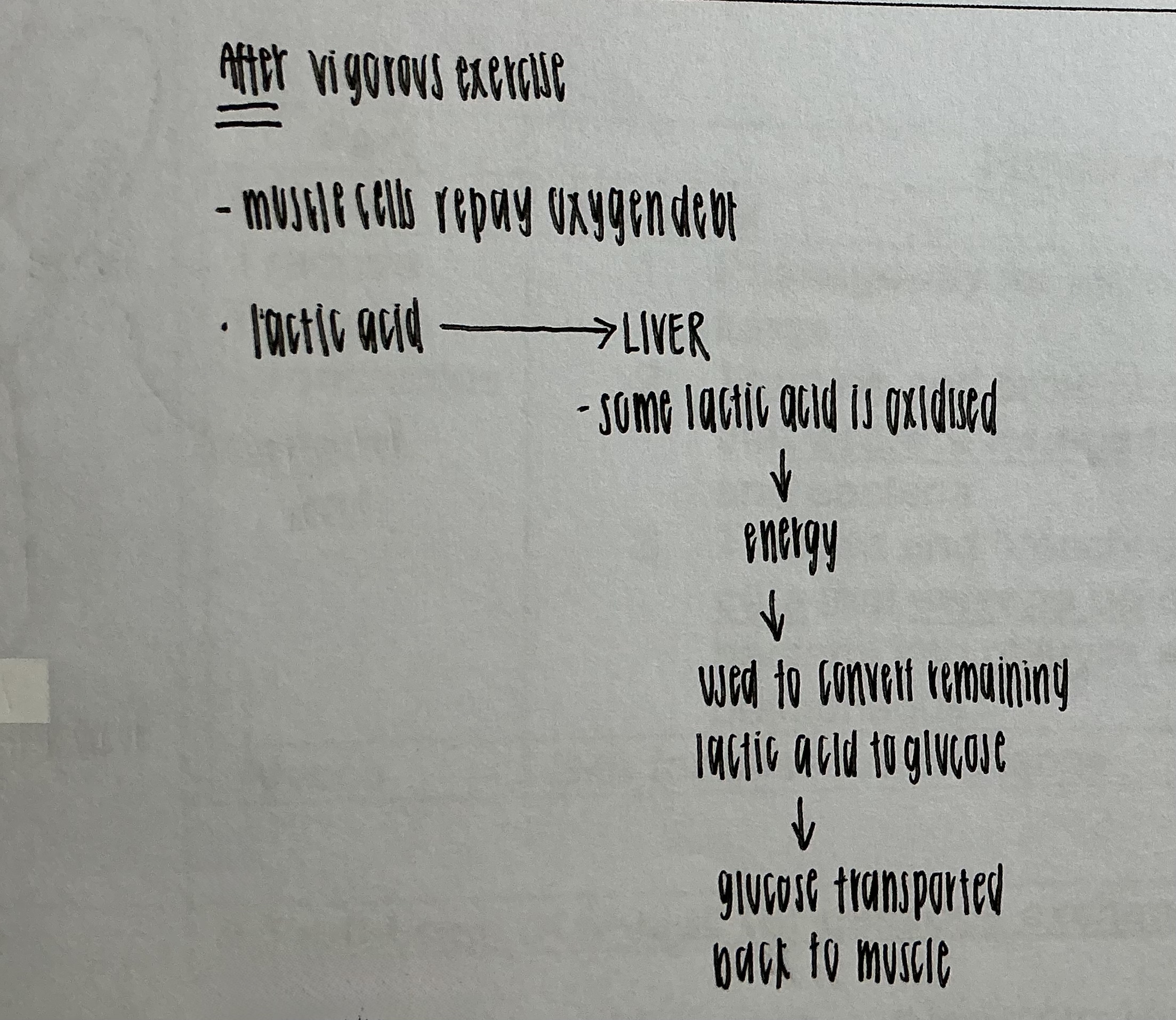
During resting after vigorous exercise
During resting, oxygen uptake remains high to repay oxygen debt incurred during the vigorous exercise
There is rapid, deep breathing to remove lactic acid produced by bringing oxygen to the liver
There is also an increased in heart rate to transport lactic acid to liver via blood for removal and to transport oxygen to liver
Oxygen is used to convert lactic acid back to glucose