Week 4 - Polymorphism and Templates
Polymorphism - Classes that can be used as their super classes
Whenever we have a student or member of staff we can use them in parameters of person object
Abstraction: Encapsulating implementation with private classes - hiding complexity
Provides everything a user needs to use the class without needing all the complexity
Inheritance: sub classing an object
Derived class inherits attributes from base class
Public - publicly available outside of class - derived inherits
private restricts access to methods and attributes - only accessible in class
protected stops access to sub classes
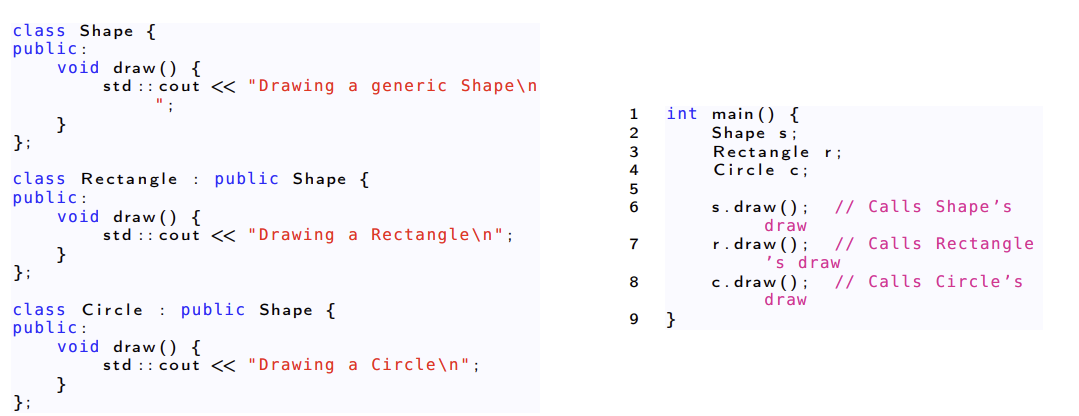
Static polymorphism - refers to function overloading resolved at compile time
different versions of a method can be defined for different classes in class hierarchy - will be known at compile time
Method called is based on static type of object at define time
Runtime Polymorphism
Achieved using virtual functions and inheritance so might not always know whats coming
Decision of which function to call is made at run time. e.g. reading shapes from a file would depend on whats in the file
Disallowing overriding - final
Once method marked as final, no derived class can override it
restricts what over people can do with your class
(*shapePtr).draw() - will allow me to get access to draw functionality
shapePtr→ - different syntax for same thing
Polymorphism in streams
in/out are streams - represent the flow of data
Streams abstract the details
Templates
Java generics - whenever we have algorithm such as sort - allows us to write the code once and have it applied to different types
Templates allow us to do same sort of thing
Function templates can be called with any type
Implementation templates define a specific implementation for a specific type