Satire NOTES
What is Satire?
An art form (literary, dramatic, visual) that uses humor, irony, exaggeration, or ridicule to expose and criticize vices, follies, abuses, and shortcomings with the intent of shaming individuals, corporations, and/or society itself into improvement or reform.
Satire typically “says what needs to be said” by veiling any controversial topics in a “tongue-in-cheek” fashion.
Satire IS intentional
Horatian Satire - After the Roman satirist Horace
Voice: Indulgent tolerant, amused, and witty
Gentle ridicule the absurdities and follies of human beings, aiming at producing in the reader a wry smile
Juvenalian Satire - After the Roman satirist Juvenal
Formal satire in which the speaker attacks vice and error with contempt and indignation
Values realism and harshness; verbally ripping somebody apart (designed to hurt feelings)
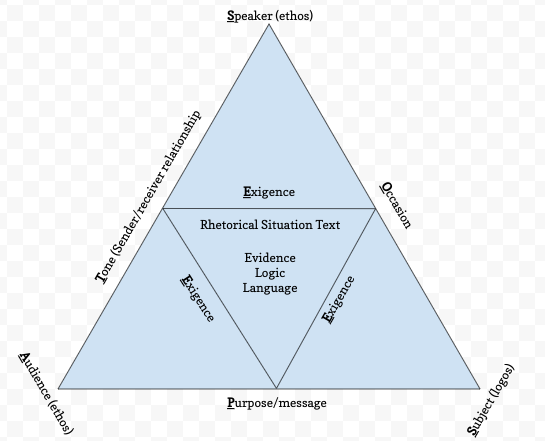
Rhetorical situation is STILL IMPORTANT in understanding satire —>
Rhetorical Choices
Sarcasm: praise to personally mock/insult someone; a form of verbal irony
Hyperbole: exaggerating something so much that it becomes ridiculous
Parody: Take the style of the author/work and replace, but doing so in a way of humor
Burlesque: an artistic composition, especially literary of dramatic, that, for the sake of laughter, vulgarizes lofty materials or treats ordinary material with mock dignity; any ludicrous parody or grotesque. (No holding back, no filter)
Caricature: takes a particular aspect of a subject and exaggerates it to create a comedic effect
Double Entendre (hear): a word/phrase open to two interpretations, one of which is usually risque (sexual)
Anachronism: A person or thing that belongs to a time period other than the one during which a piece of writing is set
Incongruity: presenting something next to something else that is completely different
Juxtaposition: putting together a person, concept, theme, etc. to highlight the contrast between them
Litotes: a figure of speech (and form of verbal irony) in which understatement is used to emphasize a point by stating a negative to further affirm a positive
Malapropism: the mistaken use of a word in place of a similar sounding one; often with an amusing affect
Oxymoron: opposite words juxtaposed that somehow make sense as a complete unit (ex. pretty ugly, deafening silence)
Lampoon: a sharp, often virulent attack directed against an individual or institution; a work of literature, art, or the like, ridiculing severely the character or behavior of a person, society, etc.
Quantification: (numbers) the act of counting and measuring human observations and experiences into members of some set of numbers. It reduces humans to numbers.
Example of satire
“On the Birth of His Son”
Families, when a child is born
Want it to be intelligent.
I, through intelligence,
have wrecked my whole life,
Only hope the baby will prove
ignorant and stupid.
Then he will crown a tranquil life
By becoming a Cabinet Master.
- Su Tong Po