Indigenous Art of North America: Tradition, Function, and Transformation
Cultural Diversity and Shared Themes in North America
Unlike the centralized empires of Mesoamerica (Aztec/Maya) or the Andes (Inca), the arts of Indigenous North America (specifically the regions now known as the United States and Canada) are defined by incredible diversity stemming from varied geography. From the arid deserts of the Southwest to the dense cedar forests of the Northwest Coast, the environment dictates the materials and forms of art.
Despite this variety, several shared themes bridge these distinct cultures:
- Spiritual Functionalism: Artifacts are rarely purely decorative; they serve specific ritual, social, or utilitarian functions.
- Continuity and Adaptation: Artists maintain ancient traditions while incorporating new materials (like glass beads from Europe) and adapting to the pressures of colonialism.
- Nature and Shamanism: There is a profound connection to the natural world, often involving transformation rituals and shamanistic practices.
- Collaborative Creation: Art is often a communal or family activity, distinguishing gender roles in production (e.g., women often creating textiles and ceramics, men painting hides or carving wood).
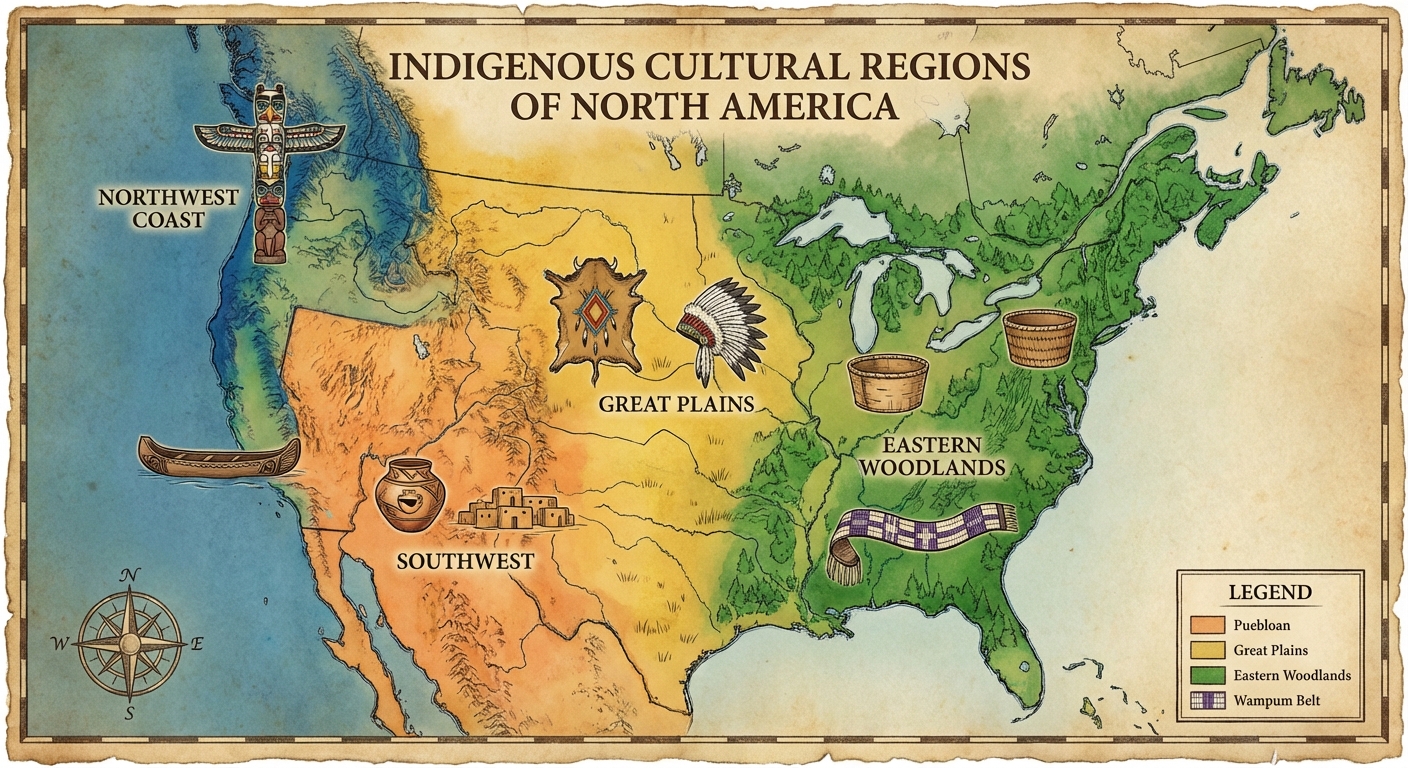
Puebloan Architecture and Ceramics (The Southwest)
The Southwest region (modern-day New Mexico, Colorado, Arizona, Utah) is home to the Ancestral Puebloans (formerly called Anasazi) and their descendants. This region is characterized by arid conditions, necessitating intricate irrigation, adobe construction, and storage solutions.
Ancestral Puebloan Architecture: Mesa Verde
Key Work: Mesa Verde Cliff Dwellings (Montezuma County, Colorado, 450–1300 CE)
The builders of Mesa Verde utilized the natural landscape for defense, thermal regulation, and community organization.
- Location: Built directly into the cliff face under overhanging rock ledges.
- Material: Sandstone, mortar, and wooden beams.
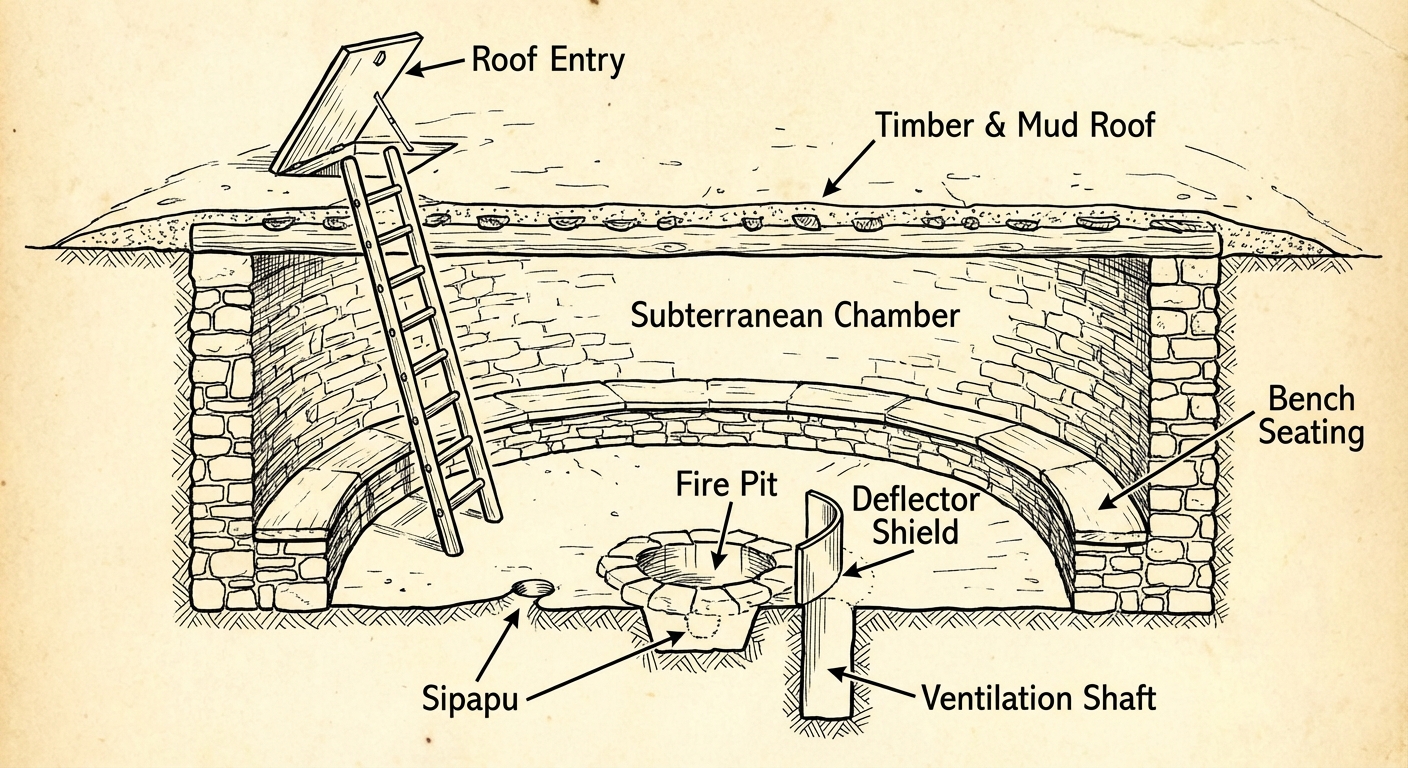
- Architecture: The site features multi-story residential dwellings and distinct circular, subterranean rooms called Kivas.
The Kiva: A Spiritual Center
The Kiva is the spiritual heart of the Puebloan community.
- Form: Circular, sunken into the ground, entered via a ladder through the roof.
- Function: Used for male council meetings, rituals, and ceremonies.
- Symbolism: A small hole in the floor, called the sipapu, represents the navigational vent through which humanity emerged from the underworld into the current world.
Modern Puebloan Ceramics: Maria Martinez
Key Work: Black-on-black ceramic vessel (Maria Martinez and Julian Martinez, Tewa, New Mexico, c. mid-20th century)
Maria Martinez (San Ildefonso Pueblo) is a crucial figure in 20th-century art history. She revitalized ancient pottery techniques, transforming functional village wares into fine art for the collector market.
- Technique (Coil Method): Martinez did not use a potter's wheel. She used the ancient method of rolling clay into long sausages (coils), stacking them, and smoothing the walls.
- The Black-on-Black Finish:
- The pot is polished with a smooth stone to create a shiny surface.
- Matte designs are painted over the polish using slip.
- The pot is fired in a manure-smothered fire. The smoke removes oxygen (reduction firing), turning the red clay completely black.
- Gender Roles: In traditional Tewa culture, women formed the pottery, and men painted the designs. Maria formed the pots; her husband Julian (and later her sons) painted them.
Northwest Coast Art
The Northwest Coast (stretching from Washington State through British Columbia to Alaska) is home to cultures like the Kwakwaka'wakw (formerly Kwakiutl), Haida, and Tlingit. This region is rich in cedar forests and salmon, leading to a stratified society with settled communities and highly stylized wood carving.
The Potlatch and Social Hierarchy
Art in this region is deeply tied to the Potlatch, a grand ceremony of feasting, gift-giving, and performance used to display status, validate lineage, and redistribute wealth.
The Transformation Mask
Key Work: Transformation Mask (Kwakwaka'wakw, late 19th century)
These masks are kinetic sculptures—they move and change during performance.
- Form: Carved red cedar wood, painted with