FRE 102: 2/12
La Bretagne (Brittany)
Nombre D’Habitants: 3 259 000 (les Bretons)
Capitale: Rennes - Cette ville est la capitale de la Bretagne et elle est connue pour ses maisons a colombages
Le Mont Saint-Michel
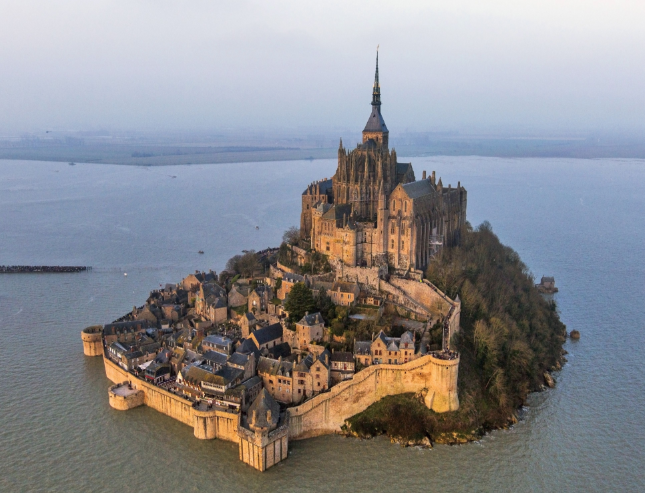
Les falaises rocheuses -
la foret de Broceliande - C’est la foret mythique de la legende du roi Arthur
les alignments de Carnac -
ses racines celtiques -
Prenominal Verbs
Verbs used to talk about what you do to yourself:
Morning:
Je me reveille - I wake MYSELF up
Je me leve - I get MYSELF up
Je me lave - I wash MYSELF
Je me brosse - I brush MYSELF
Je me maquille - I put make up on MYSELF
Je m’habille - I dress MYSELF
Evening:
Je me repose - I rest MYSELF
Je m’amuse - I amuse MYSELF
Je m’ennuie - I bore MYSELF
Je me deshabille - I undress MYSELF
Je me couche - I lay MYSELF down
Je m’endors - I fall MYSELF asleep
When saying that people are doing something to a part of their body, you generally use the definite article (le, la, l’, les) in French, rather than a possessive adjective as in English.
Je me lave les mains. - I’m washing my hands.
After the expression avant de, use an infinitive rather than a conjugated verb.
Before I eat (Before eating), I wash my hands. - Avant de manger, je me lave les mains.
To form the negative of a reflexive verb, place ne directly after the subject and pas, jamais, or rien directly after the verb. Remember that toujours, souvent, and rarement go right after the verb, but the other adverbial phrases listed go at the end of the sentence.