2a. Balance of payments
The Balance of payments
The Balance of Payments records all of the financial transactions that are made between consumers, businesses and the government in the UK with people across the rest of the world.
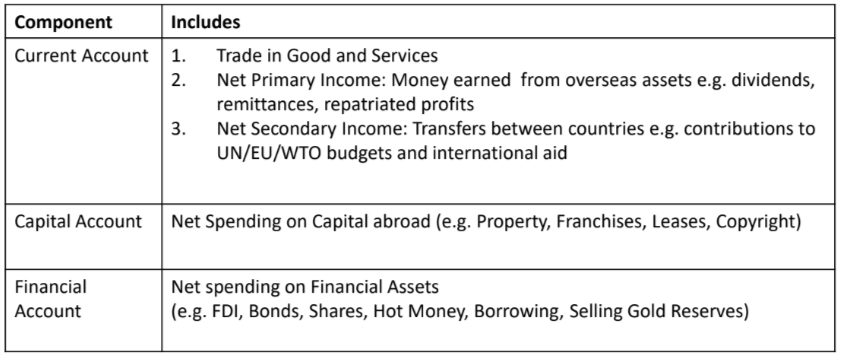
When we buy something from abroad, we ‘sell’ the cash to do so. The foreign agent now owns this financial asset. They might use this to buy a UK asset (eg business, but may just keep it in cash, adding to reserves). An import would therefore be a negative on the current account, but a positive on the capital account.
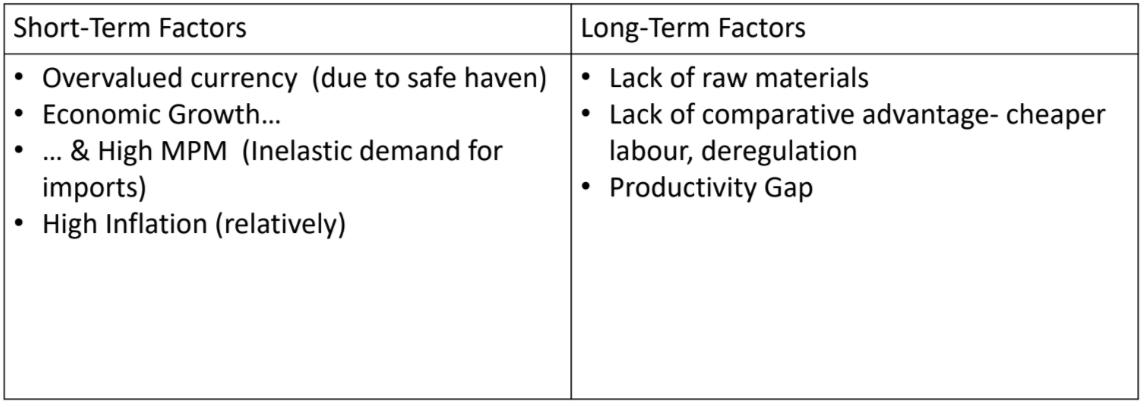
Causes of surpluses and deficits on the current account
Natural resources
Underlying competitiveness
Exchange rates
Inflation
Investment and long term growth
Spending by consumers and government
Causes of a current account deficit
Overvalued exchange rate
SPICED: A stronger pound makes imports cheaper boosting demand for imports, whilst making exports more expensive and less competitive.
Structural changes
The UK economy has gone through deindustrialisation meaning that we now import manufactured goods.
Low savings rate
Less saving leads to more disposable income which can be spent on imports (which are income elastic)
Low productivity
Low productivity, increases unit labour costs and increases prices making exports less competitive
High inflation rates
High prices makes exports less competitive
Protectionism
Protectionism can lead to retaliation which can make the current account worse
Dependence on imported raw materials.
Some countries do not have a natural abundance of raw materials and so must import these.
The UK’s current account deficit
The Balance of payments
The Balance of payments must balance. If the UK is experiencing a current account deficit, then we have to find the money from somewhere to pay for it. We could sell government bonds to pay for it, encourage FDI from abroad or sell some of the gold and foreign currency reserves. Therefore, a current account deficit is funded by a surplus on its Capital and/or Financial Account
Balancing the balance of payments
Financial account
Portfolio investment (bonds, shares)
Foreign Direct Investment
Capital account
Sale of assets
Immigrants and emigrants moving financial capital to abroad or to the UK
•Net errors and omissions (balancing tool)
Current account = (Financial account + Capital account)
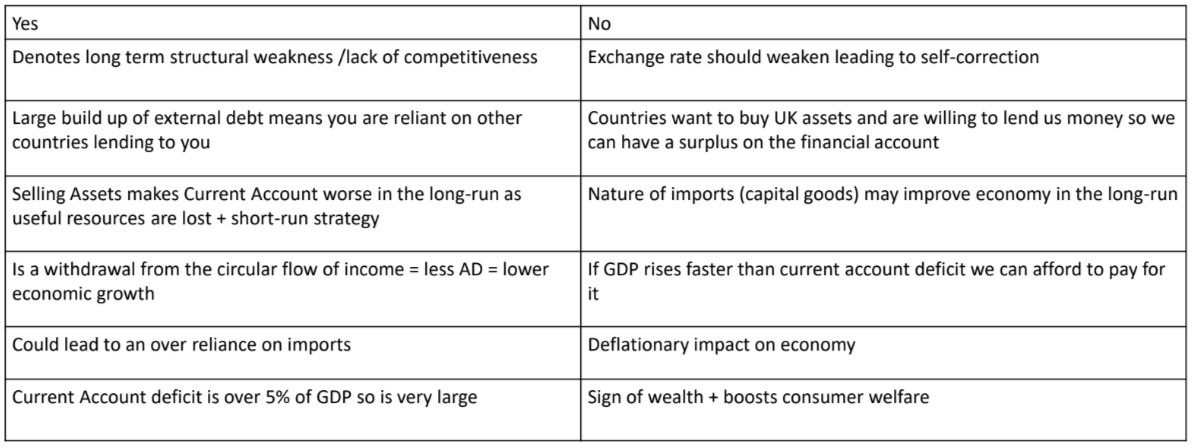
Do long term current account deficits matter?
A current account surplus
Current Account Surplus (and Capital Account Deficit): This configuration is favoured by those who believe that we should always export more merchandise and services than we import.
This so-called trade surplus necessarily means a capital account deficit – an increase in holdings of claims on foreign assets.
In other words, we have sent more goods and services to other countries than they’ve sent to us, so we are holding their IOUs in the form of money or claims on their financial assets.
In practical terms, this configuration means that:
Goods and services are competitive and desired in world markets; foreigners are willing to spend their money on products.
Owners and workers in export industries really like this situation.
Economic agents are willing to hold claims (IOUs) on foreign assets, in the form of foreign currency, stock in foreign companies, foreign
bonds, etc.
This is ok if the countries whose IOUs we’re holding have strong, stable governments and economies, or products we think we’ll one day want.
Problems with a current account surplus
Over reliant on exports- a global recession will hit the economy hard
Exports can cause demand-pull inflation
It may be difficult to invest the money from a current account surplus wisely
China artificially keeping their exchange rate low to boost competitiveness also reduces the standard of living as imports are more expensive
Temporary method of growth, as higher export-led growth will increase wages, reducing price competitiveness.
A current account balance
Neither Surplus Nor Deficit in the Current Account: This configuration is favored by those who believe that our exports to a particular nation should always equal our imports from that nation.
This view presumes that there is some inherent value in an equilibrium position or that an equilibrium somehow equates to fair trade. There is no evidence that either is the case.
The increasing complexity of global trade, based on comparative advantage and increasing specialisation makes an equal exchange of
goods and services between any two nations highly unlikely.
Most international trade is multi-lateral. For example, while the U.S. runs merchandise deficits with Japan, it runs merchandise surpluses with the Netherlands. At the same time, the United Arab Emirates runs merchandise surpluses with Japan and deficits with the U.S.
A current account deficit
Current Account Deficit (and Capital Account Surplus): This configuration is favoured by those who believe that we are better off if we import more than we export.
In other words, we are buying more goods and services from other countries than they are buying from us, so they are holding IOUs in the form of currency and other financial claims on assets.
In practical terms, this configuration means that:
Domestic consumers are enjoying foreign goods that are selling at prices below what they could be produced for in their own country.
Owners and workers in import industries, and consumers in general, benefit in this situation.
The willingness of foreigners to hold claims on domestic assets is a source of investment in domestic firms.
It is also an indication of foreign faith in the strength of the economy and stability of government.
Policies to solve the UK’s current account deficit
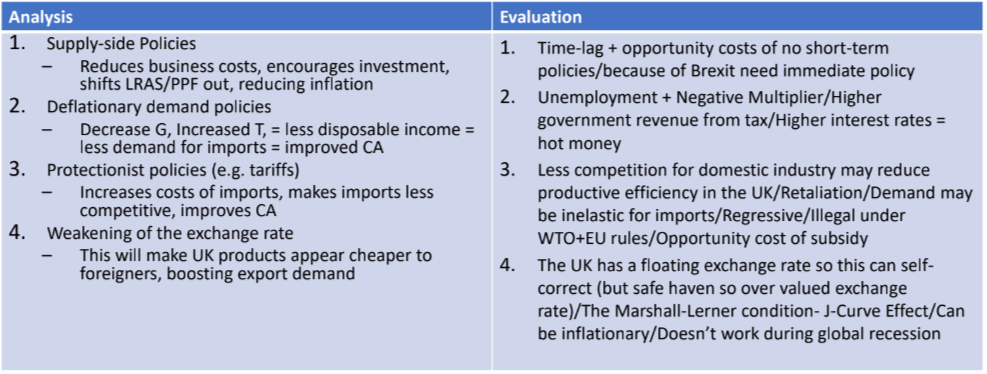
Policies to solve the UK’s current account deficit
Deflationary Demand Management
Reducing the rate of inflation should make exports more competitive and discourage imports
The government can attempt to deflate/contract the economy by...
Reducing government spending and increasing taxes = less AD
Raising interest rates to encourage savings and less borrowing = less AD
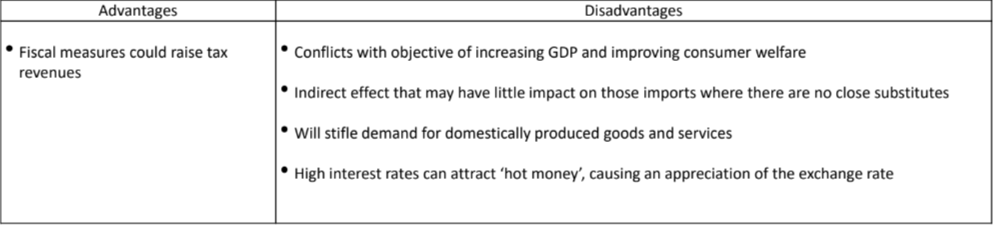
Policies to solve the UK’s current account deficit
Supply side policies
Supply-side policies should increase LRAS, leading to lower prices and more competitive exports
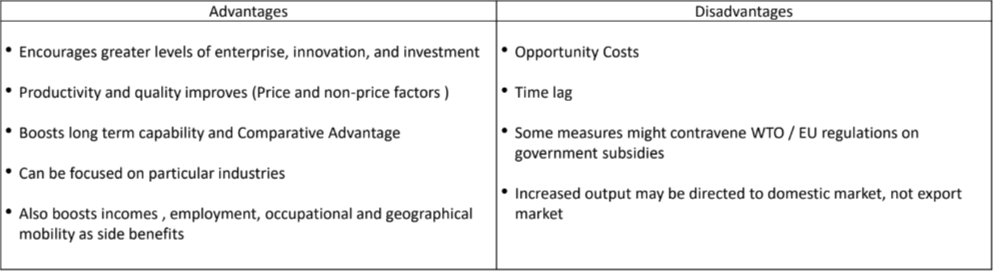
Policies to solve the UK’s current account deficit
Protectionism
Trade barriers like tariffs and quotas can discourage imports, whilst government subsidies can boost exports
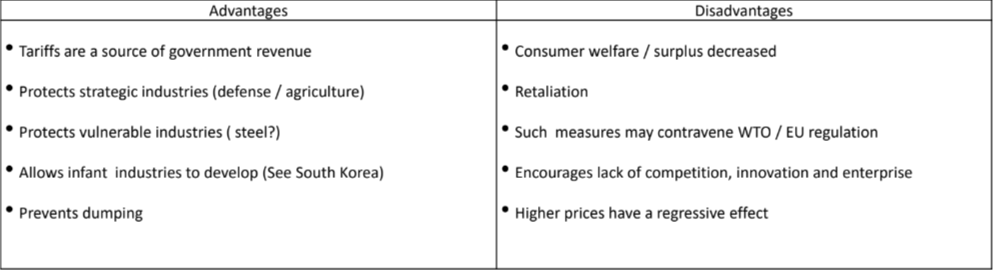
Reasons for international capital flows
Speculators looking to make quick profits
Essential part of the finance of trade (buying machinery from abroad might mean taking out a loan in a different country)
Banks might find it profitable to lend to economic agents in different countries
Individual transfer of funds abroad
FDI
Portfolio investment
Reasons for international capital flows
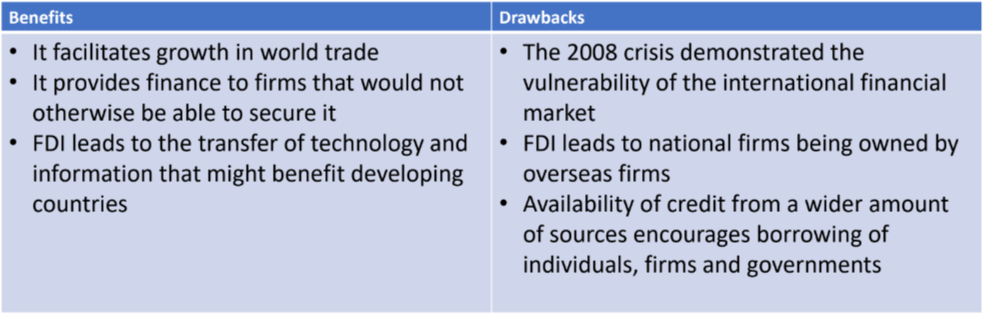
Benefits and draw backs of international capital flows (as above)
It facilitates growth in world
It provides finance to firms that financial market would not otherwise be able to secure it
FDI leads to the transfer of technology and information amount of sources encourages that might benefit developing countries
The 2008 crisis demonstrated the vulnerability of the international financial market
FDI leads to national firms being owned by overseas firms
Availability of credit from a wider amount of sources encourages borrowing of individuals, firms and governments
Financial crises
It is important to remember that loans are not given to countries but to institutions or individuals within those countries
So if a firm cannot repay a loan it has taken out in a different currency the impact might be slight.
If a bank could not pay back loans foreign lenders are likely to stop lending to all banks in that country
If a government cannot pay back a loan it would no longer be able to pay for public services
In the short term central banks lend money to banks as a ‘lender of last resort’
If banks are insolvent because bad debts are too great the government is likely to step in
Local bodies can be bailed out by central government
Governments can borrow from the IMF if necessary