Software Development Methodologies
Software development methodologies provide structured approaches to building software systems, helping teams organize work, communicate effectively, and deliver quality products.
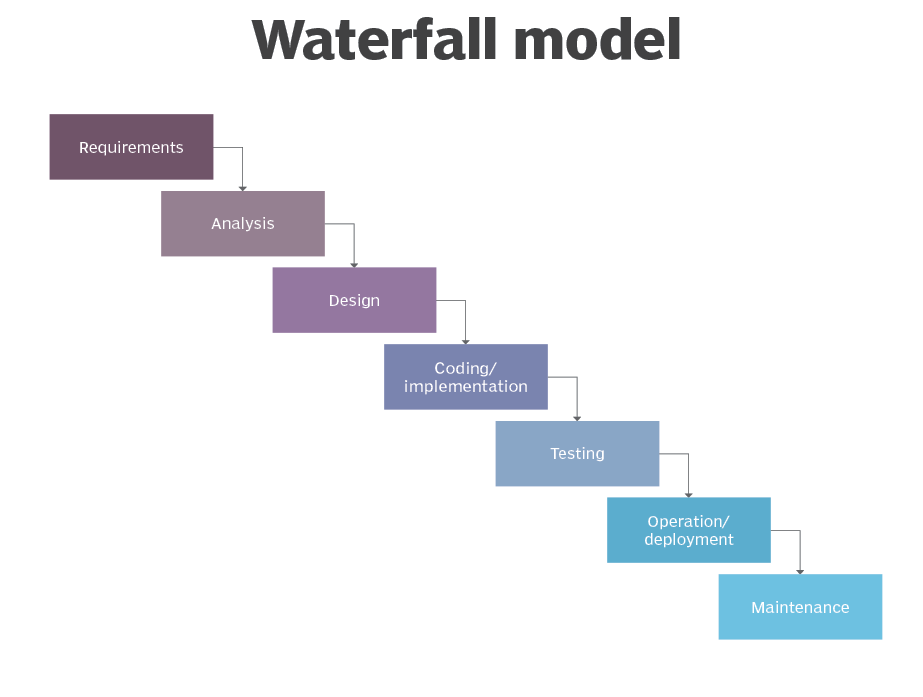
Waterfall Model
Definition: A linear, sequential approach to software development.
Phases:
Requirements gathering
System design
Implementation
Testing
Deployment
Maintenance
Advantages:
Works well for projects with clear, stable requirements.
Extensive documentation facilitates measuring progress.
Suitable for regulatory environments with minimal requirement changes.
Disadvantages:
Struggles with adaptation to changes.
Delays feedback until later stages of the project.
Digram:
Agile Development
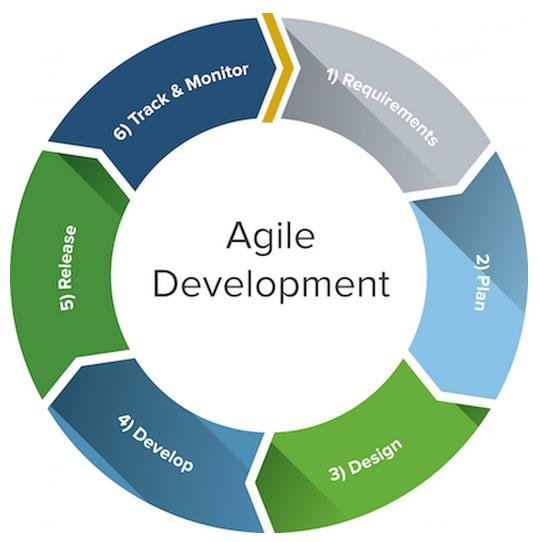
Definition: An iterative approach promoting adaptive planning and flexibility.
Core Values:
Individuals and interactions
Working software
Customer collaboration
Responding to change over following rigid plans.
Process:
Teams work in short cycles called iterations, delivering functional increments.
Frequent reassessment of priorities and early detection of issues.
Challenges:
Requires active stakeholder involvement.
Scaling can be difficult in large organizations.
Digram:
Scrum
Definition: A popular Agile framework organizing work into time-boxed iterations called Sprints (1-4 weeks).
Core Roles:
Product Owner
Scrum Master
Development Team
Event Types:
Sprint Planning
Daily Scrum
Sprint Review
Sprint Retrospective
Artifacts:
Product Backlog
Sprint Backlog
Increment
Strengths:
Emphasizes self-organization, transparency, inspection, and adaptation.
Effective for complex projects with evolving requirements.
Commitment and Discipline: Important for successful implementation of Scrum principles.
Digram: A visual representation of the relationships between different components in a system, which can enhance understanding of workflows and impact areas within Scrum.

Kanban
Definition: A workflow visualization method, focusing on limiting work-in-progress.
Key Features:
Visual representation on boards (e.g., columns for work stages).
Emphasizes continuous flow; no fixed iterations.
Advantages:
Just-in-time delivery and process visualization.
Continuous improvement using metrics such as lead time and cycle time.
Application: Highly effective for maintenance work and support teams.
Comparison: Kanban vs. Scrum
Feature | Kanban | Scrum |
|---|---|---|
Visual vs. Structure | Visualizes tasks and supports continuous flow | Structures workflow and assignments within timeboxes |
Development Cycle | Continuous delivery | Finite sprint cycles (1-4 weeks) |
Roles | No defined roles | Defined roles including Scrum Master and Product Owner |
Change Policy | Can adapt anytime | Changes typically not made during a sprint |
Digram:

Quick Overview: Kanban Characteristics
Works Well With: Both Agile and Lean principles.
Combined Method: Commonly integrated with Scrum in a hybrid called Scrumban.
Popularity: 27% of survey respondents used Scrumban, while 56% reported using Kanban.
Agile Principles
Satisfy the customer through early and continuous delivery of valuable software.
Welcome changing requirements, even late in development.
Deliver working software frequently.
Daily collaboration between business people and developers.
Maintain a sustainable development pace.
Reflect on the work process regularly for adjustment.
Iterative Development
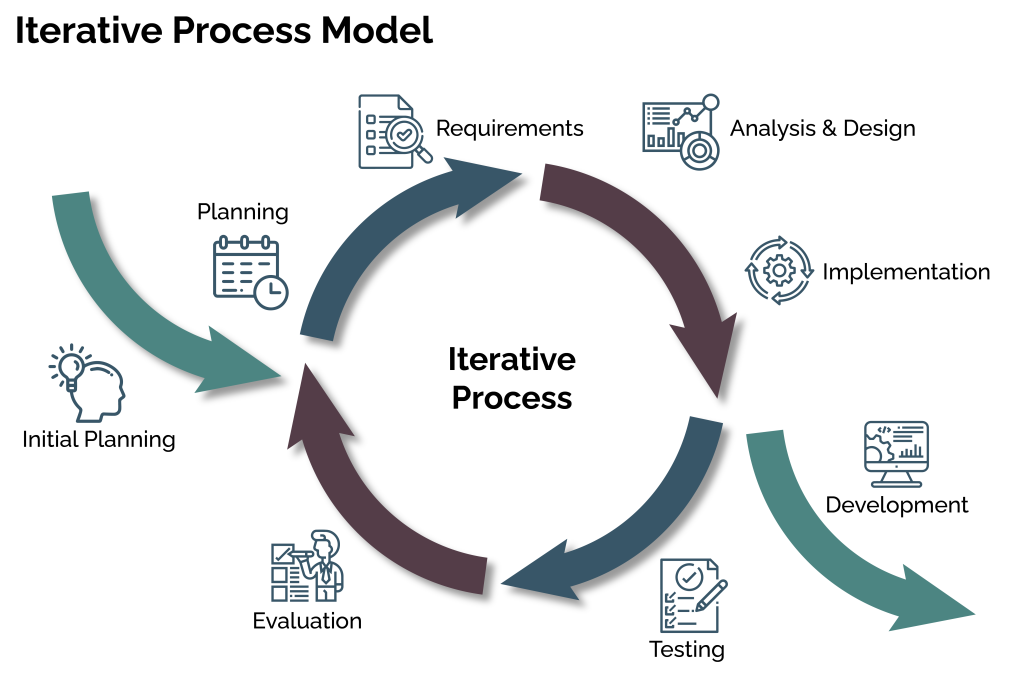
Definition: Developing software in cycles, each building on the previous one.
Focus: Deliver working software early to enhance feedback incorporation.
Cycles: Full development stages include planning, design, implementation, testing, and deployment.
Benefits of Iterative Models:
Adaptation to changing requirements.
Handling of complex, high-risk projects.
Requirement Focus in Iterative Development
Categories of requirements:
Functionality
Usability
Non-Functionality
Teams may focus cycles on all or specific types of requirements at a time.
Solution Focus in Iterative Development
Concept: Projects can have multiple architectural layers.
Delivery Approach: Can focus on horizontal slices, vertical slices, or a combination, adapting to various project needs.
Digram:
Conclusion
The choice of methodology depends on project requirements and team dynamics. Each methodology has its strengths and is suited for different types of software development challenges. Understanding these can aid in selecting the most appropriate method.
What is the Waterfall Model, and what are its advantages and disadvantages?
The Waterfall Model is a linear, sequential approach to software development that includes distinct phases: requirements gathering, system design, implementation, testing, deployment, and maintenance.
Advantages:
Works well for projects with clear, stable requirements.
Extensive documentation facilitates measuring progress.
Suitable for regulatory environments with minimal changes.
Disadvantages:Struggles with adaptation to changes in requirements.
Delays feedback until later stages, which can lead to costly rework if early assumptions are incorrect.
What is Agile Development, and what are its core values?
Agile Development is an iterative approach that promotes flexibility and adaptive planning. Its core values include:
Individuals and interactions over processes and tools.
Working software over comprehensive documentation.
Customer collaboration over contract negotiation.
Responding to change over following a plan.
Agile methods allow for frequent reassessment and adjustments based on feedback.
Can you explain the Scrum framework? What are its core roles and event types?
Scrum is an Agile framework that organizes work into time-boxed iterations called Sprints.
Core Roles:
Product Owner: Defines product features and prioritizes work.
Scrum Master: Facilitates the Scrum process and removes obstacles.
Development Team: Delivers potentially shippable product increments.
Event Types:Sprint Planning: Setting goals and planning work for the Sprint.
Daily Scrum: Short daily meetings to discuss progress and challenges.
Sprint Review: Evaluating the Sprint results and gathering feedback.
Sprint Retrospective: Reflecting on the Sprint process for continuous improvement.
What is Kanban, and what are its key features and advantages?
Kanban is a workflow visualization method designed to limit work-in-progress and enhance flow.
Key Features:
Visual representation of tasks on boards (e.g., columns for different work stages).
Continuous flow with no fixed iterations.
Advantages:Just-in-time delivery enhances process efficiency.
Provides visibility into the workflow, making bottlenecks easier to identify.
Supports continuous improvement through metrics like lead time and cycle time.
Compare Kanban and Scrum regarding their structure and roles.
Kanban:
Visualizes tasks and supports continuous flow.
No defined roles; teams decide on the workflow.
Can adapt anytime to changes in workload.
Scrum:Structures workflow within fixed-time Sprints.
Defined roles including Scrum Master and Product Owner, which clarify responsibilities.
Changes typically not made during a Sprint, focusing efforts on commitments.
What are Agile principles, and why are they significant?
Agile principles emphasize customer satisfaction, welcoming changes, delivering working software frequently, daily collaboration, maintaining a sustainable pace, and reflecting on the work process for improvements. These principles are significant as they enable teams to adapt to changing requirements quickly and enhance product quality based on customer feedback.What are the benefits of using iterative development models?
The benefits of iterative development models include:
Improved ability to accommodate changing requirements throughout the project.
Enhanced risk management, as issues can be identified and resolved in earlier iterations.
Opportunity for regular feedback and adjustments based on stakeholder input and testing results.
Incremental delivery of features, allowing for better prioritization and value delivery.
How do project dynamics influence the choice of software development methodology?
Project dynamics such as team size, project complexity, stakeholder involvement, and requirement stability directly influence the choice of methodology. For instance, well-defined projects with low uncertainty may fare well with Waterfall, while more complex projects that require flexibility may benefit from Agile methodologies. Understanding these dynamics helps ensure the chosen approach aligns with project goals and team capabilities.What is Scrumban, and how does it integrate Agile and Lean principles?
Scrumban is a hybrid methodology that combines elements of Scrum and Kanban. It retains Scrum's structure of Sprints while incorporating Kanban's focus on visual workflow management and flexibility. This integration allows teams to manage changing priorities while maintaining organized iteration cycles.What challenges do organizations face when implementing Agile methodologies?
Challenges in implementing Agile within large organizations may include resistance to change, insufficient stakeholder engagement, difficulties in scaling Agile practices, and maintaining cross-team collaboration. Additionally, organizations may struggle with transitioning from traditional methodologies to Agile mindsets, requiring cultural shifts and ongoing training to support the new approaches.