7.2 Autosomal Recessive Inheritance
Source 1: NIH || Autosomal Recessive Disorder
Definition
a pattern of inheritance characteristic of some genetic disorders
“autosomal” means the gene is located on one of the numbered, or non-sex, chromosomes
“Recessive” means two copies of the mutated gene is required to cause the disorder
both parents need to have the disease-causing alleles, rather than one gene like dominant inheritance
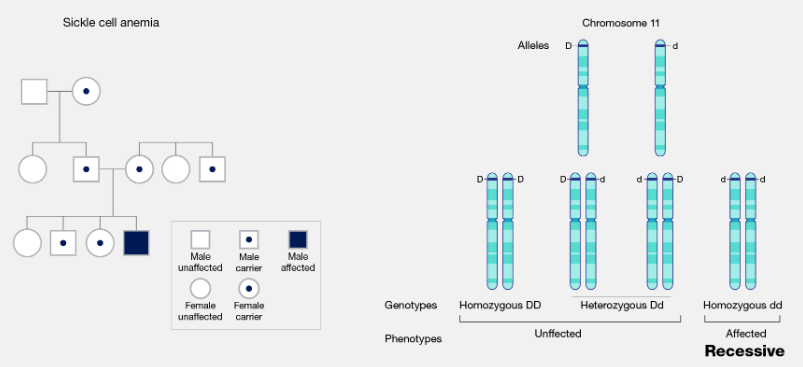
Narration
only occurs when both copies are mutated/not working
2 nonworking genes come from both mom and dad
examples: sickle cell disease, cystic fibrosis, etc.
Source: VHS || Autosomal Recessive Inheritance
Chromosomes, Genes, and DNA
chromosome are long strings of genes in our bodies
genes message cells to make chemical products like proteins
“benign variants” or polymorphisms are variations that have no impact on our health
“pathogenic variant” or mutation are a variation of genes that cause health or developmental issues/conditions
when a condition only occurs when there are 2 copies of the changed gene they are recessive
if only 1 copy of genes causes the condition it is dominant
the autosomal gene is located on the numbered chromosomes and usually influence males and females the same way
X-linked genes are located on the X chromosome and impact males and females differently
A Close Look at Autosomal Recessive Inheritance
this type of inheritance refers to the inheritance of a recessive variant on an autosome
both copies of the gene send a message to the cells to produce particular products like protein
people who have a variant on 1 gene copy are called genetic carriers for a condition
genetic carriers do not show any symptoms of the recessive condition or develop related health problems
the cell can still work with only 1 gene copy making the right instructions
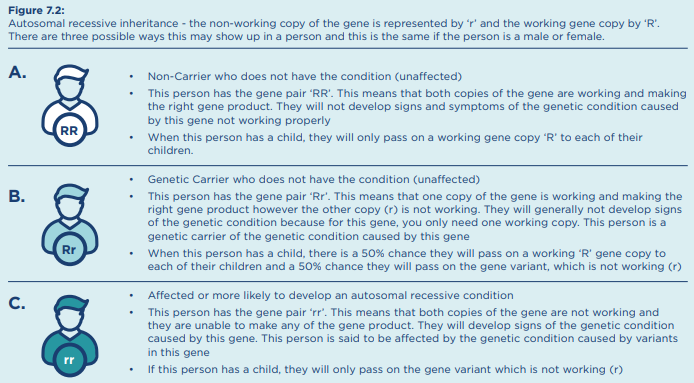
if a person has both gene copies containing the variant, they do not have the ability to make enough gene product in the right way
will have symptoms of the genetic condition
YOU WILL ONLY HAVE SYMPTOMS IF THERE ARE 2 COPIES OF THE PATHOGENIC VARIANT
How are Autosomal Recessive Gene Variants Passed?
one copy of each gene is passed to a child from their mother and father
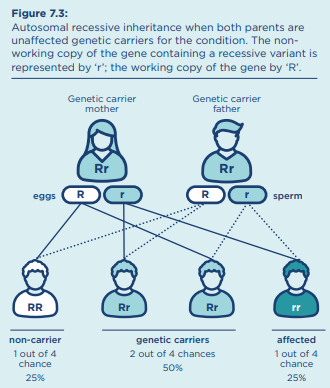
if both parents are carriers they have the chance to pass either a working or non-working gene to their baby
25% chance of passing both working genes
50% chance of passing both working and nonworking genes
25% chance of passing both nonworking/affected genes
if one parent is a carrier there is no chance that the couple will have an affected baby
50% chance they will have carriers
50% chance they will not have carriers
if one parent has the recessive condition and they marry a non-carrier, there is a 100% chance they will have carrier children
if one parent is a carrier and the other is affected, they will have affected children
50% chance a child will be a carrier
50% chance a child will be affected
if both parents have the condition, 100% of their children will also have the condition because they inherited mutated genes from each parent
What Genetic Condition are Caused by Autosomal Recessive Gene Variants?
common conditions include:
cystic fibrosis —
thalassaemia —
haemochromatosis —
Tay-Sachs disease —
genetic carriers do not show or develop any symptoms of health problems due to being a carrier
it is possible to test and determine whether someone is a carrier of certain recessive variants
there may be indications that someone may be a genetic carrier such as
having family members known to have a condition following an autosomal recessive pattern of inheritance
coming from certain ethnic or cultural backgrounds where the condition may be more common, the chance of this person being a genetic carrier would be higher than others
Source: VHS || Genetics, Autosomal Recessive
Intro
inheritance patterns illustrate disease transmission amongst generations of a family
those affected with AR disease have a disease allele on each chromosome
individuals affected with an AR disease can be traced through a family to determine which individuals are carriers and which are likely to become impacted
Development