General Biology I ORGANIC CHEMISTRY AND CELLS Lecture 4
• Organic molecules contain Carbon and Hydrogen
• Organic molecules are abundant in living organism
Macromolecules
• Carbohydrates, Lipids, Protein, and Nucleic Acids
Carbon has 4 electrons in its outer shell
It can make up to four bonds
Usually single or double bonds
can form nonpolar or polar bonds
Molecules with polar bonds are water soluble
Molecules with nonpolar bonds (like hydrocarbons) are not very water soluble
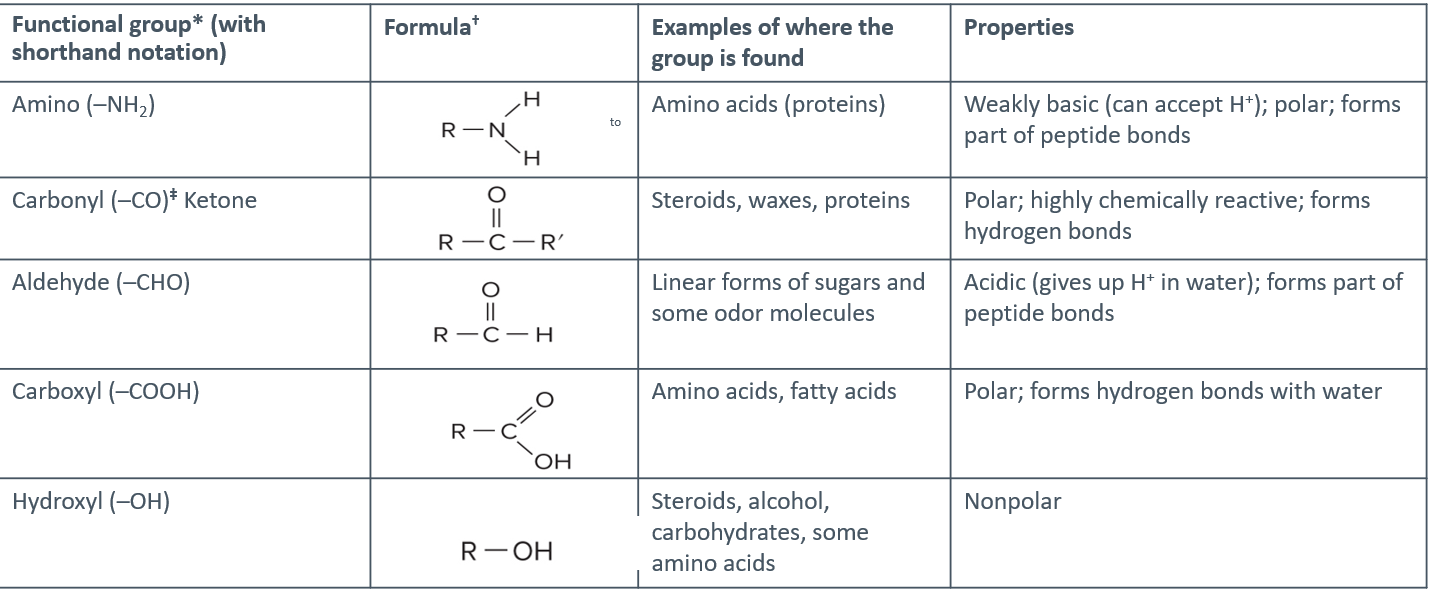
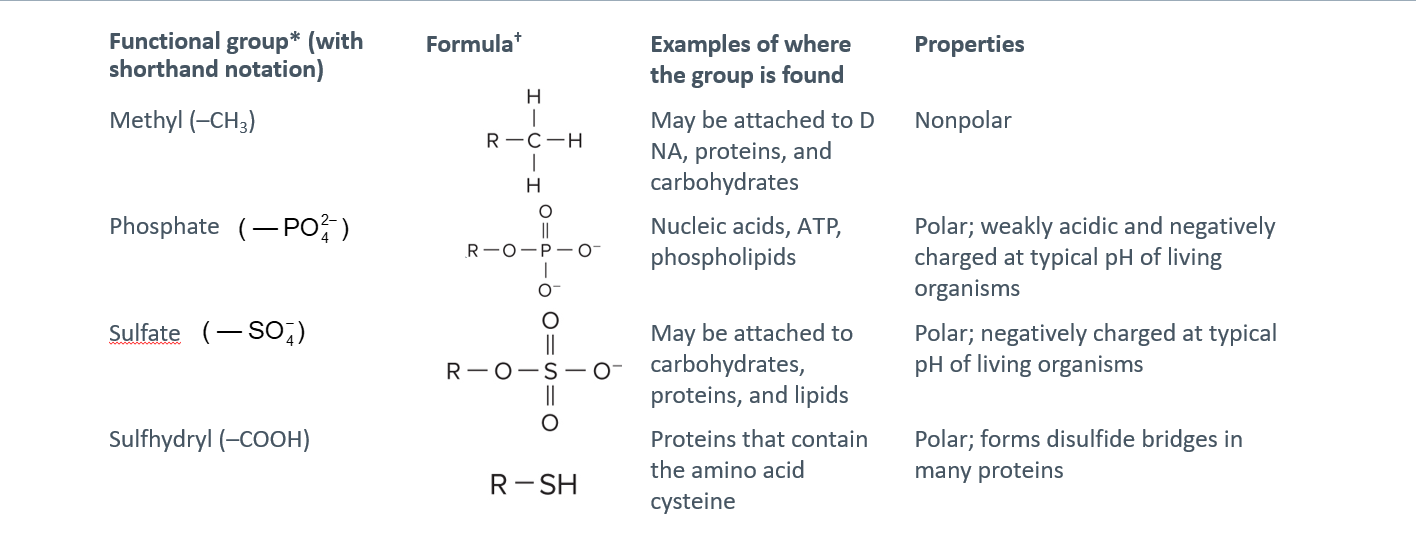
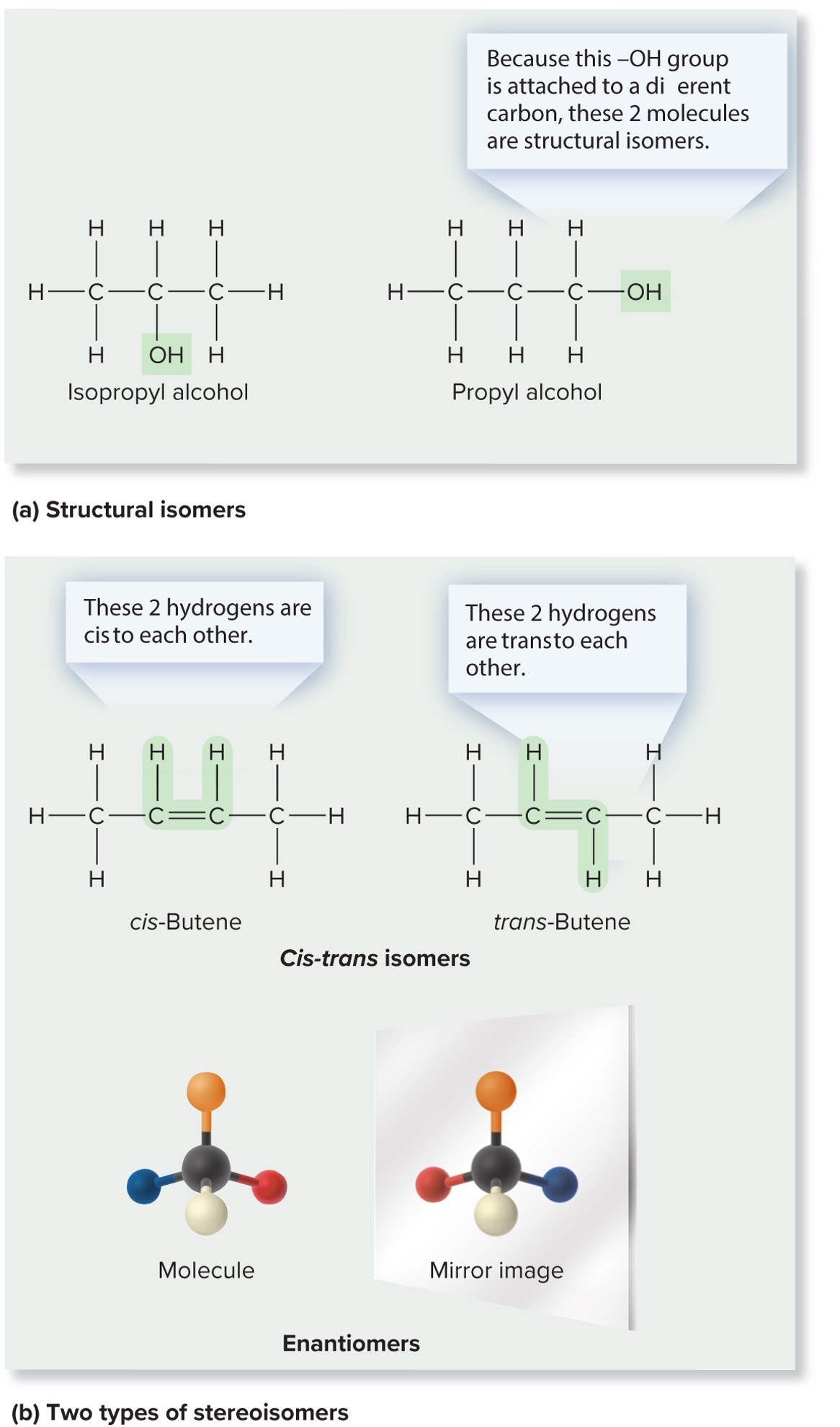
Structural isomers – contain the same atoms but in different bonding relationships
Stereoisomers - identical bonding relationships, but the spatial positioning of the atoms differs in the two isomers
Cis-trans isomers -positioning around double bond
Enantiomers -mirror image molecules
Enzymes- recognize one enantiomer usually do not recognize the other
Polymer formation by dehydration (condensation) reactions
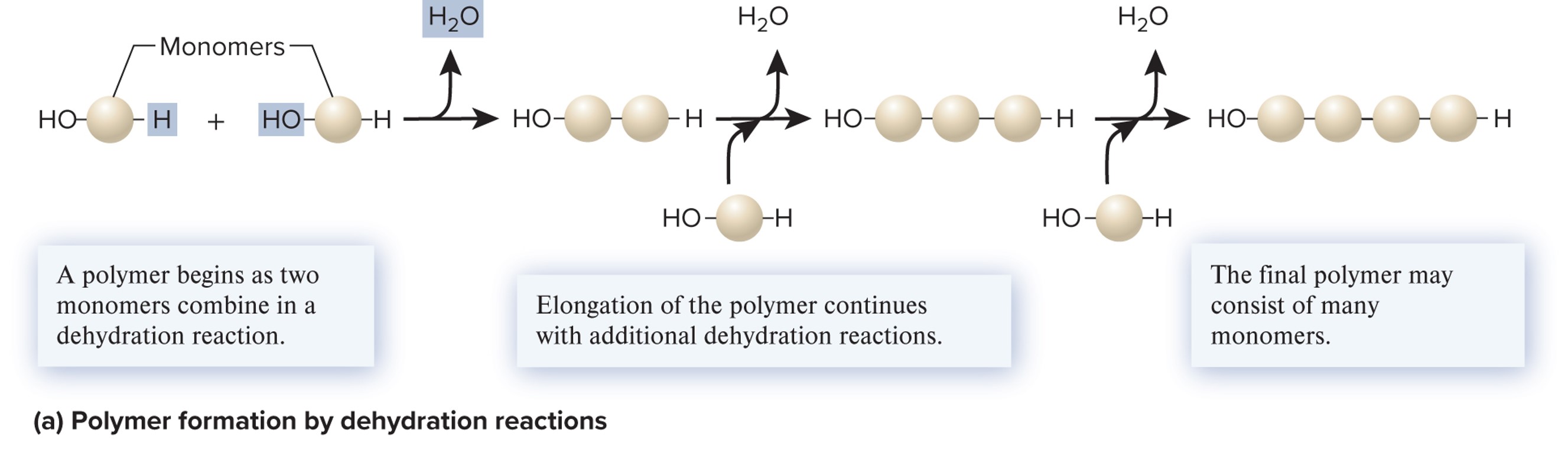
• The process repeats to form long polymers
• A polymer can consist of thousands of monomers
• Dehydration is catalyzed by enzymes
Dehydration → Form a Polymer
Breakdown of a polymer by hydrolysis reactions
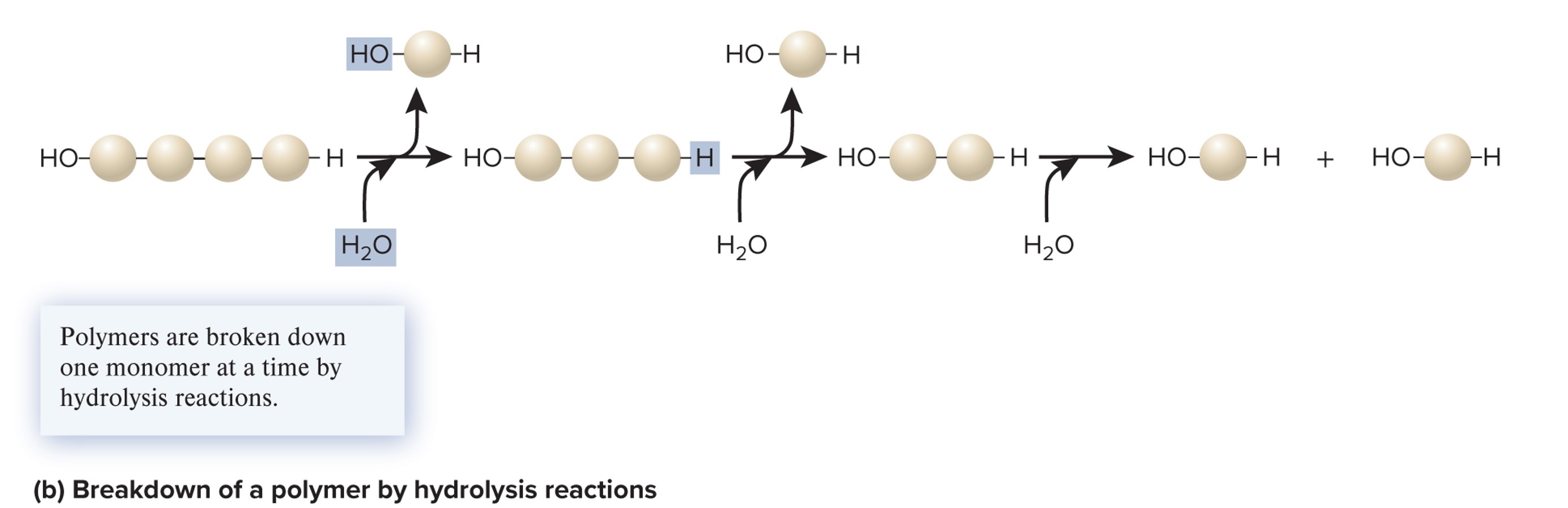
• A molecule of water is added back each time a monomer is released
• The process repeats to break down long polymer
• Hydrolysis is catalyzed by enzymes
Hydrolysis → break apart a monomer
Four Major Classes of Organic Molecules Found in Living Cells
Carbohydrates
Lipids
Proteins
Nucleic acids
Carbohydrates
Atoms → Carbon, Hydrogen and Oxygen in a 1:2:1 ratio
Monomer → Monosaccharide
Name of Bond → glycosidic
Examples → Glucose, galactose (-ose)
Starches and cellulose
Functions → primary energy source
structural (cellulose)
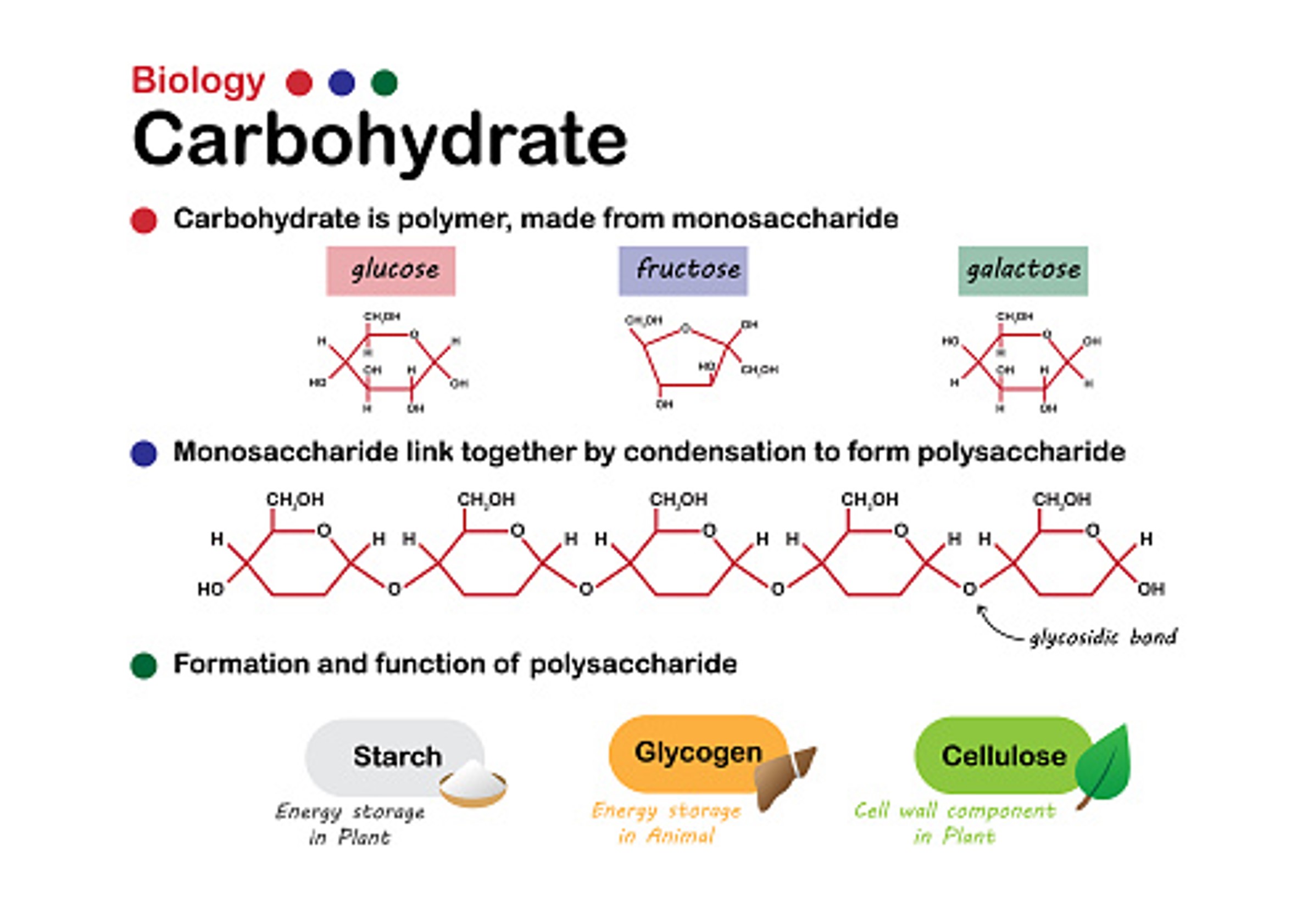
Glucose Isomers
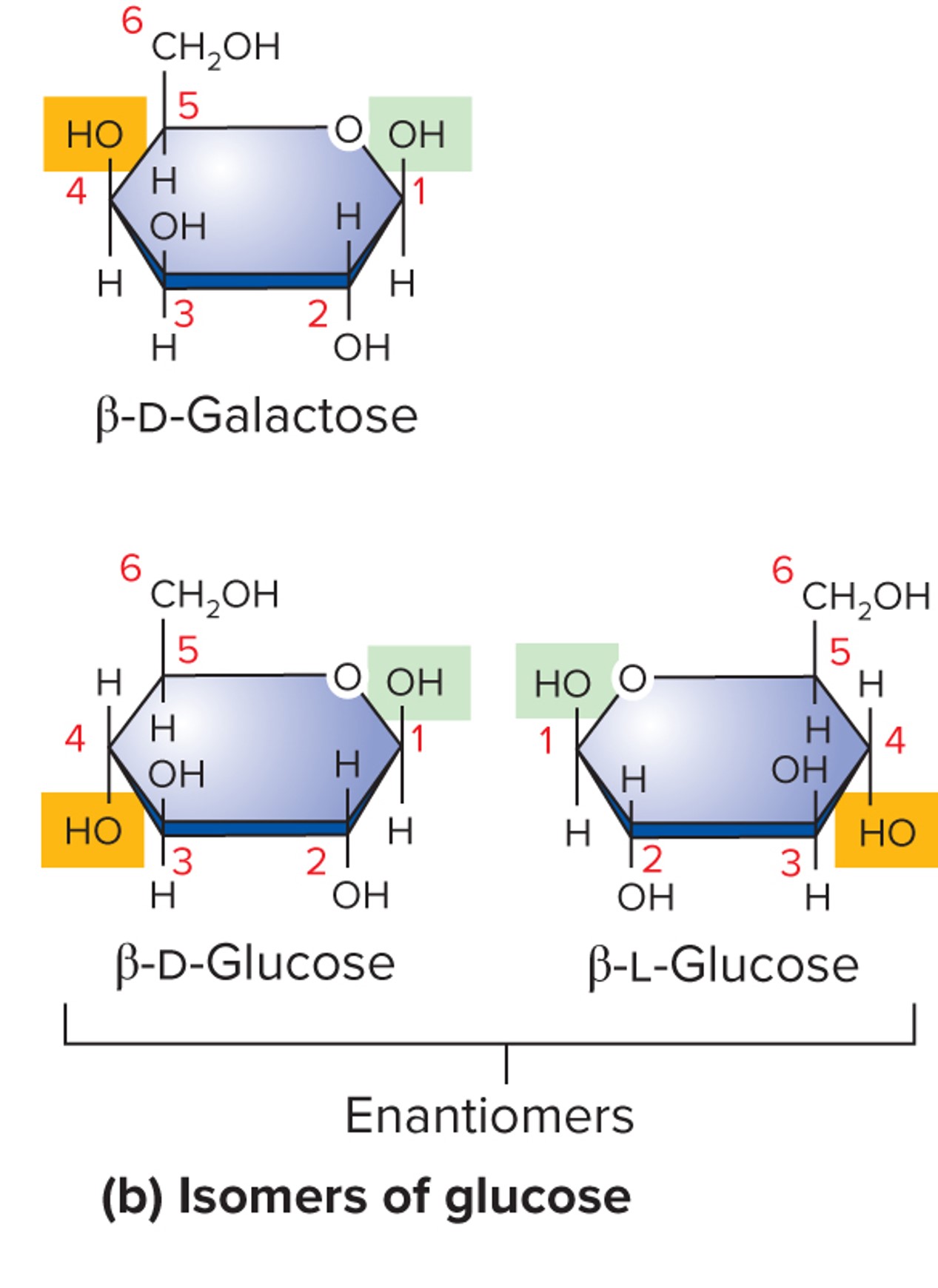
Disaccharide → “Two” “Sugar”
Glycosidic bond
Examples: sucrose, maltose, lactose
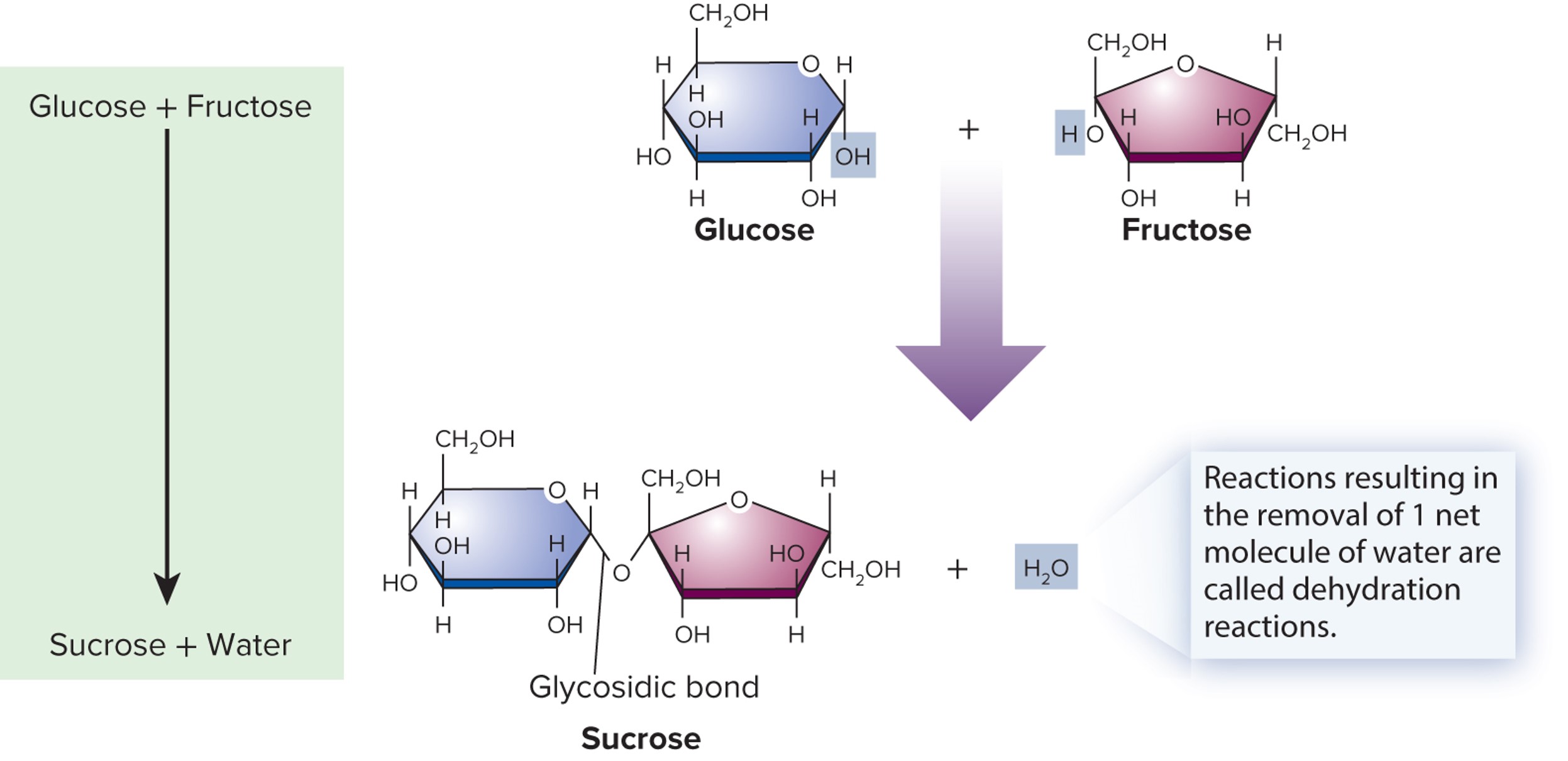
Polysaccharide → “Many” ” sugars”
Energy storage – starch, glycogen
Structural – cellulose, chitin, glycosaminoglycans, peptidoglycan
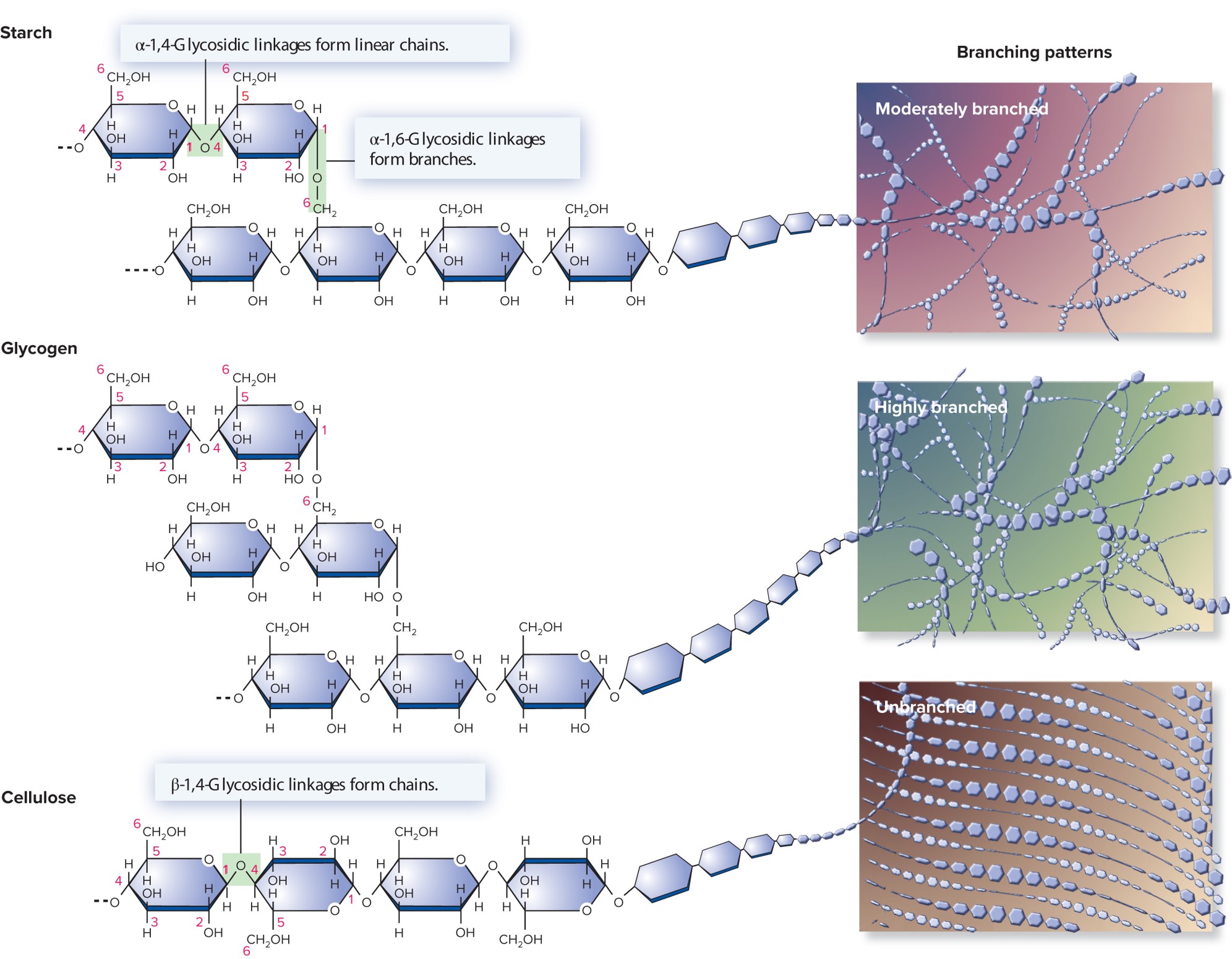
Alpha Bonds
OC Bond
Helix
Beta Bonds
B bond
pleated
Lipids → Fats
Also known as triglycerides
Formed by bonding glycerol to 3 fatty acids
Joined by dehydration; resulting bond is an ester bond
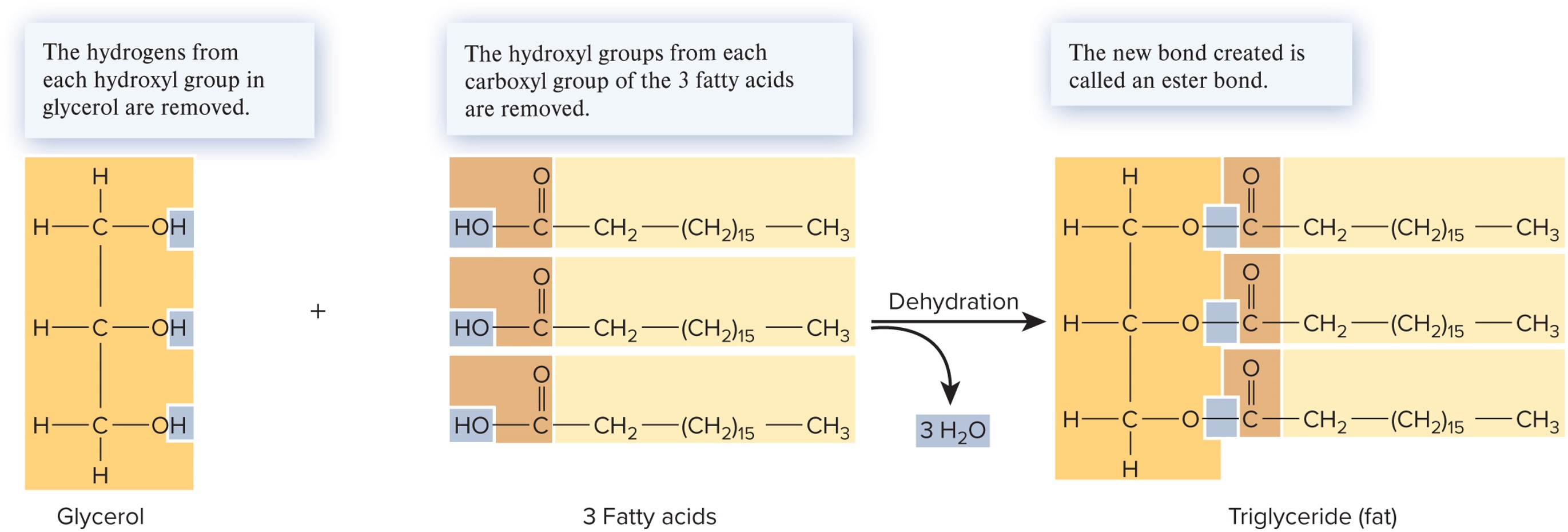
Fatty acids
Saturated – all carbons have the maximal amount of hydrogens
◦ Tend to be solid at room temperature
Unsaturated – contain one or more double bonds
◦ Tend to be liquid at room temperature (known as oils)
◦ Cis forms naturally; trans formed artificially
◦ Trans fats are linked to disease
Monounsaturated → one double bond
Polyunsaturated → many double bonds
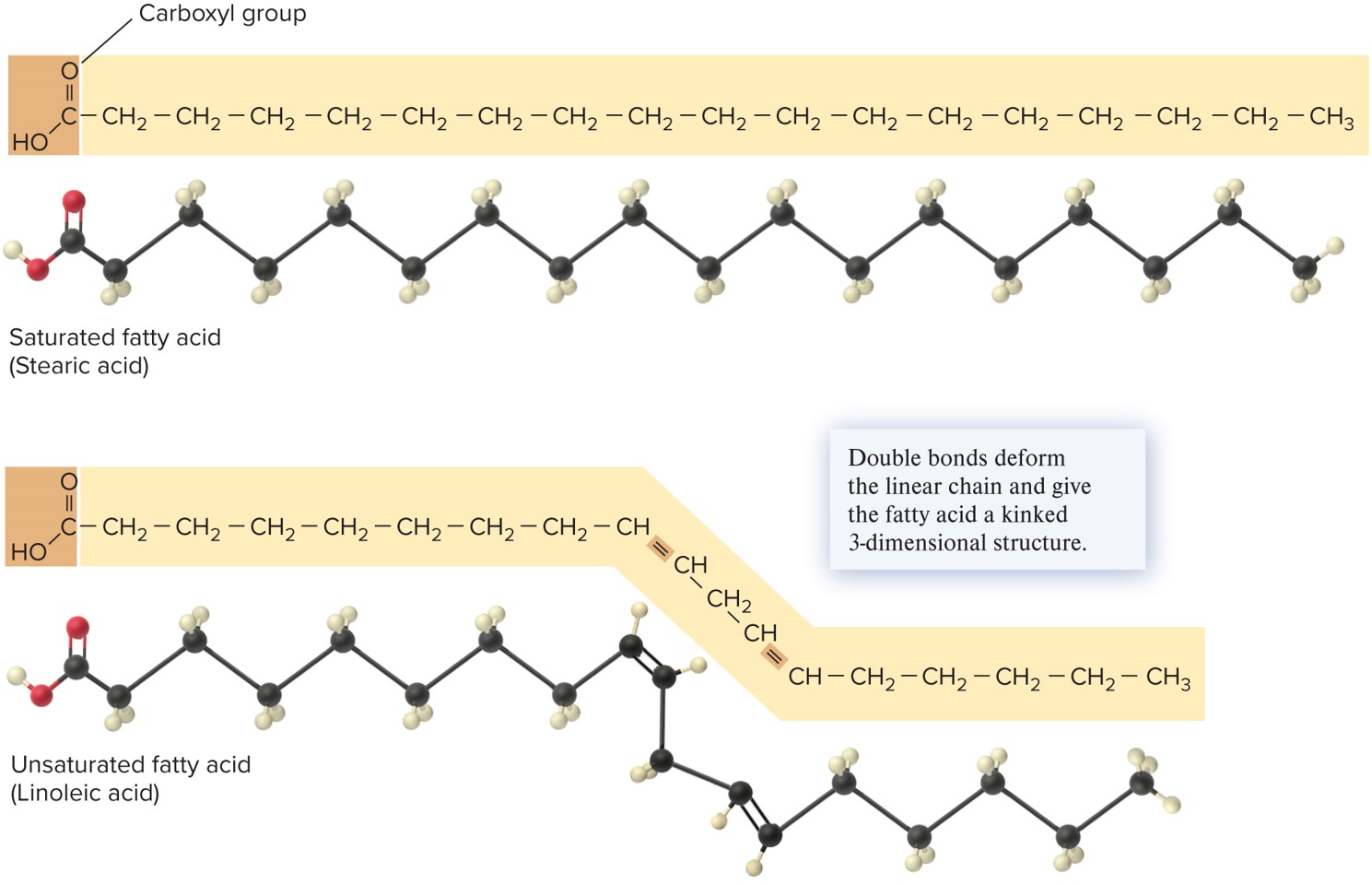
Fats
Fats are important for energy storage
1 gram of fat stores more energy than 1 gram of glycogen or starch
Fats can also be structural, providing cushioning and insulation
Phospholipids → make up the cell membrane
Formed from glycerol, two fatty acids and a phosphate group
Phospholipids are amphipathic molecules
Phosphate head – polar/hydrophilic
Fatty acid tail – nonpolar/hydrophobic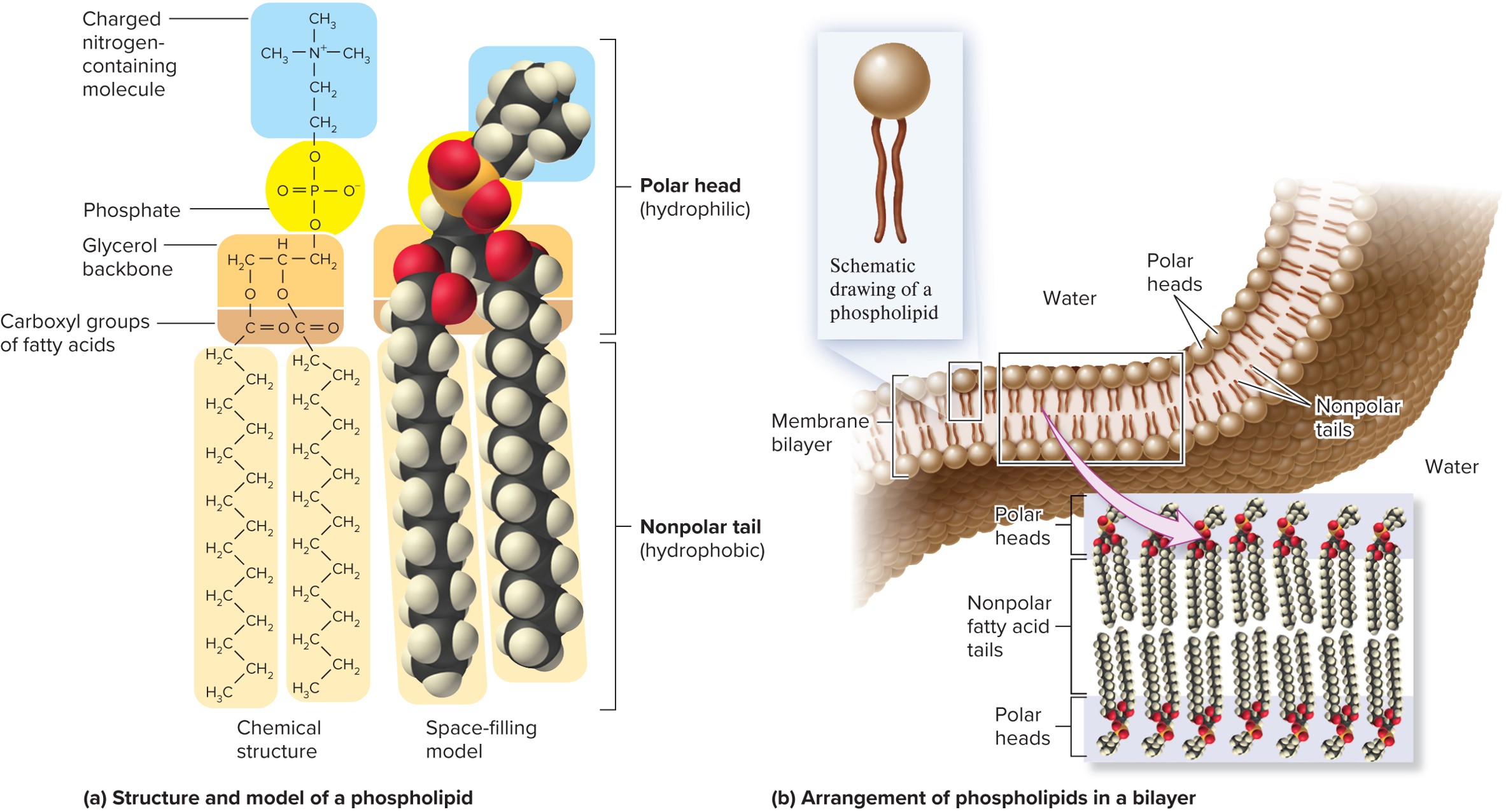
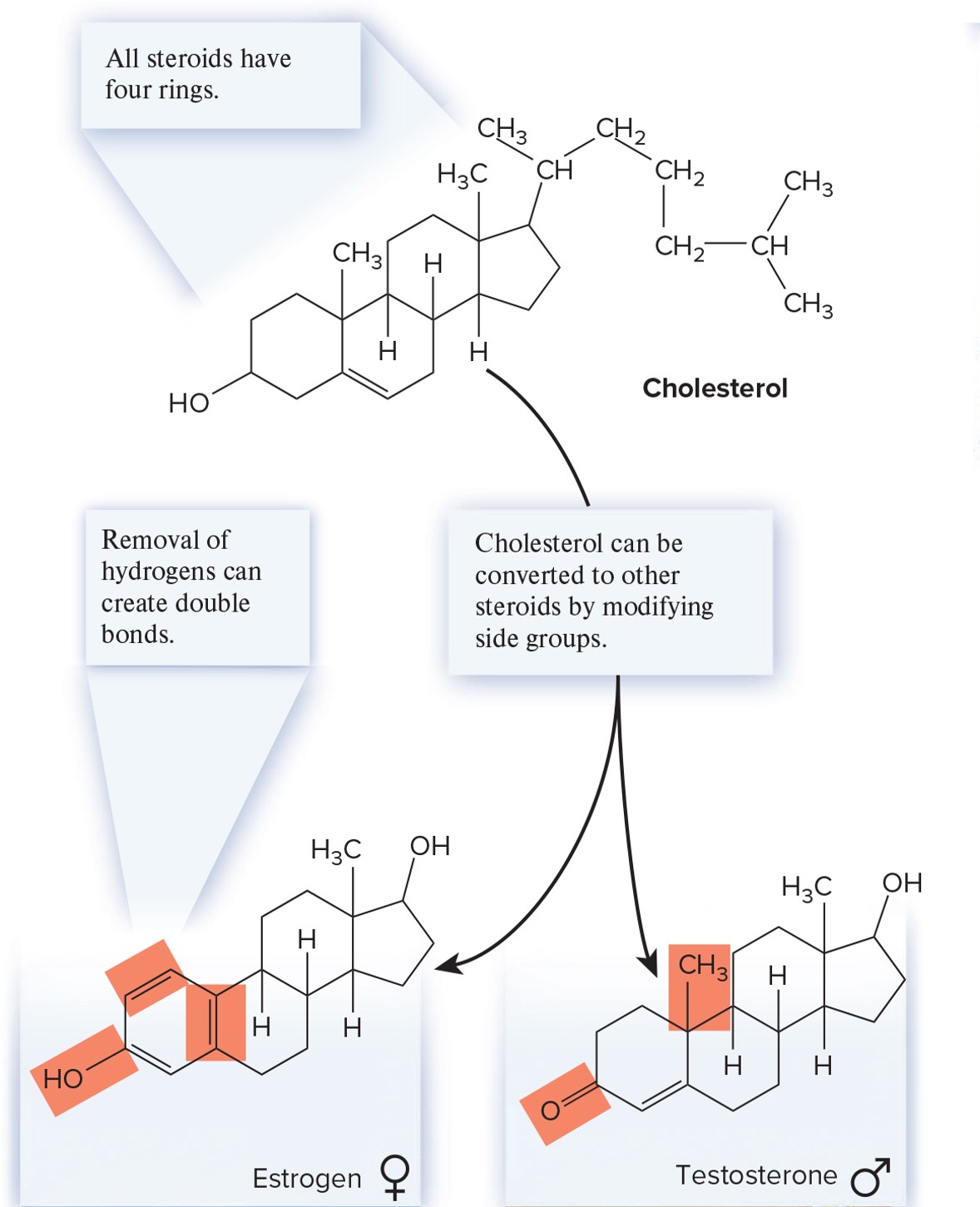
Steroids
Four interconnected rings of carbon atoms
Usually insoluble in water
Example: Cholesterol
Waxes
Many plants and animals produce lipids called waxes that are secreted onto their surface
Very nonpolar; barrier to water loss
Lipids
Atoms → Carbon, Hydrogen, Oxygen
Monomer → Fatty Acid
Name of Covalent bond → Ester
Examples → Triglyceride, phospholipid, steroids, waxes
Function → secondary energy source, structural (insulation)