Disorders of the Adrenal Medulla
Disorders of the Adrenal Medulla
Identify the physiology of the adrenal medulla, including the following:
The formation, secretion and metabolism of catecholamines
The mechanism of action of catecholamines
Describe the clinical presentation, etiology, clinical manifestations pathology and pathogenesis of pheochromocytoma.
PART 1: Physiology of the Adrenal Medulla and Catecholamines
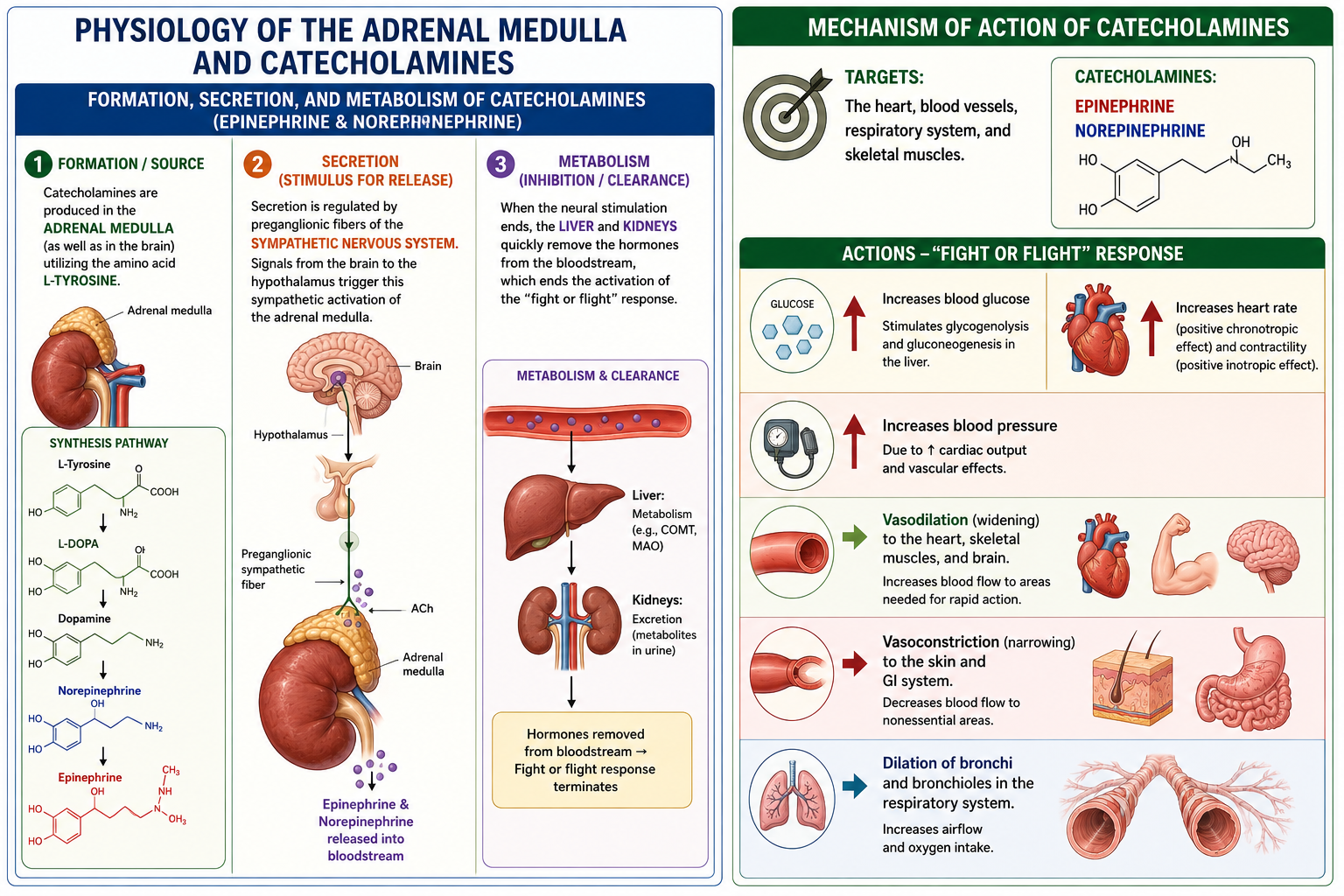
Formation, Secretion, and Metabolism of Catecholamines (Epinephrine & Norepinephrine)
Formation/Source: Catecholamines are produced in the Adrenal Medulla (as well as in the brain) utilizing the amino acid L-Tyrosine.
Secretion (Stimulus for Release): Secretion is regulated by preganglionic fibers of the sympathetic nervous system. Signals from the brain to the hypothalamus trigger this sympathetic nervous system activation of the adrenal medulla.
Metabolism (Inhibition/Clearance): When the neural stimulation ends, the liver and kidneys quickly remove the hormones from the bloodstream, which ends the activation of the "fight or flight" response.
Mechanism of Action of Catecholamines
Targets: The heart, blood vessels, respiratory system, and skeletal muscles.
Actions ("Fight or Flight" Response):
Increases blood glucose, heart rate, and blood pressure.
Causes vasodilation (widening of blood vessels) to the heart, skeletal muscles, and brain.
Causes vasoconstriction (narrowing of blood vessels) to the skin and gastrointestinal (GI) system.
Causes dilation of the bronchi and bronchioles in the respiratory system.
PART 2: Pheochromocytoma
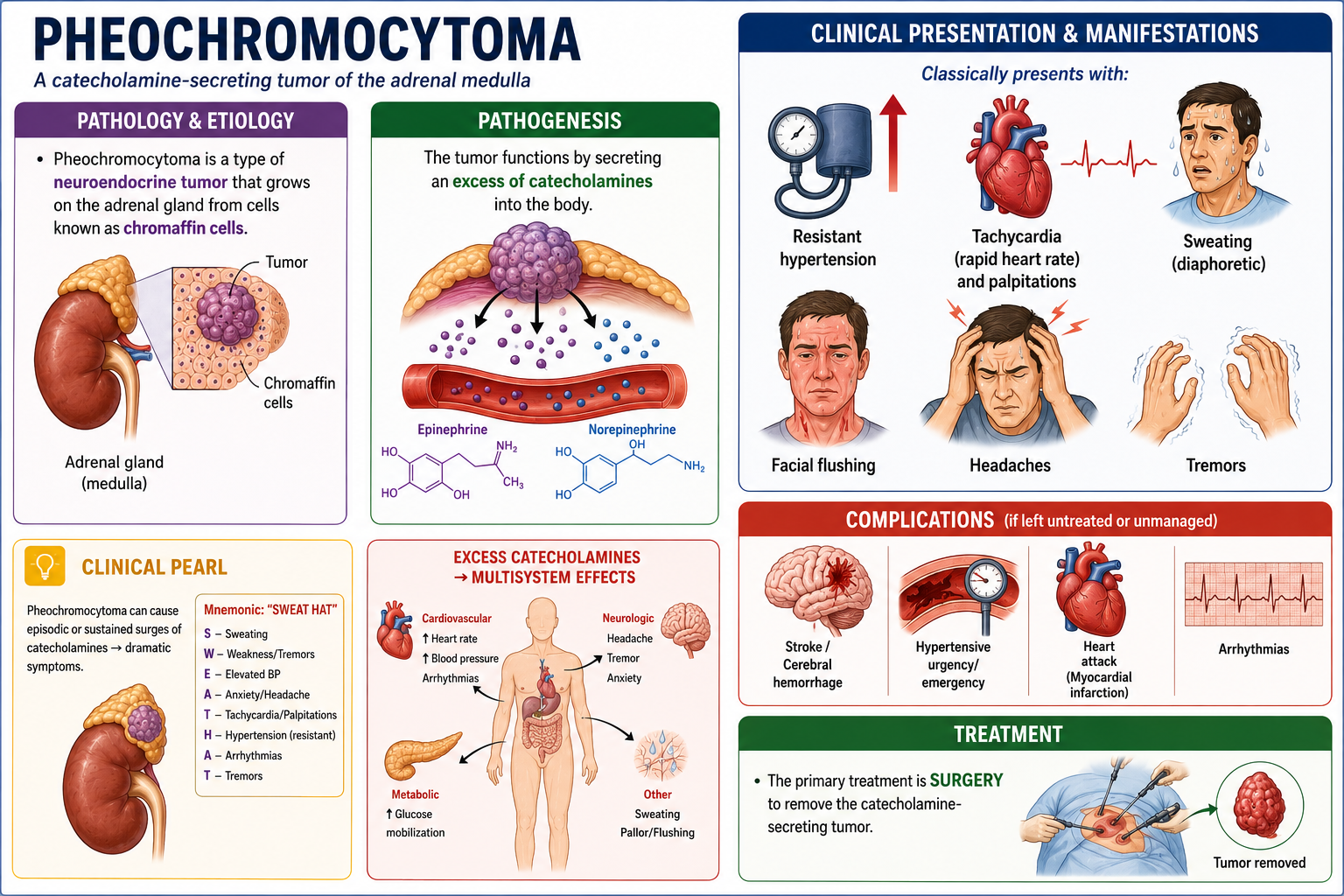
Pathology and Etiology: Pheochromocytoma is a type of neuroendocrine tumor that grows on the adrenal gland from cells known as chromaffin cells.
Pathogenesis: The tumor functions by secreting an excess of catecholamines into the body.
Clinical Presentation and Manifestations: Patients classically present with resistant hypertension, tachycardia (rapid heart rate) and palpitations, sweating, facial flushing, headaches, and tremors.
Complications: If left untreated or unmanaged, the excess catecholamines can cause a stroke, hypertensive urgency/emergency, heart attack, arrhythmia, or cerebral hemorrhage.
Treatment: The primary treatment is surgery to remove the catecholamine-secreting tumor