Insects and People: The Insect Head
Body Segments
There are 20 segments in an insect that are divided into 3 body regions:
- Head
- Thorax
- Abdomen
The head contains the insect's sensory organs, such as eyes, antennae, and mouthparts. The thorax is the middle segment, which contains the legs and wings (if the insect has them). The abdomen is the hindmost segment, which contains the digestive, reproductive, and respiratory organs.
Insect Head
- The center for sensing and eating
- Fusion of 6 segments into a hard capsule
- Appendages modified to form mouthparts
Compound Eyes
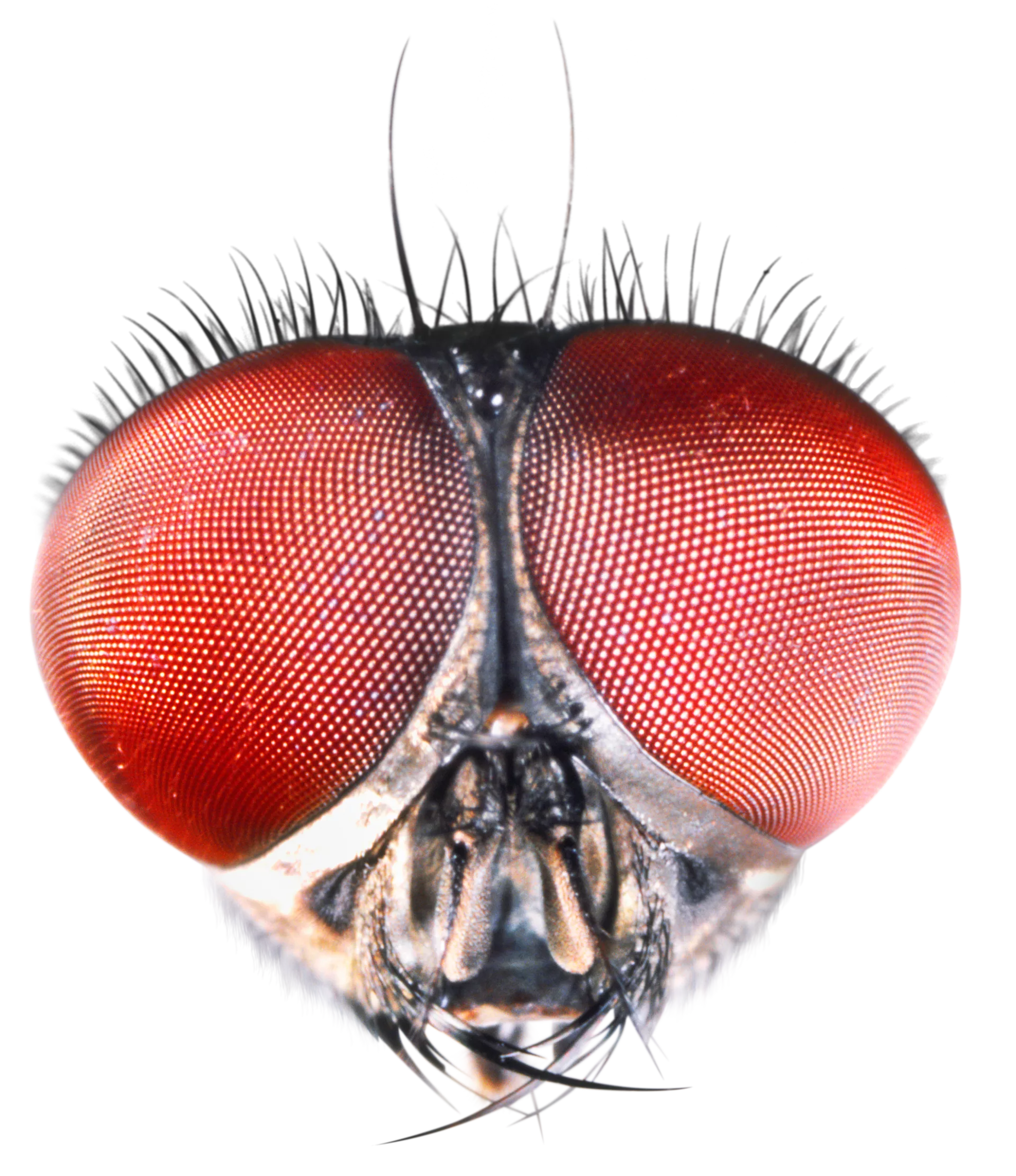
- A mosaic of hexagons or facets
- called ommatidia: hundreds of light-sensing structures constructed together
- Some can see colors, like violet, blue, green, and yellow
- There are also simple eyes called ocelli
- These can only sense light and some movement, not color
Insect eyes are the organs responsible for vision in insects. They are compound eyes, which means they are made up of many individual lenses called ommatidia. These ommatidia capture and focus light, and together they create a mosaic image that is processed by the insect's brain. The number of ommatidia can vary greatly between species of insects, with some having just a few hundred and others having tens of thousands. The shape and arrangement of the ommatidia also vary, depending on the insect's lifestyle and visual needs.
Antennae (always come in a pair)
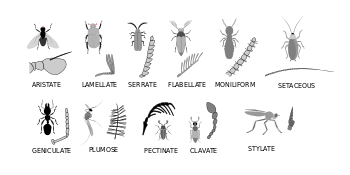
- “Feelers” that can do more than feel
- Used as a sensory organ
- You can tell them apart by their scape, pedicel, & flagellum
Mouth
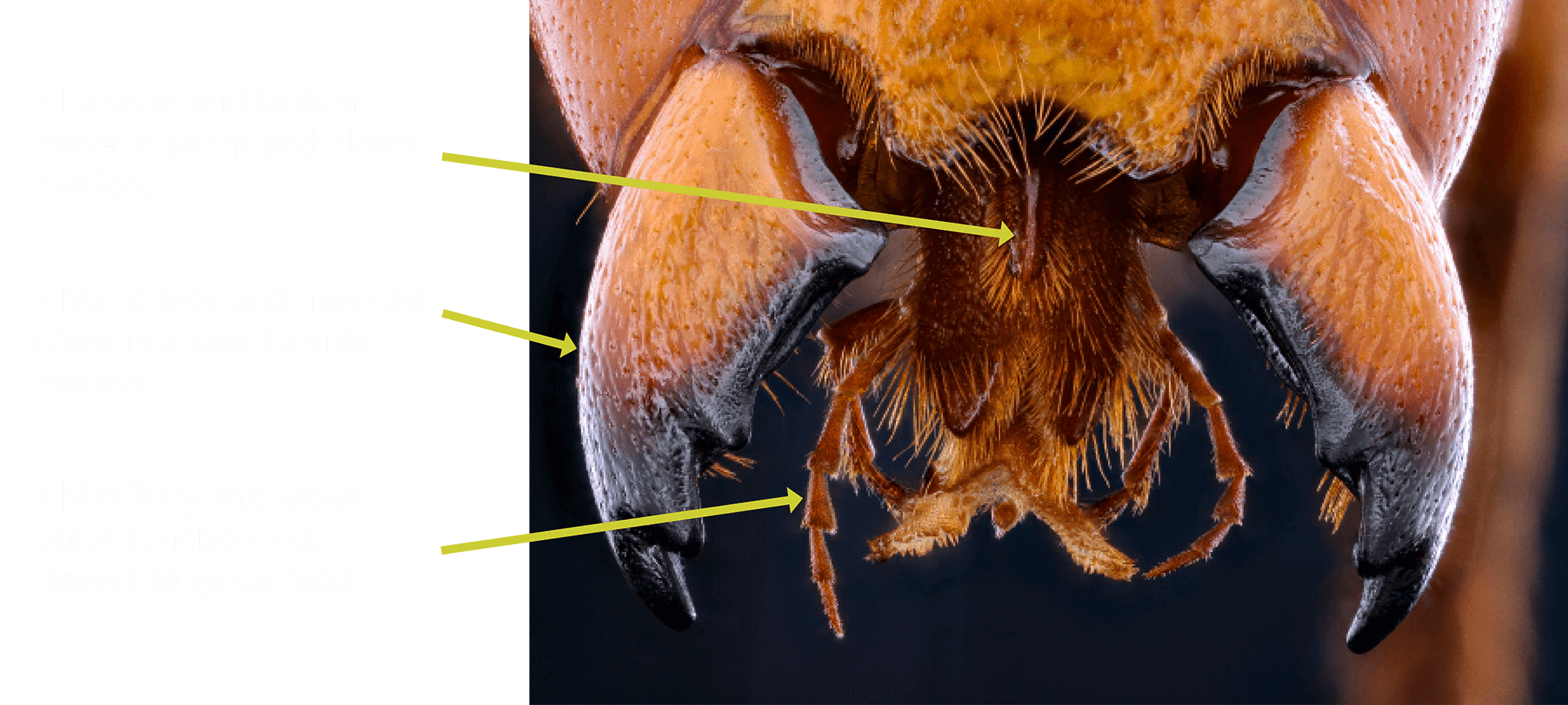
- Chewing mouthparts: the original layout with labrum, mandibles, maxillae, labium, and hypopharynx
- Rasping-sucking mouthparts: the specialized mouthparts of certain insects like Thysanoptera that are used to pierce and suck the blood of their hosts. The rasping part of the mouthparts is used to break through the host's skin, while the sucking part is used to draw blood into the insect's digestive system.
- Piercing-sucking mouthparts: specialized for piercing the skin of a host and then sucking up blood or other fluids.
- Sponging mouthparts: adapted for liquid diets such that the mandibles and maxillae are reduced in size, and instead the labium is elongated with a sponge-like labellum at its tip
- Chewing-lapping mouthparts: a type of mouthpart found in insects, such as bees and butterflies, that is adapted for both biting and lapping up fluids.
- Siphoning mouthparts: a long, thin proboscis that is used to pierce the food source and suck out the liquid, made up of the labrum, hypopharynx, mandibles, maxillae, and labium, which work together to form a straw-like structure for siphoning fluids.
- Some adults never eat, only mate