wk10 social, emotional and communicative brain II
Overview of Emotions
Emotions are valenced responses to stimuli and/or internal representations.
Key components: experiential (feeling), behavioral response, physiological.
Distinguishable from moods, which are more diffuse and longer-lasting (often have trigger)
Depend on different neural systems
can be unlearned responses to stimuli with intrinsic affective properties or learned
Involves multiple appraisal processes
Categorization of Emotions
Emotions can be basic (e.g., anger, fear) or complex (e.g., jealousy, love).
The dimensional theory differentiates between valence (positive/negative) and arousal (strength of response).
Emotions are often assessed through facial expressions in research.
Key Theories of Emotion Generation
James-Lange Theory: Emotions arise from bodily responses to stimuli (e.g., seeing a bear increases heart rate -> feeling fear).
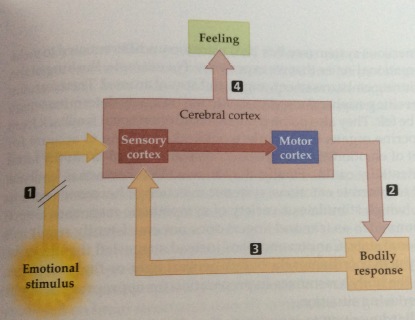
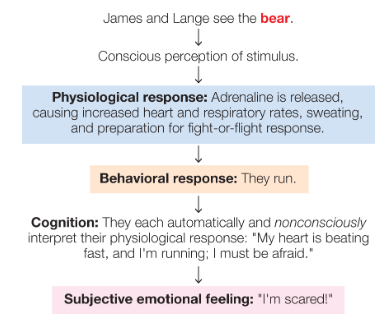
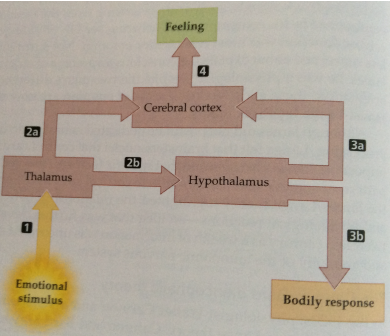
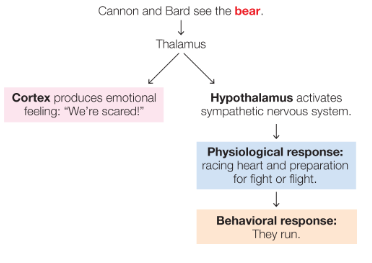
Cannon-Bard Theory: Emotion and bodily response occur simultaneously through separate pathways (thalamus to hypothalamus for response, thalamus to cerebral cortex for feeling).
Criticised the James-Lange theory
experimented with animals by disconnecting their cortex from the brainstem
proposed the diencephalic theory of emotion
the diencephalic is made up of the thalamus and hypothalamus
Neuroanatomy of Emotion
Important structures in the limbic system include:
Thalamus
Hypothalamus
Amygdala
Hippocampus
Orbitofrontal cortex
Cingulate gyrus
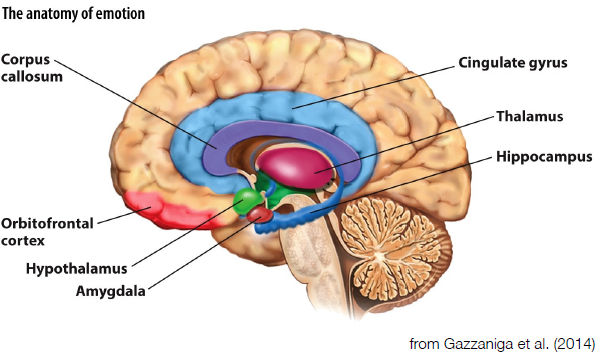
17th century: Thomas Willis noted brainstem encircled by a cortical boarder (cerebri limbus)
19th century: Paul Broca renamed it the grand lobe limbique (limbic lobe)
Involving cingulate gyrus, hypothalamus, anterior thalamic nuclei and hippocampus1930s: James Papez suggested this system is responsible for emotional behaviour - coined it the papez circuit
- Sensory messages regarding an emotional stimulus are directed from the thalamus to the cortex (stream of thinking) and hypothalamus (stream of feeling).
- Emotional integration occurs through the cingulate cortex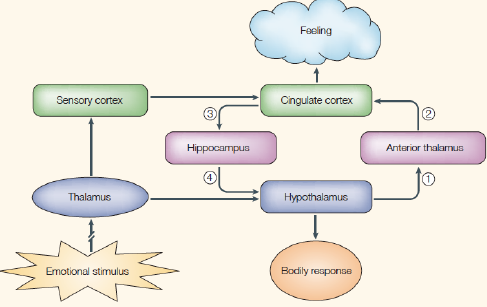
1950s: Paul MacLean named it the limbic system and extended brain areas included (amygdala, orbitofrontal cortex and parts of the basal ganglia)
Critiques of Limbic System Theory
Lack of functional and anotomoical coherence in the limbic system.
Some structures (e.g., hippocampus) associated more with cognitive processing.
Questioning the idea of a single system responsible for all emotional processing.
Role of the Amygdala
Amygdala is located in the medial temporal lobe adjacent to the anterior portion of the hippocampus
Key for fear processing; extensively connected in the brain.
Case studies (e.g., patient SM) show amygdala damage correlates with impaired fear responses.
Fear conditioning involves the amygdala linking stimuli to fear responses (e.g., light paired with shock).
Two Pathways to the Amygdala
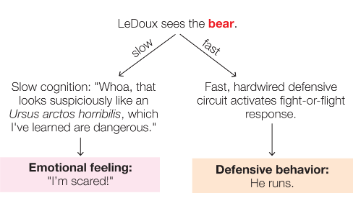
Low Road: Fast, unfiltered sensory information from thalamus to amygdala (15 ms).
High Road: Slower, processed information from thalamus to sensory cortex to amygdala (300 ms).
Contemporary Understanding
contemporary approaches focus on neural circuits rather than discrete brain regions.
Prefrontal cortex involved in reward processing (orbitofrontal) and interpreting bodily signals.
Anterior cingulate cortex integrates various information types related to emotional experience.
Hypothalamus affects motivations such as sex and hunger (part of a more extensive reward network with PFC, amygdala and ventral striatum)
Neural Reference Space for Emotions
Research shows extensive brain networks activated across various emotions, not localised to specific regions.
Activation patterns suggest a generalised emotional (superordinate category emotion) processing involving multiple structures.
Conclusion
Emotions are complex, comprising physiological, behavioral, and feeling components.
Limbic system is central, but broader networks are involved in emotional processing.
Current theories emphasise dynamic interactions among neural circuits for emotional experience.
Cognitive neuroscience has identified a number of anatomical regions involved in emotion processing
• limbic system (hypothalamus, thalamus, hippocampus, amygdala, orbitofrontal cortex, cingulate gyrus, basal ganglia)
• amygdala: important for processing / experiencing fear; fear conditioning
• “generalised emotional brain” also includes other regions (e.g. PFC); cf. “neural reference space for emotions” – brain regions consistently activated across a range of emotions
Additional / Text book
The locationist account of emotion suggests that mental states belonging to the same emotion category are produced by specific neural circuits that, when activated produce specific behaviour
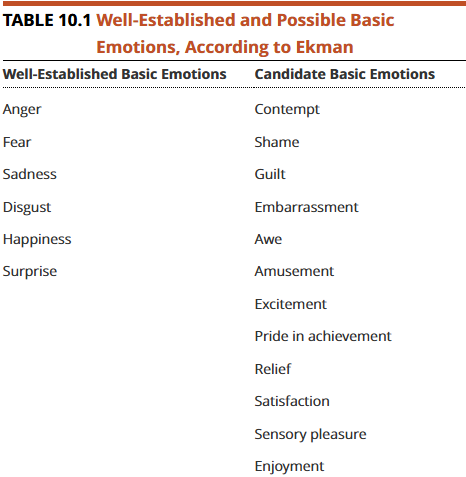
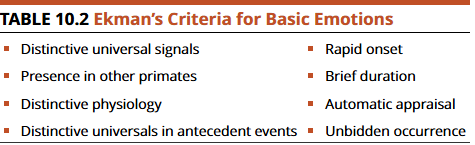
basic emotions are carved by evolution and reflected through facial expressions
complex emotions are combinations of basic, some of which may be socially or culturally learned (evolved)
dimensional theories of emotion describe emotions as fundamentally the same but differ alone one or more dimensions such as valence and arousal
Valence = pleasant-unpleasant
Arousal = intensity of the internal emotional response, high or low
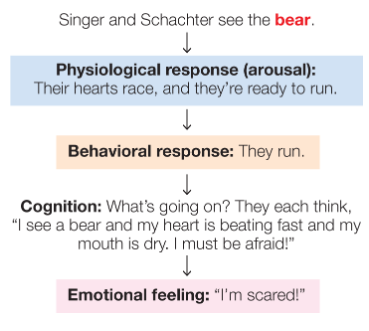
Singer and Schachter emotion theory posits that cognitive appraisal of stimulus occurs then behavioural and emotional response
LeDoux emotion theory posits that emotions are processed in the brain through two pathways: the fast, automatic pathway that bypasses conscious thought, and the slower, more deliberate pathway that involves cognitive appraisal.
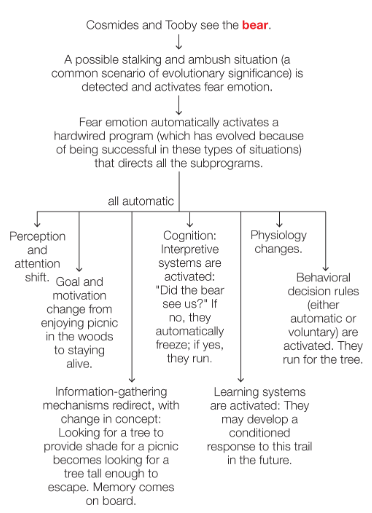
Cosmides and Tooby emotion theory posits that emotions are a coordination of automatic processes including physiology, behavioural inclinations, cognitive appraisals and feel states
Panksepp’s Hierarchical-processing theory of emotion posits emotions are processed in three ways:
Primary process (core emotion): Arises from subcortical neural networks, requiring no cognitive appraisal.
Secondary process: Shaped by cognitive appraisal and social context.
Tertiary process: Emerges from complex interactions between primary and secondary processes, reflecting higher-level interpretations and social learning.
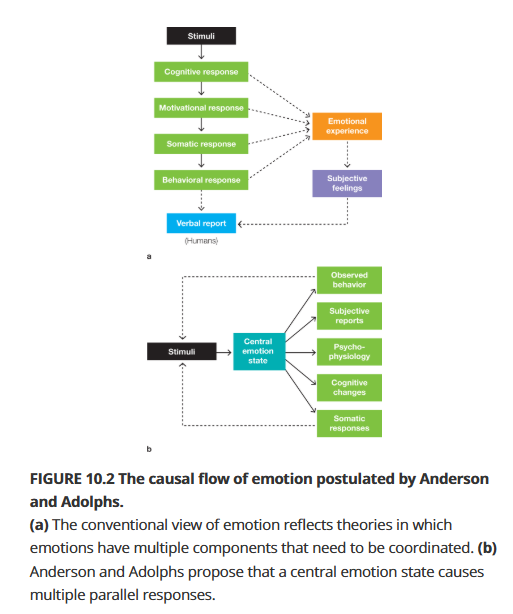
Anderson and Adolphs argue an emotional stimulus activates a CNS state that simultaneously activates multiple systems producing separate responses
The amygdala is the most connected structure in the forebrain
The amygdala contains receptors for many difference neurotransmitters and for various hormones
Damage to the amygdala impairs conditioned fear responses
Emotional learning can be both implicit and explicit; the amygdala is necessary for implicit emotional learning while the hippocampus plays a crucial role in explicit emotional memories.
Conscious knowledge cannot generate physiological changes associated with fear if there is no link to the amygdala and it’s midbrain connections
The hippocampus is necessary for the acquisition of a memory, but if the arousal accompanies memory acquisition, the strength and duration of that memory is modulated by amygdala activity
Neuroanatomy of Emotion
In the Papez circuit, the cingulate gyrus:
Integrates various sources of emotional information (e.g., sensory messages from the thalamus and feelings from the hypothalamus).
Provides output for cognitive appraisal, contributing to a top-down modulation of emotional responses.
Neural Reference Space for Emotions
Refers to a set of brain regions consistently activated across a range of different emotions.
Implies extensive brain networks are involved in a generalized emotional processing, rather than emotions being localized to specific, individual regions.