Week 6: Venus
Venus
Venus: has a thick atmosphere
covered in clouds
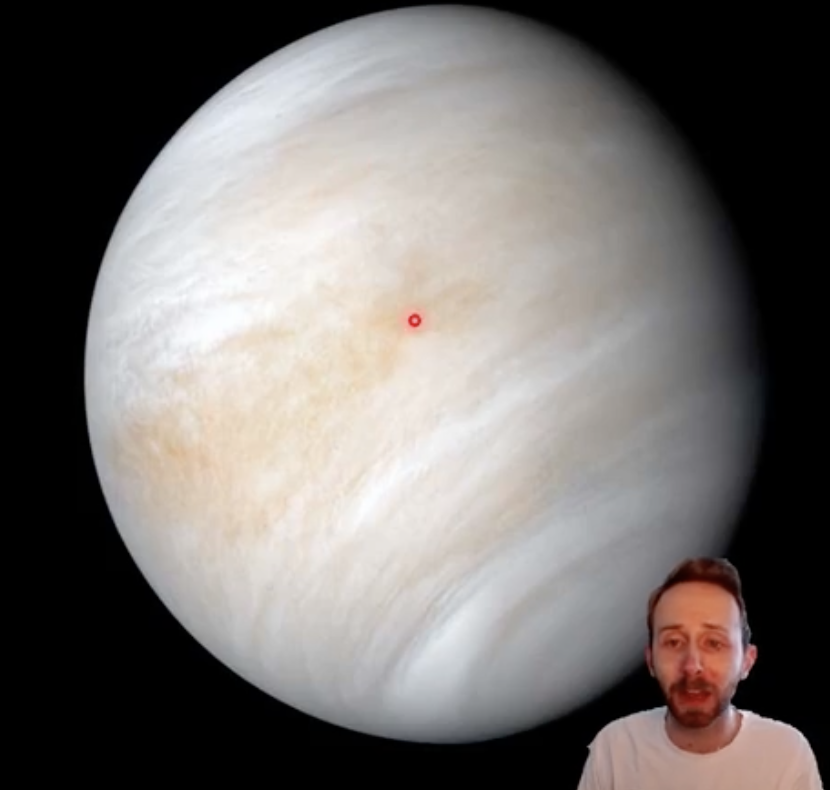
Diameter of Venus: 95% of Earth’s diameter
Density: 5.2 g/cm3
Mass: 80% the mass of the Earth
Surface Gravity: 0.9 g (g=gravity)
Our “Sister” Planet
until 1950, scientist thought Venus might be covered with rain forests
possibly inhabited by photosynthetic, Alien, human-like forms
NOT TRUE
Venus is perhaps the most inhospitable place in the Solar System
Orbit of Venus
Average distance from the Sun: 0.7 AU from the sun
has the lowest eccentric (most circular) of all the planets orbits (0.007)

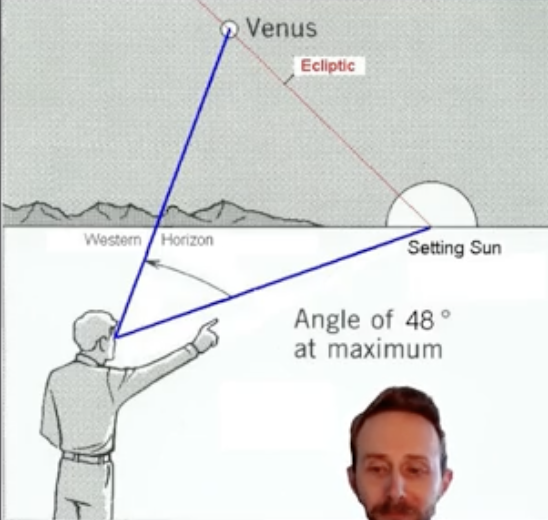
Elongation Angle of Venus
Venus’s greatest elongation angle: 48 degrees of separation
bigger orbit than Mercury, so greater maximum elongation angle
Best seen before sunrise or after sunset
sometimes called the “Evening Star” or “Morning Star”
about 3 hours before/after, compared to Mercury’s 2 hours
Venus is the brightest planet
Conjunction:
Conjunction: when objects are in the same direction (line up)
Superior Conjunction: when the sun is between you and the other body
Inferior Conjunction: when other body is between you and the sun
but planets that are further away from sun than earth will never be in inferior conjunction but can be in superior conjunction
ie: Mars will never be in inferior conjunction but can be in superior conjunction

More Facts about Venus
Period of Rotation (length of Venusian Day): 243 days
determined using the Doppler’s effect
slowest rotation rate of any major planet
Rotation is Retrograde
rotates backwards
axial tilt is confusing…
Period Revolution (Venusian Year): 225 days
Venus’s day is longer than its Year
Venus has the highest “Albedo” in the Solar System (70%)
Albedo: amount of light reflected from the body
most reflective body in the Solar System
Venera 7
Venera 7: first probe to land on Venus and first probe to send back data from another planet
daytime temperature: 900 degrees F
Hottest of all major planets!!
Nighttime temperature: 850 degrees F
Surface pressure: 90x greater than the Earth’s surface pressure
like being 3,000 ft underwater
Atmosphere on Venus
Atmosphere contains:
95% Carbon dioxide (CO2)
Sulfuric Acid Clouds
rains Sulfuric Acid
Venera 9 and 10
Venera 9 took the first photo of Venus
this is also the first photo of another planet

Venera 11, 12, 13, and 14
venera 11 and 12 were sent but lens cap was not off and wasn’t able to take photos
Venera 13 took photos below:
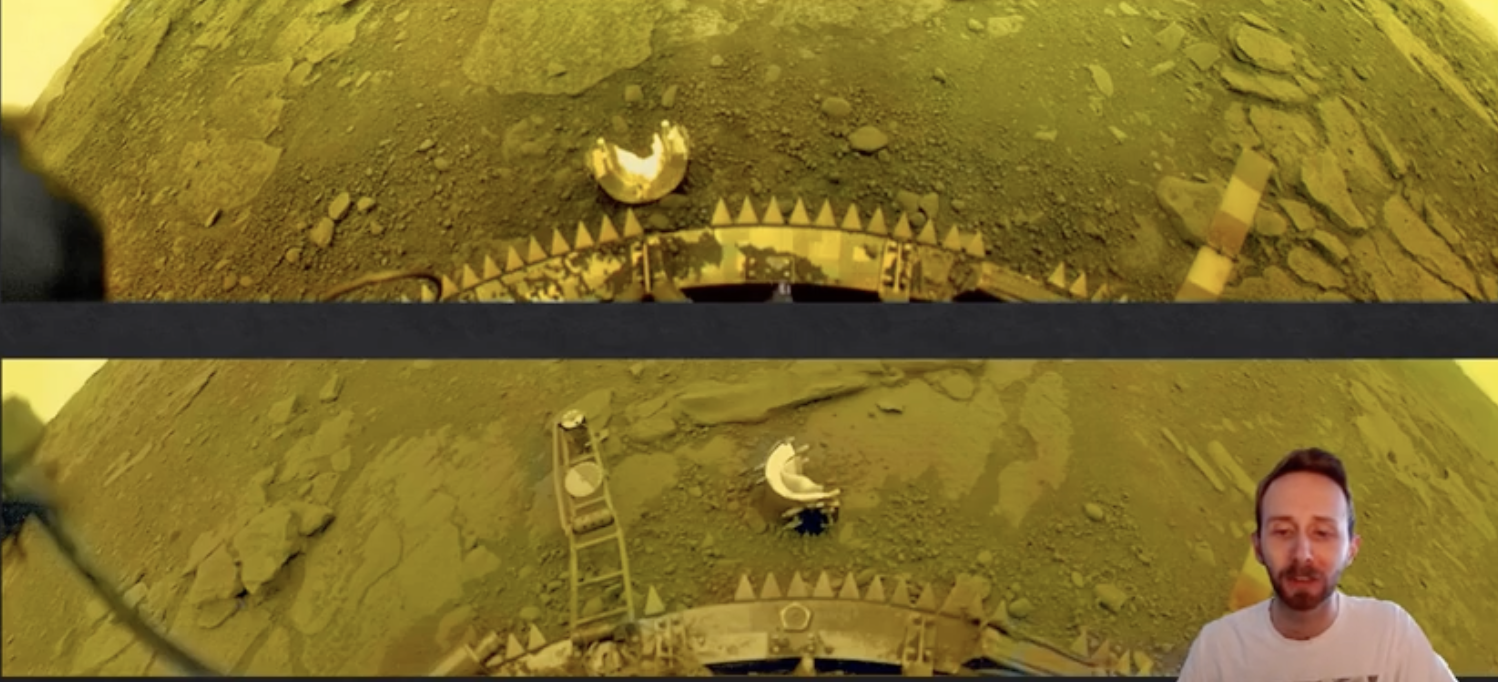
Venera 14 took photos below:

Venera Landers: the only successful landings on Venus… ever
Magellan Mission (1990-1994)
Radar mapped most of Venus’s surface
no ancient water beds or shorelines
no signs of water (erosions, etc)
Violent tectonic formations
85% of the surface is (cooled) volcanic lava floors
rest is mountains
Venus’s Major Surface Features
has continents:
Ishtar Terra
has tallest mountain range on Venus’s surface (called Maxwell Montes)
only feature on Venus named after a male
Aphrodite Terra
half the size of Africa
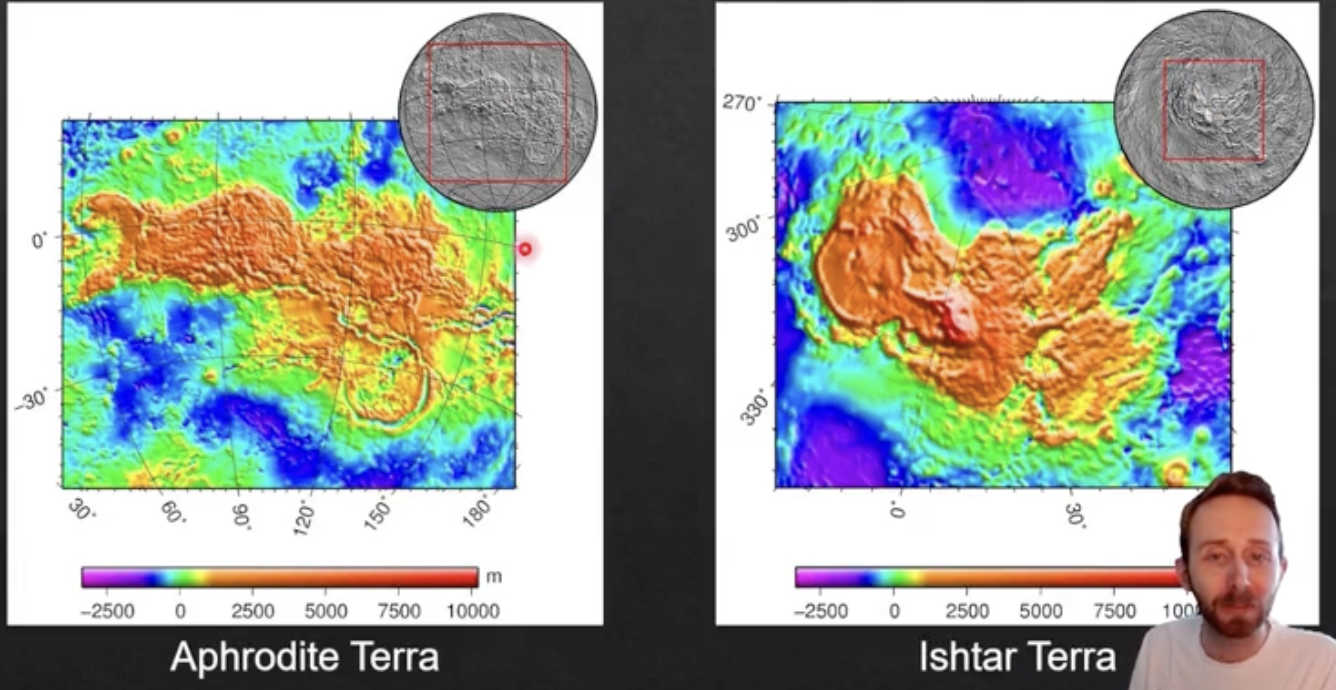
has Mountains
has Craters (not many craters though)
named after famous women
why does Venus not have a lot of craters?
because it has an atmosphere and has erosion
volcanic activity has “resurfaced” the planet long ago
No small craters, only large ones
only big craters can get through Venus’s atmosphere
has Volcanos
other features (such as volcanos) are named after various goddesses

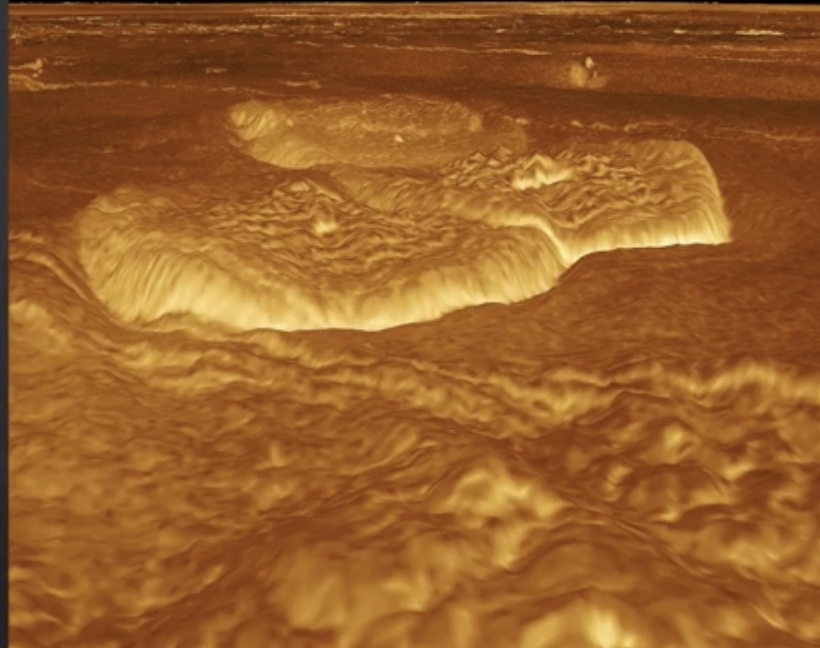
Corona: when magna builds up under surface
similar to a pimple under the skin

Venus Express
Went to venus and took pics of active volcanos
Greenhouse Effect
the thick CO2 atmosphere traps heat and creates a “Greenhouse effect”
The Greenhouse effect: the process by which an atmosphere warms a planet
mars, Venus, and other celestial bodies with atmospheres (such as Titan) have greenhouse effects
without the greenhouse effect, life on Earth could not exist
Venus has a “Runway” greenhouse effect
long time ago, Venus had an Ocean
Venus began to warm up from the sun getting hotter
Water from Ocean evaporated
water vapor enters the atmosphere and traps CO2
CO2 in the atmosphere enchances the greenhouse efffect, trapping more heat
more heat = more water evaporates and more CO2 trapping the heat
cycle continues = Runway greenhouse effect
