H Biology Unit 7 Study Guide
Cell Differentiation
Differentiation:
Process where unspecialized cell divides to produce specialized cells
Genes activated or inactivated to regulate process
Differentiated cell develops specific structures and functions
Totipotent Cells:
Can differentiate into all cell types in body
Zygote and early embryonic cells in mammals are totipotent
Pluripotent Cells:
Can differentiate into many, but not all, cell types
Have potential to differentiate into most cell types
Stem Cells:
Unspecialized cells that can give rise to specialized cells
Zygotes and embryonic cells are types of stem cells
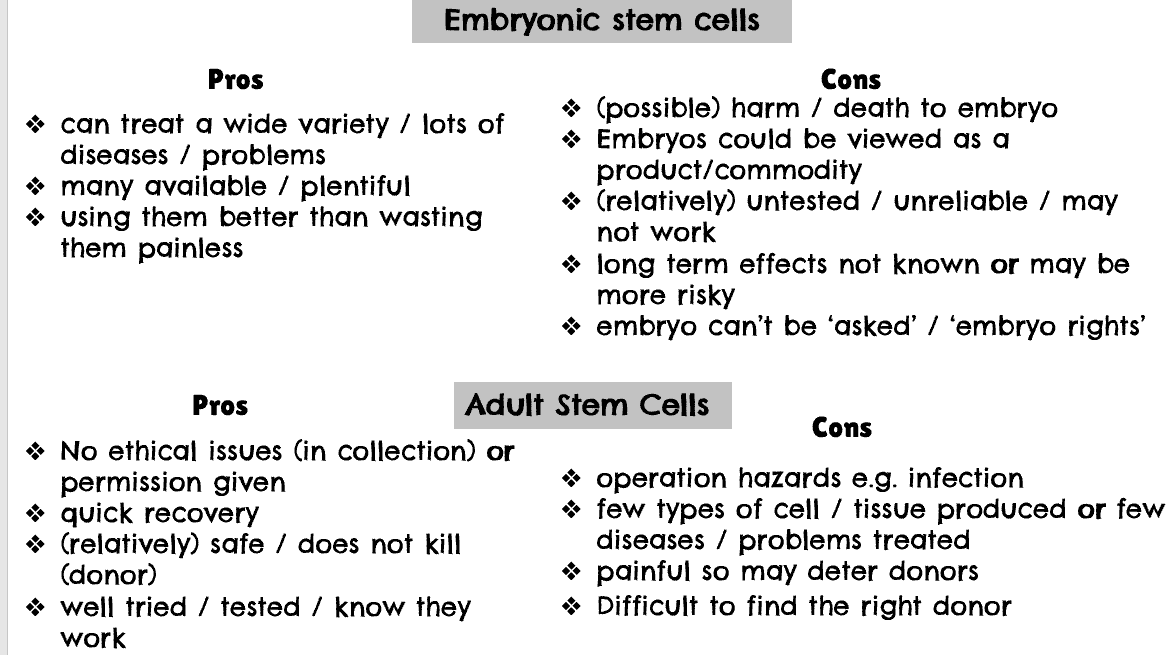
Embryonic Stem Cells:
Can divide indefinitely and specialize into any cell type
Totipotent
Adult Stem Cells (Somatic Stem Cells):
Undifferentiated cells in body
Divide to replace dying cells and damaged tissues
Being experimented on to make medicine using totipotent cells.
Epigenetics and the Human Genome Project
Epigenetics is the study of how certain factors will not CHANGE your genes, but may affect how your body reads your genes
What is the HGP?
The human genome project was an international effort that sequenced all 3 billion bases in human DNA. This also lead some scientists to map human chromosomes. More than 20,000 genes were identified.
Pros and Cons of the HGP (Incl. Ethical Concerns)
PROS
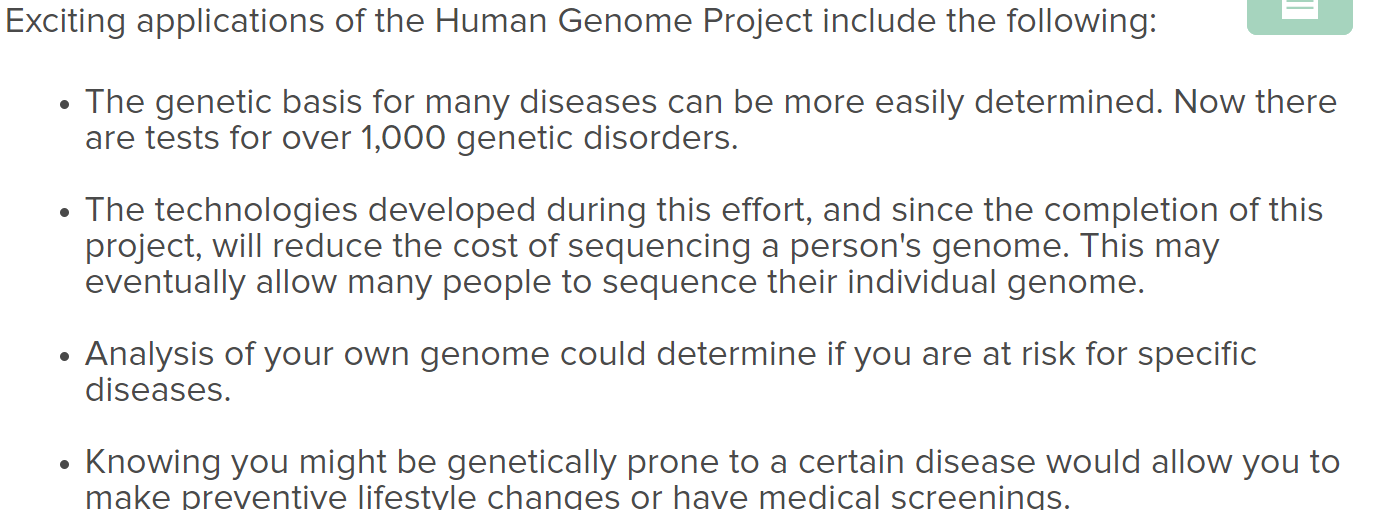
It could help with diagnosing and preventing human diseases
It could allow us to modify medication for more effective treatments
Developed DNA fingerprinting - helps in forensics
Helped to boost economy
Could help more than humans
CONS
Loss of human diversity
A trend in “designer” humans
Could be used as a form of new weapons
Foundation for genetic racism
Most accessible to wealthy cultures
Restriction Enzymes
New technologies allow us to insert parts of DNA into bacteria, called plasmids (bacterial DNA). Restriction enzymes are used to CUT the DNA, to allow for insertion.
Restriction enzymes are in BACTERIA. This is because sometimes, the bacteria needs to get rid of potentially harmful or mutated DNA.
How do restriction enzymes work?
Restriction enzymes have a special shape that allow it to move along the DNA’s double helix shape. (eg. Eco R1)
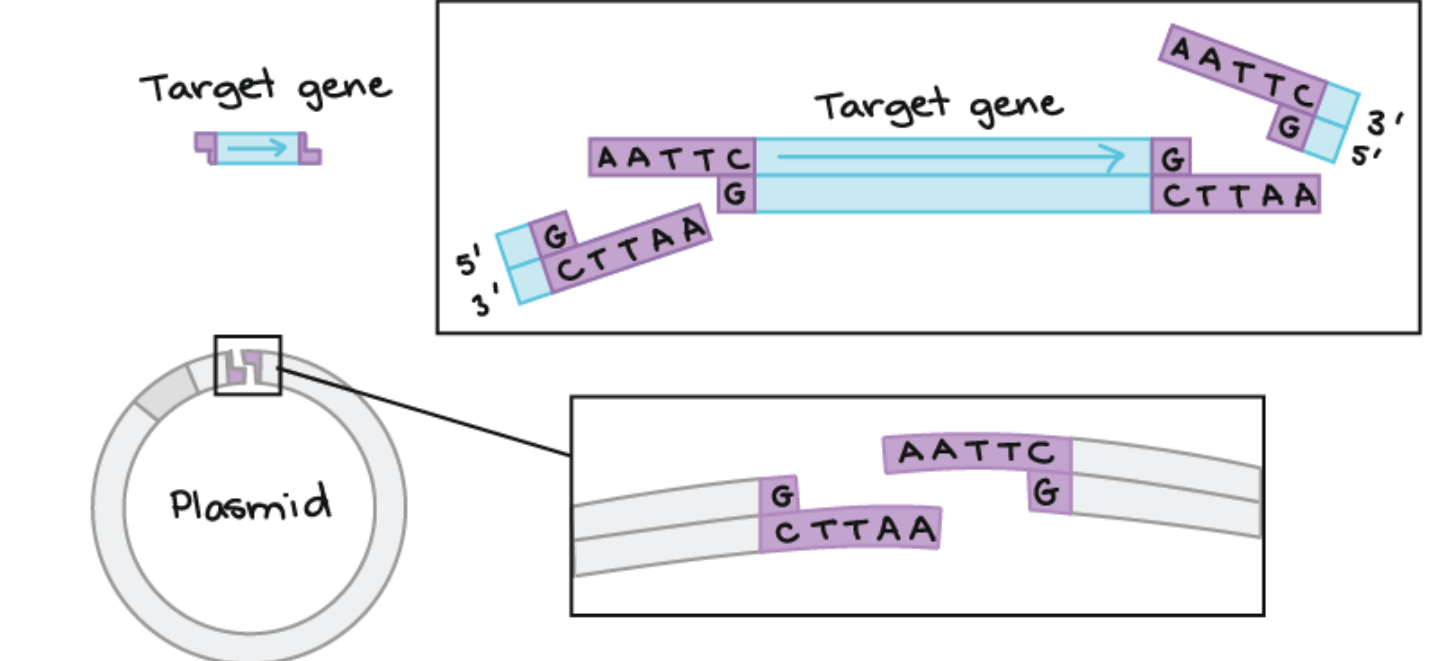
The enzyme looks for a specific section of the gene. It cuts the plasmid, and a new section of DNA is then inserted.
After cutting, it can leave either blunt or sticky ends.
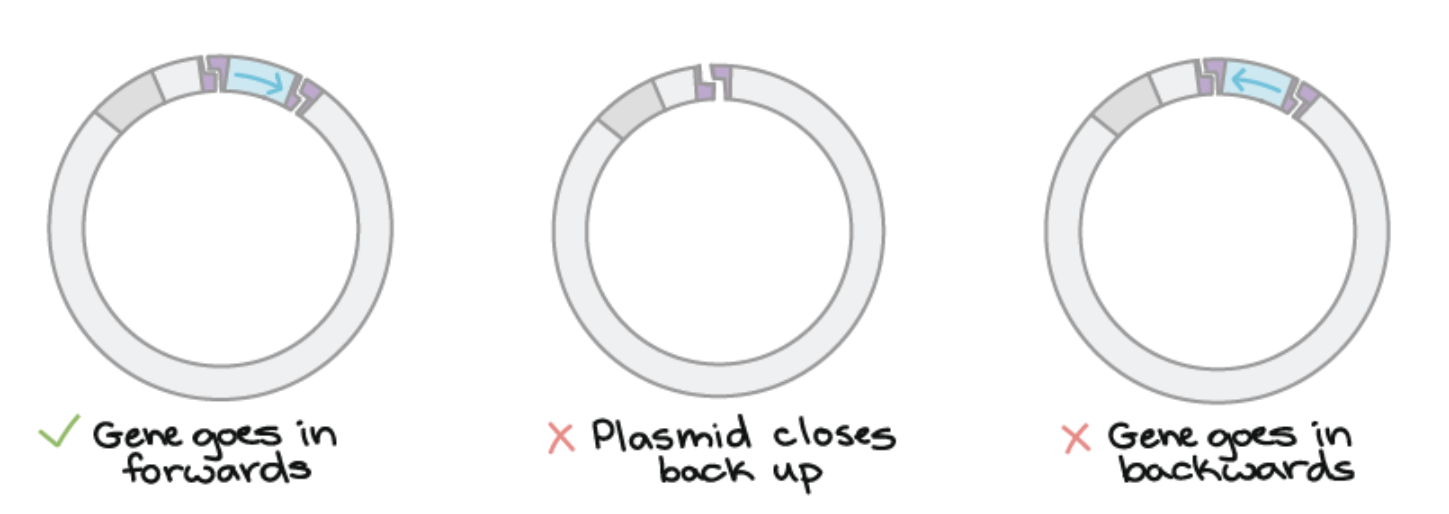
Sticky ends help the new gene to attach
Blunt ends cut straight down, and are less efficient because it is harder for ligase to link the pieces together.
If two pieces of DNA have matching ends, ligase can link them to form a single, unbroken molecule of DNA. DNA Ligase then helps attach the new DNA.
The bacteria is kept in a culture, where it multiplies (to make offspring with the edited genes), making a large number of the desired product.
Restrictive Enzymes: EcoR1 example
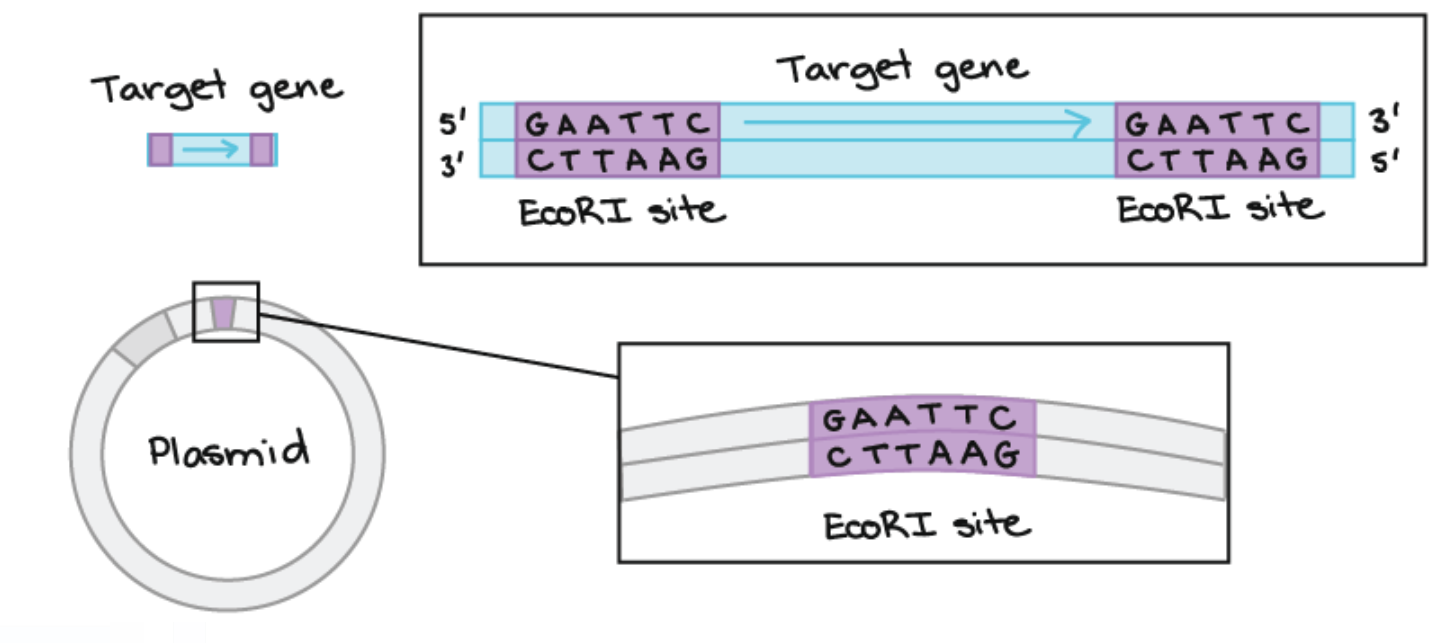
Let's see how restriction digestion and ligation can be used to insert a gene into a plasmid. Suppose we have a target gene, flanked with EcoRI recognition sites, and a plasmid, containing a single EcoRI site:
Our goal is to use the enzyme EcoRI to insert the gene into the plasmid. First, we separately digest (cut) the gene fragment and the plasmid with EcoRI. This step produces fragments with sticky ends:
 Restriction enzymes don’t always work.
 Restrictive Enzyme Puzzles
Find DNA palindromes, count up.
Determine if they’re blunt or sticky ends (<3 is blunt)
Gel Electrophoresis and DNA Fingerprinting
The purpose of gel electrophoresis is to separate and visualize DNA. It is most useful when determining different lengths of DNA. This is useful for DNA fingerprinting.
Gel-Agarose gel
Electro-Electricity
Phoresis-Travel
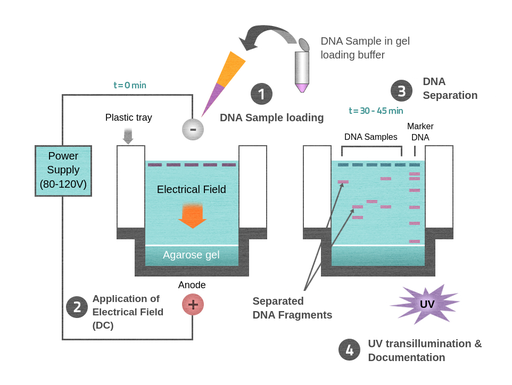
How does gel electrophoresis work?
There is a tray made of agarose or polyacrylamide gel (using a gel comb). There are sample wells at the ends.
DNA sample mixtures are put into these wells
When loading, we need to use a micropipette and constantly change the tips to avoid cross contamination.
This tray is submerged in an aqueous buffer solution. This solution allows the current to flow through the jar.
The end with the wells has a negative charge, while the opposite end has a positive charge. This is provided by a current, with a power source (you can tell with the bubbles).
Since DNA carries a negative charge, it repels from the negatively charged side, and goes towards the positive side. The smaller DNA travels faster because it moves through the spores in the buffer solution faster.
After this, the DNA is stained to see the banded pattern.
The Chronological Process of DNA Fingerprinting
DNA from an organism is placed into a tube. Restrictive enzymes are also added to break apart the DNA into fragments that we can analyze.
The same enzyme is added each time because we want to keep variables constant (the DNA already varies)
Set up gel electrophoresis. There are wells at the end that hold the samples. A different sample of DNA is placed into each.
To place the DNA, we use micropipettes and change the tip every time to avoid cross contamination.
Hook up to electrical source. The electricity will cause the DNA to move through the gel.
This works because DNA has a negative charge, and opposite charges attract. The DNA will run away from the original (negative) side.
The DNA fragments will separate based on size. Smaller fragments move faster (and further) because larger fragments take longer to get through the gel.
The gel is taken out of the chamber and stained (usually with UV stain). This helps find a pattern.
Uses of DNA Fingerprinting
Used in law enforcement to determine who committed a crime
Innocence project: Used to free individuals who have been wrongly committed of a crime
Can determine maternity and paternity
Identify how closely related organisms are (evolution!)
Summary and Misc
Humans share 99.9% identity in DNA sequence
Areas of variability are used by forensic scientists to identify individuals
Every person has a unique DNA fingerprint, which helps match DNA from crime scenes and suspects
DNA evidence is the only evidence that can undeniably identify perpetrators of crime
DNA evidence is important to exonerate wrongly convicted individuals
Bacterial Transformation
See restrictive enzymes!!
Bacterial transformation is the process of editing a bacteria’s DNA. This can be used, for example, for the production of insulin.
How does it work?
Find a piece of DNA with the desired gene in it
Use restrictive enzymes to cut out the desired gene from a separate organism
Using the SAME restrictive enzyme (bc it forms fragments with complementary sticky ends, therefore facilitating the formation of bonds between them), cut the plasmid
Insert gene into the bacterial plasmid
Inset into bacterium using electric shock
Allow bacteria to divide, resulting in large amounts of desired gene
Transgenic Organisms and GMOS
Many foods that we eat contain GMOS (e.g. cornstarch, corn syrup, corn oil, soybean oil, canola oil, or granulated sugar). However, most GMOS are used to feed animals.

Cloning
Cloning is a process used to create genetically identical copies of an organism. They occur naturally in nature, especially in bacteria (asexual reproduction). Identical twins, which also occur in humans, are also “clones” with the same DNA.
Types of Cloning
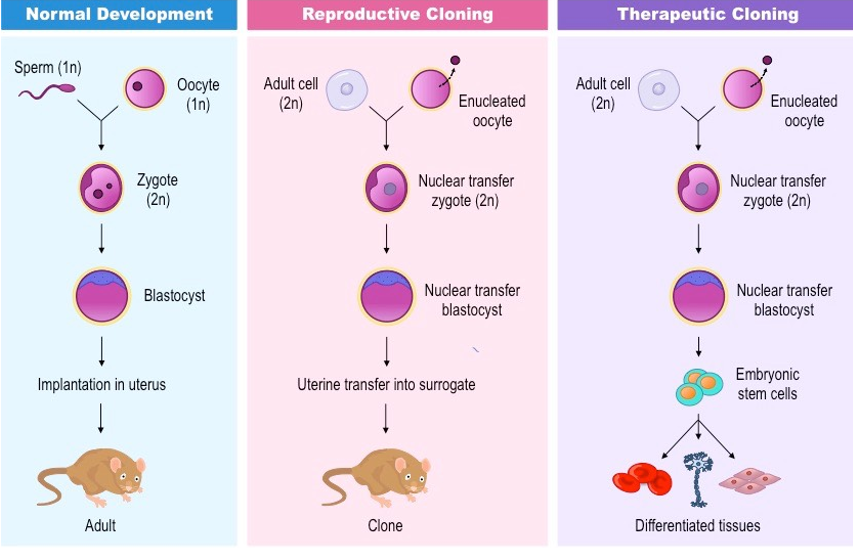
Reproductive Cloning
Somatic Cell Nuclear Transfer (SCNT)
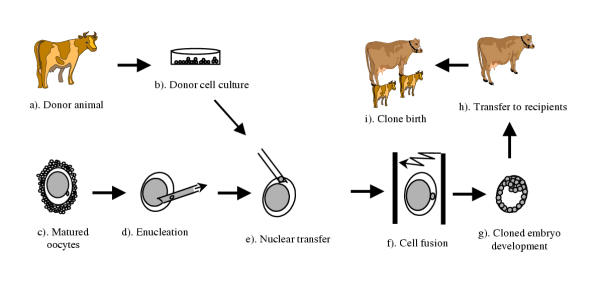
In this type of cloning, a donor cell is taken from a somatic cell donor, and an egg is taken from an egg cell donor.
The nucleus of the egg cell is removed, and replaced with the donor nucleus (with an electric shock)
The fused cell goes back into the uterus of a surrogate mother
The clone will look like the somatic cell donor
Produces a copy of a whole animal
Beneficial for infertile couples
Therapeutic Cloning
Used to created stem cells (embryos; see specialized cells), which could be used to replace tissue, or to create medicine
They are kept in a lab instead of implanted in the uterus
Gene Cloning
Recombinant DNA Technology
Used to clone certain parts of DNA or genes
See restrictive enzymes