week 3: Brain disease and compulsion




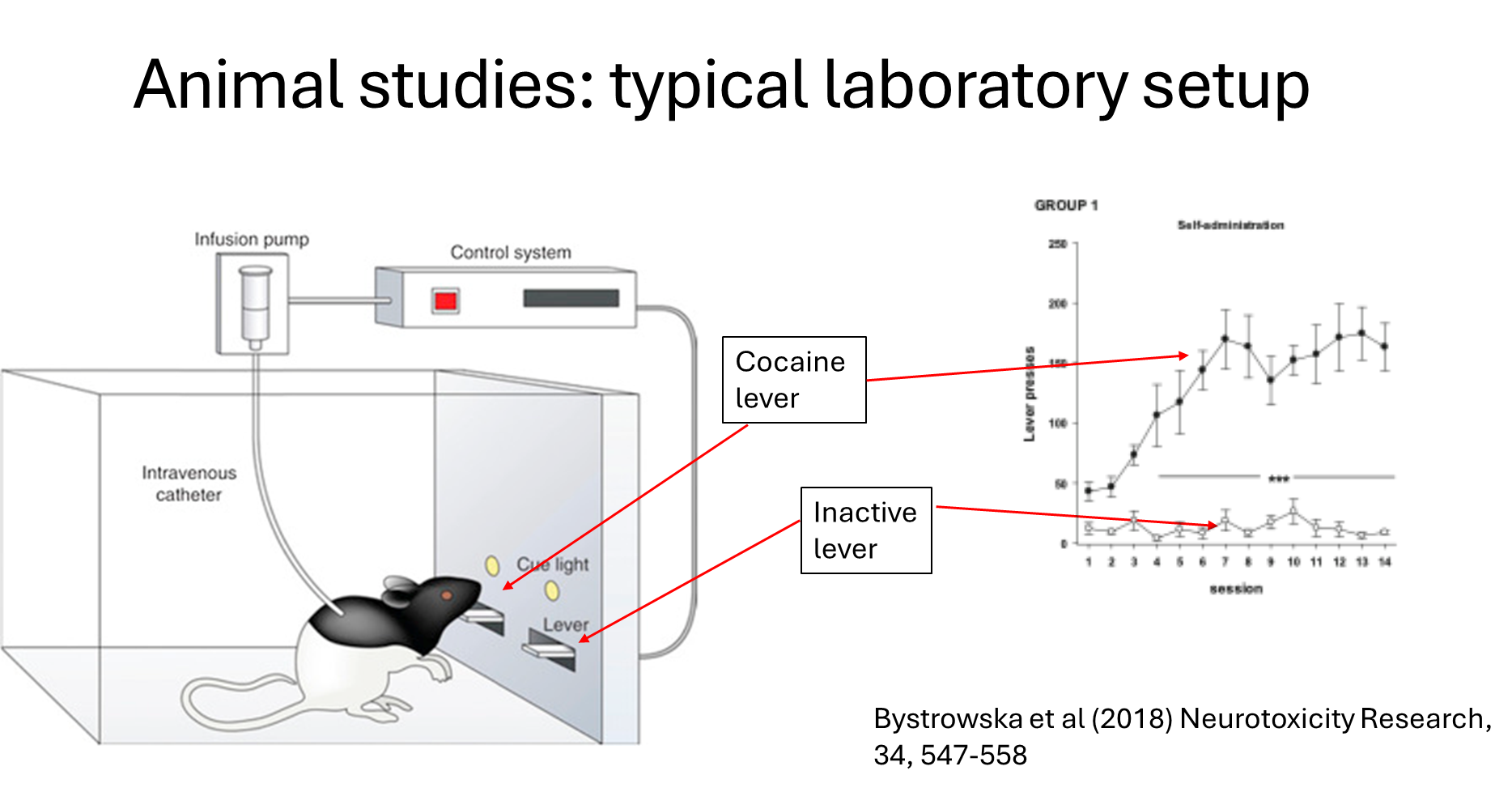
animal put into the room and through trial and error finds out what lever does what
the inactive lever has no consequence
found that once the animal discovers the cocaine lever leads to access to the drug, they continuously pull the lever at greater rates
we can observe the strength of this craving and response to the cocaine lever in different situations, such as adding a scenario where if they pull the lever they do get cocaine, but they also get an electric shock
this has been found to not negate the increased rate of pulling the lever

the 3 criteria model: three different behavioural tests that rely on the self administration of drugs from the animals
look at post-mortem brain of animals as a result of drug use, or micro-dialysis whilst the rat is in a drug chamber

there is nothing else enjoyable that the rat could do, whereas, humans have various means to have joy, such as eating nice food, socialising etc
but a rat in a chamber has drug or nothing
so what happens to a rat if they have the opportunity for drug or something else enjoyable
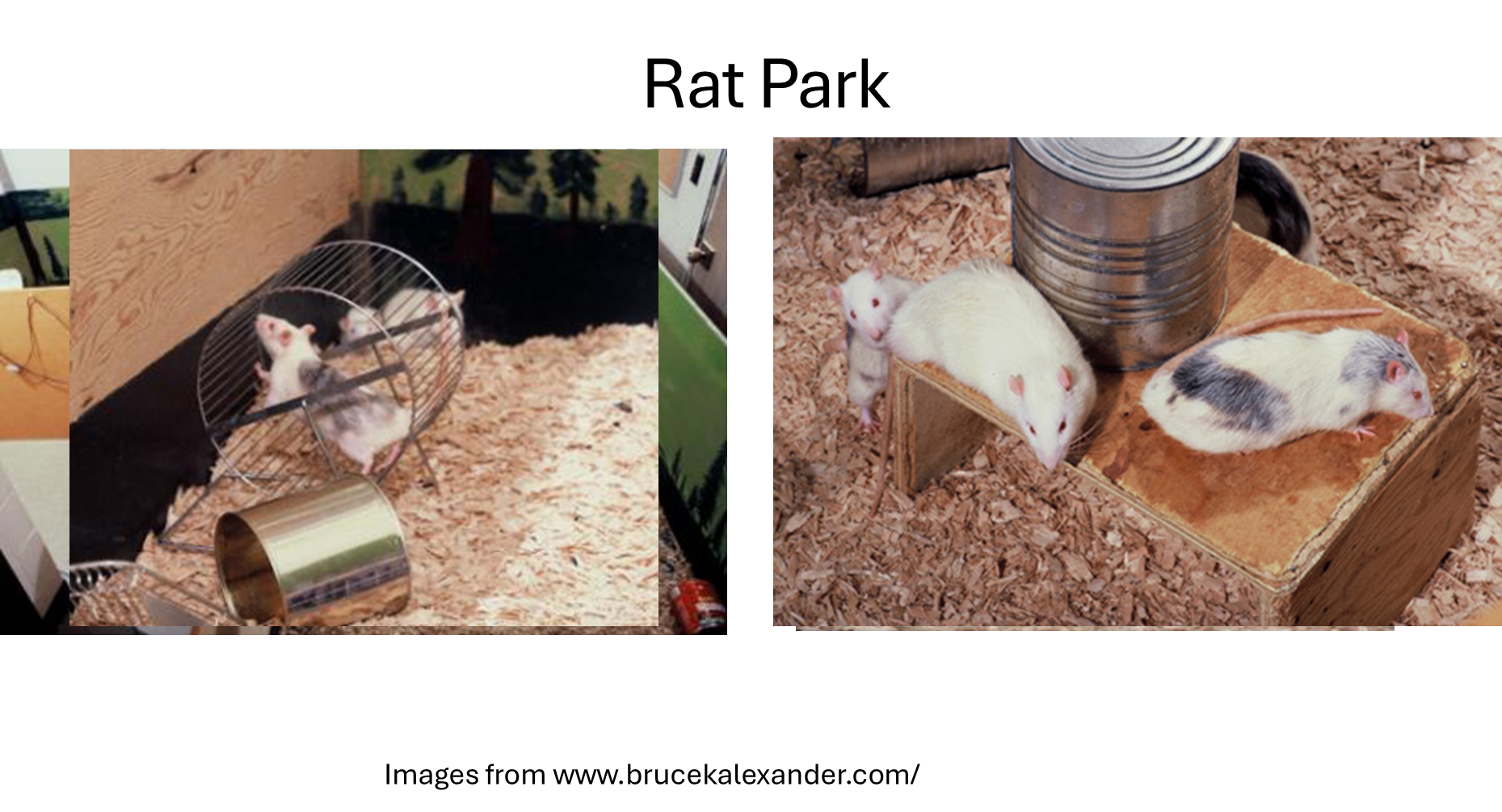
rats had access to water with morphine, or regular water
they were in a very enriched environment with other animals for social interaction
they wanted to see the extent to which rats like to drink the water with morphine in it given various opportunities of enjoyment
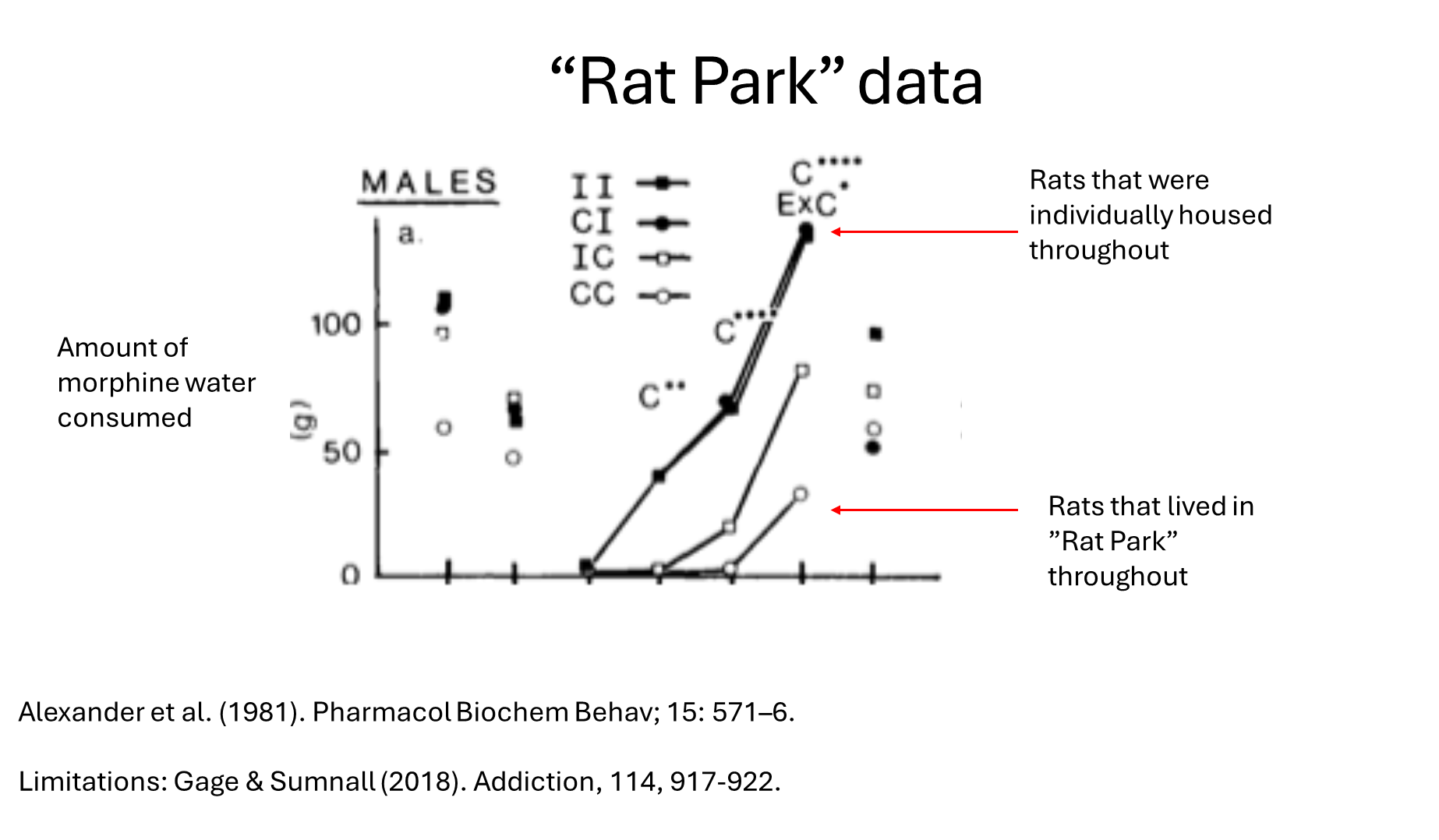
rats that lived in that lovely environment significantly reduced their consumption of morphine, unlike those individually housed in the chambers
chambers are very boring with little stimulation
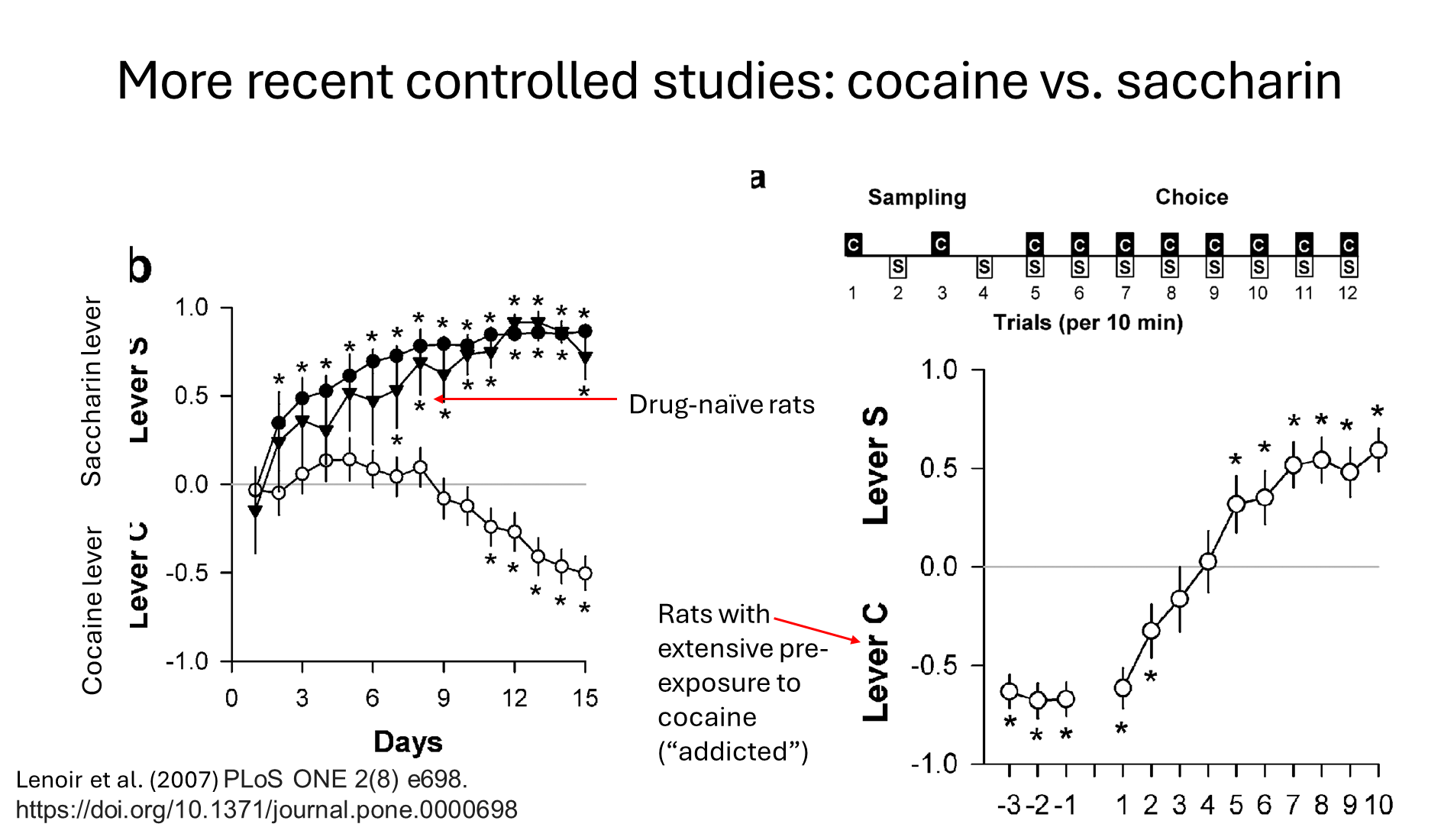
have their rats in a standard, boring instrumental chamber with two levels: Cocaine and Saccharin
C lever might produce a drug straight into the veins, S lever produces a sweet liquid that has a nice taste but has no drug effect
in animals that have not been exposed to drugs for significant times (drug naive), they press on the S lever a lot more than the C lever after 15 days
they will start out pressing both levers but prefer S at the end
naive rats wouldn’t be a good model for addiction so lets observe in rats that have been continuously and extensively exposed to cocaine without the option of saccharin and put them in the instrumental chamber
initially they prefer the cocaine lever, but overtime they prefer the S lever
once given an alternative they prefer the saccharin
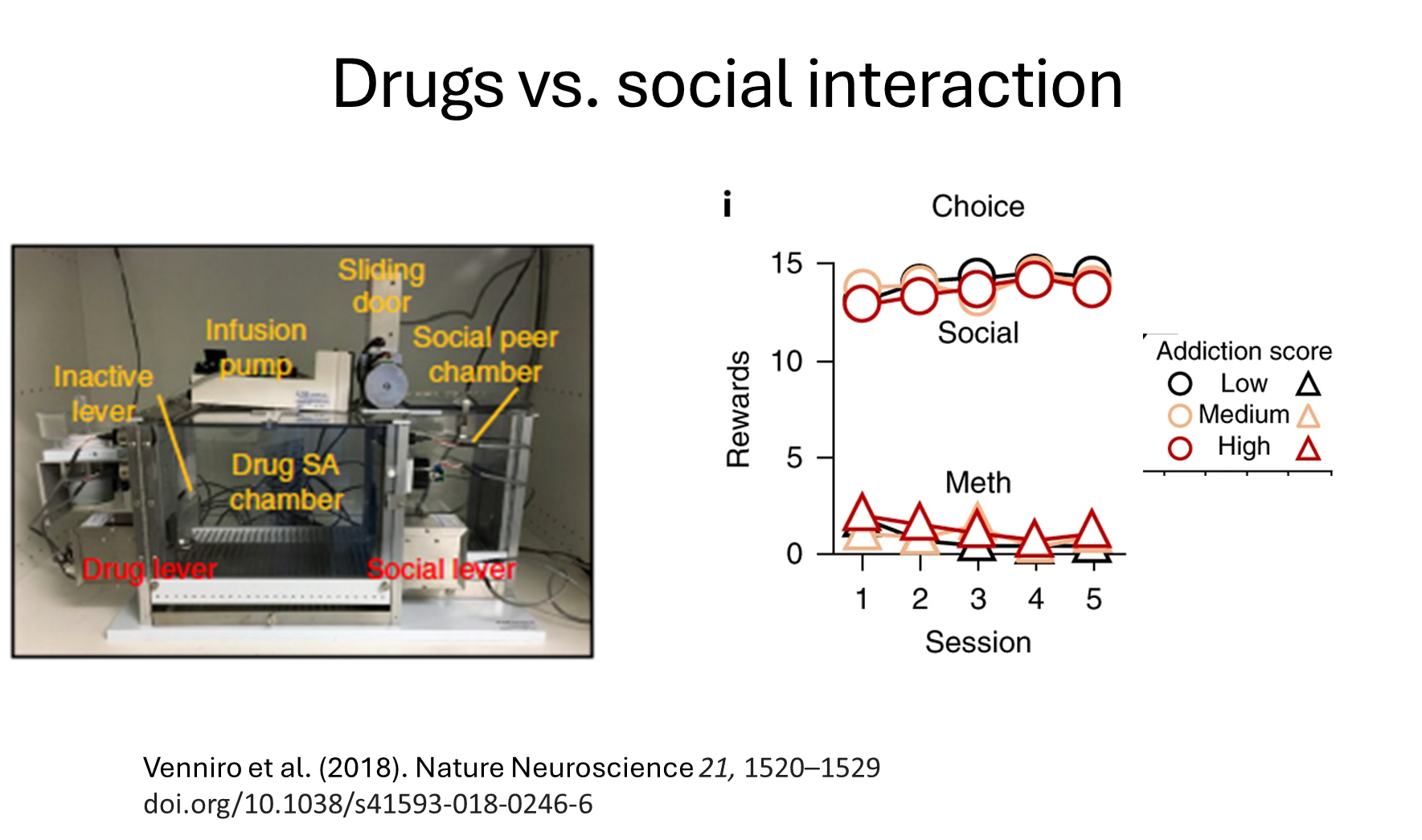
options/ rewards are pulling a lever for a: drug or a friend to play with
when rats have this choice, from a very early stage and continuously, they would much prefer the lever that gives them a social interaction
you can also include other covariates to this test, like measuring and controlling baseline addiction to meth
but the marked preference for social interaction occurs regardless

even in the most addiction prone rats, they still prefer alternative rewards
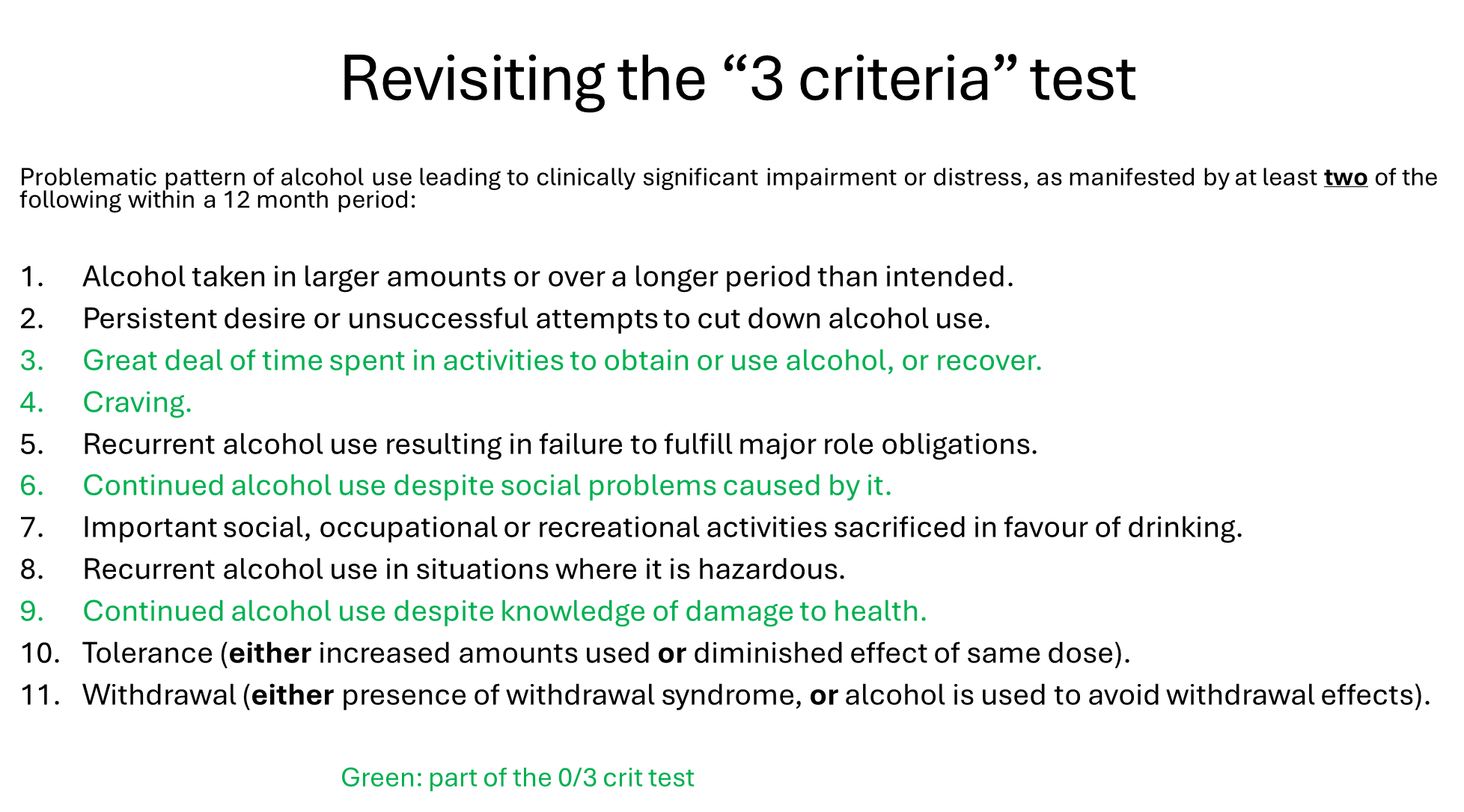
there are number of different animal procedures, involving operant responding, which map onto the rules in green
these are four diagnostic criteria in animals
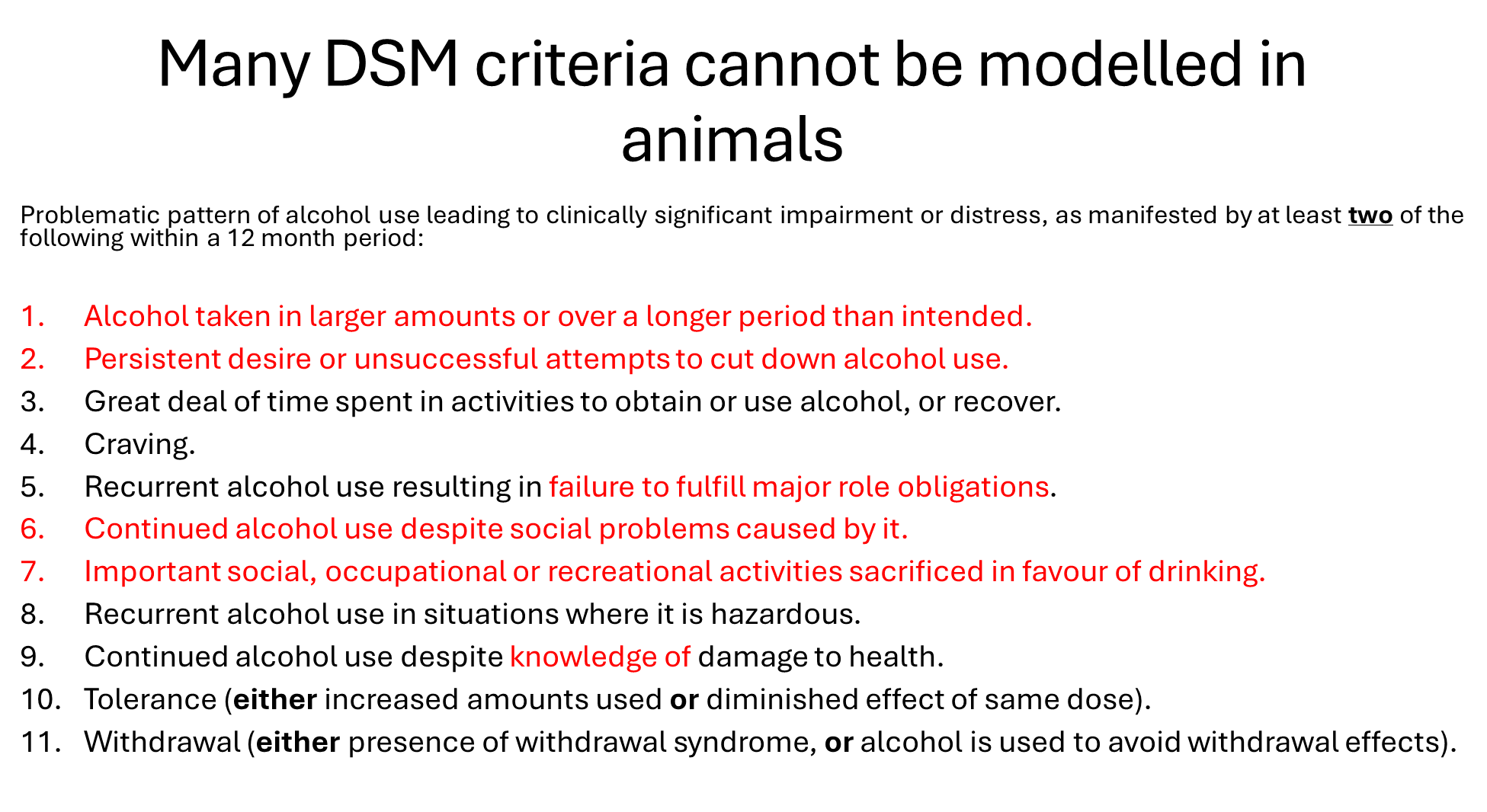
that also means by inference that we can’t measure these aspects in animals
the first two are a disconnect in intentions and behaviour
rats have no major role obligations
social problems: this cannot model in an animal, they are unaware of the harm that they could cause

addiction is not just about behaviour, the criteria argue it is also about making intentions or resolutions that can only be verbalised
motivational treatments change intentions
maybe the ones that the 3 model can’t explain are the more important ones
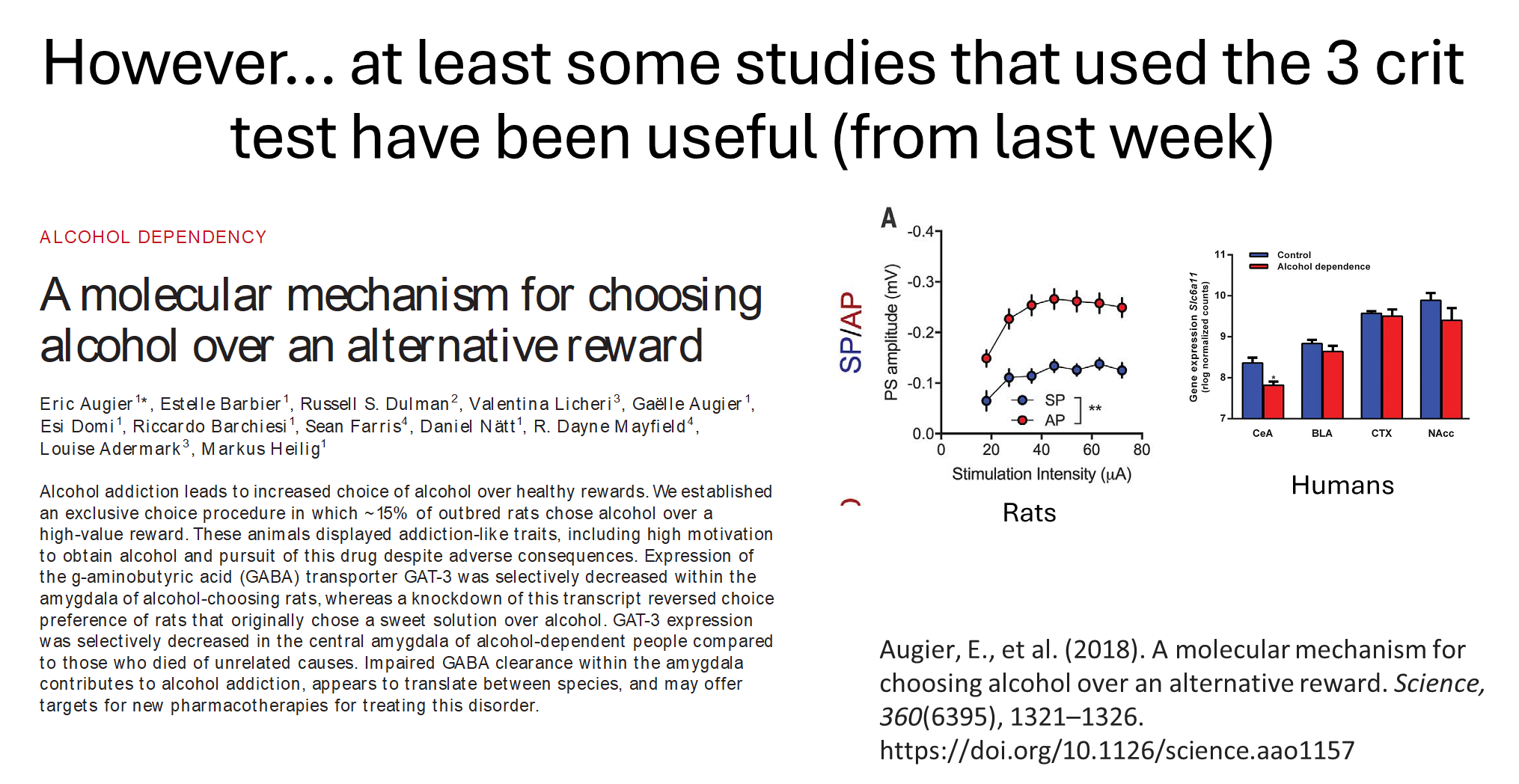
rats either tend to meet all three criteria or 0, so either addiction prone or addiction resistant
they found that those two groups of rats do respond different in this study
changes in the sensitivity in the GABA transporter

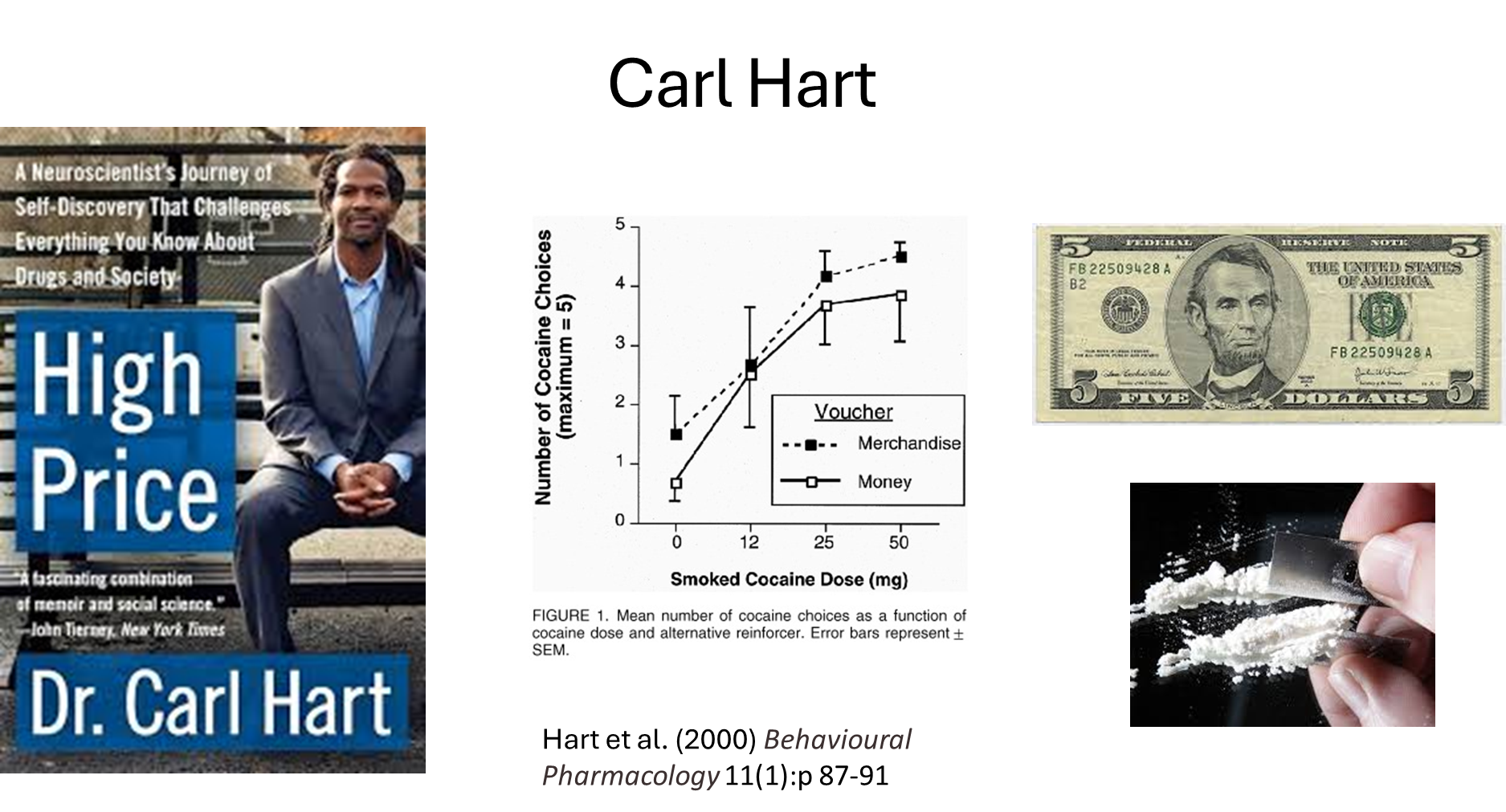
Hart’s book ‘high price’ is very critical of the brain model of addiction and that it is an addiction of compulsion
he gave cocaine addicts a choice in an experiment; cocaine or $500
the overall pattern of results is relatively the same, the most you could choose cocaine was 5, but the important aspect is the intermediate
the choice for cocaine altered depending on the dose cocaine available and also whether people were given cash or merchandise
as the dose of cocaine increases it becomes more attractive, but during the intermediate points they refused the cocaine and took the money
at no point was it inevitable that they would choose the drugs, there is a higher likelihood with greater dosage but not always chosen
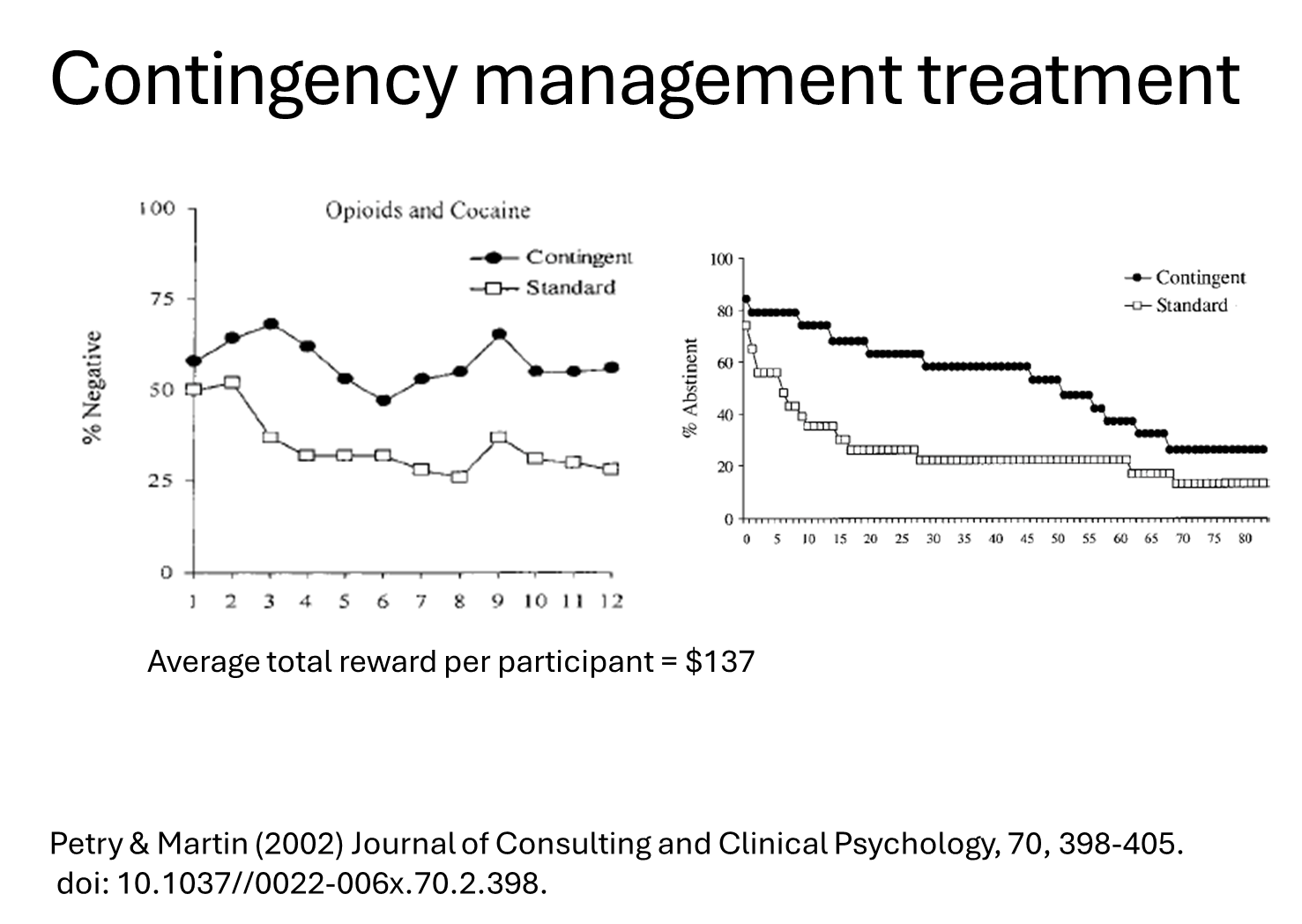
pps provided a urine sample once or twice a day, if no trace of the drug then they get a reward
the group offered the payment had a higher proportion of negative drug tests compared to the control group (white group) that provided urine samples and received a random amount of money (but the money they received was unrelated to if their sample was clean or not)
providing an award from abstinence showed relatively to work
afterwards the second graph shows how many remained abstinent from cocaine after taking the awards/ incentives away
overtime fewer people remained abstinent, but there was a difference in the two groups
those that received an incentive to abstain remained abstinent for longer: there was a lasting effect even with the incentive
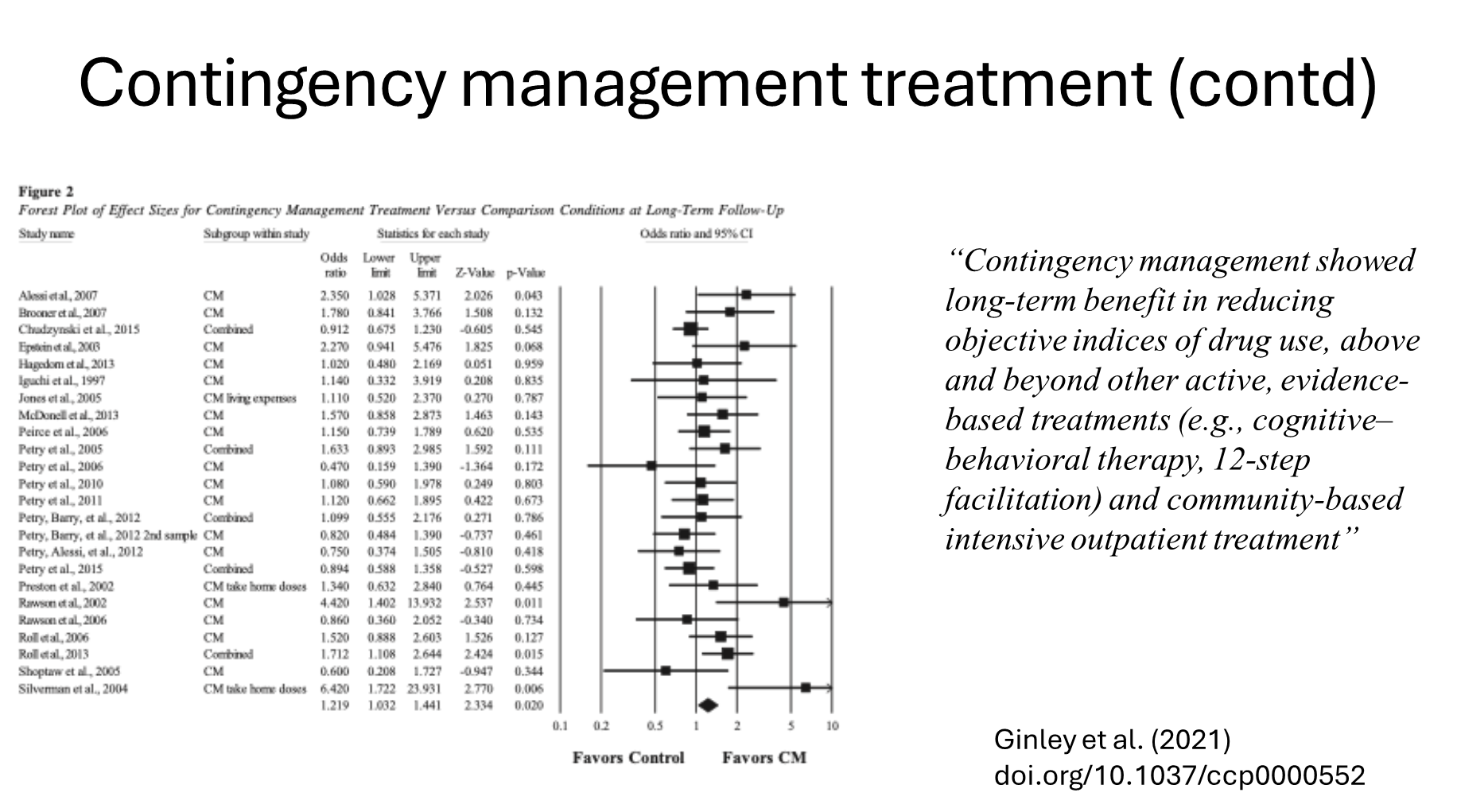
more recent meta-analysis just looking at long term outcomes at follow-up
small but reliably and beneficial effect for contingent management treatment
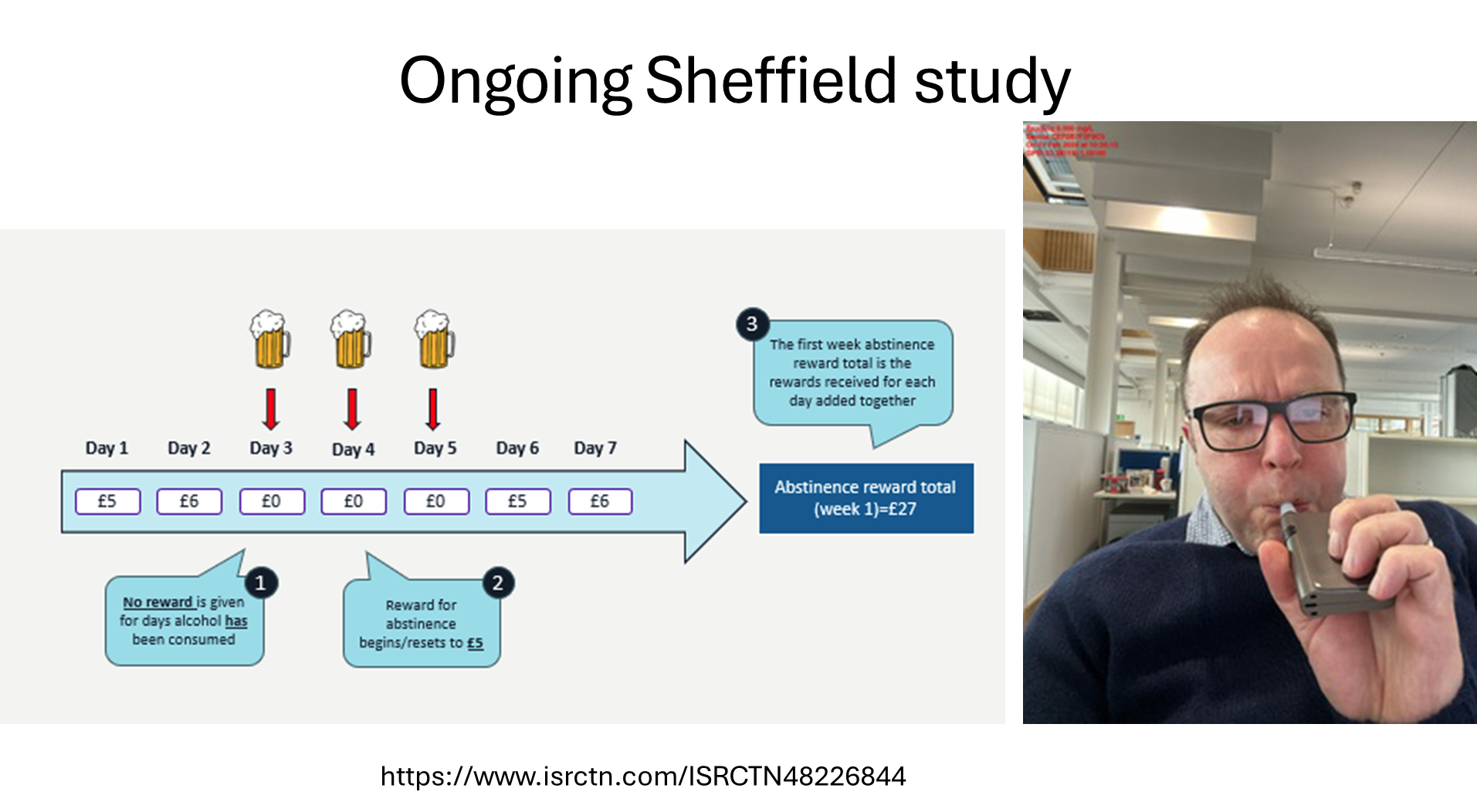
recruited people that were drinking too much and wanted to cut down
several breathalysers a day with cash reward to those that abstained
each cumulative day of abstinence the reward increases
the breathalyser takes a photo as you’re doing it too to prove it was the correct person doing it

the reinforcers do not have to be that big, but if offered an incentive contingent on abstinence of drug use it is effective
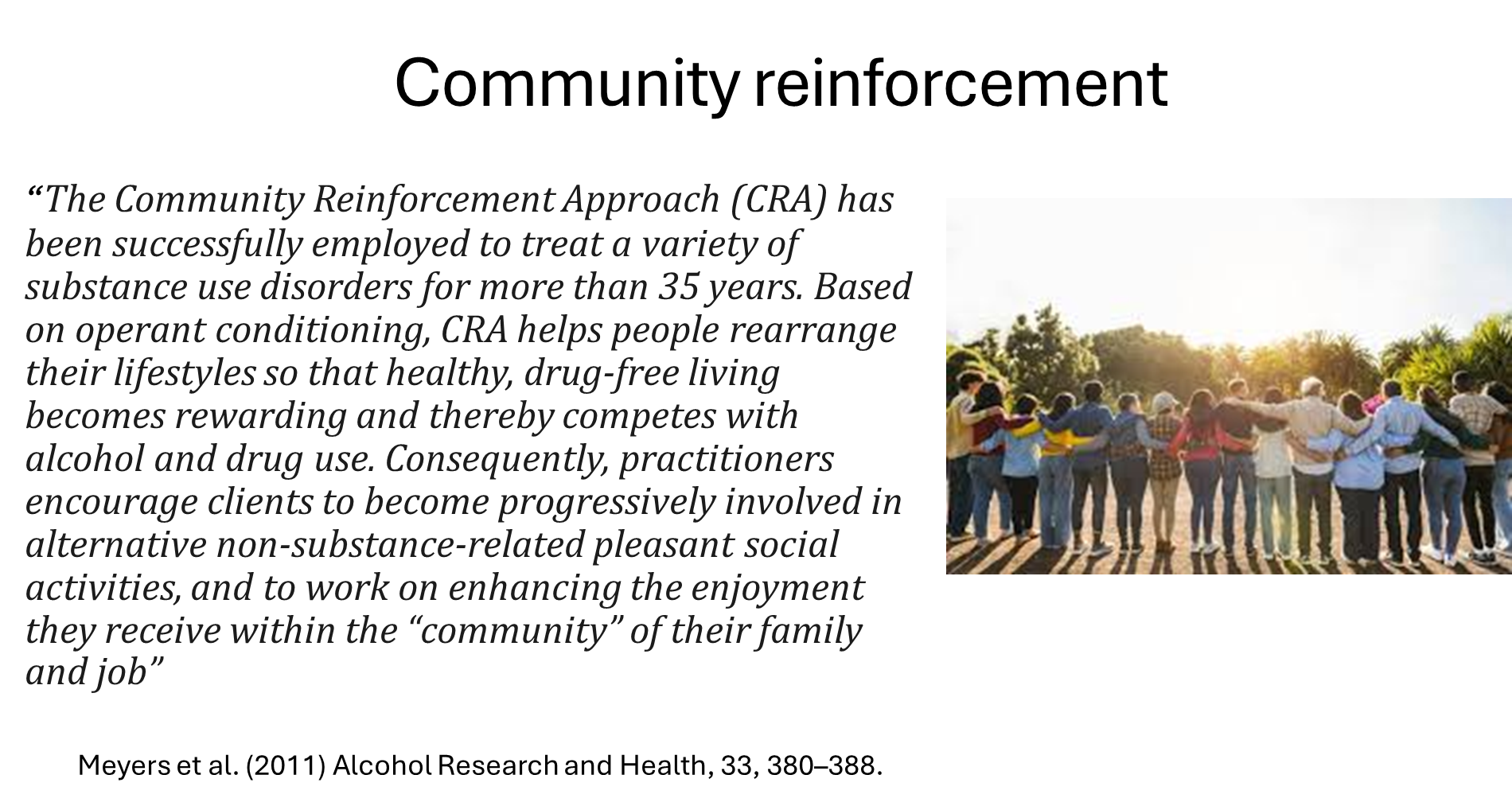
this thinks about the effect of person’s environment to restructure it to increase in the rewarding behaviour surrounding abstaining from drugs
difficult to do meaningfully because it requires a significant amount of restructuring
when done though it does make meaningful outcomes
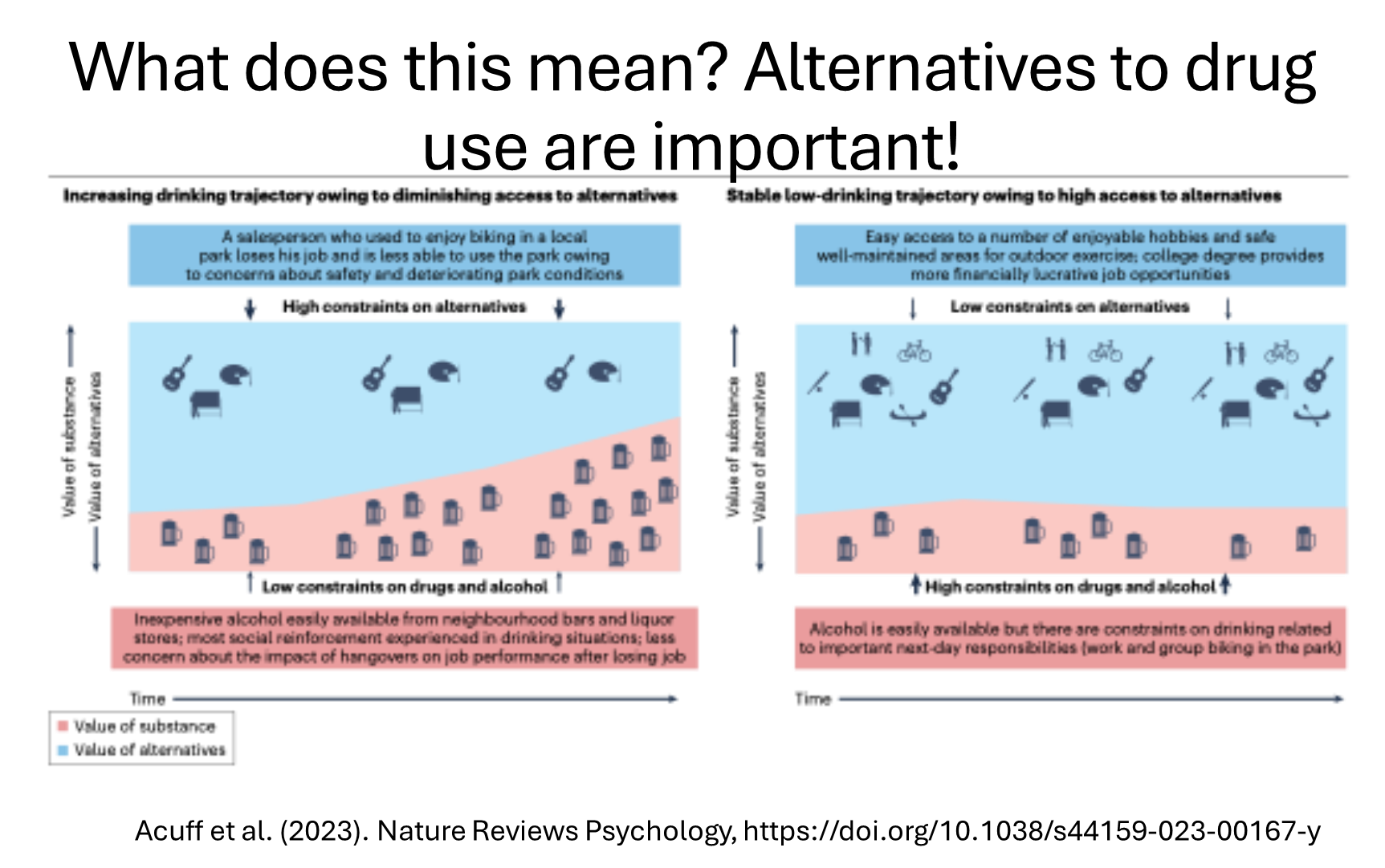
when we think about what causes addiction, we should look potentially beyond a person and their characteristics
living in a deprived environment with lower accessibility to alternatives makes alcohol or other substances seem more appealing
whereas someone in a different environment that makes constraints on drinking and substance use
this even includes jobs, parks, recreational activities
this is features of an environment that influence substance consumption
this is just a theory but one that could explain what we have seen
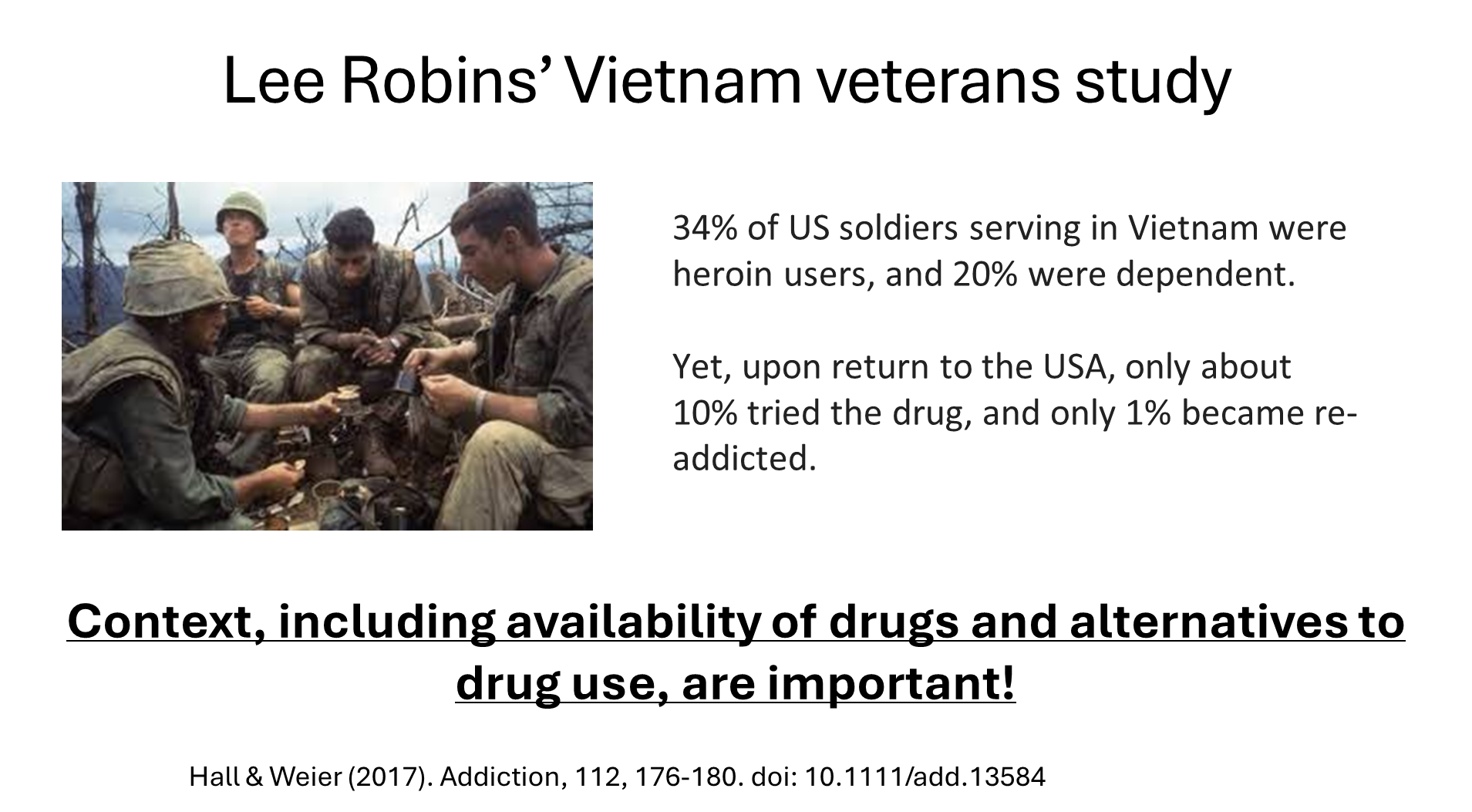
even returning to deprived communities in the US, with multiple reasons to become addicted to drugs and engage further in substance use, an overwhelming majority did not
despite potentially altering their brain chemistry by doing heroin for years
an erradication of addiction was seen in the sample
however, there are ambiguities here that argue it is an oversimplification to attribute it to their new environment

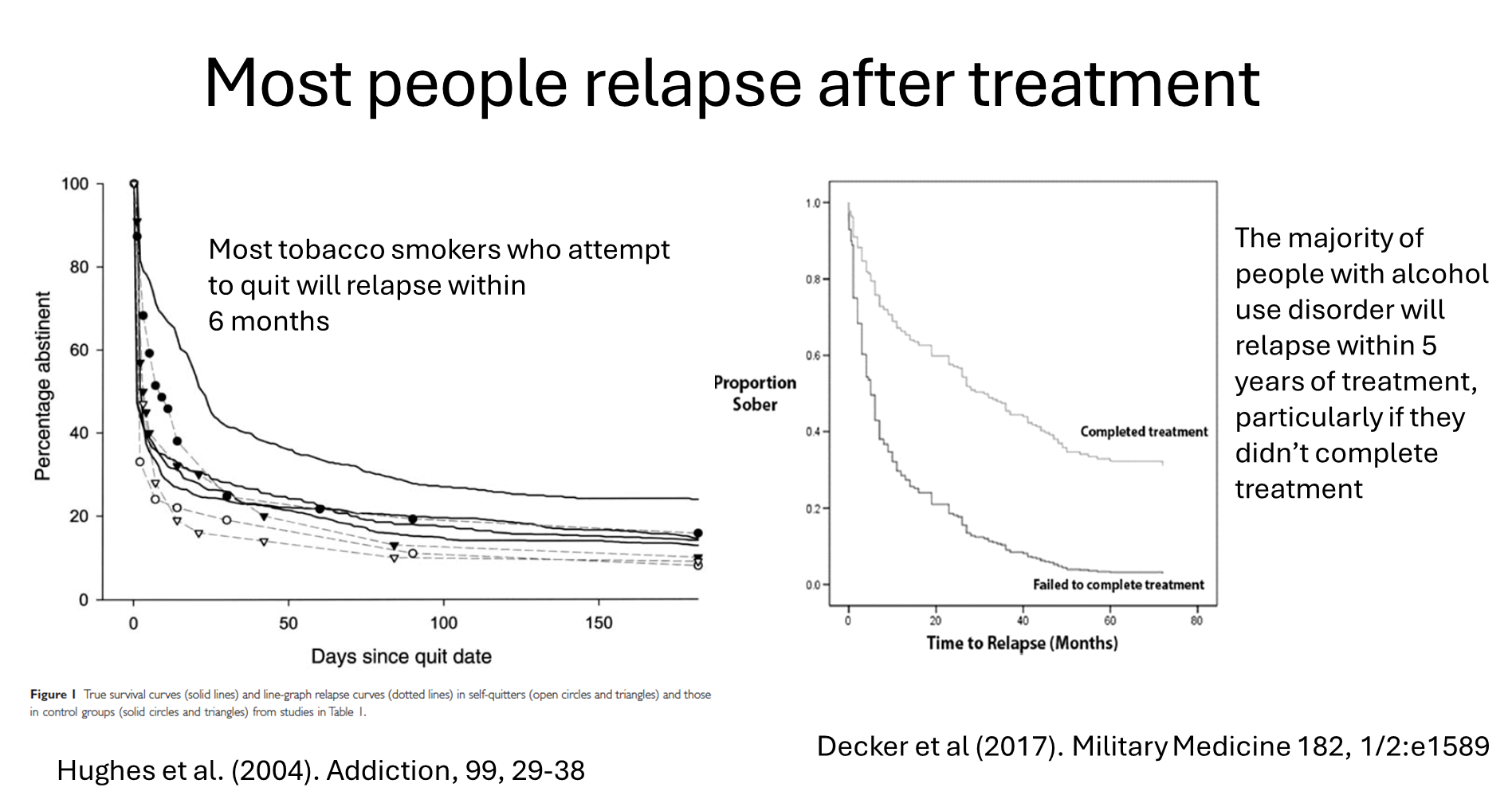
following people over 6 months, most people will relapse regardless of the treatment used
similar pattern seen in those with AUD
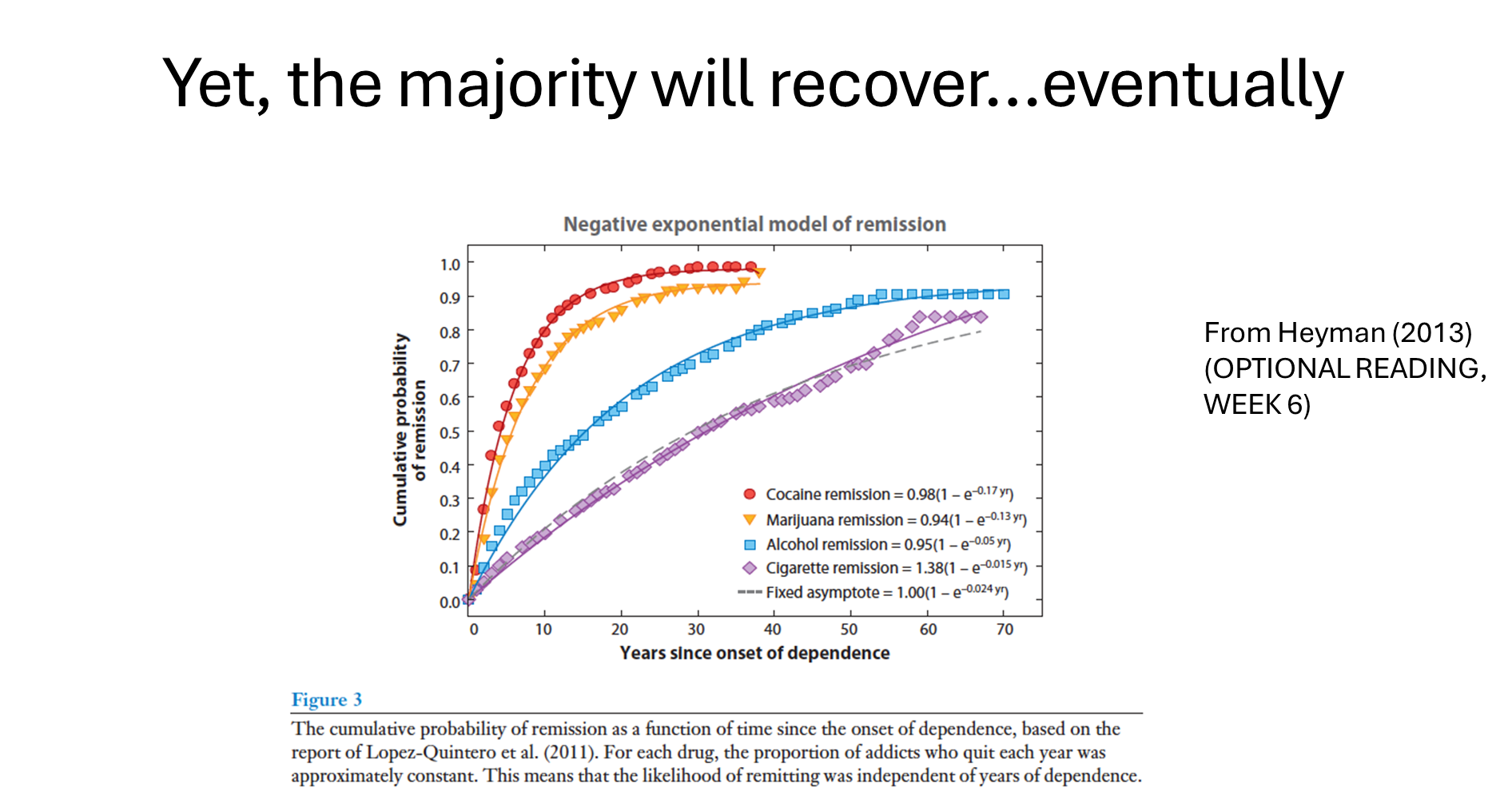
another way of looking at it is well what proportion of people achieve remission? and how long does this take?
this graph shows the probability of remission even looking at a drastically long time period, but eventually most people will achieve remission we might just have to look at a longer period of time
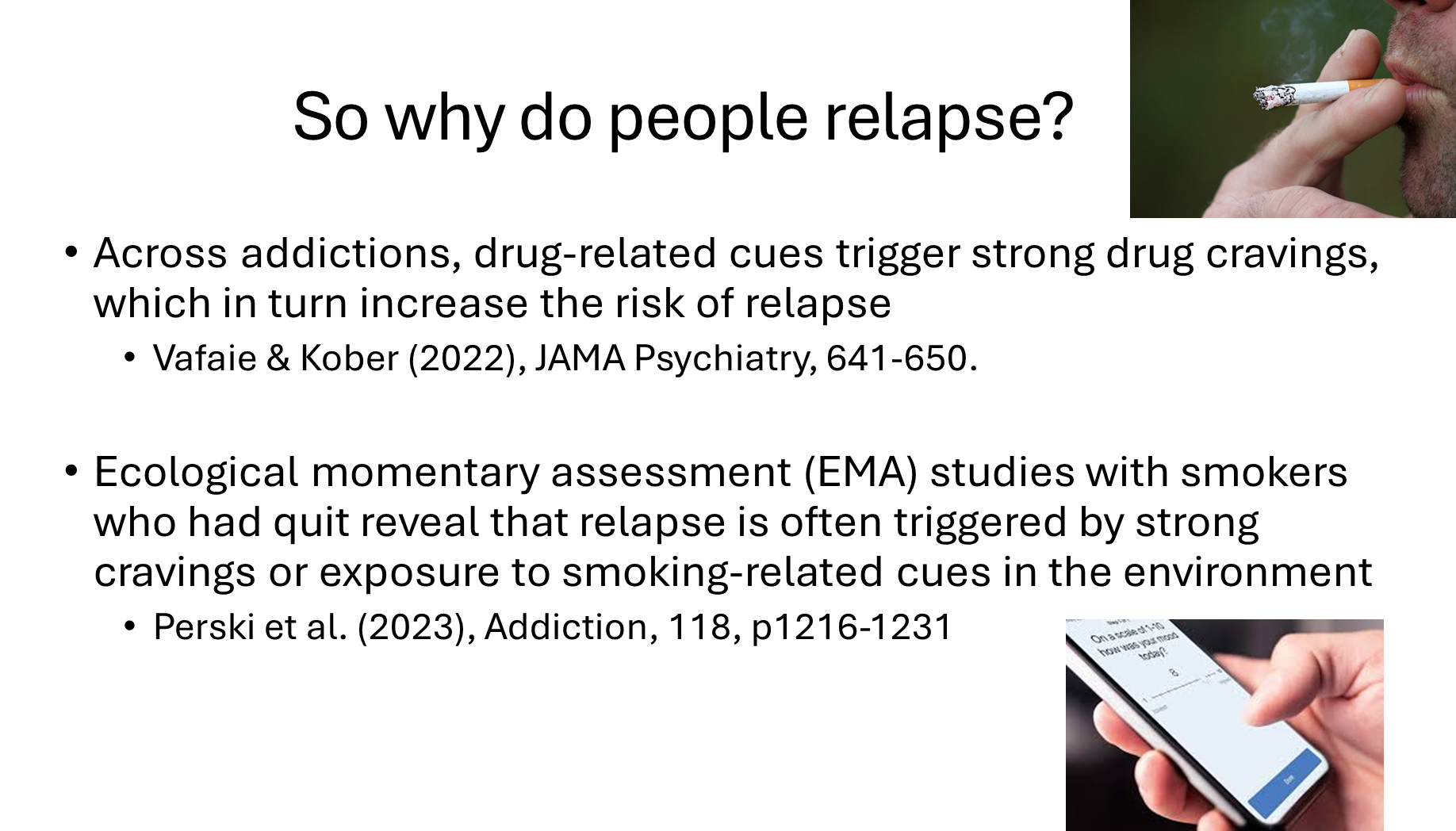
the influence of drug related cues, which risk the run of relapse like seeing or smelling a ciggy
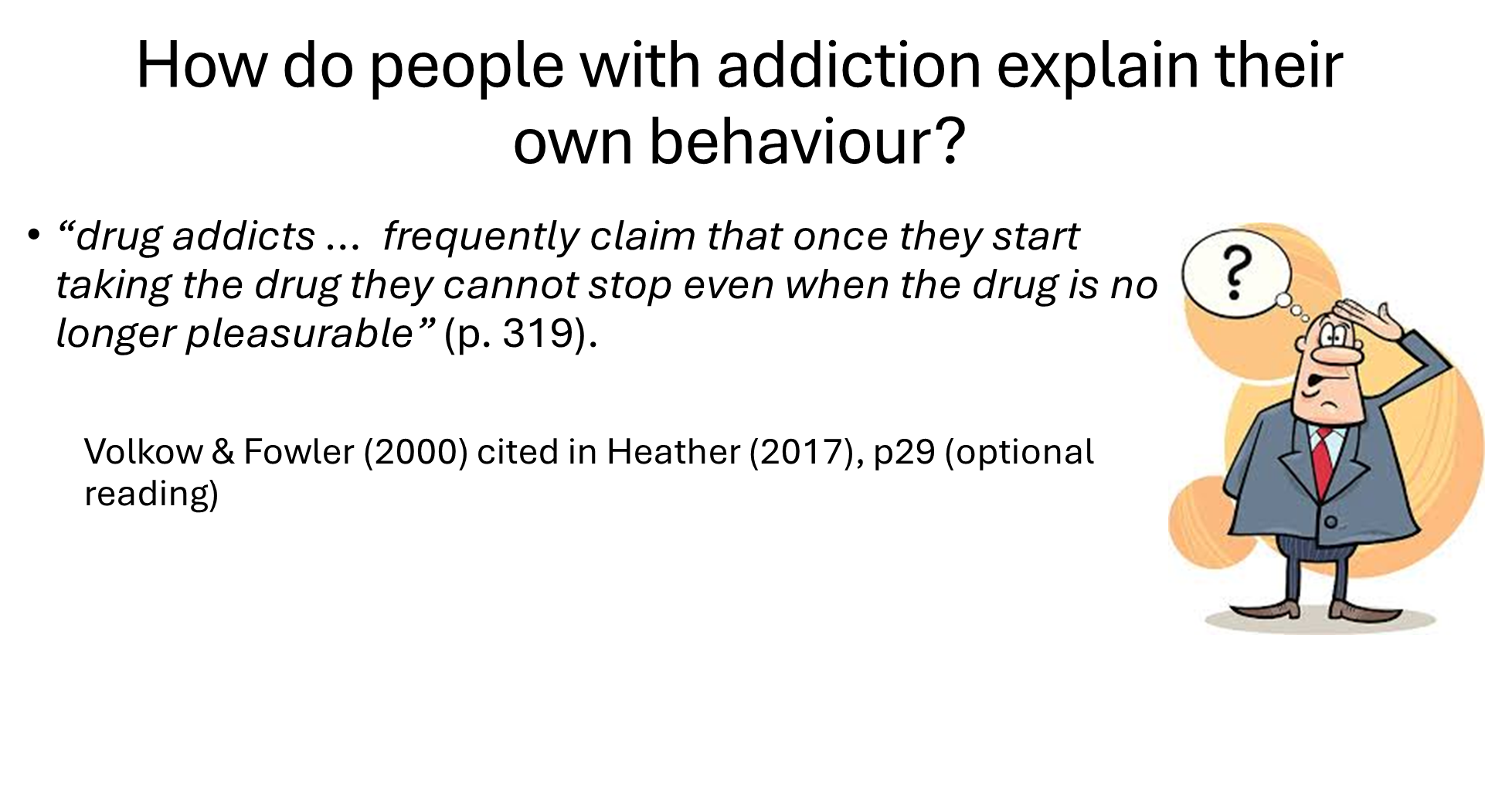
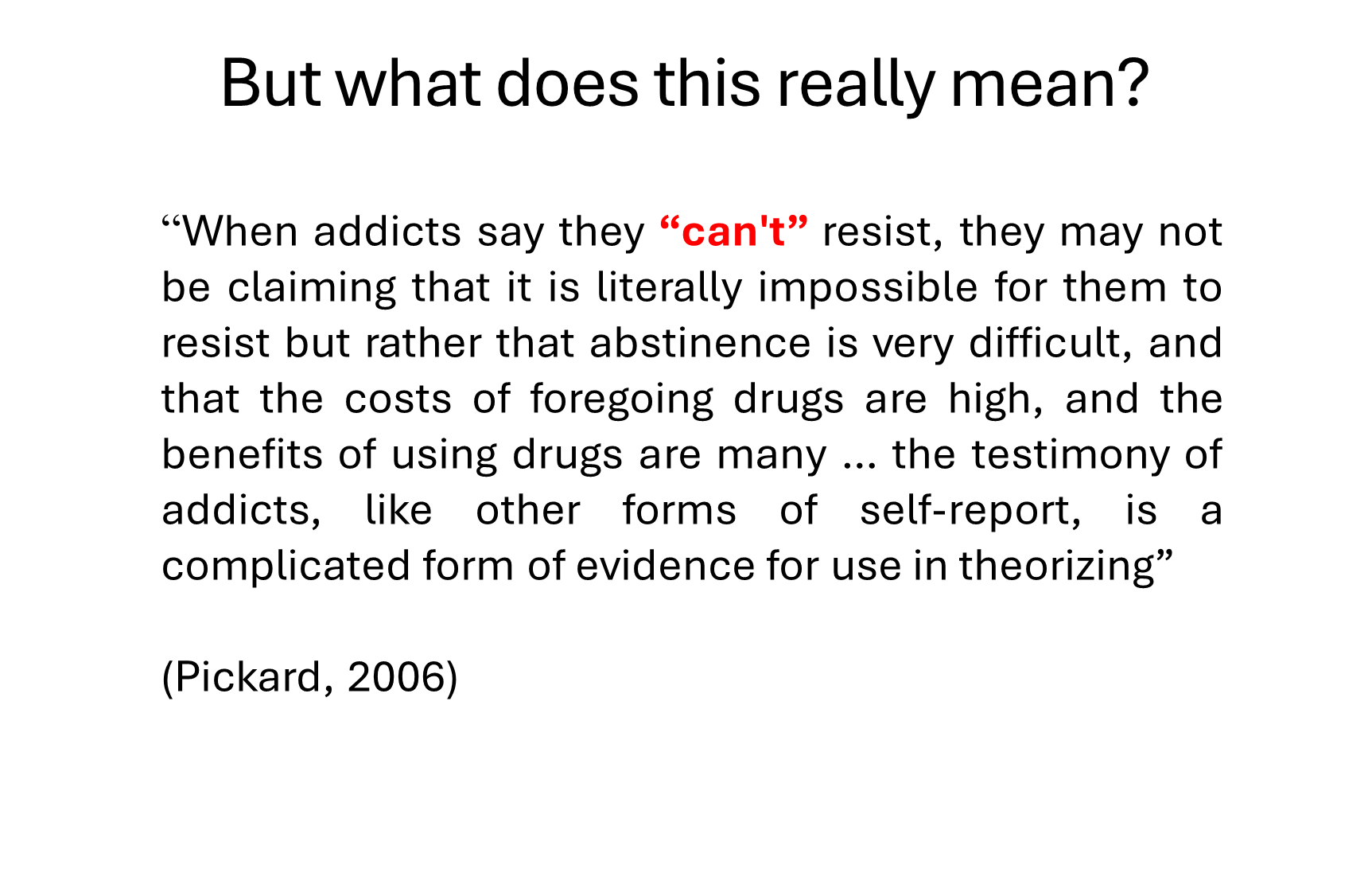
heather and pickard have said when people say they ‘can’t resist’ what does that actually mean?

If I ask you to go to a party and you say you ‘can’t come’ you don’t mean you actually can’t, you just have other things you’d prefer or you don’t want to come
heather argues this is what addicts are saying
so how should researcher interpret how people attribute their own behaviour
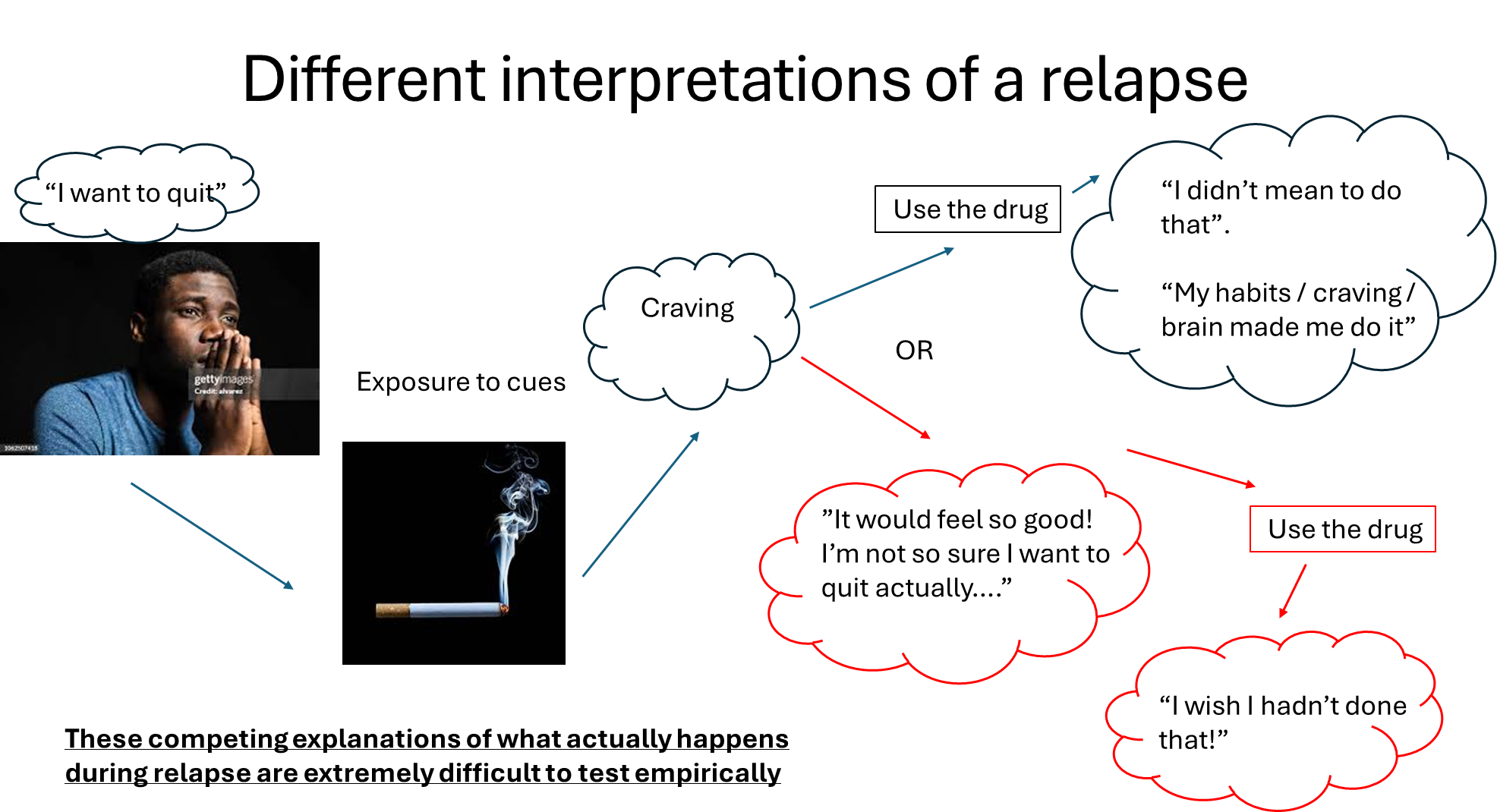
cues in environment triggering an action is typically labelled the cause in almost all models
but there is another explanation in red
to test this is to follow around a person in remission and continuously ask, but by doing so you may trigger a relapse
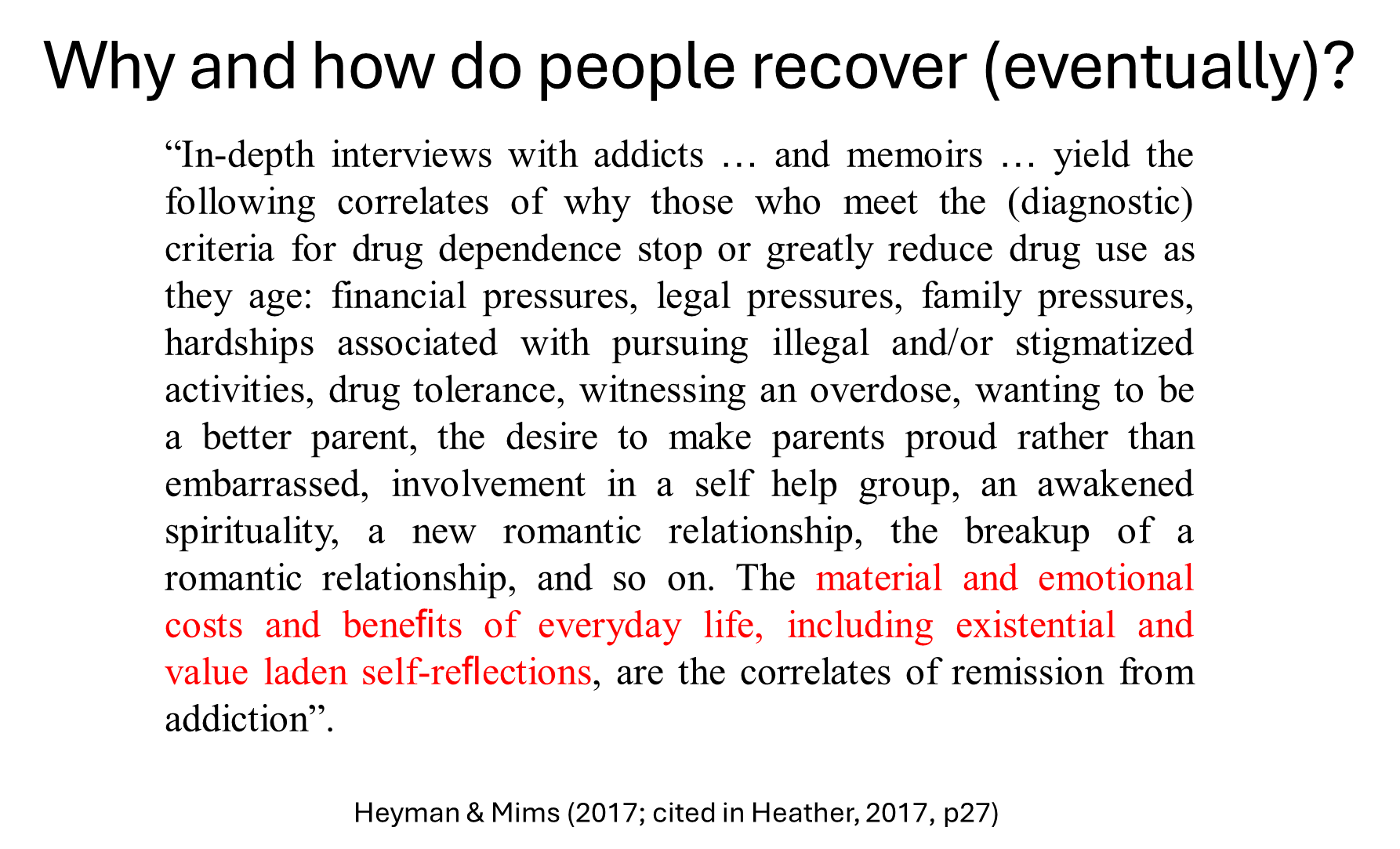
we can also ask people why they recovered not just relapsed
conclusion in red, what are people losing from drugs and what could they gain from stopping
this is what helps people to recover




could just mean there is an association




this does not mean they have a brain disease nor if it is irreversible as the model suggests
should medication development be the primary area of treatment?
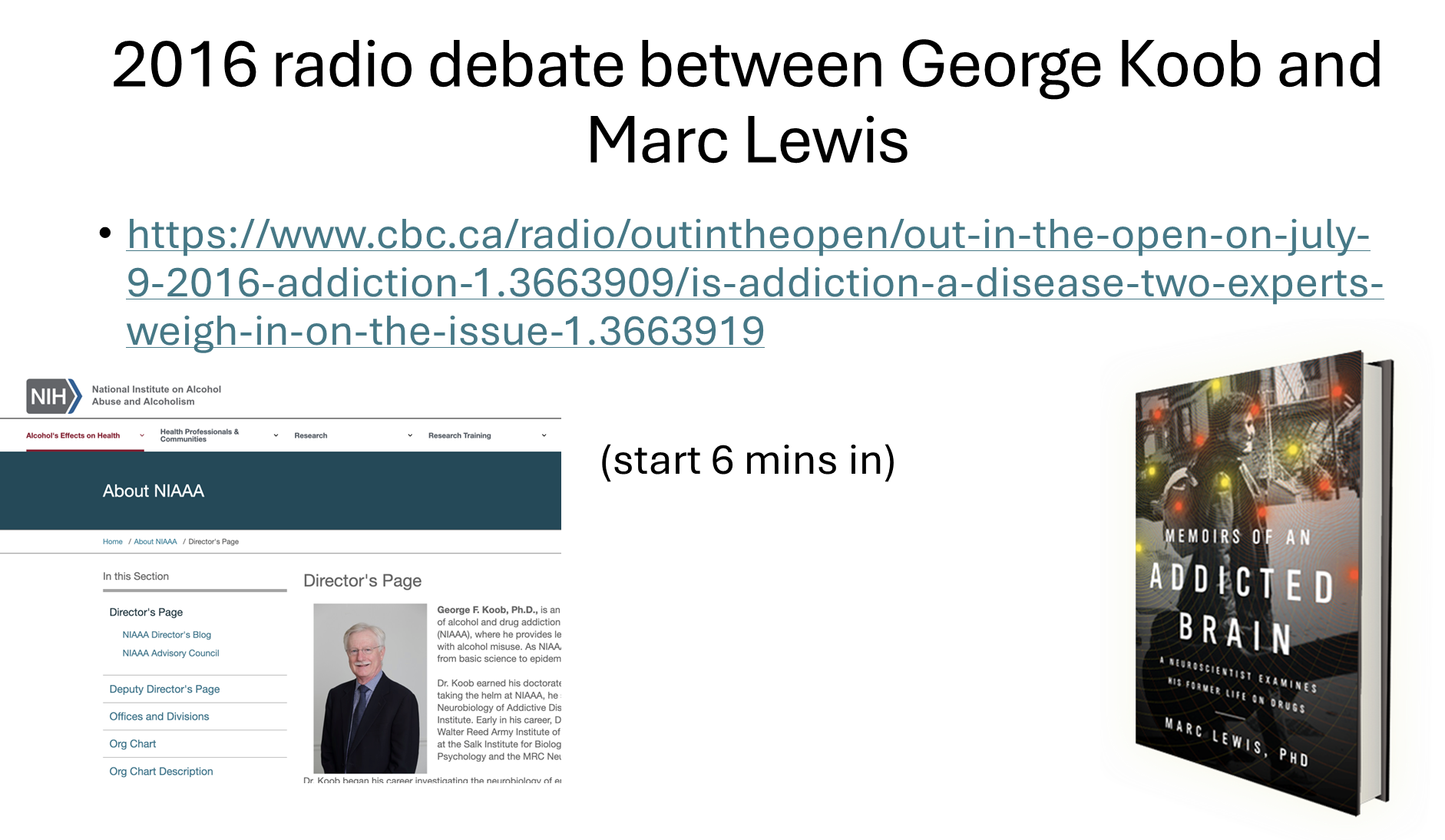
george koob is a big supporter of the brain disease model, marc lewis disagrees

marc Lewis’ credential is he is a neuroscientist, as well as having endured addiction himself
he argues it is habitual, but not a brain disease
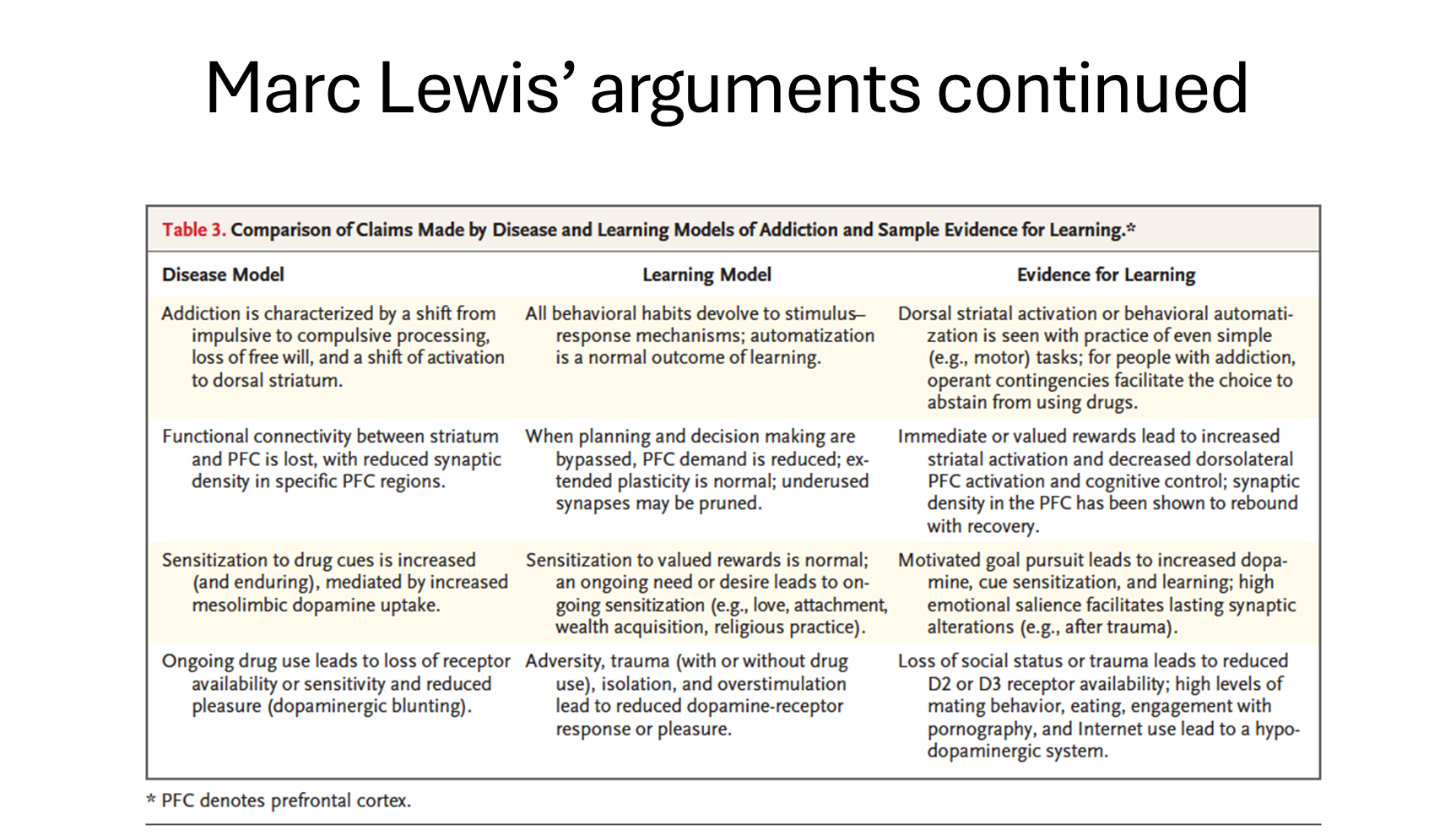
in his paper he compares and contrast these arguments and claims of the learning model of addiction
he compares different ways of understanding the evidence of the brain disease model
the third column summarises the evidence, which is more consistent with the idea that this is simply what the brain does
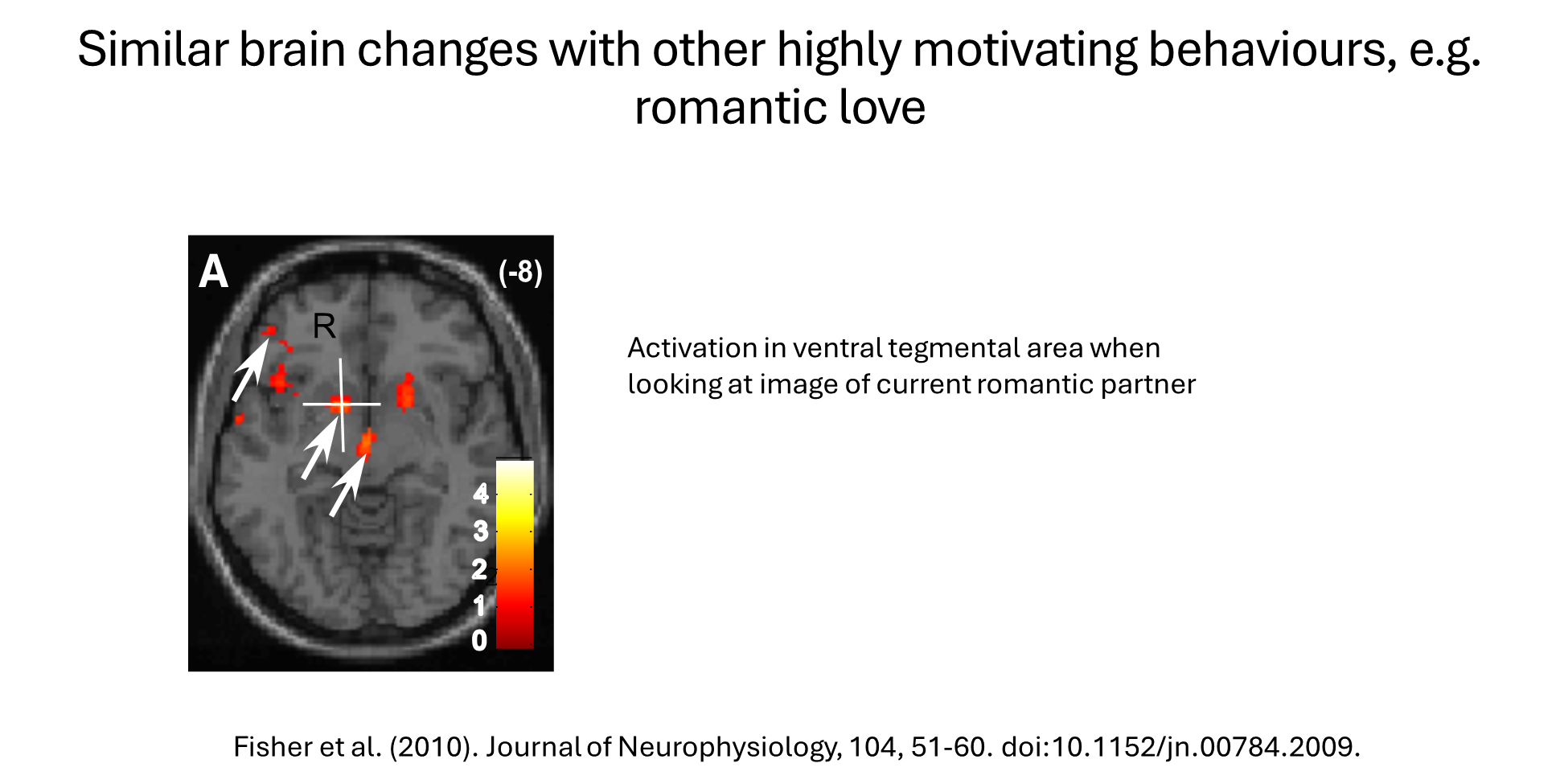
when you look at what happens in the brain of someone in addiction, similar patterns of brain activity are seen with people in love
maybe this is just how motivation works
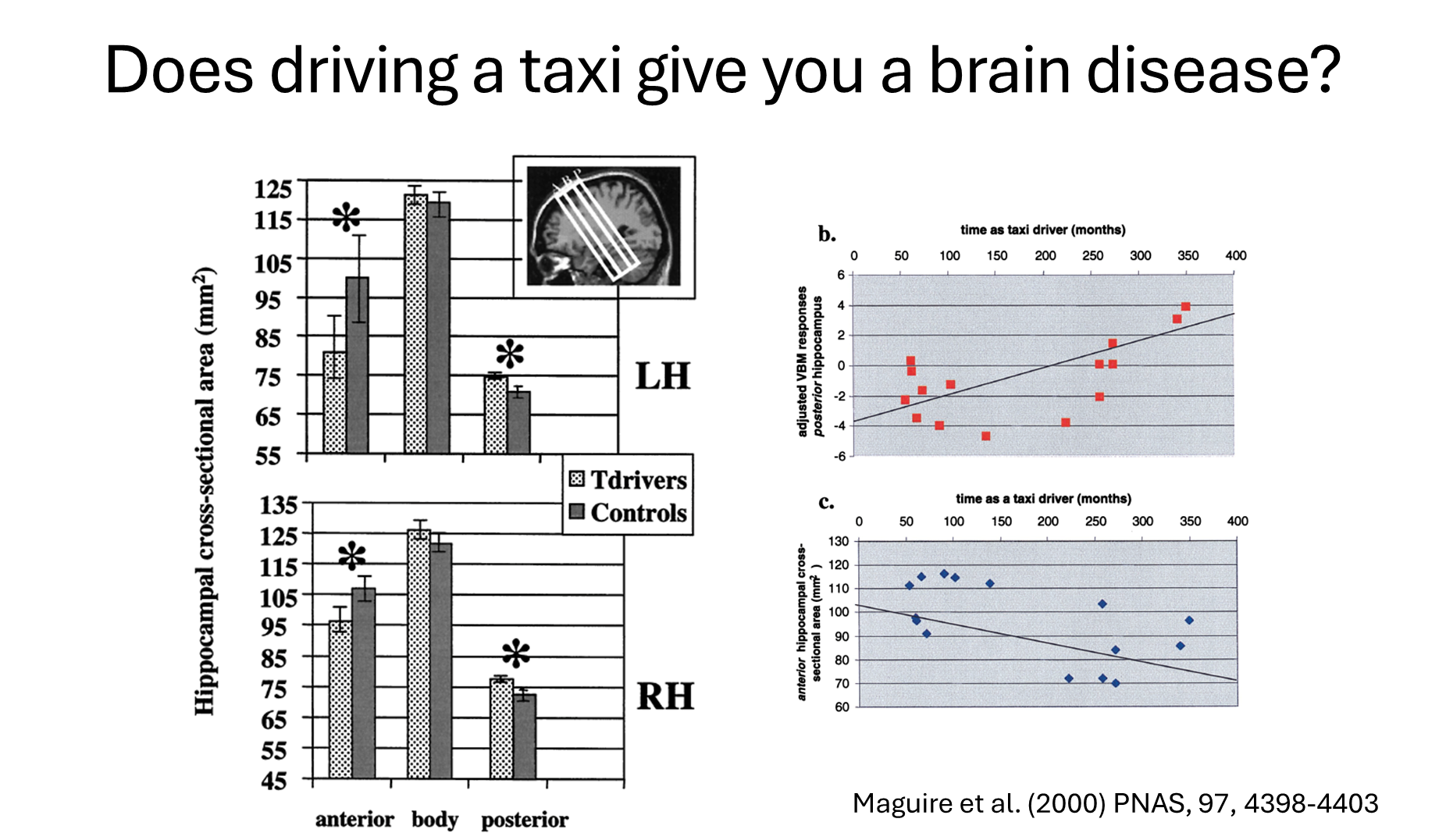
really old study, but looks at brain structure related to experience
taxi drivers with internal map had greater GMV
if you engage your spatial memory a lot, hippocampus is bigger than controls
looking at the correlations, the longer they have driven the more drastic the results
shows you convincingly, that these difference emerge as a change in experience, would this count as giving you a brain disease? because it has changed overtime?
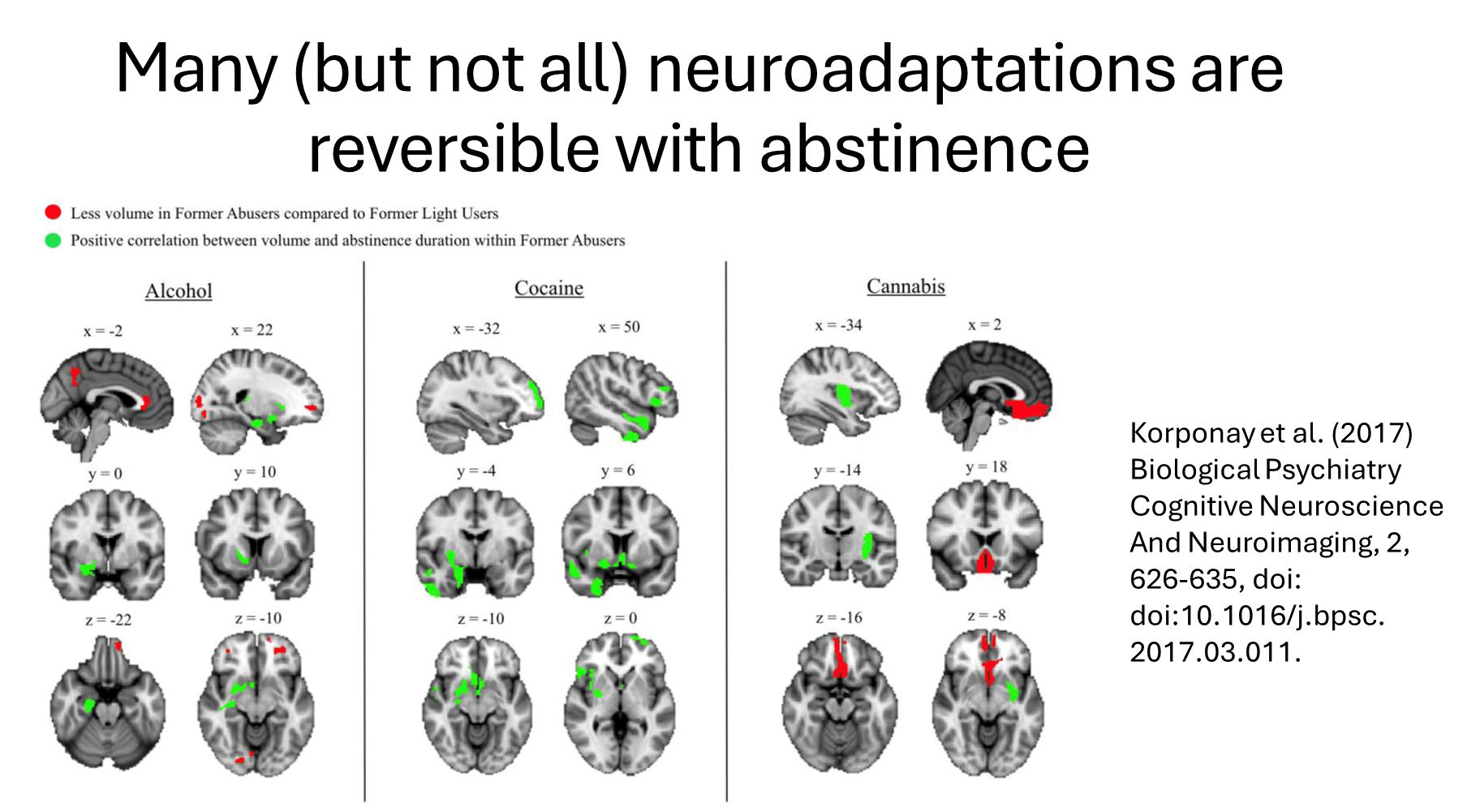
the area highlight in red are indicative of areas that perhaps do not recover following substance addiction
the longer people abstain the more some areas of their brain recover, this is the areas highlighted in green

we shouldn’t be looking at all changes in the brain, just specific ones
lets looks at the dopamine changes, THAT is not normal, that would not be a normal change
a lot of neuroadaptations do not recover
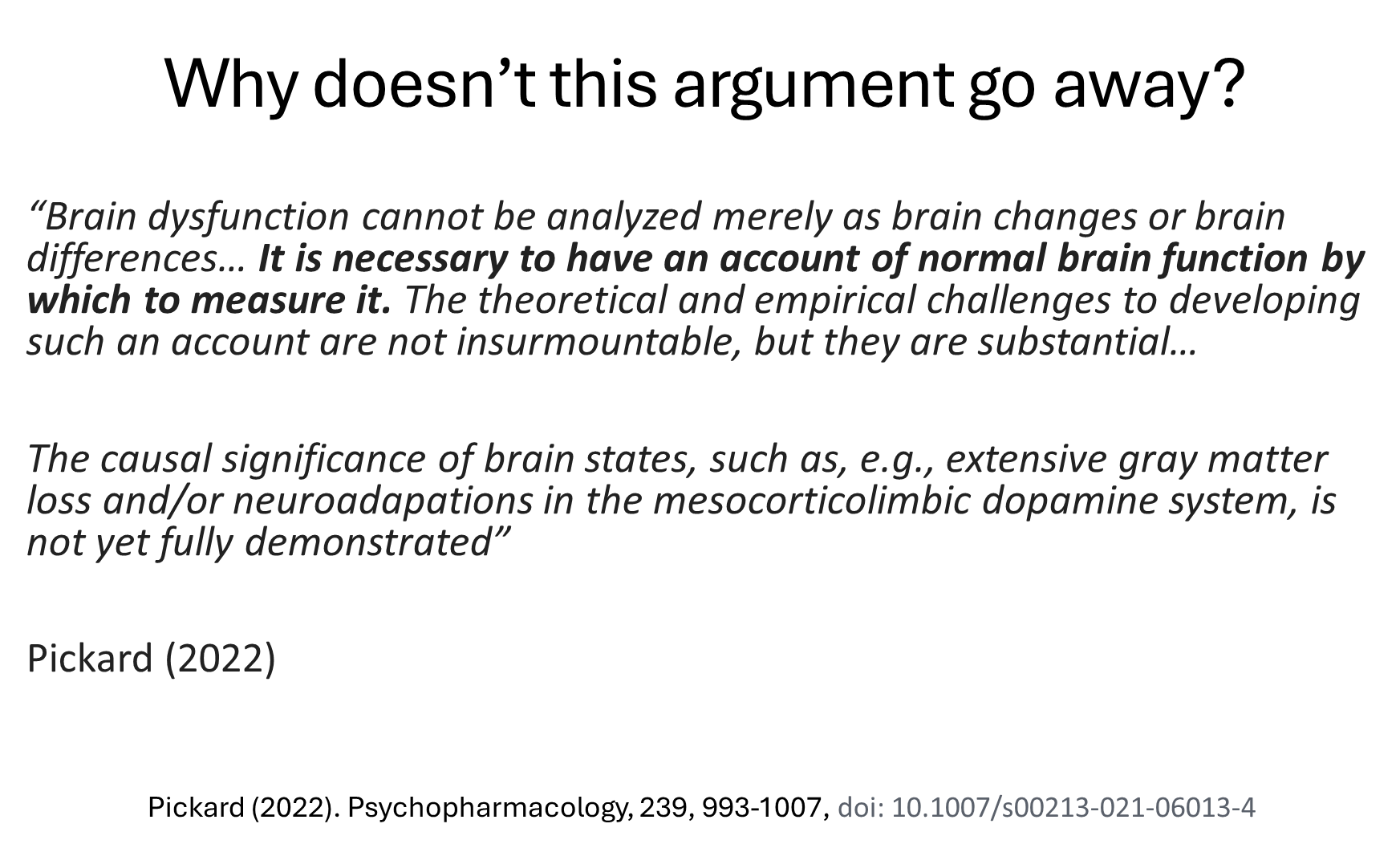
we don’t know what a healthy human brain completely looks like, we do not have this model
we need that to detail what a deviation from this looks like
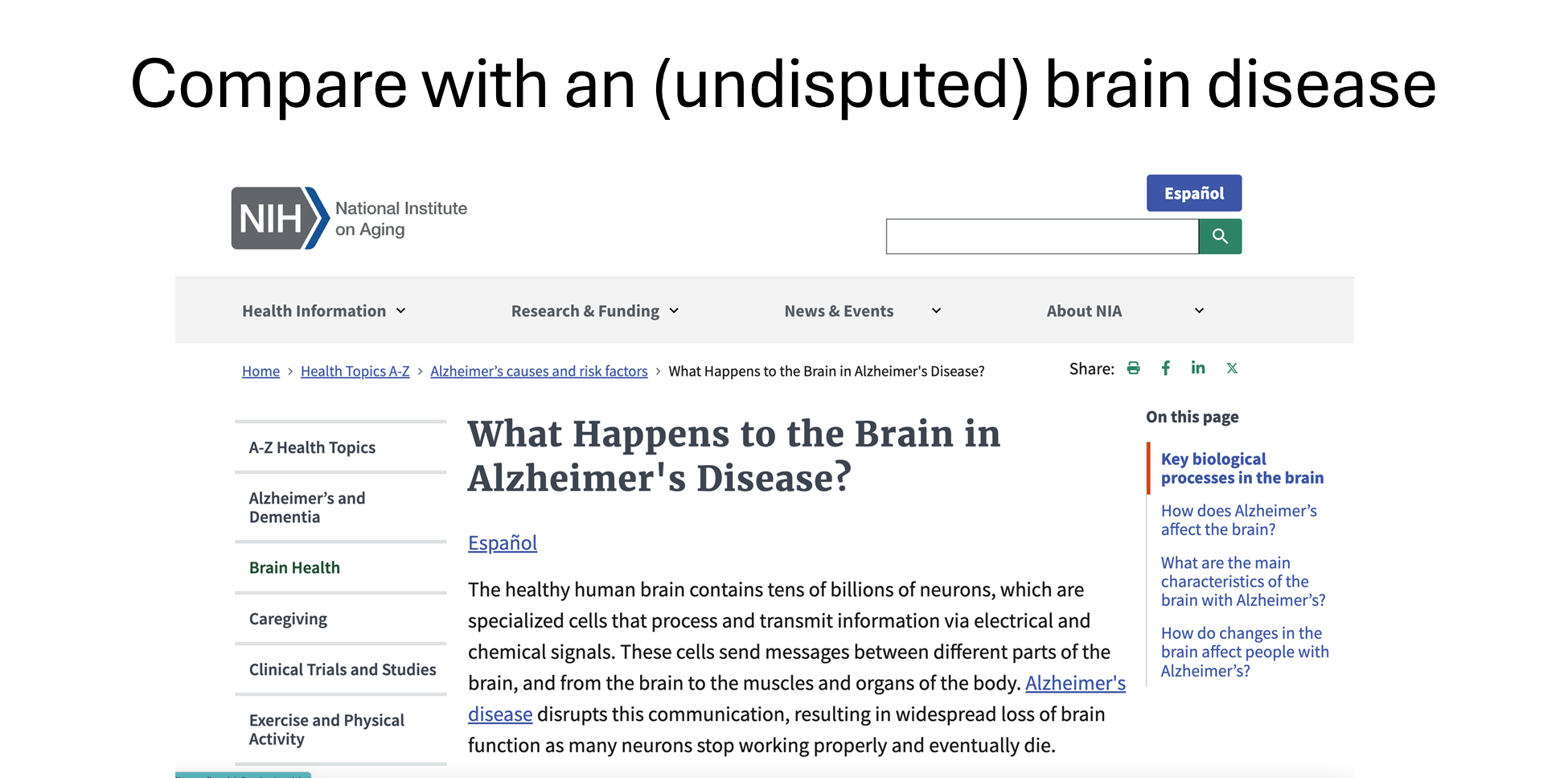
with AZ we can characterise what occurs structurally in the brain and it is fairly simple disturbance of a healthy brain
using this label ‘brain disease’ for disorders can be difficult because the biological mechanisms are well defined
so if the biological deficit DOES exist, it is too complex to be explained right now



animal research has offered great medications
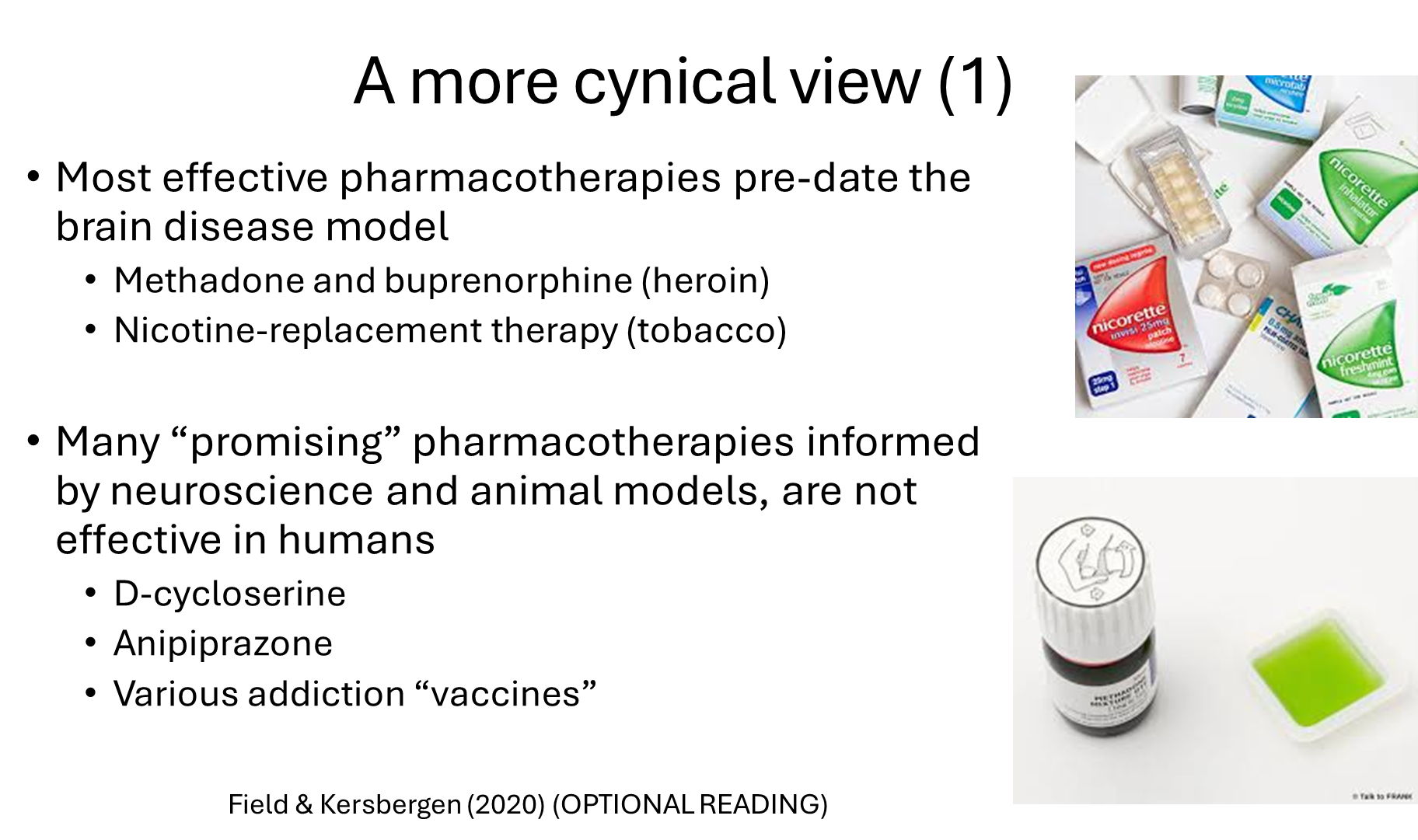
these drugs do not cure you of your addiction but help maintain a healthier addiction lifestyle
a lot of treatments fail at the clinical trial stage even though they have made it through animal testing and pharmacological stages
vaccines have been attempted in humans, as well as other developments, but do not work
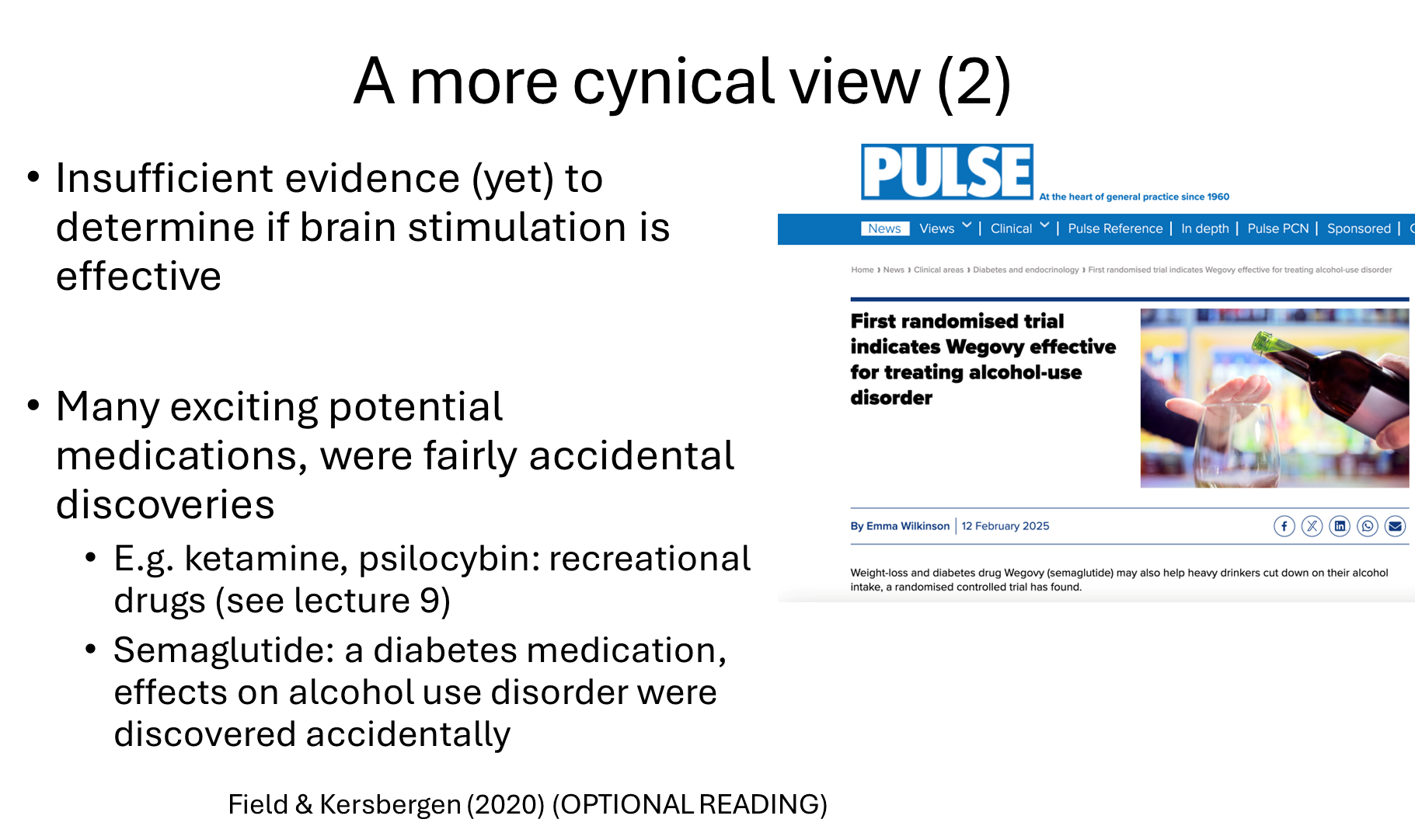
brain stimulation has some exciting papers on its development
semaglutide: they reduce drug use and could be a game changer for addiction
we studied them in other conditions and observed they were helpful for addiction
we did not use brain models or our own means to discover this
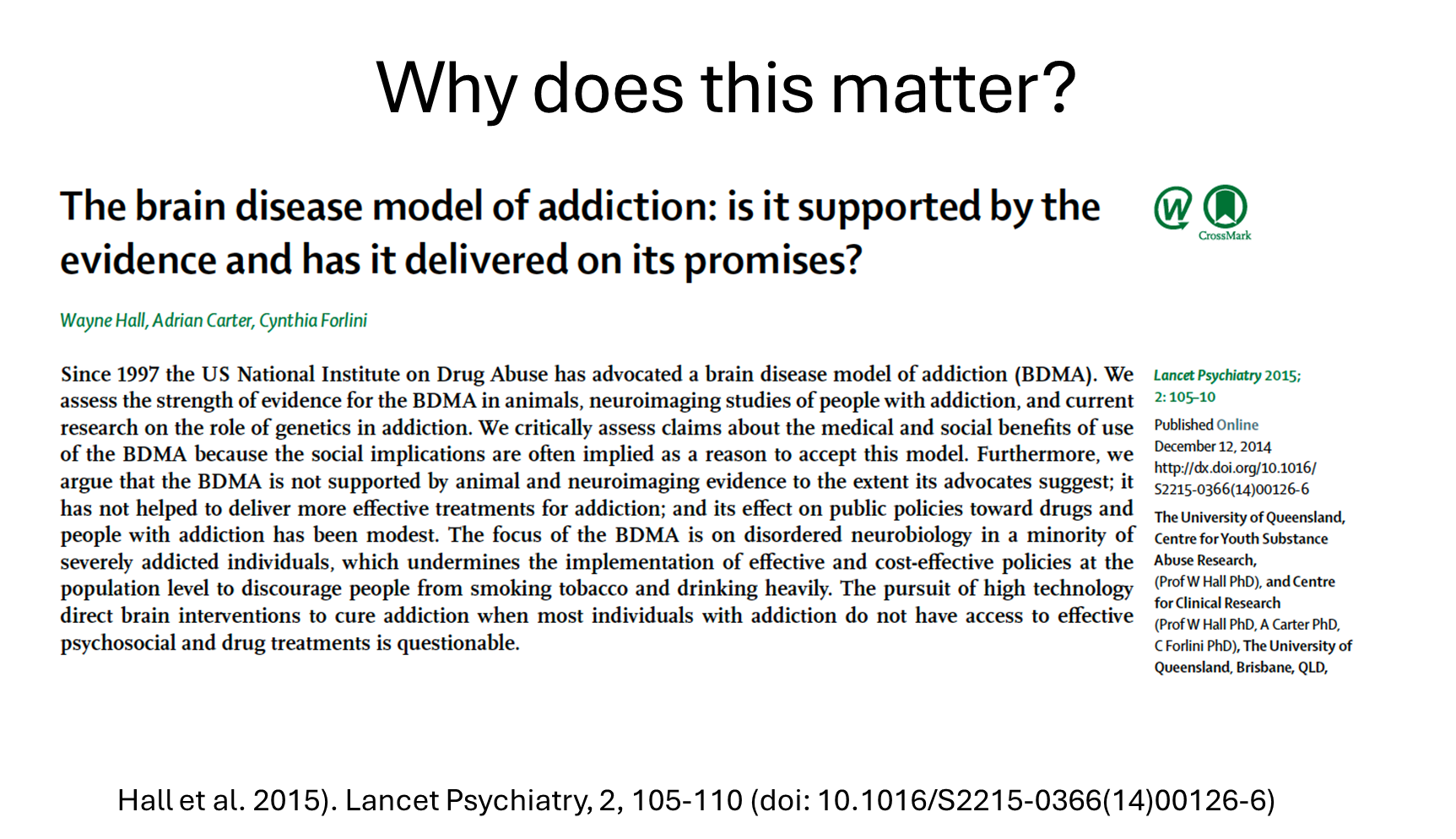
a lot are calling for a rethink about neuroscience research for addiction, which is in itself slightly reductionist
has this focus really delivered the results to justify its spending?
potentially the investment isn’t justified and is better used elsewhere

in the UK, it will be the wealthy that benefit
this focus will not benefit the most people. calling for a public health approach
the way to benefit the most people is broader approaches like broader smoking bans


if you tell them its their fault, then people feel responsible
people may feel more inclined to get help if they aren’t shamed and blamed for it

evidence is complicated
a broader view is that there are bio models for every disorder basically, the evidence has shown that when you tell someone they have a disease or disorder, they will feel blame but also less optimistic about recovery
stigma: reduce this may bring the opposite of what is intended, this applies to addiction as well
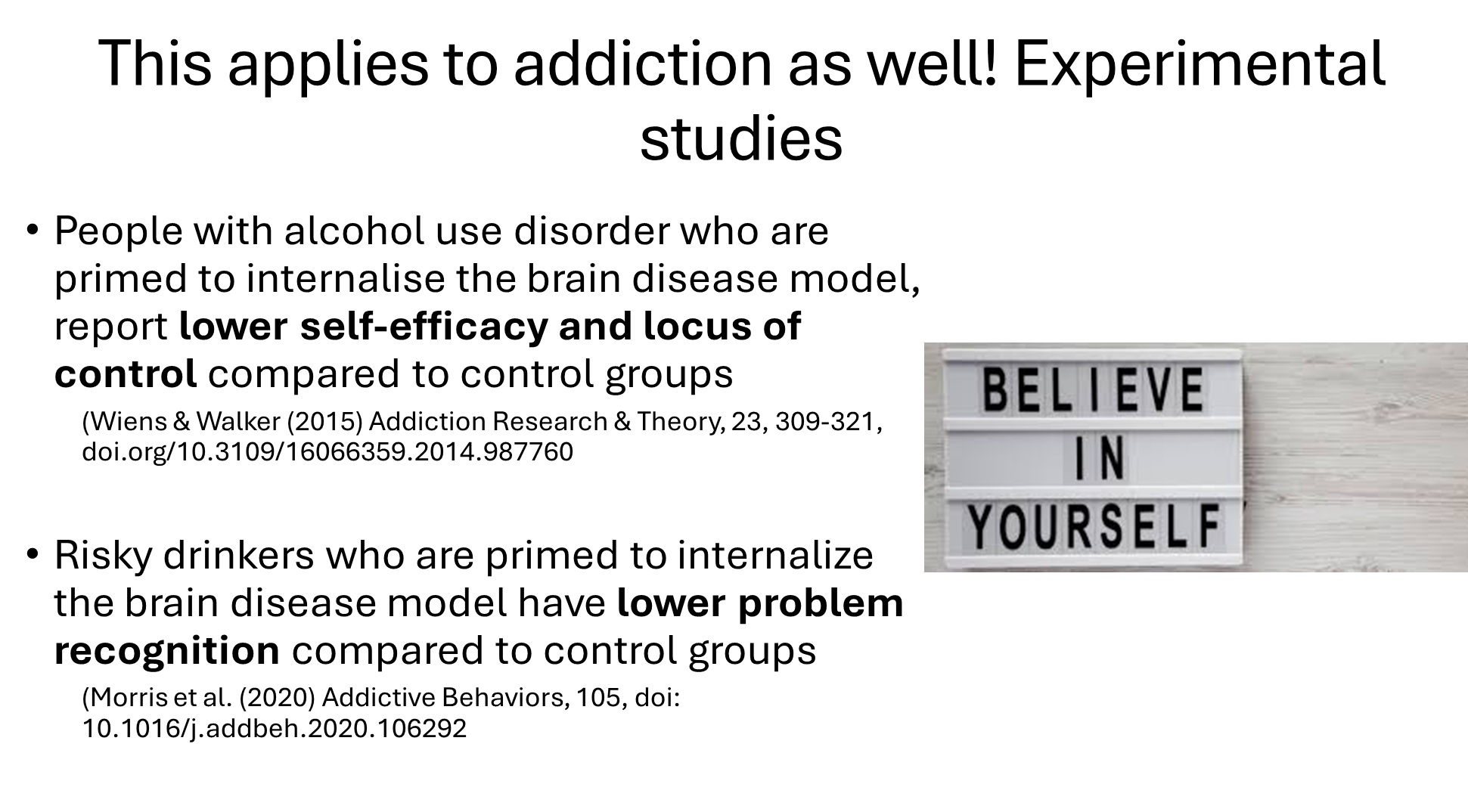
more recent work (morris) took a similar approach, giving different reasons for their behaviour, tell them its a behaviour issue they are more likely to recognise it is a problem

framing the blame in different ways
when framed as a brain disease, lower stigmatising blame but also lower prognostic optimist: people are less optimistic that they will get better
study using people with a heroin addiction

people who believed their drinking behaviour was a disease were more likely to return to drinking

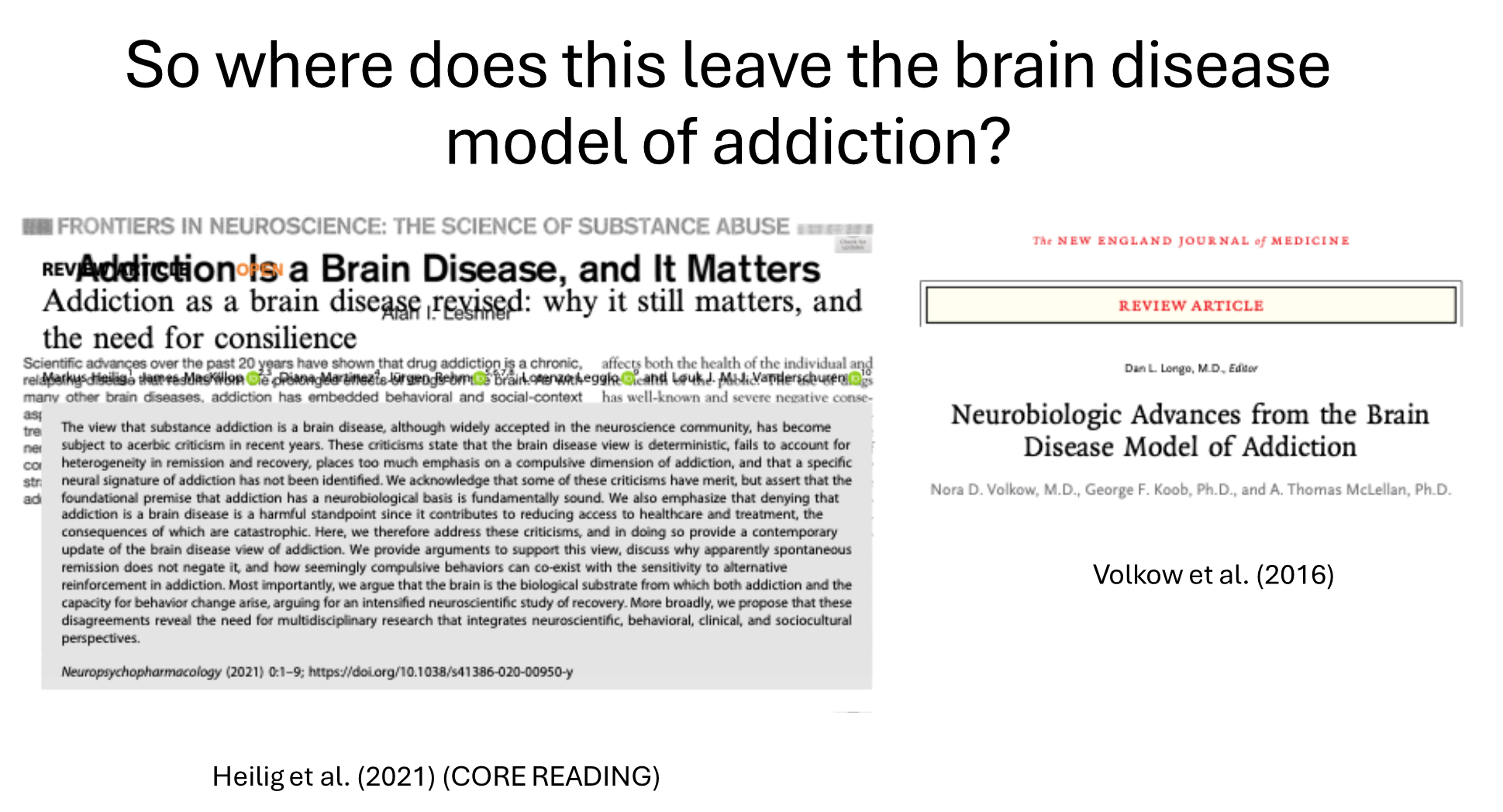
started with this paper in 1977, now has been reinforced in 2019

more of a balanced perspective
recognition that the brain adaptations are changing the likelihood of taking drugs but does not make it inevitable
recognises that people with addiction can control their behaviour but it is extremely challenging
second point: many counterpoints to this and ridi

quite a shift on how the disease model has been framed over the last few years
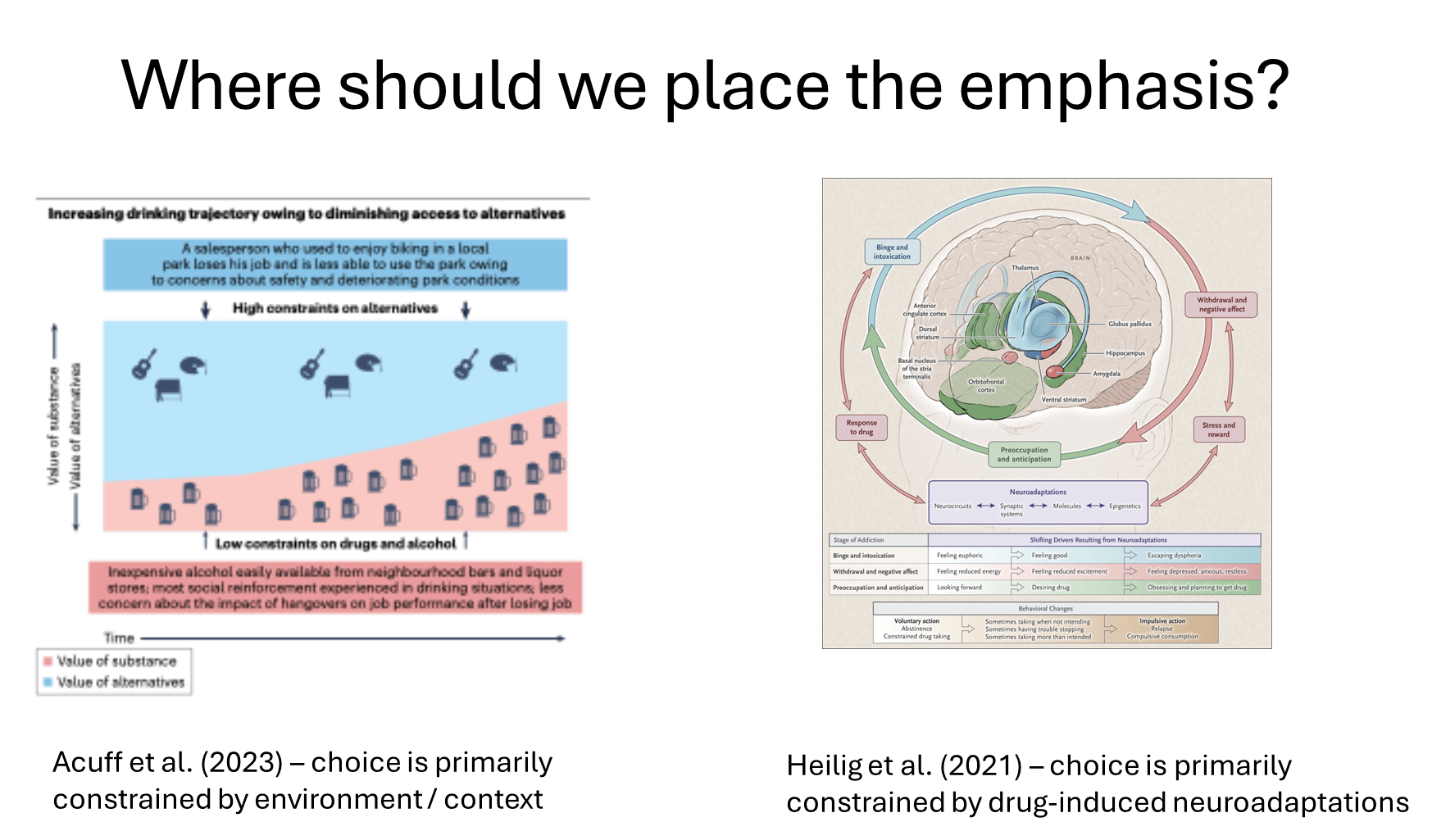
should we focus on the brain or the environment
there is not definitive answer