Human Nutrition
Biological Molecules
Biological molecules are the building blocks to make cells and other key structures to make living organisms.
You get them through eating.
They give you the ability to:
Make more cells
Grow
Provide energy
Keep you healthy
The most important of these three molecules you need are:
Carbohydrates
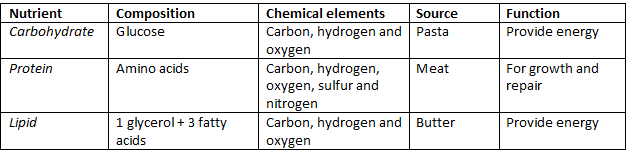
Composed of carbon, oxygen and hydrogen
Used by the body for respiration to release energy
We get it in the form of starch
Carbohydrates are stored as starch in plants
Carbohydrates are stored as glycogen in animals
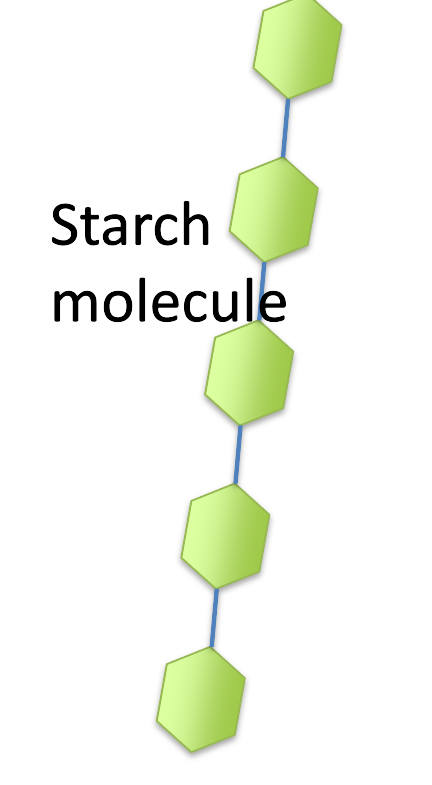
Starch is insoluble and can’t be absorbed by the body.
Enzymes are required to break them down.
Lipids
Composed of carbon, oxygen and hydrogen
Fats and oils
Used to make cell membranes, provide insulation, protect organs and as a secondary energy store
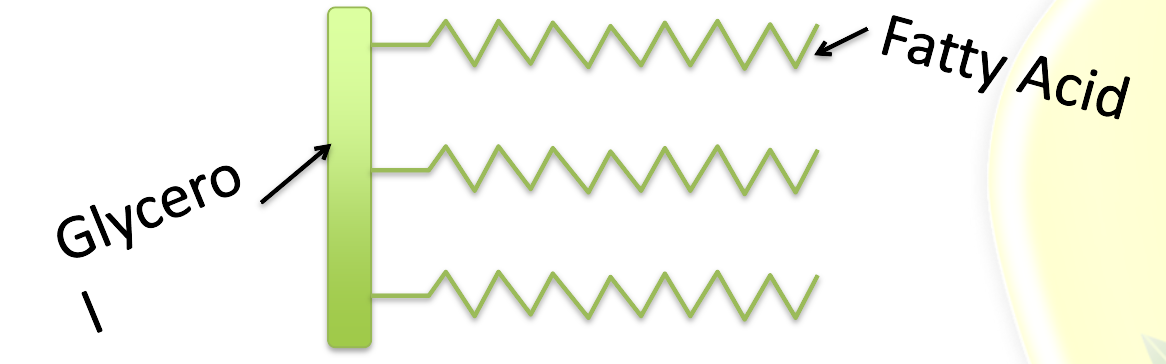
They are made of one glycerol and three fatty acids
Too much fat can lead to heart disease, especially saturated fats and cholesterol
Proteins
Composed of carbon, oxygen, hydrogen and nitrogen.
All cells contain protein
It is used for growth and repair of tissues
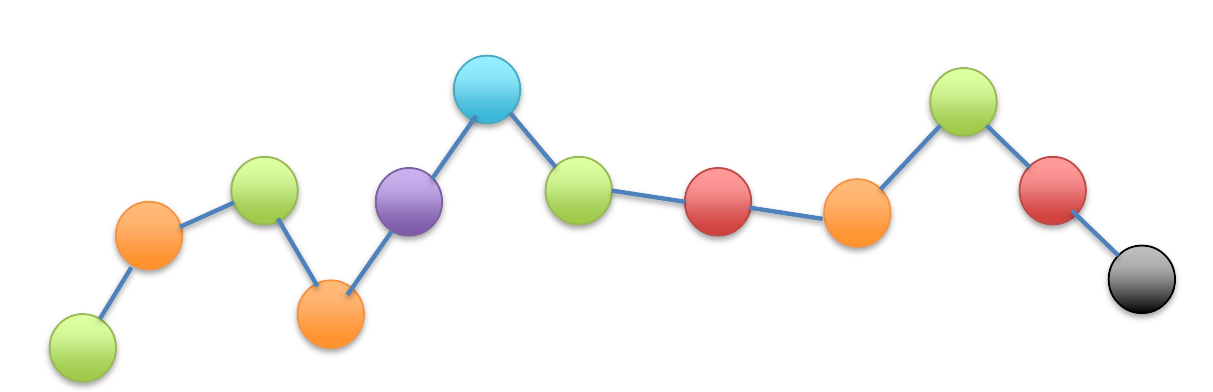
Proteins are made of amino acids.
Food tests
Starch
Place 5ml of sample in a test tube
Put 3 drops of iodine in the test tube
If there is a colour change of brown/orange to blue/black, iodine is preset
Repeat 3 times for more reliable results
Glucose
Place 5ml of sample in a boiling tube
Put 3 drops of Benedict’s solution in the boiling tube
Place boiling tube in a water bath for 5 minutes
Remove from the water bath then shake
If there is a colour change of blue to brick red, glucose is preset
Repeat 3 times for more reliable results
Protein
Take 5ml of sample and place in a boiling tube.
Add 3 drops of biuret, then shake.
If there is a colour change of blue to lilac, protein is present
Lipids
Take 5ml of sample and place it in a boiling tube
Place 5ml of ethanol and 5ml of water in the boiling tube then shake
If there is a colour change of transparent to cloudy lipids are present
Balanced Diet
Balanced Diet - All the essential nutrients in correct amounts
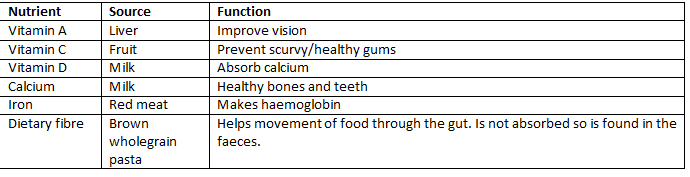 A lack of iron causes anaemia. Symptoms are tiredness and shortness of breath due to a lack of haemoglobin
Enzymes
 Enzymes have an optimum temperature and pH. If they are overheated (past 55C) they become denatured. Their active site is irreversibly changed.
Salivary Amylase is produced in the salivary glands
Protease is produced in the pancreas
Pepsin is produced in the stomach
Lipase is produced in the pancreas
Digestion
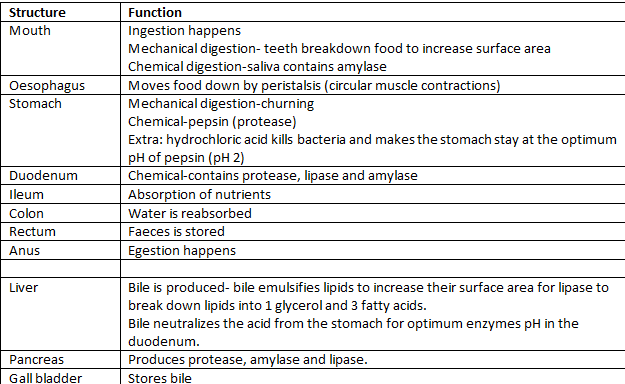 Four processes:
Ingestion
Digestion
Absorption
Egestion
Villi
Soluble food molecules ( 1g3fa ) diffuse into the bloodstream in the villi.
Adaptations:
Large surface area to volume ratio for increased absorption
Villi are one cell thick so they have a short diffusion distance
Villi have a good blood supply which creates a large concentration gradient