Neural Signalling
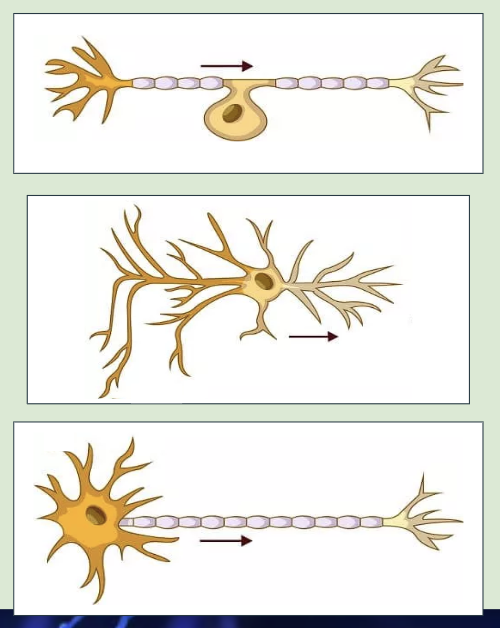
neurons - specialized cells carrying electrical impulses
sensory neurons - transmit nerve impulses from sense receptors → central nervous system (CNS)
interneurons - transmit nerve impulses btwn neurons
located in CNS
motor neurons - transmit nerve impulses from CNS → effector
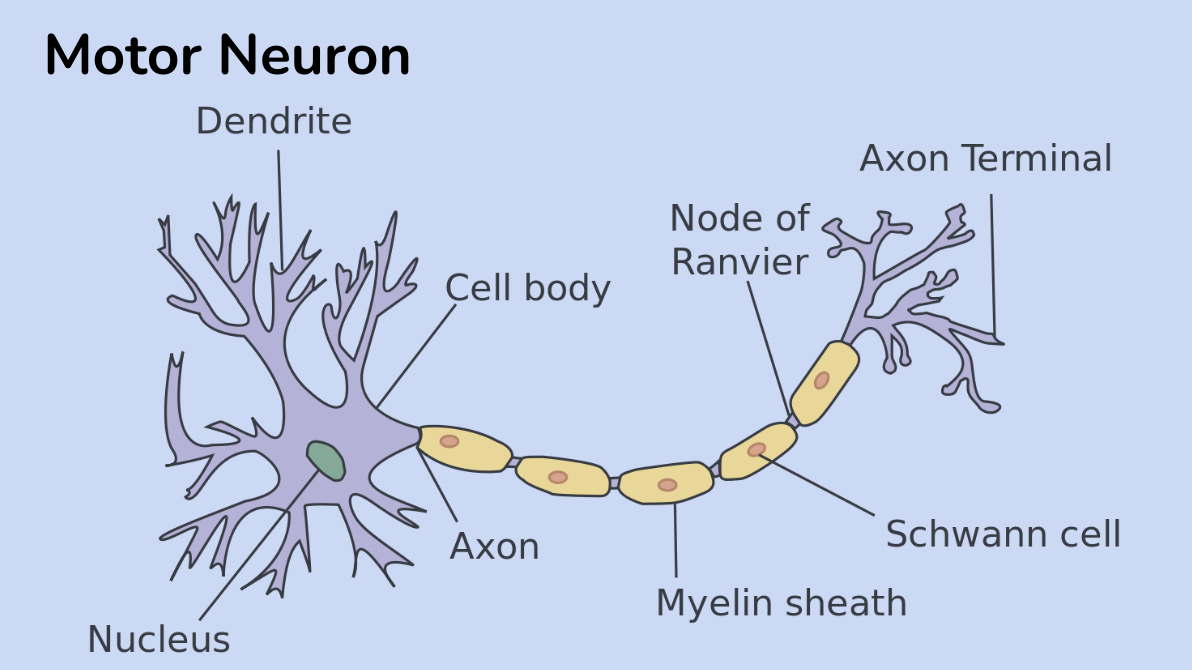
Structures in motor neurons
dendrites - short nerve fibers
receive info from neurons via neurotransmitters
cell body (soma) - cell nucleus + cytoplasm
take info from dendrites + determines at axon hillock if action potential fires
axon
action potential moves along axon → axon terminals
covered in Schwann cell extensions (myelin)
Schwann Cells
produce myelin for motor neurons
maintain strength of action potential
axon terminals
where neurotransmitters are released
released as a result of action potential
node of ranvier
allow saltatory conduction
electrical signal jumps from one node to next
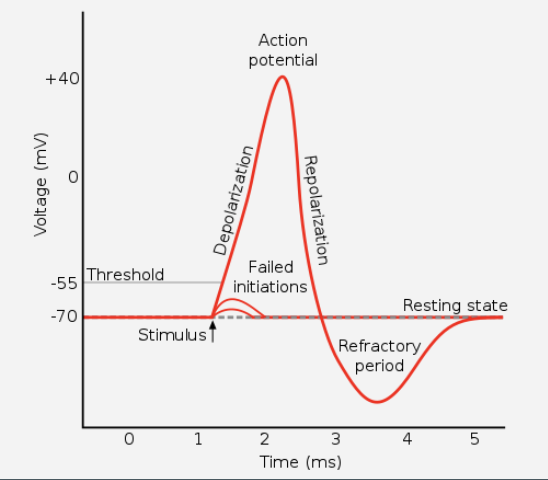
Resting potential - electrical potential difference (voltage) of cytoplasm of a neuron relative to surroundings at rest
for neurons = -70 mV
negative bc of distribution of ions inside/outside plasma membrane
inside of neuron = high concentration of organic negative neurons
Sodium potassium pump uses ATP to maintain resting potential of a neuron (active transport)
pumps OUT 3 Na (sodium)
pumps IN 2 K (potassium)
against concentration gradient
example of exchange transporter
sodium and potassium transported in opposite directions
Action of sodium potassium pump
3 NA attach to sodium ion binding sites → ATP attaches to pump and hydrolyzes → phosphate remains on protein pump → ADP released → phosphate makes pump change shape → sodium moves across axon membrane → sodium released OUT of cell
2 K attach to potassium ion binding sites → phosphate released from pump → pump returns to original shape → potassium moved INTO cell
Nerve impulses - action potentials propagated along nerve fibers
action potential involves flow of sodium + potassium ions
electrical
involves flow of ions along nerve fibers (ex axons)
Action potential - change of electrical potential difference (voltage) as nerve impulse moves across nerve fiber
involve depolarizaiton/repolarization of nerve fiber along axon
Depolarization - increase of potential difference across membrane of a cell
neuron at -70 mV gets stimulus → reaches threshold potential (-55mV) → voltage gated sodium channels open → sodium diffuses into nerve fiber → potential difference (voltage) increases to +30 mV
Repolarization - restoration of potential difference to resting potential across membrane of a cell
potential difference reaches +30 mV → voltage gated sodium channels close → voltage gated potassium channels open → potassium moves out of cell → potential difference decreases below resting potential (-70 mV) (hyperpolarization)
sodium potassium pump restores resting potential by pumping sodium out of cell + potassium into cell
Threshold potential - minimum potential difference required across a membrane to initiate an action potential
voltage gated sodium channels open at -55 mV → sodium ions enter nerve fiber
Depolarization → influx of sodium ions into nerve fiber
sodium enters nerve fiber → spread out via diffusion → create local currents
movement of sodium ions in local channels in axon → decreases potential difference to threshold potential → action potential propagated along nerve fiber
Oscilloscopes - used to measure changes in potential difference of axons during action potential
animal size increases → speed of nerve impulses decreases
negative correlation example
Large animals have adaptations to increase speed of nerve impulses
wide axon diameter
diameter increases → speed of nerve impulse increases
positive correlation
squid have diameter of 1 mm → speed of nerve impulses 35 ms^-1
myelination of axons
speed of small, unmyelinated axons as low as 0.5 ms^-1
myelin - multilayer of phospholipids + proteins
surrounds axons
wrapped around axons via Schwann cells → form myelin sheath
spaces btwn myelin sheath = nodes of Ranvier
insulating layer
increases speed of nerve impulses
can be as high as 150 ms^-1 compared to unmyelinated 0.5-10 ms^-1
myelinated neurons can do saltatory conduction
Coefficient of determination R² - determines strength of relationship btwn 2 variables
high = strong relationship
low = weak relationship
Saltatory conduction- the way an action potential jumps btwn nodes of Ranvier as it moves down an axon
more faster/energy efficient than non-saltatory condutction
myelin insulating axon → faster action potential propagation
action potentials only occur at nodes of Ranvier
sodium potassium pumps + voltage gated channels clustered at nodes of Ranvier
action potentials jump node → node traveling down an axon
Synapse - junctions btwn 2 neurons OR neuron and an effector (muscles, glands, etc)
nerve impulses ONLY pass from presynaptic → postsynaptic membrane
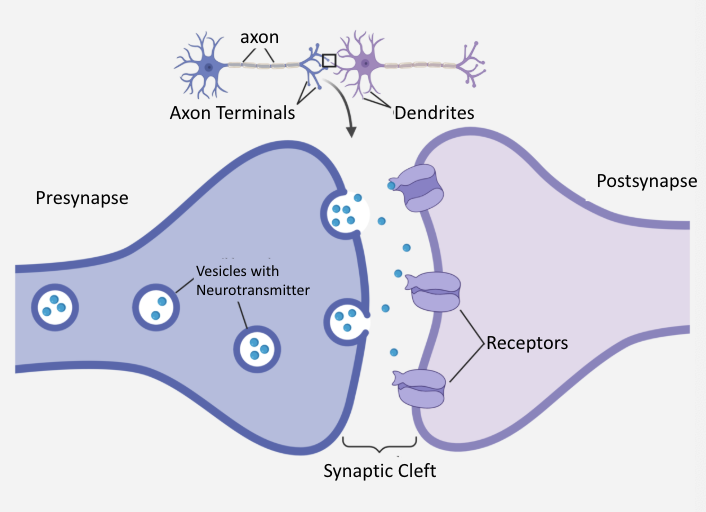
Nerve impulses transmitted across synapses via neurotransmitters
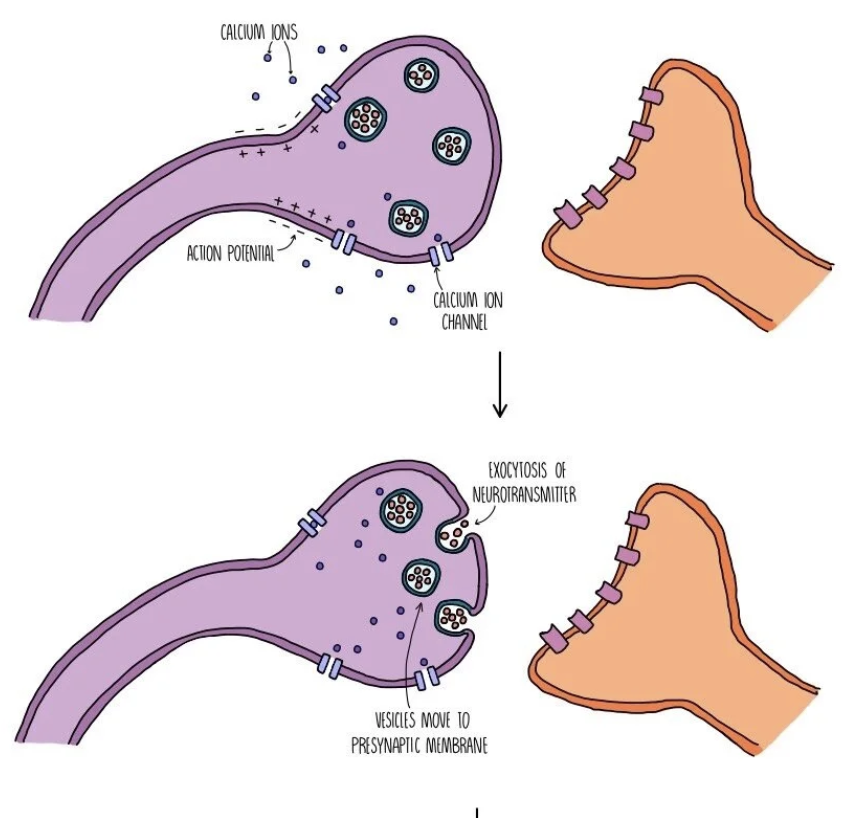
action potential arrives at end of presynaptic neuron → triggers opening of voltage gated calcium ion channels → calcium moves into synaptic knob via facilitated diffusion → triggers movement of vesicles w neurotransmitters to presynaptic membrane
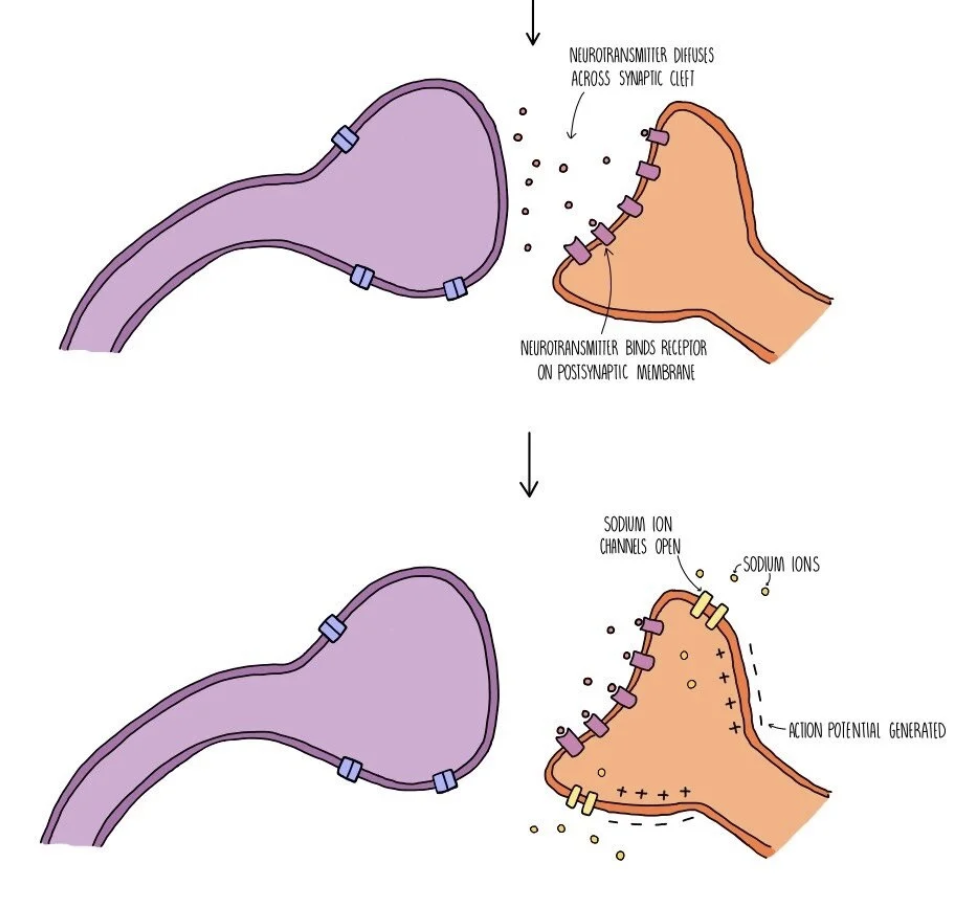
vesicles fuse w presynaptic membrane → contents released via exocytosis → neurotransmitters diffuse across synaptic cleft → neurotransmitters bind to specific receptors on postsynaptic membrane → sodium ion channels open
sodium moves into postsynaptic neuron → depolarization → action potential (if excitation exceeds -55 mV) → neurotransmitter removed from synaptic cleft → stops stimulation of action potential → neurotransmitter reabsorbed or broken down
Acetylcholine - neurotransmitter existing in many synapses (ex. neuromuscular junction)
neuromuscular junction - synapses btwn axon terminals or motor neurons + muscle fibers
motor neuron releases acetylcholine into synapse → acetylcholine binds to muscle fiber sarcolemma → ligand gated channels for acetylcholine open → sodium ions come into muscle fiber
muscle fiber is positively charged inside → signal travels down T tubules alongside sarcoplasmic reticulum → voltage gated calcium channels on SR open → acetylcholinesterase breaks down acetylcholine → signal ends
arrival of action potential at axon terminal → release of acetylcholine into synaptic cleft
acetylcholine diffuses across synaptic cleft → acetylcholine binds to transmembrane acetylcholine receptors on postsynaptic membrane → ligand gated channels open → threshold hit → voltage gated sodium channels open → sodium flows into neuron → excitatory postsynaptic potential
exogenous chemicals - come from sources outside of living things
may interfere w synaptic transmission
neonicotinoids - bind to cholinergic protein receptors + prevent binding of acetylcholine
often used in pesticides
can kill non-target insects like bees
acetylcholine binds to nicotonic cholinergic receptors on postsynaptic membrane
neonicotinoids also bind to these receptors + have similar structure to nicotine/acetylcholine
binds irreversibly to acetylcholine receptors in insects → blocks synaptic transmission → paralysis/death in insects
acetylcholine receptors in humans are a different shape → neonicotinoids less toxic to humans
cocaine - prevents reuptake of dopamine
dopamine - neurotransmitter responsible for feelings of reward + motivation
dopamine transporters - remove dopamine from synaptic clefts btwn neurons in brain
cocaine binds to/blocks dopamine transporters → prevents reuptake of dopamine
lots of dopamine remains in synaptic cleft → continue binding to dopamine receptors on postsynaptic membrane → continued excitation of reward pathway
types of neurotransmitters
excitatory
increase likelihood of action potential being generated at postsynaptic neuron
open sodium channels → allow sodium ions to enter neuron
inhibitory
decrease likelihood of action potential being generated at postsynaptic neuron
bind to protein receptors allow negative ions to enter neuron → neuron is hyperpolarized → potential difference lower than resting potential
neurons have many synapses with other neurons
inhibitory and excitatory neurotransmitters can be released at different synapses → send both signals out to cell body
summation of effects = process that the combined influence of neurotransmitters determines if neuron generates action potential or not
all or nothing consequence
either threshold is reached and action potential propagated… or not
nociceptors - group of unspecialized free nerve endings that serve as pain receptors
can respond to range of stimuli
high temp
acid
chemicals (ex. capsaicin)
nociceptor is stimulated → sodium channels on nociceptor open → sodium flows into nociceptor → threshold potential reached → action potential generated → travels to brain → pain !
emergent properties come from interactions of component parts
whole is greater than sum of parts
ex. consciousness from neurons in the brain