2.2 - Government and the Economy
Market Structure
market structure - how a market is organized based on the number of business competing for sales in an industry
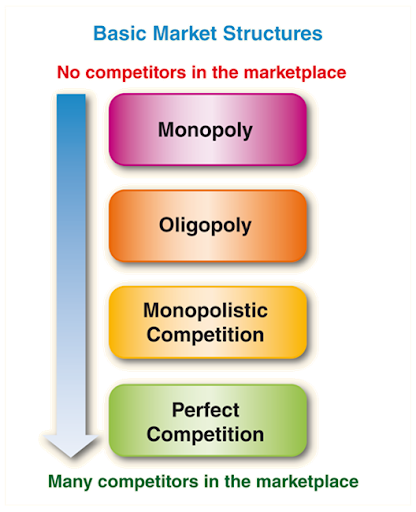
Monopoly - a market structure with one business that has complete control of a market’s entire supply of goods or services
oligopoly - a market structure with a small number of businesses selling the same of similar products
monopolistic competition - a large number of businesses selling similar (not the same) products and at different prices
perfect competition - characterized by a large number of businesses selling the same product at the same prices
competition in monopolistic competition is price or non-price
price competition - lower price in the main reason for customers to buy one business over another
non-price competition - a competitive advantage based on factors other than price
Role of Government in the Economy
The foundation of free enterprise is freedom of choice
US constitution gives congress power to regulate commerce
commerce - the activities involved in buying and selling goods on a large scale
roles of the government in the economy:
manages economy
provides public goods and services
provides legal framework
promotes competition
corrects for extranatities
Manage the economy
fiscal policy - the tax and spending decisions made by a the president and congress
can boost economy when weak
monetary policy - regulates the supply of money and interest rates by a central bank in an economy
federal reserve system - the central bank of the US
money supply - the total money circulating at any one time in a country
provide public goods and services, available to anyone in the economy
public education
construction and maintenance of roads
police and fire protection
postal services
public parks
Provide a Legal Framework
necessary for a legal government economy to function
all levels of government make and enforce laws
criminal laws
civil laws
Promoting Competition
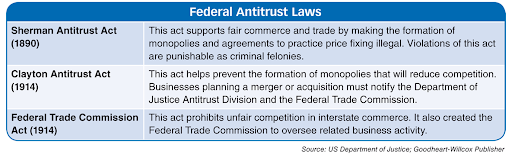
antitrust laws - promote fair trade and competition among businesses
laws to prevent monopolies
price fixing - when two or more businesses in an industry agree to sell the same good or services at the same price
collusion - when two or more businesses work together to remove their competition, set prices, and control distribution
Correcting for Externalities
externalities are not connected to economic activity, but affect people
externalities are caused by one party, but affect another party