Exam qs
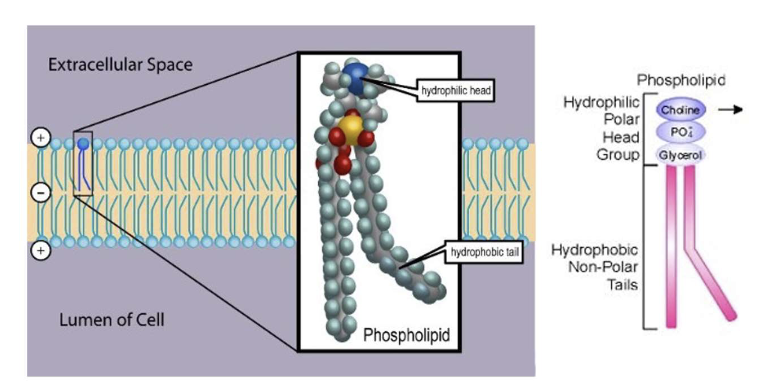
b. Phospholipids.
Individual units that make up the membrane
Have a head and a tail- head is hydrophilic phosphate group, tail is hydrophobic phosphate group
Contains intracellular fluid and extracellular fluid
They are amphiphatic- have hydrophilic and hydrophobic properties
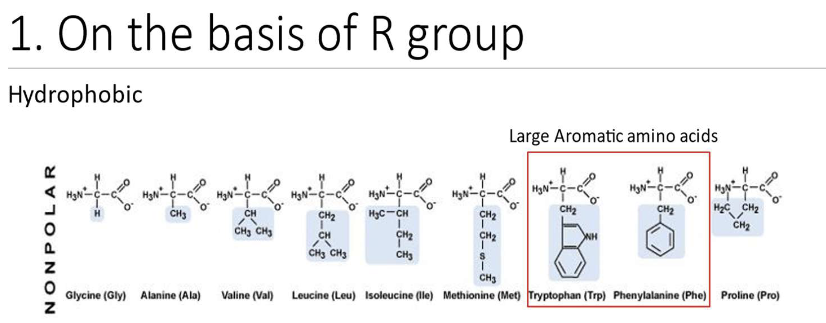
Non-polar amino acids.
As a result of being hydrophobic, most are buried within the core of a protein structure
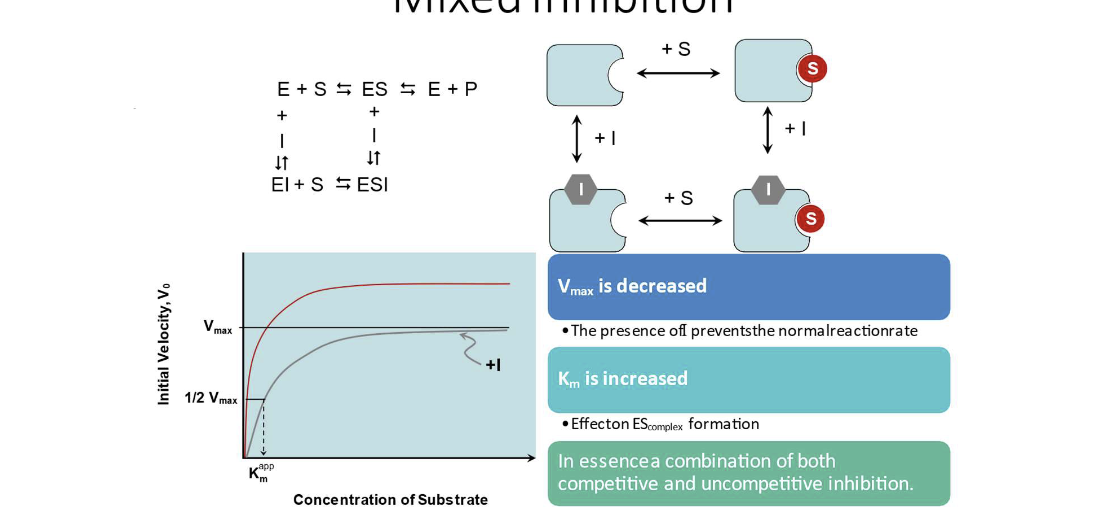
e. Mixed inhibition.Definition: A type of enzyme inhibition where the inhibitor can bind to both the free enzyme (E) and the enzyme-substrate complex (ES), but with different affinities.
Effect on enzyme activity:
Reduces the maximum reaction rate (Vmax).
Alters the apparent Michaelis constant (Km): can increase or decrease depending on inhibitor affinity.
Binding sites:
Inhibitor binds at a site other than the active site (allosteric site).
Kinetics:
Vmax decreases
Km changes (increase if inhibitor prefers free enzyme, decrease if prefers ES)
Lineweaver-Burk plot: Lines intersect not on either axis, indicating changes in both Km and Vmax.
Describe 4 different layers of protein structure
Primary, secondary tertiary, quarternary
Primary- peptide bond links amino acids together
Secondary- local folding of polypeptide chains into regular patterns due to hydrogen bonding between different amino acids
Tertiary protein structure
Definition: The three-dimensional folding of a polypeptide chain due to interactions among R-groups (side chains) of amino acids
Stabilized by:
Hydrogen bonds
Salt bridges
Hydrophobic interactions
Disulphide bridges (Van der Waals forces
Disulphide bridges have a covalent link between two -SH groups of two cysteine residues- important for stability
Charged and polar R groups on protein surface can interact with water
Non polar r groups are buried in core of protein