Damping
Definition:
Damping is a process by which the amplitude of oscillations or vibrations in a system decreases over time due to energy dissipation.
This can occur through various mechanisms, including friction or material deformation.
Definition of Free Oscillations:
Free oscillations refer to the natural, unforced vibrations of a system that occur when the system is displaced from its equilibrium position and then released.
Example with a Car and Speed Bump:
When a car goes over a speed bump, it experiences an upward motion and then a downward motion as it moves past the bump.
Damping is evident as the car's suspension system absorbs the energy from the impact, causing the car to settle back down smoothly instead of bouncing excessively.
The dampers in the car's suspension help control the oscillations, ensuring that the ride remains comfortable and stable by gradually dissipating the energy from the movement.
Example of critical damping so wheel is on the road as much as much as possible
Damping Graphs
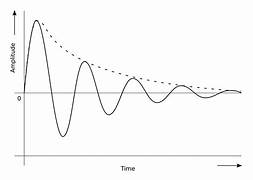
Under Damped
Light damping - Light energy loss
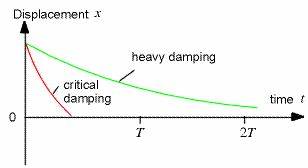
Critical/Heavy Damping
Critical damping - gets to equilibrium as quickly as possible
Heavy damping - heavy energy loss