Personality
We categorized personality in two ways.
extrovert(social), introvert(shy)
level neuritic(crazy) and stable(Calm,level headed)
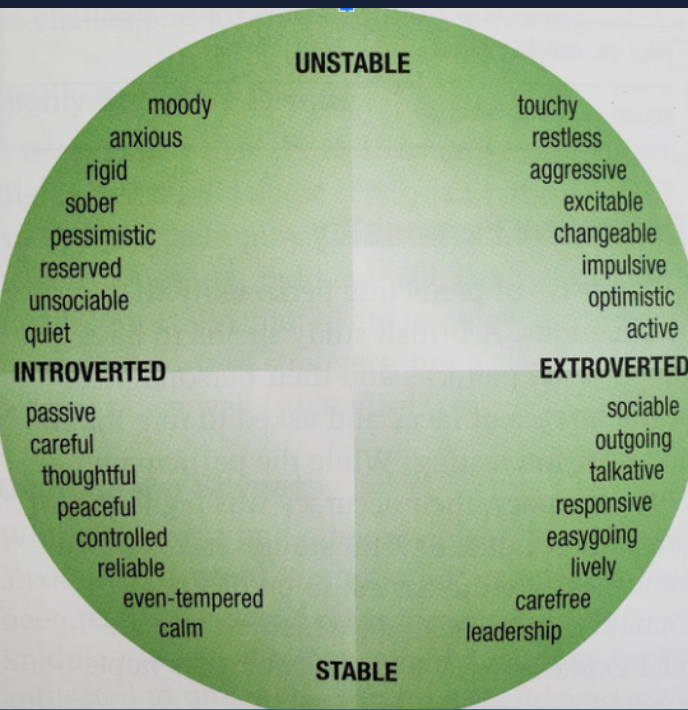
Eysenck tested various hypotheses regarding personality traits using factor analysis, which led to his theory of three primary dimensions: extroversion, neuroticism, and psychoticism. This framework allowed for a better understanding of how these traits influence behavior and social interactions, ultimately providing valuable insights into personality psychology. Another theorist Mischel expanded on these ideas by proposing the concept of personality as a function of situational influences, emphasizing the importance of cognitive processes in shaping an individual's reactions to various environments.
THE BIG 5
Traits
Openness(Imaginative/independent vs practicable/conforming )
conscientious(organized/careful vs disorganized/careless)
extroversion(outgoing vs shy)
agreeable(friendly/helpful vs hard to talk to/ unkind)
neuroticism (scared/insure vs calm/secure)
Factor Analysis:
Subject respond to series of questions of how they would react to various scenarios, allowing researchers to gauge their level of agreeableness and neuroticism through their responses. This method provides insight into the underlying personality traits, enabling a better understanding of individual differences in social interactions and emotional stability.
Facial patterns their is a link between facial expressions and an individual's level of neuroticism, showcasing how emotional responses manifest physically.
people were shown faces and asked to rate them on the big 5 scale, which includes traits such as openness, conscientiousness, extroversion, agreeableness, and neuroticism, revealing how perceptions of facial expressions correlate with these personality dimensions.
Extroversion was the easiest to predict on faces.
Introversion:
1 in 5 people are introverted
introverts find it draining to be around people for extended periods of time and often need solitary time to recharge.
more likely to think before they act and develop ideas privately
Extroverts expect to see the world as use do.
Introversion vs being shy:
Introverts find people draining vs shy people may not necessarily feel drained by social interactions, but rather might experience anxiety or discomfort in social settings.
Shyness in adults begins early in life,
Infants who cried and thrashed their limbs often displayed signs of anxiety under new circumstances, leading to increased caution later in childhood and adulthood. This early behavior can manifest as shyness, making it difficult for individuals to engage comfortably in new social environments.
If parents are super protective child’s shyness is made greater.
If parents are outgoing then shyness is reduce later in life.
Biology and environment play a role in shyness.
Perfectionism,
It can be positive and negative, influencing an individual's confidence and social interactions in various environments.
They often believe it is not perfect its wrong.
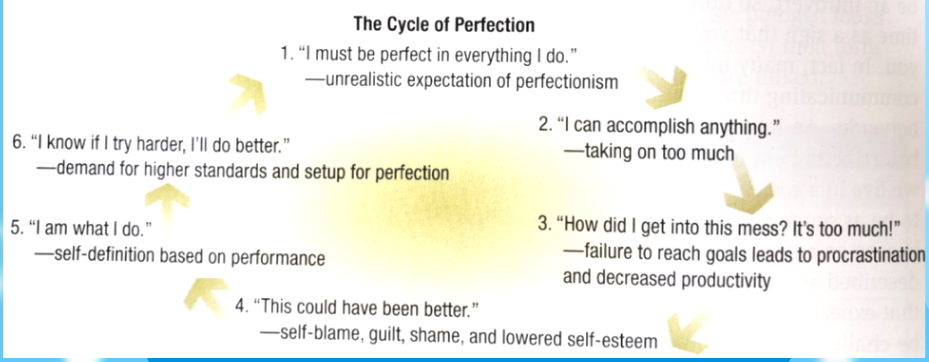
Perfectionism develops at a young age,
Factors,
Parents are perfectionist,
Strict parents
eldest child
Perfectionism is common in young athletes who often feel pressured to meet the high expectations of their parents, leading to increased stress and anxiety.
Birth order.
Physiologist have looked at birth order for perfectionist
Adler-Birth order theory, there is differences personality traits and behaviors among siblings, with firstborns often displaying higher levels of perfectionism due to the responsibility and expectations placed upon them. Middle and youngest siblings may develop different traits, such as creativity and risk-taking, as they navigate their distinct roles within the family dynamic.
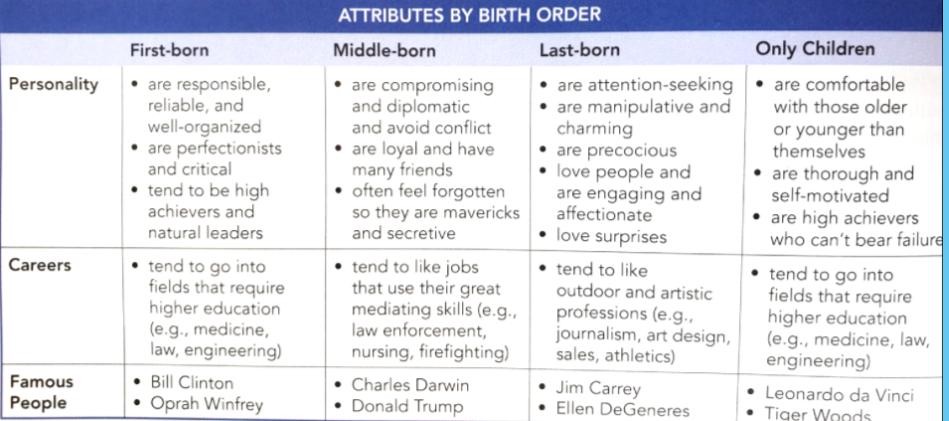
Limitations
these may very based off other factors such as environment and number of years between other siblings. Additionally, cultural influences and parenting styles can significantly impact the expression of these traits, making it difficult to generalize the effects of birth order on personality.