Ecology + Biosphere
Levels of Ecological Research
organismal (like Hunt studying fruit flies and evolution)
population (organisms of same species in the same area)
community (group of populations in the same area, like how rattlesnake populations interact w/ mice)
ecosystem (community + physical factors they interact with)
landscape (mosaic of ecosystems)
biomes (type of landscape)
biosphere
Climate = long term weather conditions
macroclimate = global/larger scale, microclimate = specific location
4 main factors:
Sunlight + Earth’s movement in space→ drives differences in temperature, air movement, and water cycle
Precipitation
Tropics: water evaporates→ warm, wet air towards poles
Rising air masses: released water→ high precipitation (often in tropics)
Dry, descending air masses: arid climates (near 30 degrees north and south)
Wind- wind belts globally
Earth rotates→ land near equator moves faster than at the poles
Cooling trade winds blow east to west (Tropics)
Prevailing westerlies blow west to east (Temperate zones)
Temperatures
directly affects biological processes→ metabolism, growth, survival
driven by solar radiation (sunlight)
varies w/ time of days, seasons, microclimate scale like being in shade
Seasonality- only present in mids to high latitudes
high latitudes (near poles) seasonality due to tilt of Earth’s axis, and annual passage around sun
Day length diff b/w winter and summer solstice can vary more in northern areas than in south, even in the continental US
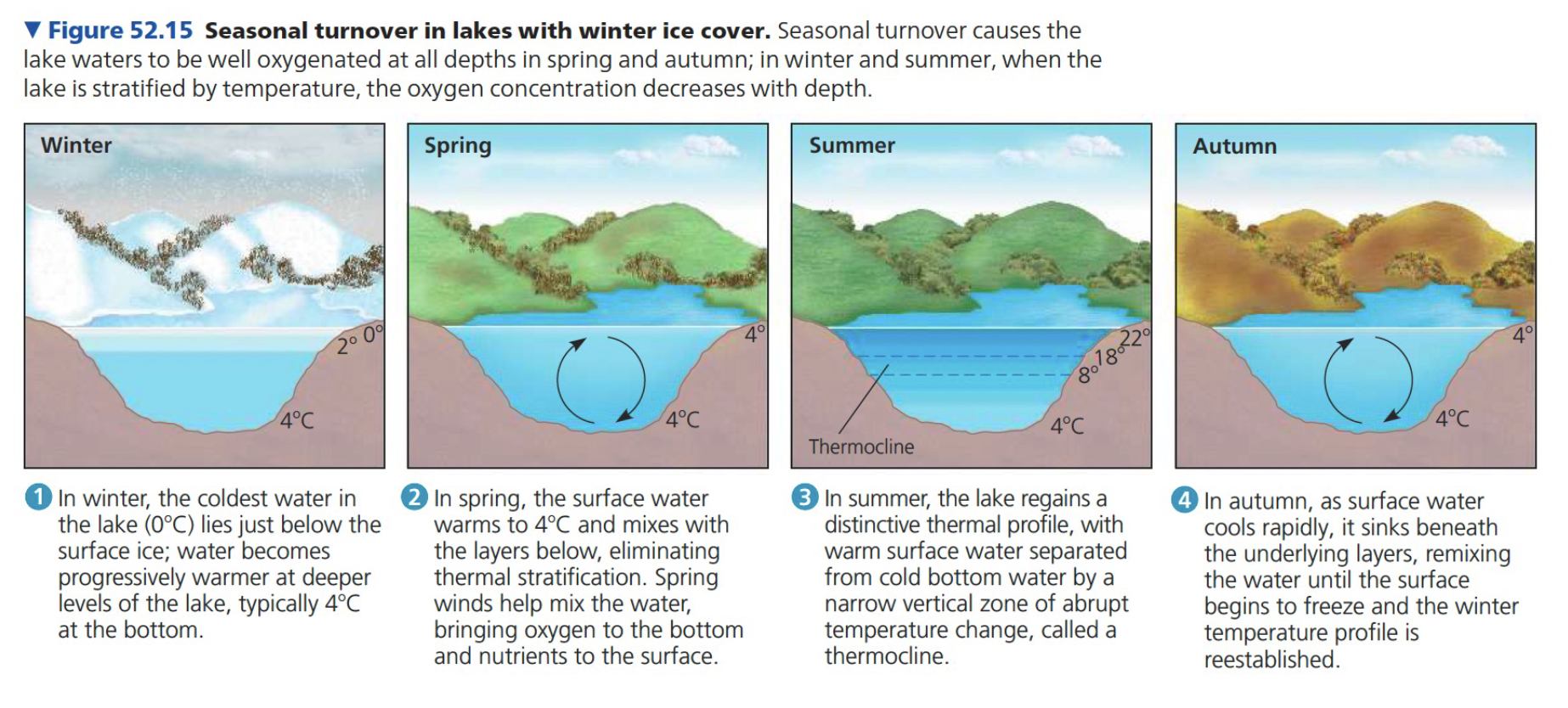
Small aquatic environments- temperate lakes are layered
surface water w/ lots of oxygen, nutrient-rich area at bottom
turnover in spring and water→ reoxygenation and temperature differences
Biomes- major lifezones characterized by physical environment
terrestrial biomes strongly influenced by temperature and precipitation
aquatic zones influenced by light penetration and depth from bottom
Species distributions- result of ecology and evolutionary history, impacted by climate and species history