AP Gov; Unit 5: Political Participation
5.1 Voting Rights and Models of Voting Behaviors
Elections: From State To Federal Control
The Constitution left states in control of elections, but the federal government has taken more control over elections in the last century
Reason: to prevent discrimination
States are still in charge of the other aspects of elections, including early voting and photo ID requirements
15th Amendment
The rights of citizens of the United States to vote shall not be denied or abridged by the United States or by any State on account of race, color, or previous condition of servitude
17th Amendment
The Senate of the United States shall be composed of two Senators from each State, elected by the people thereof, for six years; and each Senator shall have one vote. The electors in each State shall have the qualifications requisite for electors of the most numerous branch of the State legislatures.
19th Amendment
The right of citizens of the United States to vote shall not be denied or abridged by the United States or by any State on account of sex.
24th Amendment
The right of citizens of the United States to vote in any primary or other election for President or Vice President, for electors for President or Vice President, or for Senator or Representative in Congress, shall not be denied or abridged by the United States or any State by reason of failure to pay any poll tax or other tax.
26th Amendment
The right of citizens of the United States, who are eighteen years of age or older, to vote shall not be denied or abridged by the United States or by any State on account of age
Voting Rights Act of 1965
Banned literacy test & other substantial votes
Political Efficacy
A person’s belief that they understand and can impact politics
Massachusetts ballot
Starts with the highest ranking officer to the lowest one
Candidates are grouped by office instead of party
Discourages voting exclusively for one party
Indiana ballot
Candidates are grouped by party instead of office
Rational-Choice Voting
A voter examines an issue/candidates and consciously decided to vote in the way that seems to most benefit the voter
Retrospective Voting
Looking back; vote based on how the incumbent party has done
Ronald Reagan reelection in 1984
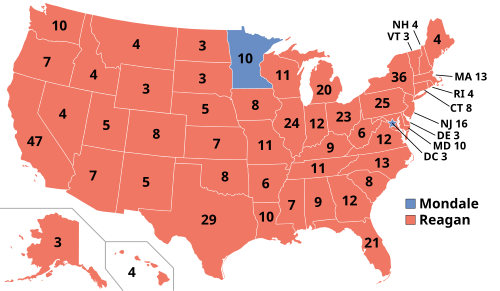
Prospective Voting
Forward Looking; vote based on who you believe will handle the most important issues better
Party-Line Voting/Straight ticket voting
Supporting a party by voting for candidates from one political party for all public offices across the ballot
5.2 Voter Turnout
Low Voter Turnout
Compared to other western democracies
Highest in presidential elections
About 58% in 2016
US more democratic Send money, Contact Officials,
Voter Turnout
Why is turnout higher in presidential elections than in midterm elections or primary elections?
Increased media attention
Increased fundraising and money spent on advertising
Election feels more important to people
Only once every 4 years
Causes for Low Participation
Registration requirements
Weekday elections
No cost for not voting
Many elections
Voter fatigue
Low political efficacy
Weakening political parties
Suggestions to improve turnout
Automatic registration
Making voting compulsory
Holiday / Weekend elections
Early votings
Absentee / Mail-in ballots
Motor Voter Law
Allow people to register when getting a driver’s license
Increased registered voters; did not significantly increase voter turnout
State voter photo ID laws
Laws governing elections are made by states
Some states require voters to show a valid photo ID to vote
Supporters of voter photo ID laws claim that they will decrease voter fraud, or people voting illegally
Opponents of voter photo ID laws claim that voter fraud is extremely rare, and will suppress voting
Demographics
Most likely to vote
College educated
Higher income
Religious
white
Middle aged/Older (44+)
Voter choice
Party identification is the best indicator of how a person will vote
Ideological orientation is also a good predictor
Conservative --> Republican, Liberal --> Democrat
Candidate characteristics, whether they are seen as trustworthy, responsible, etc
Contemporary political issues people sometimes have different preferences depending on which issues are seen most pressing: economic, defense, social equality, etc…
There are also demographic patterns of voter choice
5.3 Political Parties
Linkage Institutions
Channels that allow individuals to communicate their preferences to policymakers
Link citizens to the government
Political Parties
Media
Interest Groups
Elections
Policy Making Institutions: 4 Branches of Government (Legislative, Executive, Judicial, Bureaucracy
New Deal, Internment of Japanese Americans (Public Policy)
Institutional Actors: President, courts, etc…
Political Party
Organization that seeks political power by electing members to office
Primary purpose:
Gain power
Secondary
Influence public policy
Party functions
Mobilization, GOTV (Get Out The Vote campaign)
Ensure that supporters actually make it to the polls & vote
Educating voters & policymakers d4c ahh
Establish a party platform
Written list of political beliefs and policy goals
Recruit and nominate candidates
Support campaigns: fundraising, media strategy
Committee and party leadership systems in legislatures
Committee Systems
The committee chairs are from the majority party & committee membership is divided up based on party
Party leadership
Leadership roles are based on party
Majority party: speaker of the house, majority leader
minority party: minority leader
Party Caucuses
Caucus: Informal gathering of like-minded individuals
Closed meetings of party members to set legislative agendas, select committee members and chair, and choose leadership
5.4 How and Why Political Parties Change and Adapt
Candidate Centered Politics
Focus on candidates as individuals, rather than party identification
Party Identification/Partisanship
Affiliation with a political party
Changes in Party Identification
Critical Election
Precedes a party realignment; polarizes voters around new/major issues. EX: 1860 (Civil War), 1932 (Great Depression)
Party Realignment
Dramatic, long-lasting shifts in party affiliation
Many people change parties
Regional Realignment
South was consistently Democratic from 1828-1960; transitioned from 1964-1994, is now consistently Republican
Party Dealignment
Decline in party identification and loyalty
Campaign Finance Law
Increase in private campaign contributions to candidates and PACs (Political Action Committee) has allowed candidates to be more independent of the party
Candidates and politicians are now less reliant on the party for money and therefore more independent to do as they wish
Primary System
The role of party leaders in nominating candidates has been weakened
In the past, party bosses and leaders were more responsible for choosing candidate, but now people can vote for their preferred candidate in primary elections
5.5 Third-Party Politics
Two-Party System
A result of tradition and election policies, NOT the Constitution
Democrats and Republicans control Elections
Structural Barriers to Third-Party Success
We Have
Plurality System
Winner-Tax-All Voting Districts
Single-Member Districts
We Don’t Have
Majority System
Proportional Representation
Multi-Member Districts
Our electoral system is set up in such a way that it promotes a two-party system, so the three features we have are all barriers to third party success
Barrier to a 3rd parties
Plurality system - Candidate with most vote wins (even if she/he wins <50%)
Alternative aid to 3rd parties
Majority System - Candidate wins by receiving more than 50% of the votes
Requires a runoff election when no candidate receives 51% or above
Barrier to 3rd Parties
Winner-take-all voting districts - The candidate with the most votes wins the congressional seat
Alternative to aid 3rd Parties
No proportional representation - Congressional seats are apportioned according to the % of votes won by each party
Barrier to a 3rd Parties
Single member districts - One representative is elected in each district
Alternative to aid 3rd Parties
No multi-member districts- Several representatives are elected in each district
Barrier to a 3rd Parties
Ballot requirements - Fees, petition signatures required to appear on ballots
Alternative to aid 3rd Parties
Electoral College - Must win a plurality of votes in a state to receive any electoral votes
Informal Barriers to third-party success
Major parties incorporate popular portions of third-party agenda into their own platforms
People feel like they’re throwing their vote away
Less money
Less media coverage
Fewer advertisements
5.6 Interest Groups
THE PURPOSE OF POLITICAL PARTIES IS TO SEIZE CONTROL OF THE GOVERNMENT
Interest Groups
Organization that attempts to influence policy, some for a specific purpose or a more general purpose
Increasing in number and influence
Pluralistic Democracy
Federalist No. 10
Multiple groups competing for power
Typically, interest groups are said to embody pluralist democracy
This makes sense because there are interest groups on multiple sides of just about every political issue
Public Interest Groups
Work for the collective interest of a broad group of individuals, not just its members
Advocates for civil liberties, civil rights, education, environment
Ex: American Association of Retired Persons (AARP)
Single-Issue Groups
Interest groups that focus advocacy on a single issue
Ex: National Rifle Association (NRA)
Institutional Groups
Intergovernmental Groups
Represent state and local governments to lobby for federal funds
Professional Associations/Labor Unions
Ex: American Medical Association (AMA)
Ex: American Bar Association (ABA)
Ex: American Federation of Labor and Congress of Industrial Organizations (AFL-CIO)
Corporations
Ex: U.S. Chamber of Commerce
Ex: National Association of Manufactures
Ideological, Social, and Protest movements
Civil rights movement
Women's movement
Environment movement
Consumer movement
Functions of Activities
Educate voters and office holders
Provide expert information to government officials
Give office holders feedback from their constitutions
Write bills for office holders that can be introduced into Congress
Draft legislation
Suggest and support legislation
Mobilize membership
To apply pressure to legislature and government agencies
Social media, phone, email, mail, town halls, etc.
Iron Triangle/Issue Networks
Work with legislators and bureaucrats to ensure policy is made that benefits group’s memberships
Create PACs
Raise and spend unlimited independent expenditures
Make campaign contributions
Corperations & labor unions can contribute to Super PACS
Endorse Candidates
Encourage membership to vote for particular candidates
Get Out The Vote (GOTV)
Mobilize votes, get them to the polls
Advertise
Organize protests
Lobbying
Lobbying Congress
Lobbying the Courts
Amicus Curiae Briefs
Litigation
File lawsuits to attempt to change policy through courts
When constitutional rights are being violated
When lawmakers are violated
Grassroots Lobbying
Go directly to citizens and try to persuade them about an issue
Citizens must then take action for it to be effective
Contact representatives, town halls, vote, etc
Inequality of Political and Economic Resources
Some groups have larger membership or are very well-funded, increasing the influence they have
5.7 Groups Influencing Policy Outcomes
Social Movements
Broad based efforts to achieve major policy change
Examples:
March For Our Lives
Black Lives Matter
Occupy Wall Street
#MeToo
Civil Rights Movement
Women’s Rights Movement
LGBTQ Rights Movements
Often use protest and civil disobedience as a way to call attention to their issues
Protest
Public demonstrations designed to call attention to the need for change
Civil Disobedience
Intentionally breaking a law to call attention to an injustice
5.8 Electing a President
Presidential vs Congressional Elections
Presidential elections are much more competitive
Presidential winner usually gets < 55%
Congressional winner usually gets > 60%
Incumbency Advantage For Both Congress and President
President is very well known
Has command of the bully pulpit
Presidential Election Cycle
Invisible Primary > Primaries > National Convention > General Election
Presidential Preference Primaries
Primaries are held in all 50 states over the course of several months
The winner in each state receives delegates to committee to at the national convention
Primaries
Closed Primary
Only registered party members can vote
Open Primary
Residents can vote in either party’s primary
Super Tuesday
Often the most important day of primary season; the day with the most primaries
California moved to bring in more people to vote
National Convention
Officially nominate a presidential candidate
Criticism of Primary Systems
Too much importance placed on early states
Caucus/primary voters are more ideological, not representative of the average American
Electoral College
The people who represent each state and officially elect the president
Established in the original Constitution, altered by the 12Th Amendment
Originally intended to be a guard against participatory democracy; an example of elite democracy
538 total electoral votes, 270 to win; Popular vote doesn’t matter
Small states are overrepresented
Candidates focus on competitive, big states AKA swing states and battleground states, where polls show a tight race
If no candidate gets 270 votes, the House of Representatives decides the election 1 vote per state
About 6 weeks after the election, the electors got to state capitals to cast their ballots
During the first week of January Congress counts the votes and officially declares a winner
Exaggerates the margin of victory
Difficult to remove the Electoral College
It would require a constitutional amendment
Benefits small states, rural populations, and the two major parties
5.9 Congressional Elections
Primary Elections
Allow citizens to choose their party’s candidates for general elections
Notes
Notes
5.10 Modern Campaigns
Political Consultants
Professionals hired by a campaign to develop media strategy, fundraise, research, and conduct polling
Rising Campaign costs
Campaigns have gotten very expensive
TV ads, staff salaries, social media ads, direct mail, offices, travel
Intensive Fundraising efforts
Raise money from individuals, PACS, Super PACS
PAC is regulated by Federal Election Commission (4 dems, 4 republicans, they set a minimum on how much they can donate and how much a PAC can give)
Super PAC are regulated by the Internal Revenue Service
Long Election Cycles
Following midterm election; invisible primary, where potential candidates begin making speeches, fundraising, hiring a staff
Candidates announce candidacy 6 months to a year before the first primary; campaign extensively in Iowa and New Hampshire
Primary Season; Jan-June of election year
National Convention: August
Reliance on Social Media for Campaign Communication and Fundraising
5.11 Campaign Finance
Hard Money
Contributions directly to candidates
Limited and regulated by Federal Election Commission
Soft Money
Contributions to a political party that cannot be used to promote a specific candidate
Not limited or regulated by F.E.C
Independent expenditures
Money spent to support a candidate, but not contributed to the candidate or party
Not limited
Source of Campaign funding
Individuals can give up to 2,800 (for the 2019-2020 election cycle)
Candidates can spend an unlimited amount of their own money
Political parties
Political Action Committees
Political Action Committee (PAC)
Private group organized to raise money to elect a candidate
# of PACs has greatly increased
Established by campaigns, citizens, corporations, unions, and interest groups
86% of PAC $ goes to incumbents
Can contribute up to $5,000 per candidate
Money in politics & Free Speech
Federal legislation and case law pertaining to campaign finance demonstrate the ongoing debate over the role of money in political and free speech
Buckley v Valeo (1976) (Watergate Scandal)
No limit on a candidate spending his or her own money
Spending money is a form of free speech
Bipartisan Campaign Reform Act of 2002
Banned Soft money
“Stand by your ad” provision attempted to reduce attack ads
“I’m so and so and I approve this message.”
Banned corporations and unions from independent political spending within 60 days of a general election or 30 days of a primary election
Banned direct contributions from corporations to candidate campaigns or political parties
Citizens United V. Federal Election Committee
Hillary:the movie
Struck down parts of BCRA, including the ban on soft money and limitations on timing of political ads
Political spending by corporations, associations and labor unions is a form of protected speech under the First Amendment
Led to significant increase in the amount of money being contributed to political campaigns
5.12 The Media
Traditional News Media
Newspapers, radio, network TV
Cable TV
24 Hour news cycle
More sensationalistic, focus on commentary over substance
Internet, Blogs
Dramatically increased news choices
Social Media
Facebook, Twitter, etc.
Often ideology driver
Reinforce existing beliefs
Allows citizens to influence what is seen as newsworthy
Narrowcasting
Targeting news coverage to specific groups of people
Gatekeeper
By deciding what is newsworth, news media influence what becomes an issue and for how long
Agenda Setting
Media influences the list of issues to be addressed by the government
Media reports on an issue, causing the public to see it as important
Citizens vote or demand policy action on the issue
Issue becomes apart of governmental policy agenda
Scorekeeper
Focus on who is “winning” and “losing”
Horse Race Journalism
Focus on polls rather than substantive issues
Citizens are less informed
May lead to a bandwagon effect
Watchdog
Bark bark woof woof
5.13 The Changing Media
Increasing Demand for Media & Political Communications
Debates over media bias
Impact of media ownership and partisan news sites
Debates over Media Bias
Increase in ideologically-oriented news
Reporting vs. commentary
Media Ownership
In search of more viewers, news coverage has become more sensationalist, more biased, more commentary, less substance
Partisan News Sites
Biased/ideological news coverage
Level of Political Knowledge Among Citizens is Impacted By
Increased media choices
Ideologically oriented programming
Consumer-driven media outlets
Emerging technologies that reinforce existing beliefs
Uncertainty over credibility of news sources and information
Consumer-driven media outlets
Goal of media organizations is to make money, so journalism standards have fallen as they compete for clicks, views, and ratings
Social Media
Often reinforces existing beliefs