Glycolysis + Pyruvate Oxidation Notes
Energy Flow and Electron Flow: The Driving Force of Life
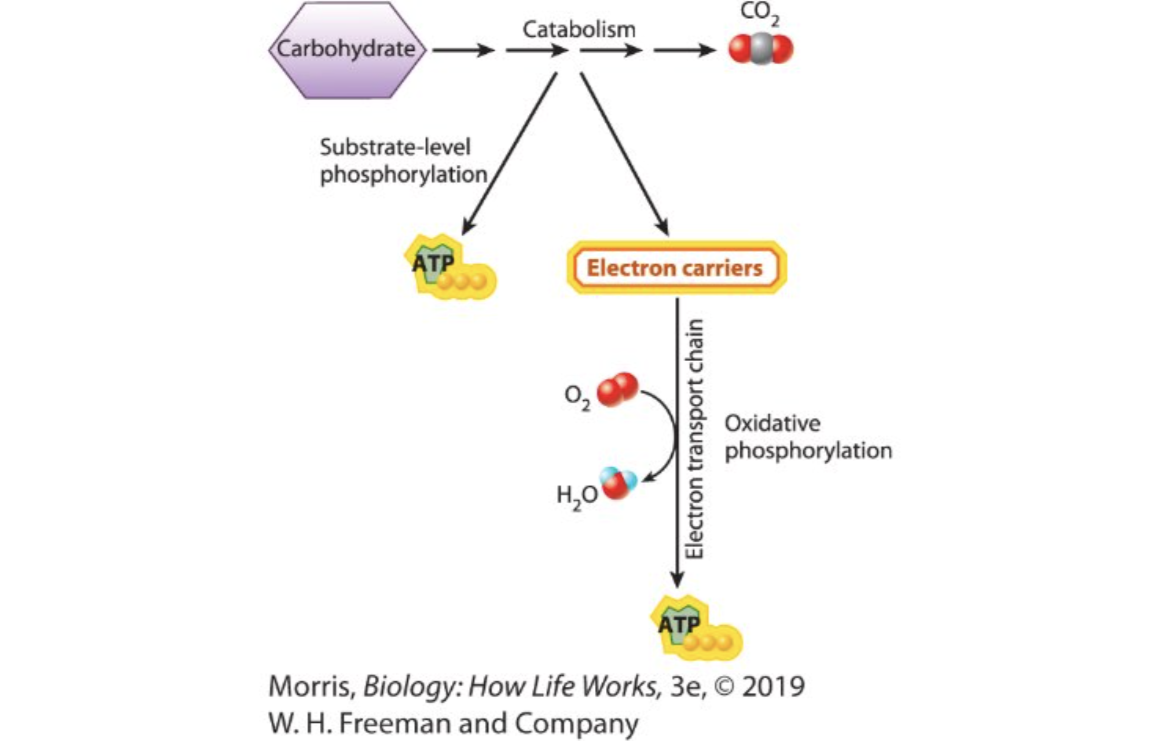
Catabolism of carbohydrates (like glucose)
Toàn bộ quá trình hô hấp tế bào là để lấy năng lượng từ glucose.
2 cách để lưu trữ năng lượng
ATP: Adenosine triphosphate, the primary energy currency of the cell.
Electron Carriers: Molecules like NADH and FADH2, which transport high-energy electrons.
Cách tạo ra ATP:
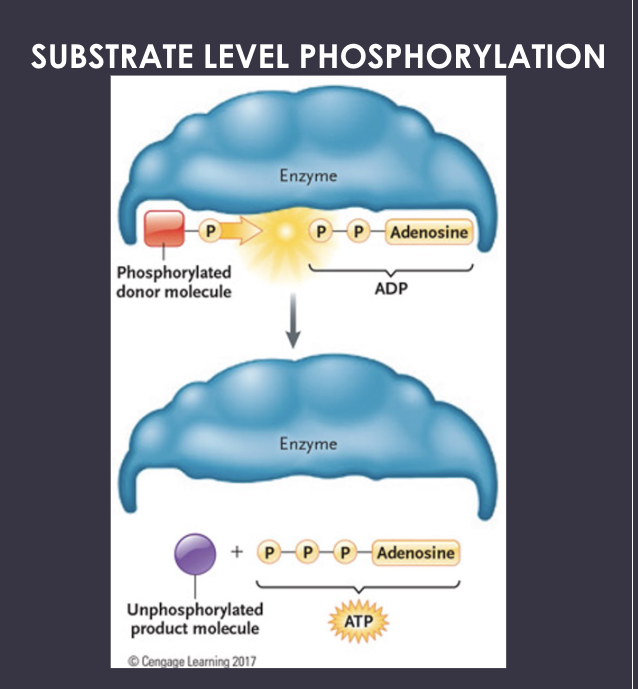
Substrate-level phosphorylation: Direct transfer of a phosphate group from a substrate to ADP—enztme chuyển trực tiếp nhóm phosphate từ một chất nền → ADP..
Oxidative phosphorylation: Occurs in the electron transport chain, where electron carriers donate electrons—diễn ra ở chuỗi truyền electron, khi NADH/FADH2 nhả electron.
Redox Reactions: Oxidation and Reduction
Redox reactions= oxidation + reduct
Oxidation:
Loss of electrons.
Becoming more positive.
Loss of a full hydrogen atom (which includes an electron).
Mnemonic: OIL (Oxidation Is Loss)
Reduction:
Gain of electrons.
Becoming more negative.
Gain of a full hydrogen atom.
Mnemonic: RIG (Reduction Is Gain)
In cellular respiration, the process of extracting energy from glucose to generate ATP involves a series of electron transfers.
Glucose is oxidized: It loses electrons progressively.
O2 is reduced: It gains electrons at the end of the electron transport chain, forming H2O
Cellular Respiration in Eukaryotes
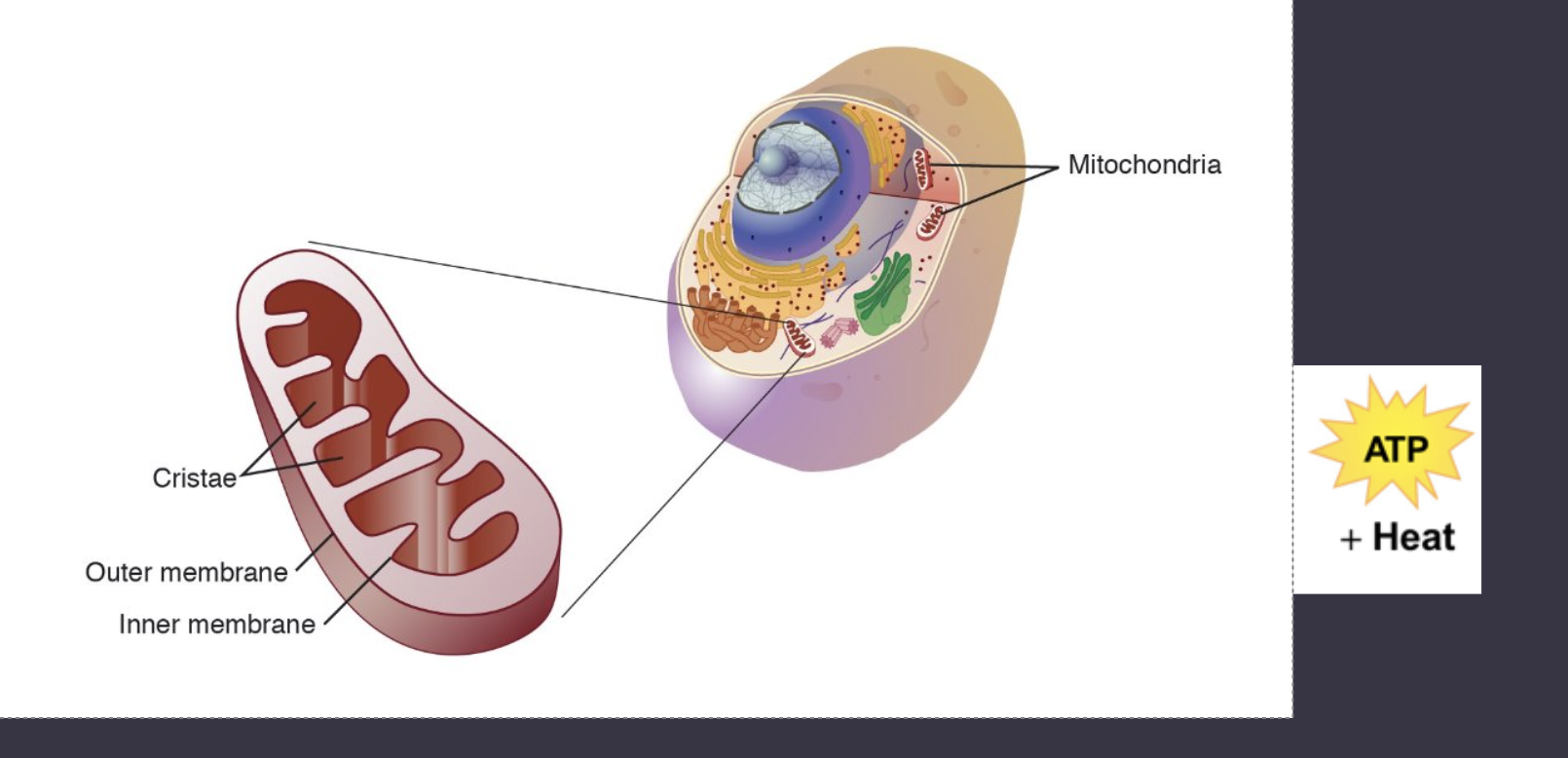
It generates ATP and heat.
The entire process is:
Starts in the cytoplasm: Glycolysis.
Ends in the mitochondria:
Pyruvate processing (oxidation).
Citric Acid Cycle (CAC).
Oxidative Phosphorylation (Electron Transport Chain and ATP Synthase).
The mitochondrion is the powerhouse, featuring:
An outer membrane—màng ngoài
An inner membrane folded into cristae, which increases surface area for the electron transport chain—tăng diện tích cho chuỗi electron
Electron Transfer and Carriers
Throughout the oxidation of glucose, enzymes called dehydrogenases facilitate the transfer of electrons to electron carriers.
A dehydrogenase is likely an enzyme responsible for removing hydrogen atoms (and thus electrons) from a molecule.
Key electron carriers involved:
NADH (nicotinamide adenine dinucleotide).
FADH2 (flavin adenine dinucleotide).
These carriers transport high-energy electrons to the electron transport chain.
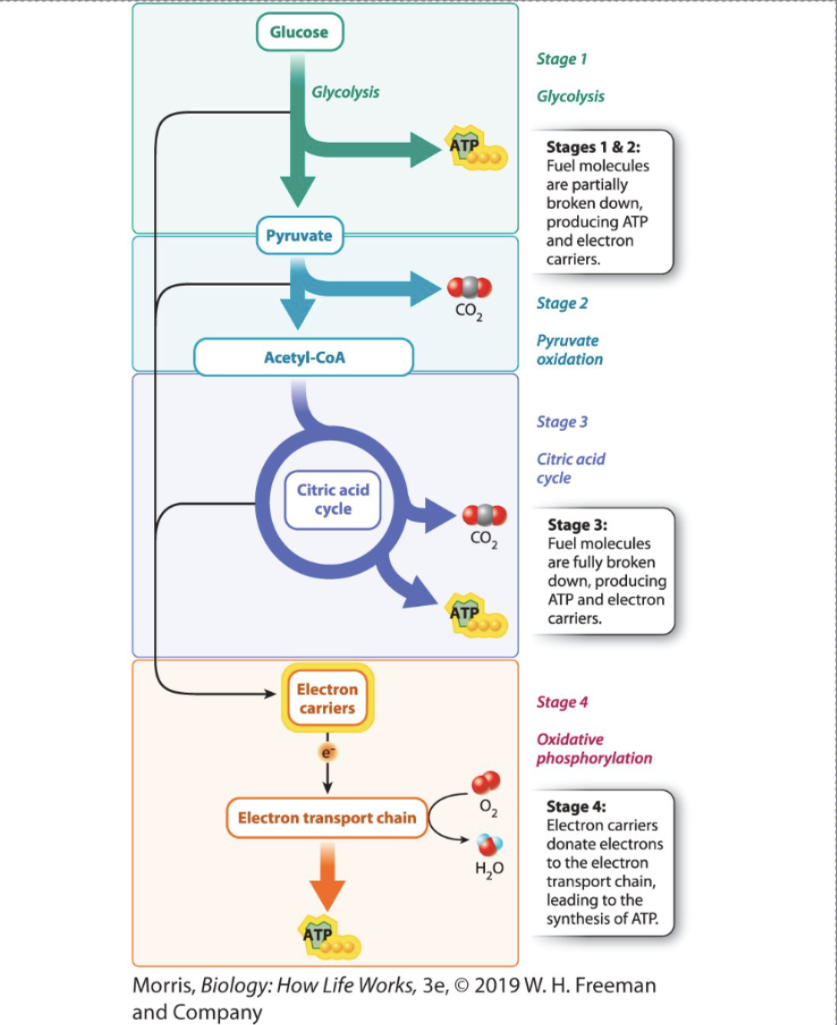
Stages of Cellular Respiration
Stage 1: Glycolysis —cytoplasm
Fuel molecules (glucose) are partially broken down—phân giải
Produces more ATP and electron carriers—NADH
Stage 2:Pyruvate Oxidation and Citric Acid Cycle —mitochondrial
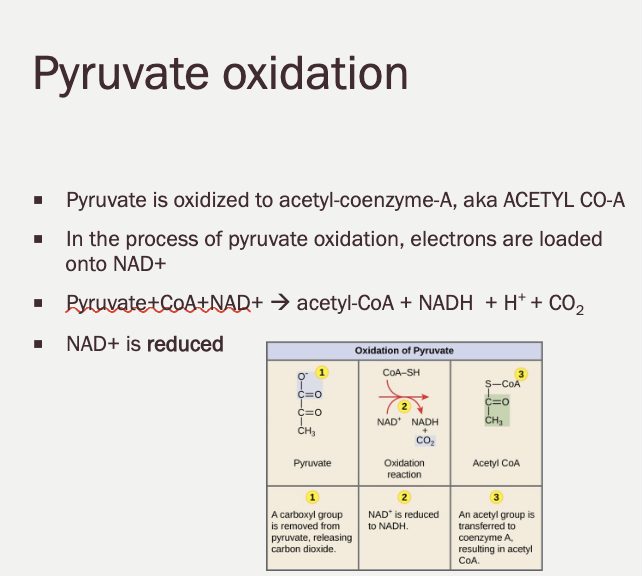
Pyruvate (from glycolysis) is oxidized to acetyl-CoA.
Acetyl-CoA enters the Citric Acid Cycle.
Produces ATP and electron carriers (NADH, FADH2).
Stage 3: Oxidative Phosphorylation
Electron carriers donate electrons to the electron transport chain.
This leads to the synthesis of the majority of ATP—tạo thật. nhiều
Glycolysis: The First Stage
Location: Occurs in the cytoplasm of the cell.
Oxygen Requirement: An anaerobic process, meaning it does not require oxygen.
Process: Glucose (a 6-carbon sugar) is split into two molecules of a 3-carbon compound called pyruvate.
Reactants: Glucose.
Products (per molecule of glucose):
molecules of ATP (via substrate-level phosphorylation).
molecules of NADH (electrons transferred from glucose to ).
2 Pyruvate ( 3 carbon each )
ATP Production in Glycolysis: Substrate-Level Phosphorylation
Mechanism: A direct method of ATP synthesis.
An enzyme transfers a phosphate group from a phosphorylated donor molecule (substrate) directly to ADP.
This forms ATP and an unphosphorylated product molecule.
Pyruvate Oxidation: The Link Between Glycolysis and the Citric Acid Cycle
Starting Point: Glycolysis produces two pyruvate molecules from each glucose molecule, each containing carbon atoms.
Location: Pyruvate is actively transported from the cytoplasm into the mitochondrial matrix.
Process: Pyruvate undergoes a sequence of enzyme-driven reactions (enzymes catalyze and accelerate these reactions).
Overall Reaction Equation:
Input: pyruvate,NAD + OUTPUT: CO2 and Acetyl-CoA,NADH