Lecture 11: Introduction to Microeconomics and Economic Analysis of Law
Block 3: Law & Economics:
“For the rational study of law the black-letterman may be the man of the present, but theman of the future is the man of statistics andthe master of economics.”
“...it seems to me that every lawyer ought toseek an understanding of economics.”
Oliver Wendell Holmes, ‘The Path of Law’ (1897)10 Harvard Law Review 457,
469 and 474 respectively.
“Whatever its deficiencies, theeconomic theory of law seems, to thisbiased observer anyway, the bestpositive theory of law extant.”
Richard Posner, ‘The Economic Approach toLaw’ (1975) 53 Texas Law Review 757, 774
Introduction to Neo-Classical Microeconomics:
Econmics as a brad discipline can be categorised into 2 definitive parts; Microeconomics and Macroeconmoics.
Macroeconomics = how different elements of the overall economy influence and relate to each other (employment, inflation, growth, fiscal policy (which is tax and spend), monetary ( which are interest rates)
Microeconmics = individual economic units (eg: consumers, groups businesses) and their decision making within a particular market/ markets
Eg: Prices, quantity ofoutputs, costs, supplyand demand, scarcity,efficiency, innovation
There aret subparts to microeconmics:
Deductive microeconmics = it starts from assumptions to logically un derstanding conceptual relationships and likely outcomes.
Empirical microeconmics= understanding how economic units act and particular markts work through real world data
There is another subpart to Deductive microecoonmics:
-Neo-classical microeconomics
-Economic analysis of law
Classical economics:
Adam Smith, The Wealth of Nations (1776): Identifies various microeconomic concepts and relationships:
Efficiency of Labour Specialisation: He identified that pinmakers that used to create nails that would be hammered into walls had to be graciously skilled with metal and many other factor. However he found out that 10 Scottishpinmakers can make 48,000 a day if they each do aspecific task; but could probably make none if they eachhad to do the whole process from beginning to end.
Efficiency of Free Markets: He identified that private self-interest on markets leads to better outcomes for society than governmental control of the economy. This is because if the government left people and their markets alone (leaving their prices and what they sell to be set by themselves) people would end up leading with their own self interest( whehter as a consumer or seller).People behave as if“led by an invisible hand” so that the market spontaneouslybrings “the precise quantity thither which may be sufficientto supply, and no more than supply, the demand.” This was revolutionary and changed how people and the government looked at things.
Economics as a Deductive Science:
John Stuart Mill, On the Definition of Political Economy; and on theMethod of Investigation Proper to It (1836):
He argued that Economics cant be empirical and is necessarly dductive; and must be reasoned from how ppl might behave, not facts (‘“must necessarily reason,from assumptions, not from facts.”)
Why he argues that:
Deductions from starting assumptions is the “only method bywhich truth can possibly be attained in any department of thesocial science”.
Unlike natural sciences, social sciences like economics cannotundertake experiments that investigate a particular variable byholding all of the other circumstances constant.
Predictions might be wrong and empirical verification important,but deductive theory still stands – nothing else can be done.
There are a list of assumptions to be taken in Neo-Classical Micro economcics
Reasoning from a series of starting assumptions to make sense of decision-makingand relationships between economic phenomena. Common assumptions include:
Rational Utility Maximisation: economic actors always choose the course of action that best satisfies their utility (preferences, desires, money), e.g., consumers choose the cheapest option; businesses maximise their profits.
Perfect Information: all economic actors know everything. Nothing is uncertainor hidden.
“Law” of Demand: The less smth is (scarcity) means that its price would go up for (demand for it). However the demand for a product decreases (daimond) as the price increases (not evryone uses it bc of how expensive it is).
Zero Entry/Exit/Transaction Costs: it costs nothing to enter or exit a market ortransact for a product/service.
Homogenous Goods: products are identical, with no distinctions, branding, oradvertising.
Aren’t these assumptions completely unrealistic?, Are decision-makers really rational? Isn’t imperfect information more likely than perfect?, Real-world scenarios do not look like the stylised models?
Neo-Classical Microeconomics: Power of Assumptions?:
Lionel Robbins, An Essay on the Nature & Significance ofEconomic Science (1932) 1: “The efforts of economists during thelast hundred and fifty years have resulted in the establishment of abody of generalisations whose substantial accuracy andimportance are open to question only by the ignorant or theperverse.”
Milton Friedman, ‘The Methodology of Positive Economics’ inEssays in Positive Economics (1953) 15: “…the relevant questionto ask about the "assumptions" of a theory is not whether they aredescriptively "realistic," for they never are, but whether they aresufficiently good approximations for the purpose in hand. Andthis question can be answered only by seeing whether the theoryworks, which means whether it yields sufficiently accuratepredictions.”
Assumptions to Models:
Simplicity as the Point: deliberate simplifications to strip awaycomplexity and thereby understand core relationships. It is only through simplifying can you truly understand core factors
Edward Lazear, ‘Economic Imperialism’ (2000) 115 Quarterly Journal of Economics 99, 99-100: “... our discipline has a rigorous language that allows complicated concepts to be written in relatively simple, abstract terms. The language permits economists to strip away complexity. Complexity may add to the richness of description, but it also prevents the analyst from seeing what is essential.”
Building Models: assumptions can be used as the starting-point forbuilding “models” on economic phenomena. Models are good bc they break down complex data to the bare factors.
E.g. Smith’s 1776 account of self-interest and invisible hand > late 1800s model of perfect competition.
Eg: Model of Perfect Competition:
Assumptions: infinite number of rationalproducers, homogenous goods, perfectinformation, no transaction or entry/exit costs.
=
Over time through market entry and exit, theequilibrium Price (P) and Quantity (Q) atintersection of Demand (D) and Supply (S)
=
Allocative Efficiency: society’s scarceresources used to maximise the combinedwelfare of consumers and producers – thelowest possible consumer price for producersto cover their costs.
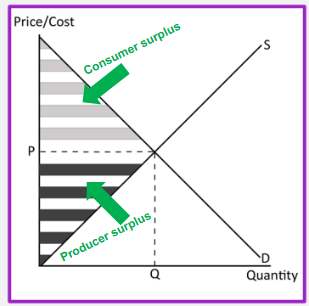
People always aim to get to the equilibrium Price (P) where both the consumer and producer is satisfied.
They build models to understand models and economics argue that the more busineesses in the world the better.
20th Century development:
More “Scientific”: attempts to make economicsmore like the “hard” natural sciences (especiallyphysics):
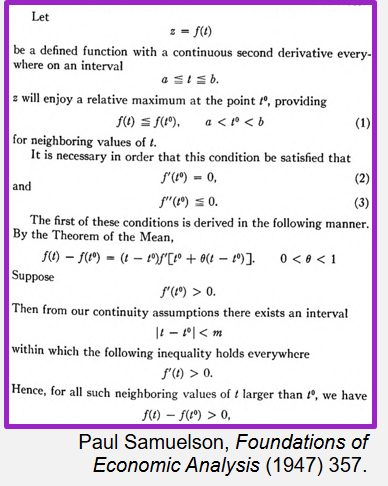
Axiomatisation: translating theories intological variables (x, y, z), functions, andrelationships (looking more like maths).#
More Models: creating formal models ofhow economic phenomena work/relate toeach other.
Empirical Testing: subjecting models tostatistical methods and testing usingavailable data (“econometrics”).
“The Mainstream”:
Neo-Classical microeconomics has been the mainstream approach toeconomic analysis of law.
However since 1970s, microeconomics has become increasinglypluralist in its methods; this has increasingly been reflected in economicanalysis of law too.
We will encounter two refinements/challenges to neo-classicalmicroeconomics:
Game Theory: how decision-making takes into account the decisionsof others (e.g. “Prisoner’s Dilemma”) – week 12 lecture.
Behavioural Economics: how cognitive biases lead to deviationsfrom rational decision-making (e.g. status quo bias) – week 14 lecture.
Development ofEconomic Analysis of Law:
Remember the legal realist movement (week 8 lecture).
Legal Realism:
Beyond Legal Formalism: JG Riddall, Jurisprudence (2005) 223: “…theexistence of one common and all-pervading characteristic, namely adetermination to look at the law with open eyes, to look, not at the oldbooks, but at the law as it actually operated in everyday practice…”
Legal Doctrines Shape and are Shaped by Economics: e.g. strictfreedom of contract and a pro-business, laissez faire economy(Robert Hale, ‘Coercion and Distribution in a Supposedly Non-CoerciveState’ (1923) 38 Political Science Quarterly 470; Karl Llewellyn, ‘TheEffect of Legal Institutions Upon Economics’ (1925) American EconomicReview 665)
But Not like “Law and Economics”: progressive, anti-extreme-free-markets perspective; did not use neo-classical microeconomic approach.
Broader Training: did inspire some Law Schools to expand curriculum.
University of Chicago:
The Chicago School of Economics: from 1920s, economistsFrank Knight and Jacob Viner made the University of Chicago amajor centre for neo-classical microeconomic theory.
Economists in the Law School: from 1930s, Chicago LawSchool experimented with economists teaching certain coursesand started appointing neo-classical economists (Henry Simon,Aaron Director) to the faculty.
Antitrust/Competition Law as the Spark: economist AaronDirector trained students on the antitrust module how to analyselegal doctrine in light of neoclassical microeconomic theory. Ledmajor studies into economic consequences of antitrust, withresearch students including George Stigler and Milton Friedman.
Journal of Law & Economics: founded in 1958 by Director, laterco-edited with economist Ronald Coase (joined Chicago 1964)
Growth of Law & Economics Movement:
Coase as Most Influential Work: Ronald Coase’s 1960 article is oftenseen as kickstarting broader L&E movement: ‘The Problem ofSocial Cost’ (1960) 3 Journal of Law & Economics 1 (discussed later).
Calabresi on Tort Law: Guido Calabresi analysing tort/accident lawfrom a (slightly less purist) economic view: ‘Some Thoughts on RiskDistribution and the Law of Torts’ (1961) 70 Yale Law Journal 499; TheCosts of Accidents: A Legal and Economic Analysis (1970).
Becker on Criminal Deterrence: Gary Becker applied economicthinking to all aspects of life (e.g. discrimination, marriage, divorce,education (“human capital”)), but impact on law felt most with criminaldeterrence: ‘Crime and Punishment: An Economic Approach’ (1968)76 Journal of Political Economy 169.
Growth of Law & Economics Movement
Posner’s (Ever More) Comprehensive Account:
Richard Posner, Economic Analysis of Law(1973), explaining the approach and analysingmany different areas of law from an (neo-classicalmicro)economic point of view.
9th edition (2014) covers property law, contractlaw, family law, tort law, criminal law, the commonlaw method, competition law, intellectual propertylaw, employment law, utilities regulation, corporatelaw, bankruptcy law, financial regulation, taxation,inheritance, criminal and civil procedure, law-making, evidence, constitutional law, federalism,discrimination, international law…
His created a massive movement..
Massive Influence in USA:
Law Schools:
Huge growth in L&E research done by legal scholars from 1960s.
Many US Law schools offer modules on economic analysis of law
Judiciary:
Students and proponents of law and economics become keyfigures in judicial system (e.g. Judge Posner, Judge Calabresi,Justice Stephen Breyer).
Judicial training programmes in L&E popular from 1980s (e.g. Law& Economics Center founded 1974, now at George MasonUniversity).
Less Impact in Europe: some take up in Continental Europeanteaching/research; relatively little in the UK.
Illustrations ofEconomic Analysis ofLaw:
How Does it Work?
“… human beings are rational maximizers of their satisfactions.This implies that people respond to incentives – that if a person’ssurroundings change in such a way that he could increase hissatisfaction by altering his behavior, he will do so.” Richard Posner,Economic Analysis of Law (9th edn, 2014)
“Economics generally provides a behavioral theory to predict howpeople respond to laws. This theory surpasses intuition just asscience surpasses common sense. The response of people isalways relevant to making, revising, repealing, and interpretinglaws.” Robert Cooter and Thomas Ulen, Law & Economics (6th edn2012) 3
How does it work?:
Legal subjects are rational decision-makers, choosing the course of actionthat maximises their utility.
Legal doctrines (rights, obligations, prohibitions) and processes affect theirincentives to do certain things, positively or negatively, with implications foroverall efficiency/welfare.
Can therefore engage in:
Positive Analysis: analyse what the effect of law is on incentives andthe implications for overall efficiency/welfare (or predict how changes tothe law will alter efficiency/welfare).
Normative Analysis: recommend how law should be changed to betterachieve more efficient outcomes / maximise welfare.
(can positive analysis really be separated from normative?)
What is ‘Efficiency’:
Generally, it is satisfying as many people’s utility (preferences, welfare) to thegreatest possible extent (optimisation). In general terms making evryone as happy as possible in the maximum way.
But what is optimal efficiency?
Pareto Efficiency: when it is not possible to make anyone better off withoutmaking someone else worse off. We will only make a change if it doesn’t make someone else worse off.
Kaldor-Hicks Efficiency: when additional gains to one group could no longertheoretically compensate for making others worse off. Efficiency is okay if the ones who are getting SO WELL OFF that it compensates for those who are losing- they gain much more than the others lose (utilitarinism by Bentham- most amount of pleausre/ pain)
So if a proposed change to a legal rule would make X £10 better off and Y £1 worse off,it would not be a Pareto efficient change, but it would be a Kaldor-Hicks efficientchange (as X could in theory compensate Y for the loss).
L&E scholars tend to use Kaldor-Hicks efficiency (e.g. Posner): accepting situationswhere some are better off so long as their gains are larger than the losses others incur.
How do we Achieve Greater Efficiency?
Market Exchange Usually the Most Efficient Mechanism:
Belief running back to Adam Smith – self-interested behaviournaturally allocates resources in a more effective manner thanstate intervention (regulation, quotas, taxes).
“Resources tend to gravitate toward their most valuable uses ifvoluntary exchange – a market – is permitted… By a process ofvoluntary exchange, resources are shifted to those uses in which thevalue to consumers, as measured by their willingness to pay, ishighest. When resources are being used where their value ishighest, or, equivalently, when no reallocation would increase theirvalue, we say they’re being employed efficiently.” Richard Posner,Economic Analysis of Law (9th edn, 2014).
Remove legal restrictions on efficient voluntary exchange.
Facilitate exchange through reducing transaction costs andovercoming information asymmetries. (Stuart Mill- said that ppl would instinctively come up with a better thingbc self interensts leads them , He said this is better than the state helping everyone individuaully). He did argue tht we shld facilitate this change by reducing transaction costs
Causing a Nuisance:
Sturges v Bridgman (1879): a confectionary maker’s (sweetmaker) machinery made so muchnoise and vibration. This machine was used to make sweets. So much so that a doctor in the adjoining property couldn’t consultpatients (listening to stesthoscope). Courts granted injunction to stop confectionary maker using machinery,i.e. doctor had a right to prevent disruption from other property.
Ronald Coase, ‘The Problem of Social Cost’ (1960) 3 Journal of Law &Economics 1: If zero transaction costs, negotiation can lead to a more efficientoutcome than enforcement by whoever has the right.
- Keeping the machinery and paying the doctor more than their loss of incomemay cost less to the confectioner than changing practices or movingelsewhere. If so, most efficient outcome is for confectioner to negotiate topay doctor – both are better off than doctor forcing their right.
- Works both ways: if confectioner had the legal right to continue and if thedoctor’s losses were greater than the confectioner’s losses fromstopping/moving, most efficient outcome is to negotiate to pay theconfectioner to stop/move – both better off than confectioner forcing right.
Causing a Nuisance:
Implications of Coase’s Analysis:
Causation puts impetus on causing party to stop, but a two-party problem: both properties being next to each other and both in a position to negotiate.
In the absence of transaction costs, which party has the rightdoes not matter (“Coase Theorem”): if the right leads to aless efficient outcome than optimal, parties will negotiate to amore efficient position where they both benefit.
Transaction costs are a major restriction on this happening:conducting negotiations, drawing up a contract, making sureit is observed. They therefore often prevent the most efficientallocation of resources. Therefore which party has the rightdoes matter.
Example:
Rent Control Law:
Richard Epstein, ‘Rent Control and the Theory of EfficientRegulation’ (1988) Brooklyn Law Review 741: law setting maximumrental fees is less efficient than a free market.
Tenants stay in properties longer, shielded from those willing topay more at renewal. Not allocated to those who want it themost.
As higher prices can no longer be used to distinguish who getsthe property, landlords take into account non-price factors:people they know, “low-risk” tenants, biases, bribery.
Reduced income for landlords may mean less spend onmaintenance, security, and upkeep; less incentive to attracthigher-paying renters.
Significant increase in demand due to depressed rental prices;little incentive for new supply to be brought to market andgreater incentives to extract other value from property other thanrent (sale, change purpose).
Rules and Standards:
Example 2:
Law Against “Baby-Selling”?:
“Part I of this paper develops a model of the supply and demand for babies for adoptionunder the existing pattern of regulation and shows (1) how that regulation has created ababy shortage (and, as a result, a black market) by preventing a free market fromequilibrating the demand for and supply of babies for adoption, and (2) how it hascontributed to a glut of unadopted children maintained in foster homes at public expense.Part II explores the objections to allowing the price system to equilibrate the adoptionmarket and argues that the objections do not justify the existing regulations though theymight justify a more limited regulation of the baby market. In Part III we consider, in the spiritof the new economic analysis of the political process, some of the reasons why thegovernment has curtailed the operation of the market in this area. Part IV proposes amethod of practical experimentation with introducing a market in adoptions. Parts III and IVare highly tentative. In the course of the analysis we attempt to sketch how the worldwould look if a free market in babies were permitted to come into existence.”
Elisabeth Landes and Richard Posner,
‘The Economics of the Baby Shortage’ (1978) 7 Journal of Legal Studies 323, 324